
Loading, please wait...
LOT 0194
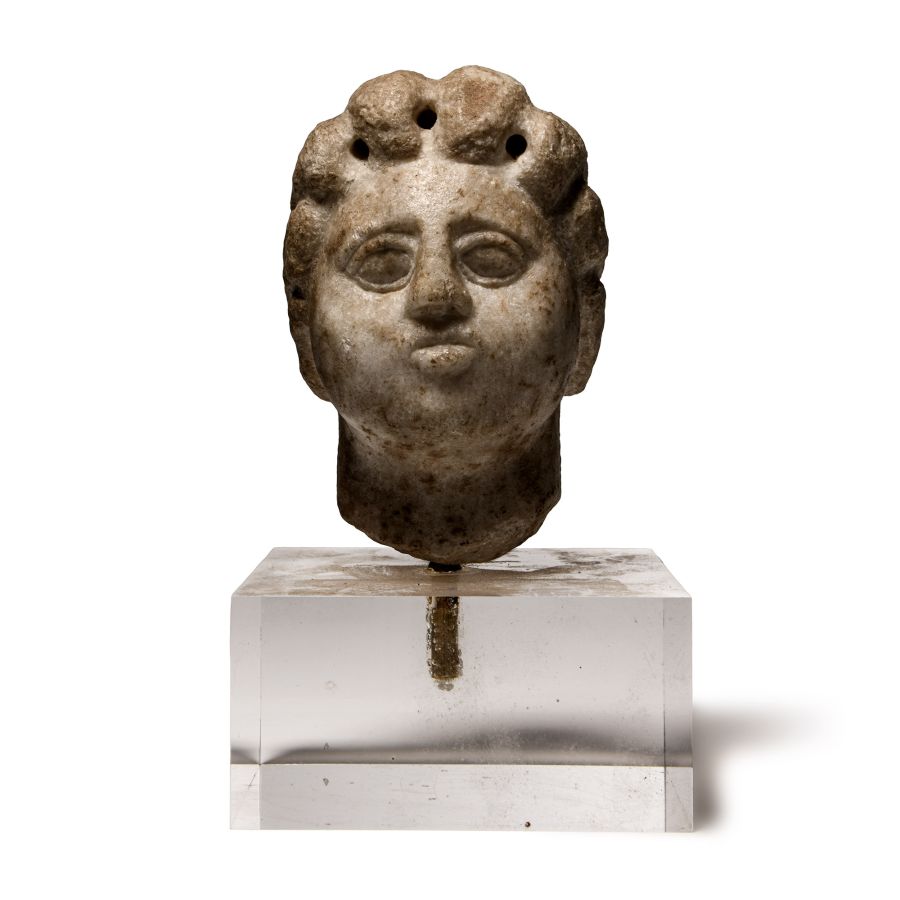
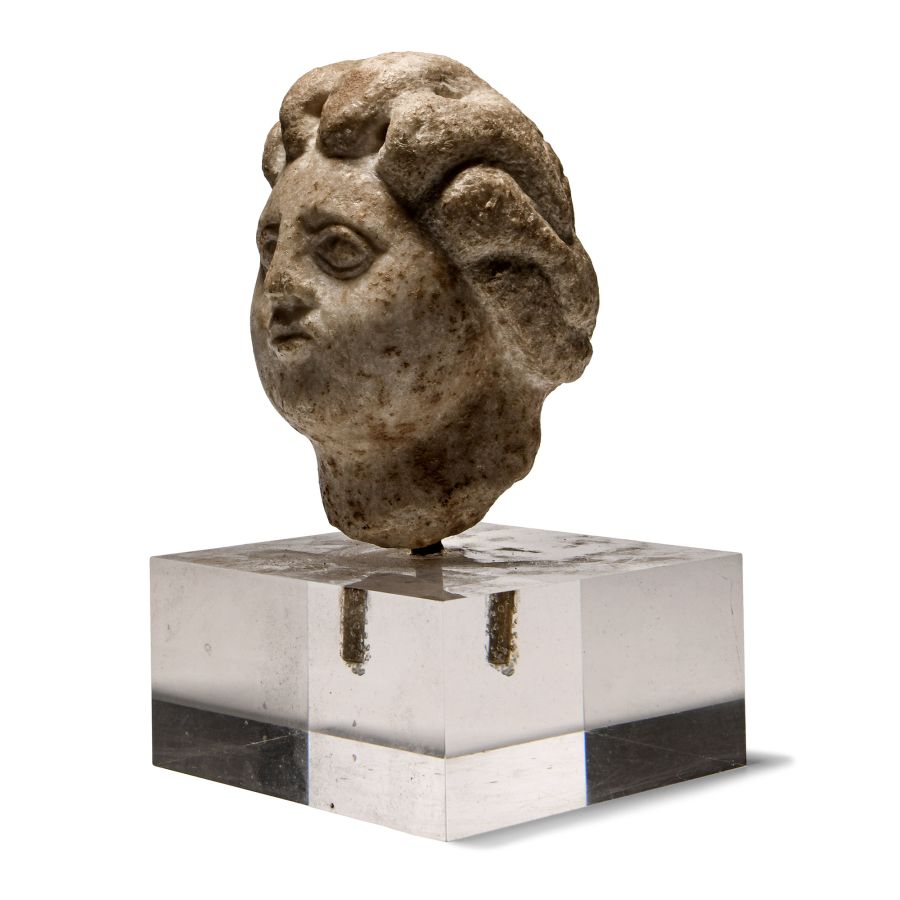
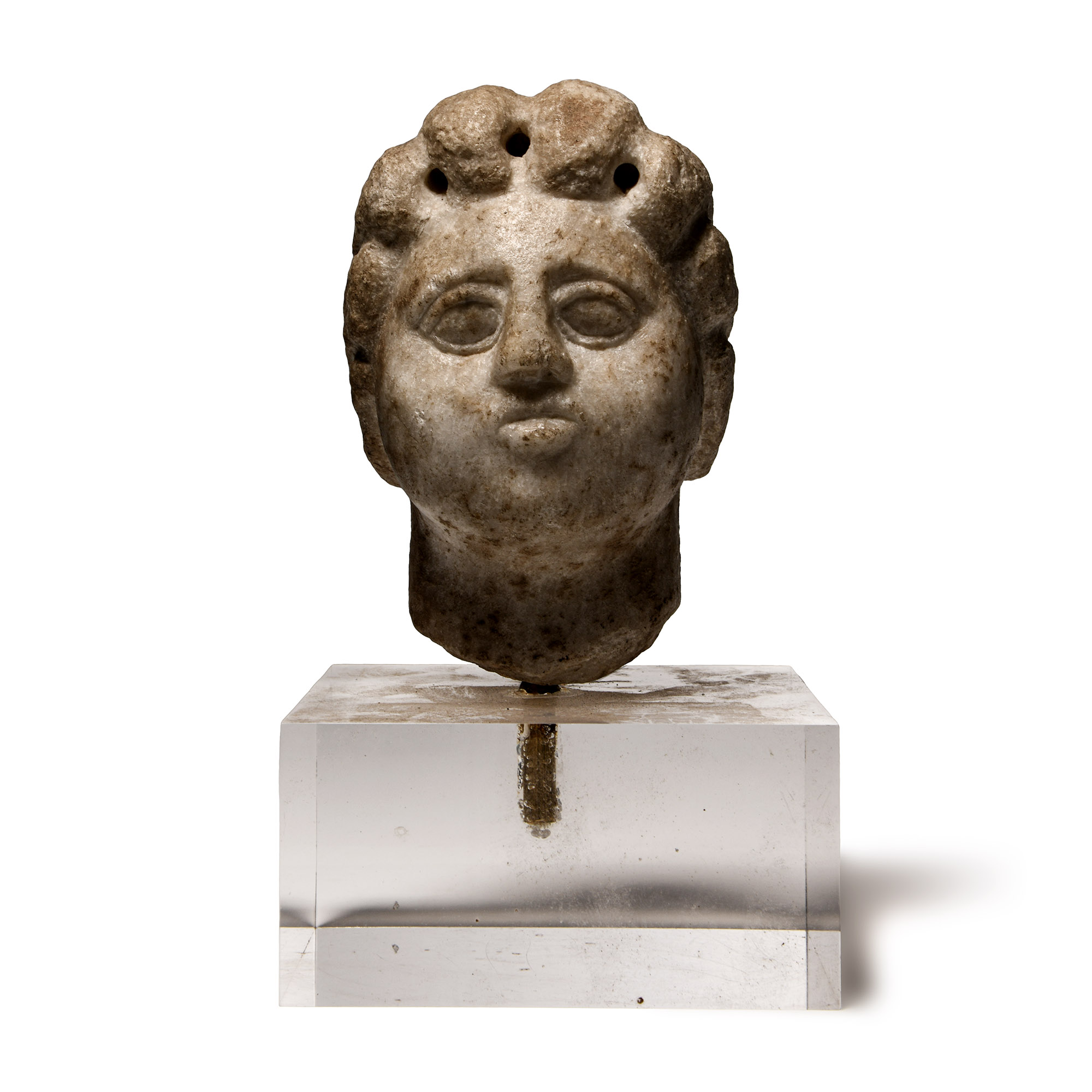
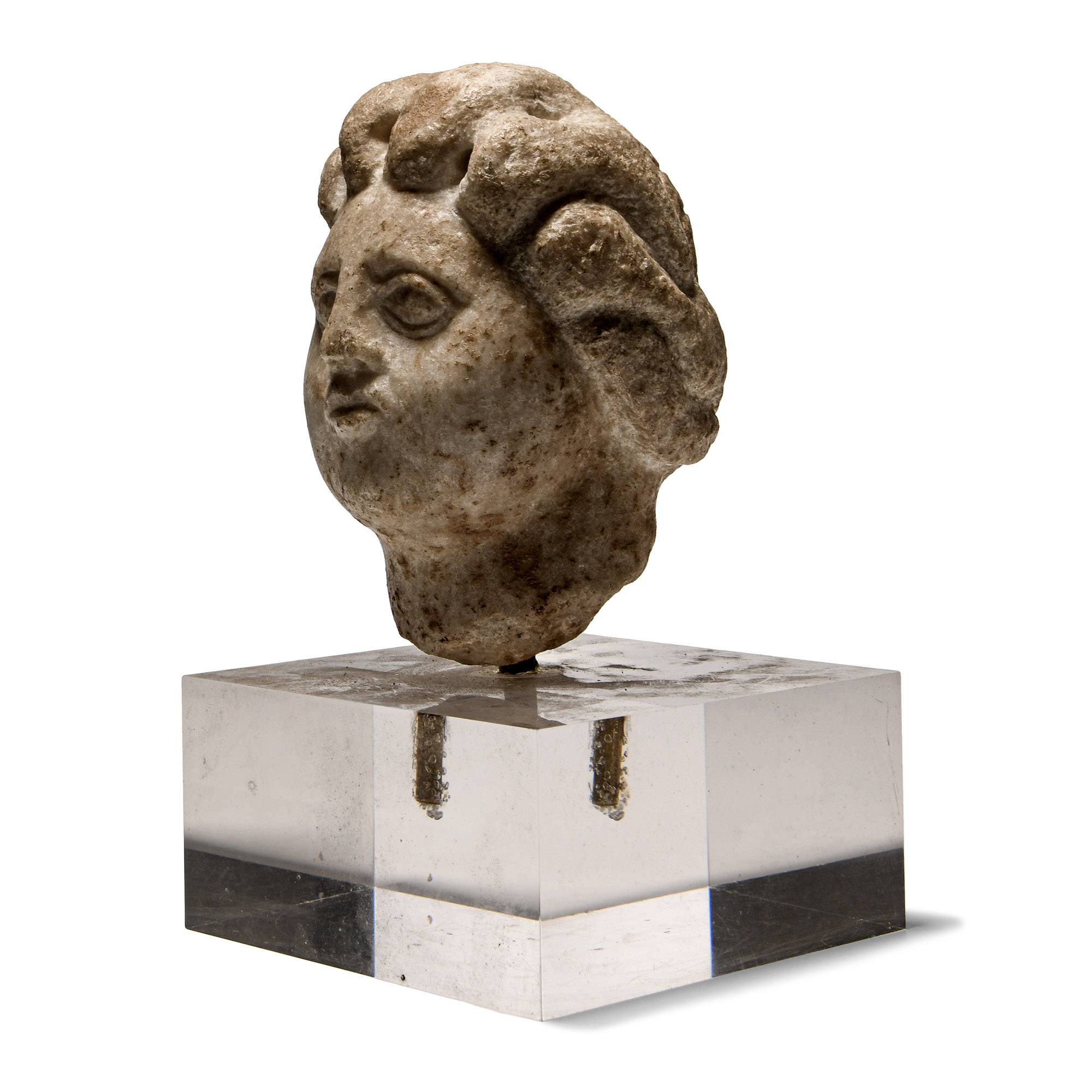
Romano-British Marble Head of a Lady
CIRCA 2ND CENTURY A.D.
6 3/4 in. (1.6 kg total, 17 cm high including stand).
Carved in the round with fleshy facial features, almond-shaped eyes and small pouting mouth; the hair modelled with hollowed curls above the brow; mounted on a custom-made display stand. [No Reserve]
ProvenanceFound Cambridgeshire, UK.
From a collection acquired on the UK art market from various auction houses and collections mostly before 2000.
From an important Cambridgeshire estate; thence by descent.
Cf. similar in the collection of the British Museum, London under accession number 1973,0327.3; cf. Graham, F., Hadrian's Wall in the days of the Romans, Newcastle, 1984, pp.177-178; Clayton, P., A Companion to Roman Britain, Oxford, 1980, p.71, for similar style of sculptures; cf. Harley, E., Roman Life at the Yorkshire Museum, York, 1985, p.17, and De La Bédoyère, G., Roman Towns in Britain, London, 1993, p.118 (for similar hairstyle).
FootnotesThese kind of sculptures represented people or divinities of the Roman Britannia. They are found in several civilian tombstones, characterised by provincial style, that was enhanced by colouring which is absent today. The image here represented is a domina (a high-status middle-aged woman) in a typical hairstyle of 2nd-3rd century A.D. (Graham, 1984, p.222). In these provincial artworks the strong influence of the Celtic art is evident, especially in the eyes and hair of the sculpture.
CONDITIONTimeLine Auctions follows a vetting process to ensure the authenticity and legality of all items, reinforcing our commitment to integrity and responsible trading. Each antiquity, antique, and coin lot undergoes thorough examination by a vetting committee of at least ten external specialists, professional trade association members, scientists, and archaeologists: Our Vetting Process
AUCTIONS:
TimeLine is a leading auction house specialising in antiquities, ancient art, collectables, natural history, coins, medals, and books. Our auctions offer museums, collectors, historians, and enthusiasts the opportunity to acquire unique and historically significant pieces.
-
.jpg)
Roman Votive Hand to God Sabazios
2nd-3rd century A.D.Sold for (Inc. bp): £910
Hollow-formed right hand from a statuette, with fingers splayed and flat palm, good anatomical detailing. 362 grams, 12.1 cm
Private collection 1990s. Ex London, UK, gallery.
The votive character of the hand could link it to the God Sabazios, often associated with a number of archaeological finds depicting a bronze, right hand in the benedictio latina gesture. The hand appears to have had ritual significance and may have been affixed to a sceptre (as the one carried by Sabazios on a slab, one from Philippopolis, nowadays Plovdiv in Bulgaria). The association with Sabazios is sometimes suggested in similar hands, by the presence of a snake embossed around the circumference of the hand, because the iconic image of the god or hero on horseback battling the chthonic serpent, appears on Celtic-Roman votive columns, and with the coming of Christianity it was easily adapted to the representations of Saint George fighting the Dragon. -
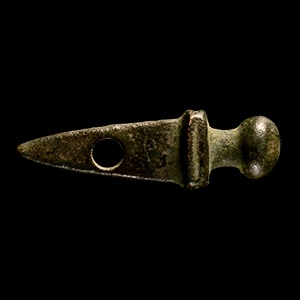
Roman Gladius Sword Amulet
Circa 1st century B.C.-1st century A.D.Sold for (Inc. bp): £208
A miniature sword-shaped votive or amulet with ribbed guard and knop finial; pierced through the blade. 4.50 grams, 31 mm
Ex property of a North West London gallery; formerly in a 1980s collection. -
Romano-British Marble Head of a Lady
Circa 2nd century A.D.Sold for (Inc. bp): £975
Carved in the round with fleshy facial features, almond-shaped eyes and small pouting mouth; the hair modelled with hollowed curls above the brow; mounted on a custom-made display stand. 1.6 kg total, 17 cm high including stand
Found Cambridgeshire, UK. From a collection acquired on the UK art market from various auction houses and collections mostly before 2000. From an important Cambridgeshire estate; thence by descent.
These kind of sculptures represented people or divinities of the Roman Britannia. They are found in several civilian tombstones, characterised by provincial style, that was enhanced by colouring which is absent today. The image here represented is a domina (a high-status middle-aged woman) in a typical hairstyle of 2nd-3rd century A.D. (Graham, 1984, p.222). In these provincial artworks the strong influence of the Celtic art is evident, especially in the eyes and hair of the sculpture.
