
Loading, please wait...
LOT 0687
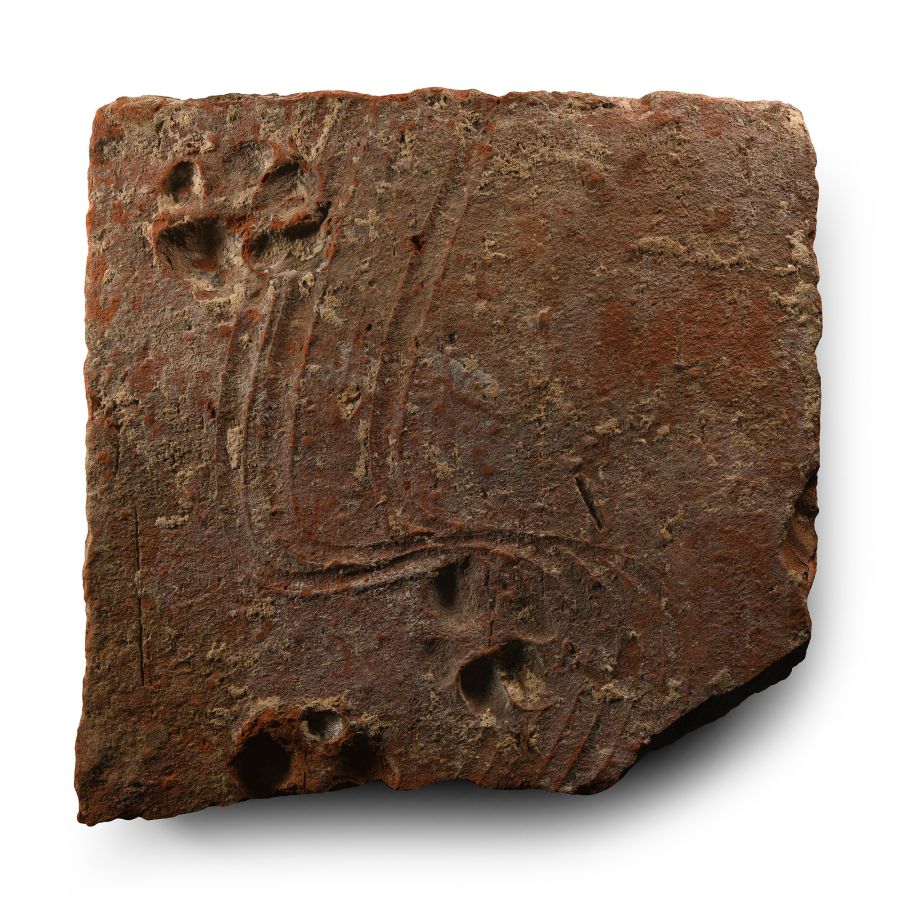
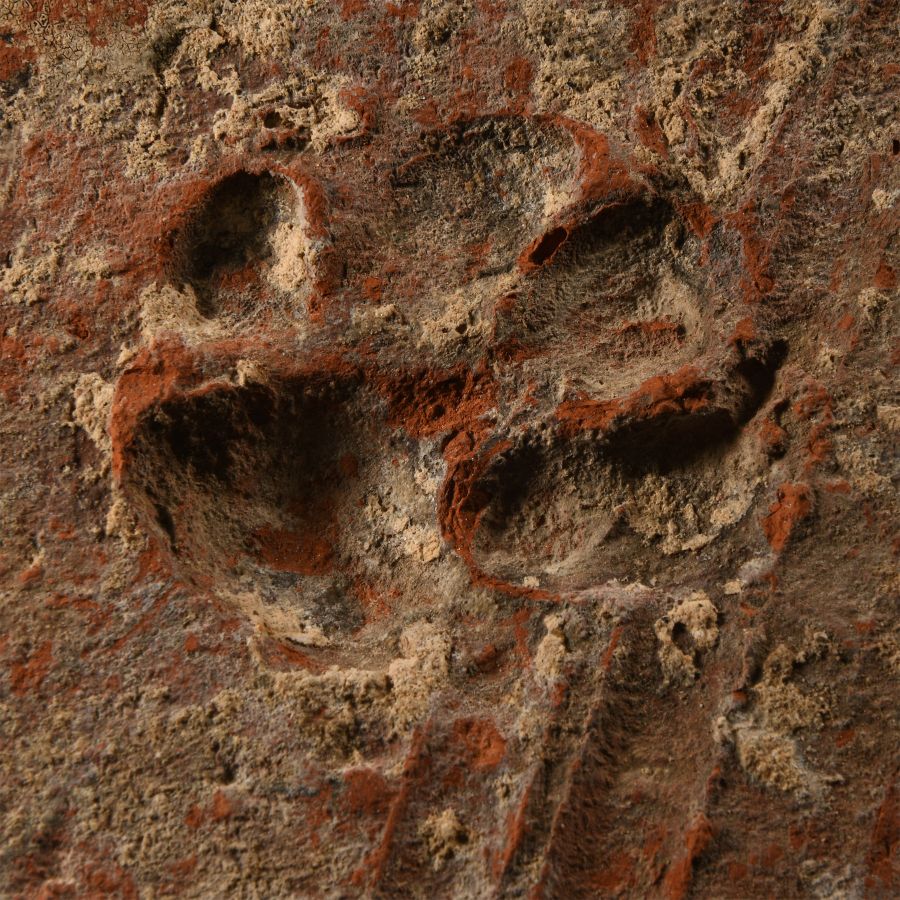
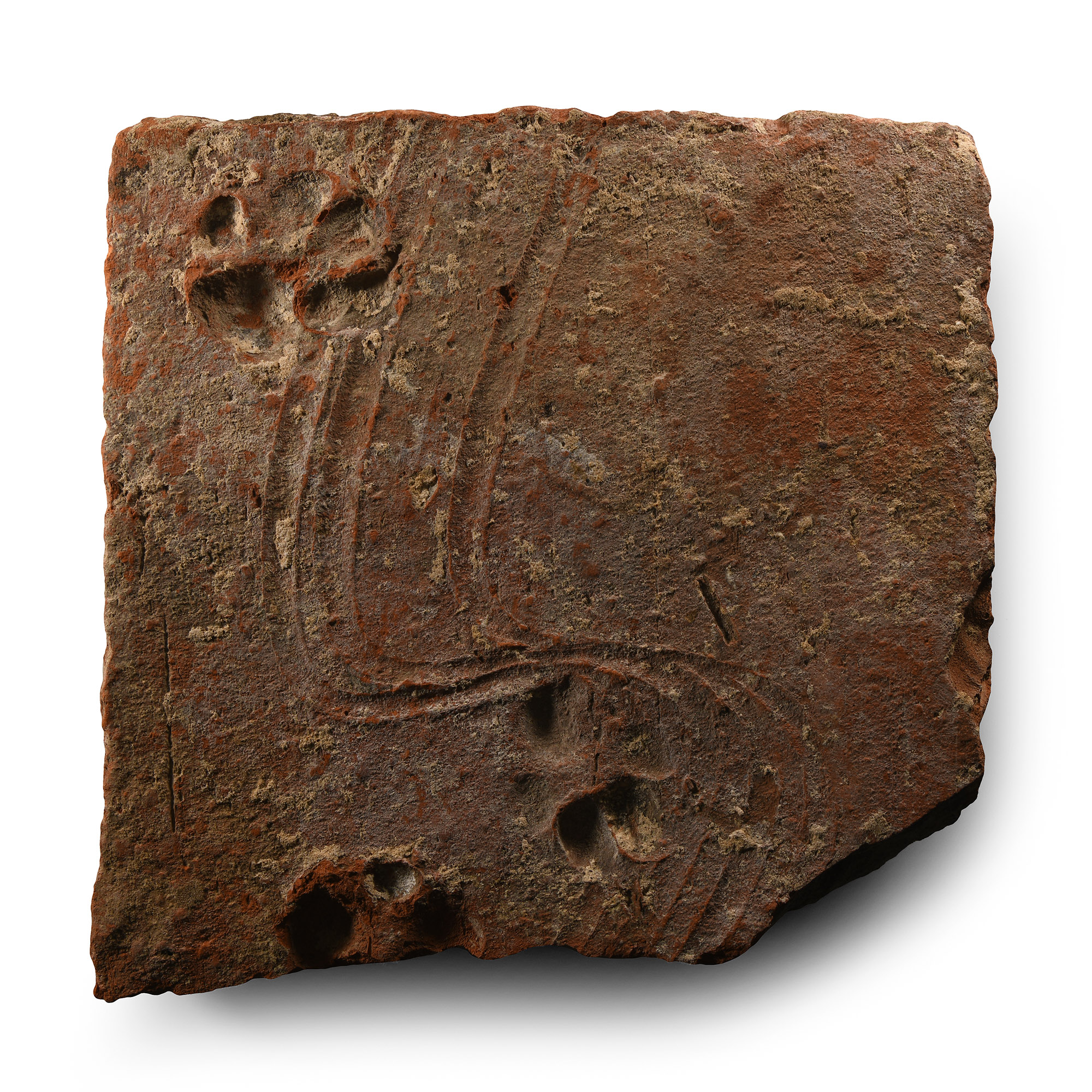
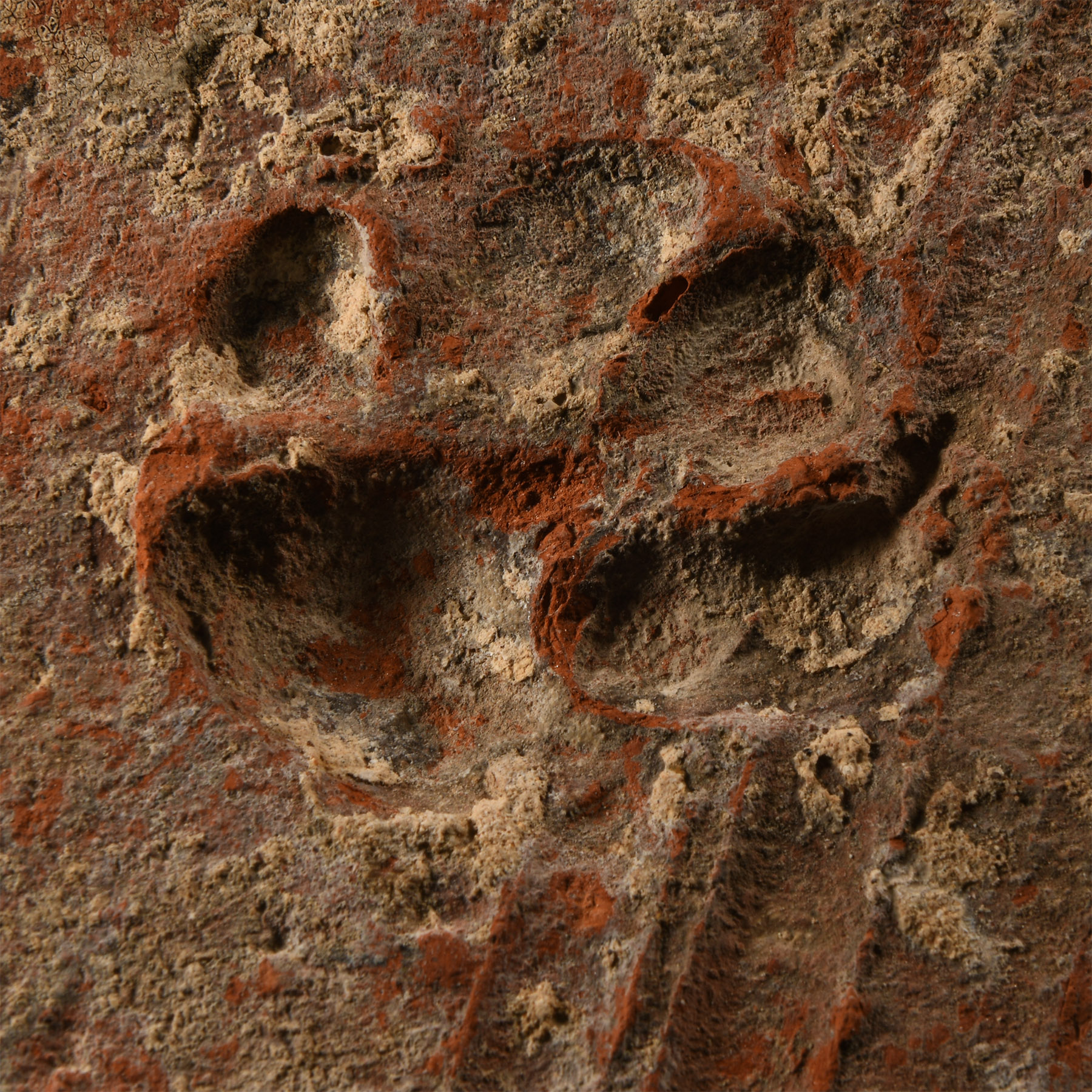
Romano-British 'Lympne Castle Roman Fort' Terracotta Tile with Roman Dog Pawprints
3RD-4TH CENTURY A.D.
9 1/4 x 9 1/2 in. (3.28 kg, 23.5 x 24 cm).
Substantial tegula with pawprints from a dog; with old collector's note. [No Reserve]
ProvenanceFound Lympne Castle, Kent, UK.
From the collection of a late East Anglian teacher and antiquarian who retired to the Isle of Wight, UK.
He amassed a large collection of objects between the 1960s-1980s.
Accompanied by an original old collection display card.
Lympne Castle was built close to the former Roman fort of Portus Lemanis, incorporating curated elements from the ruins of the fort. The Roman structure formed part of the Litus Saxonicum ('Saxon Shore') a series of coastal fortifications erected in the 3rd century to deter raiding from the coastlands across the North sea.
CONDITIONTimeLine Auctions follows a vetting process to ensure the authenticity and legality of all items, reinforcing our commitment to integrity and responsible trading. Each antiquity, antique, and coin lot undergoes thorough examination by a vetting committee of at least ten external specialists, professional trade association members, scientists, and archaeologists: Our Vetting Process
AUCTIONS:
TimeLine is a leading auction house specialising in antiquities, ancient art, collectables, natural history, coins, medals, and books. Our auctions offer museums, collectors, historians, and enthusiasts the opportunity to acquire unique and historically significant pieces.
LOT 0687
Romano-British 'Lympne Castle Roman Fort' Terracotta Tile with Roman Dog Pawprints
Sold for (Inc. bp): £468
-
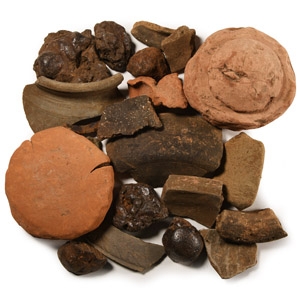
Roman 'Wetwang' Artefact Collection
1st-4th century A.D.Sold for (Inc. bp): £4
Including ceramic rim fragments, terracotta figurine fragments, iron slag, decorated sherds and other items. 1.82 kg total, 2-10 cm
Found near Wetwang, East Yorkshire, UK. Acquired 2005. Ian Wilkinson collection, Nottinghamshire, UK. -
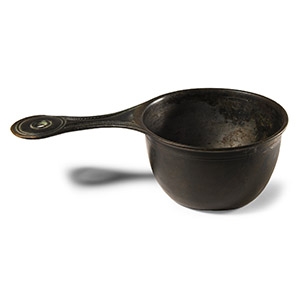
Roman Bronze Patera with Maker's Mark for Licinius
1st-2nd century A.D.Sold for (Inc. bp): £1,820
With drum-shaped bowl and thick rim developing to a short handle with pierced lobe finial; stamped to the upper face of the handle with maker's name '[.]OIYBI'; to the underside of the base, pointillé legend 'LICINI[...]V'. 242 grams, 19.5 cm
Acquired from Munich and London, 1990s. From the collection of a London, UK, gentleman. Accompanied by an academic report by Dr Raffaele D’Amato. This lot has been checked against the Interpol Database of stolen works of art and is accompanied by a search certificate number no.12064-217904.
The owner of the patera seems to be a certain Licinius. In contrast to more elaborate counterparts, paterae such as this were likely carried as part of the standard kit of Roman soldiers, used as a general cooking and eating utensil. -
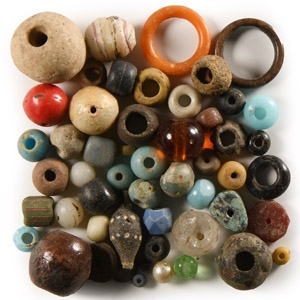
'Thames' Bead Collection
1st-2nd millennium A.D.Sold for (Inc. bp): £156
Including annular, spherical, tabular and other types in various materials. 66 grams total, 3-22 mm
Found Billingsgate spoil from the Thames foreshore, London, UK, circa 1984. Property of an Essex collector.
