
Loading, please wait...
LOT 0750
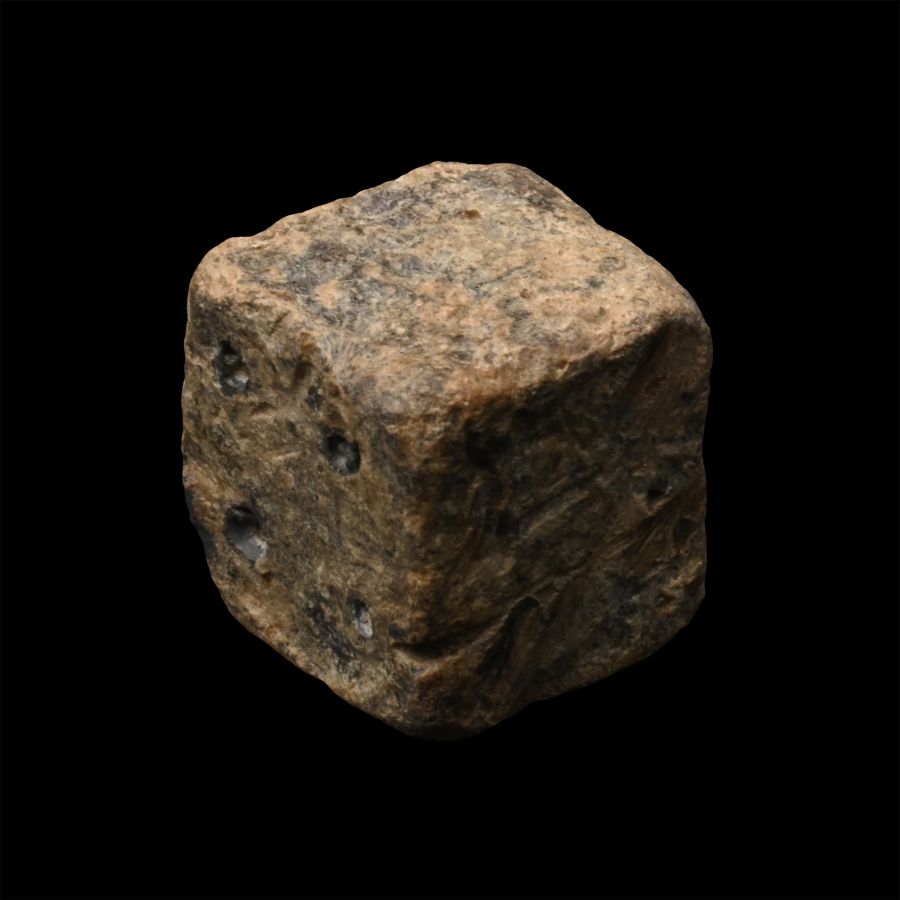
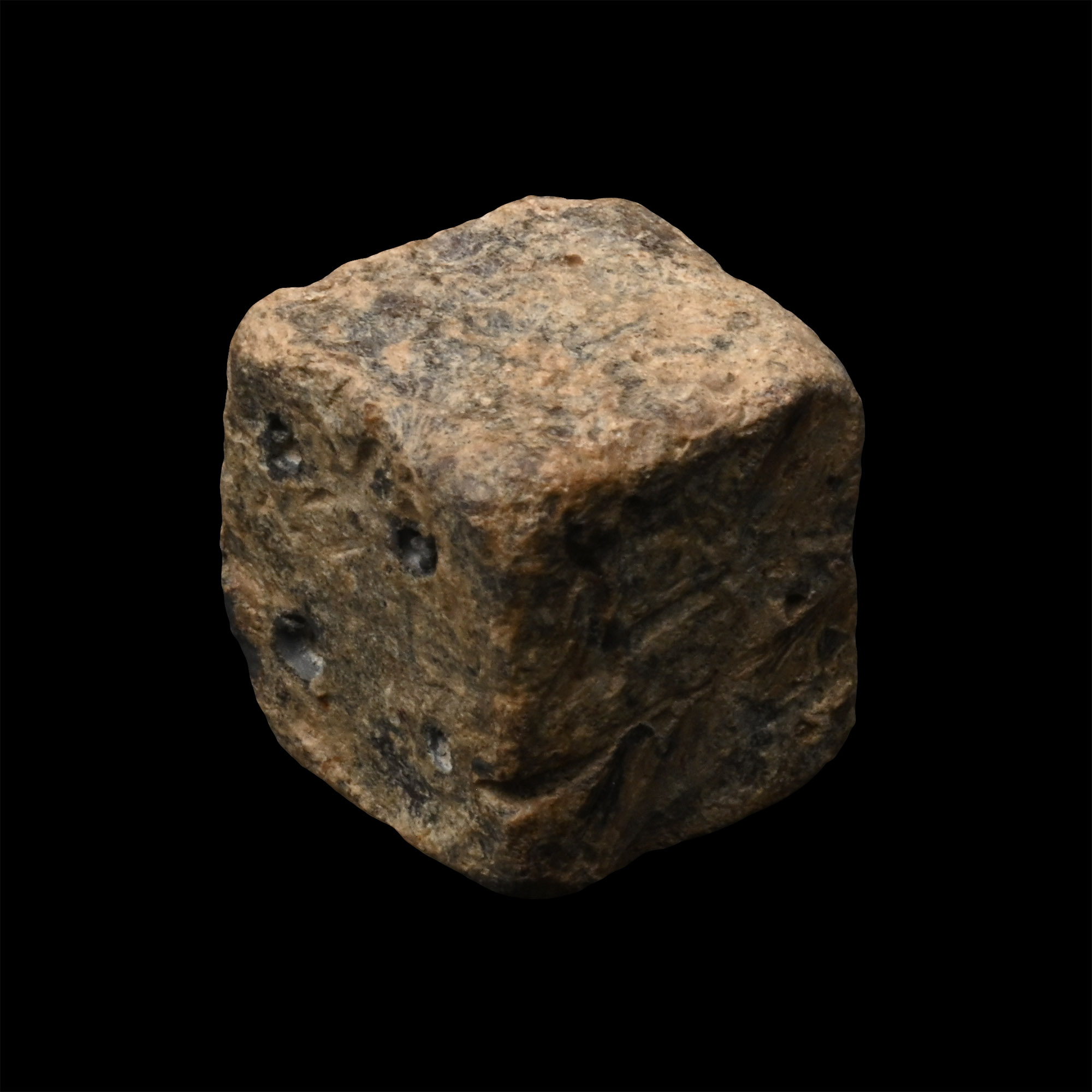
Romano-British Lead Gaming Dice
1ST-4TH CENTURY A.D.
1/2 in. (16.6 grams, 12 mm).
Cuboid with pellet markings on most faces. [No Reserve]
ProvenanceFound Wiltshire, UK.
From the private collection of Colin Narbeth, UK, 1990s, with collection reference no.52.
Accompanied by a typed collection ticket.
TimeLine Auctions follows a vetting process to ensure the authenticity and legality of all items, reinforcing our commitment to integrity and responsible trading. Each antiquity, antique, and coin lot undergoes thorough examination by a vetting committee of at least ten external specialists, professional trade association members, scientists, and archaeologists: Our Vetting Process
AUCTIONS:
TimeLine is a leading auction house specialising in antiquities, ancient art, collectables, natural history, coins, medals, and books. Our auctions offer museums, collectors, historians, and enthusiasts the opportunity to acquire unique and historically significant pieces.
-
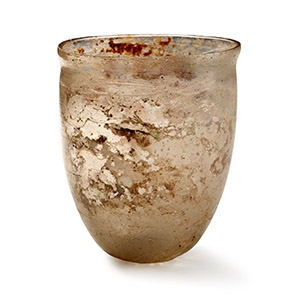
Roman Iridescent Glass Flask
1st-4th century A.D.Sold for (Inc. bp): £221
Aqua glass drum-shaped jar with everted rim and rounded base. 34.58 grams, 70 mm
Acquired Christie's, London, Antiquities, Works of Art and Important Renaissance Bronzes, Plaquettes and Limoges Enamels, 8 July 1981, no.617 (part). From a private Wiltshire, UK, collection. Accompanied by a copy of the relevant Christie's catalogue pages. -
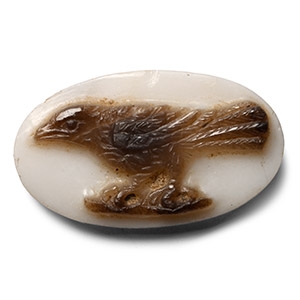
Roman Sardonyx Cameo of an Eagle
2nd-3rd century A.D.Sold for (Inc. bp): £3,380
With a cameo image of a bird, probably an eagle, facing left; supplied with a museum-quality impression. 0.65 grams, 16 mm
Private English collection, formed between the late 1970s and early 1990s. Private collection, London, UK. This lot has been checked against the Interpol Database of stolen works of art and is accompanied by search certificate number no.12950-246450. -
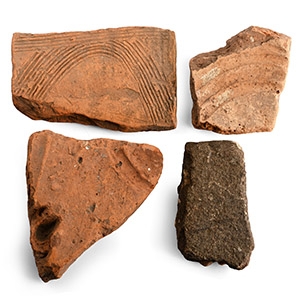
Roman Tile and Concrete Group
1st-4th century A.D.Sold for (Inc. bp): £20
Including terracotta tile fragments with striations and other detailing; opus caementicium accretion. 1.98 kg, 11.5-16.5 cm
From the collection of a Buckinghamshire, UK, collector established from the earlier 1960s.
