
LOT 3234
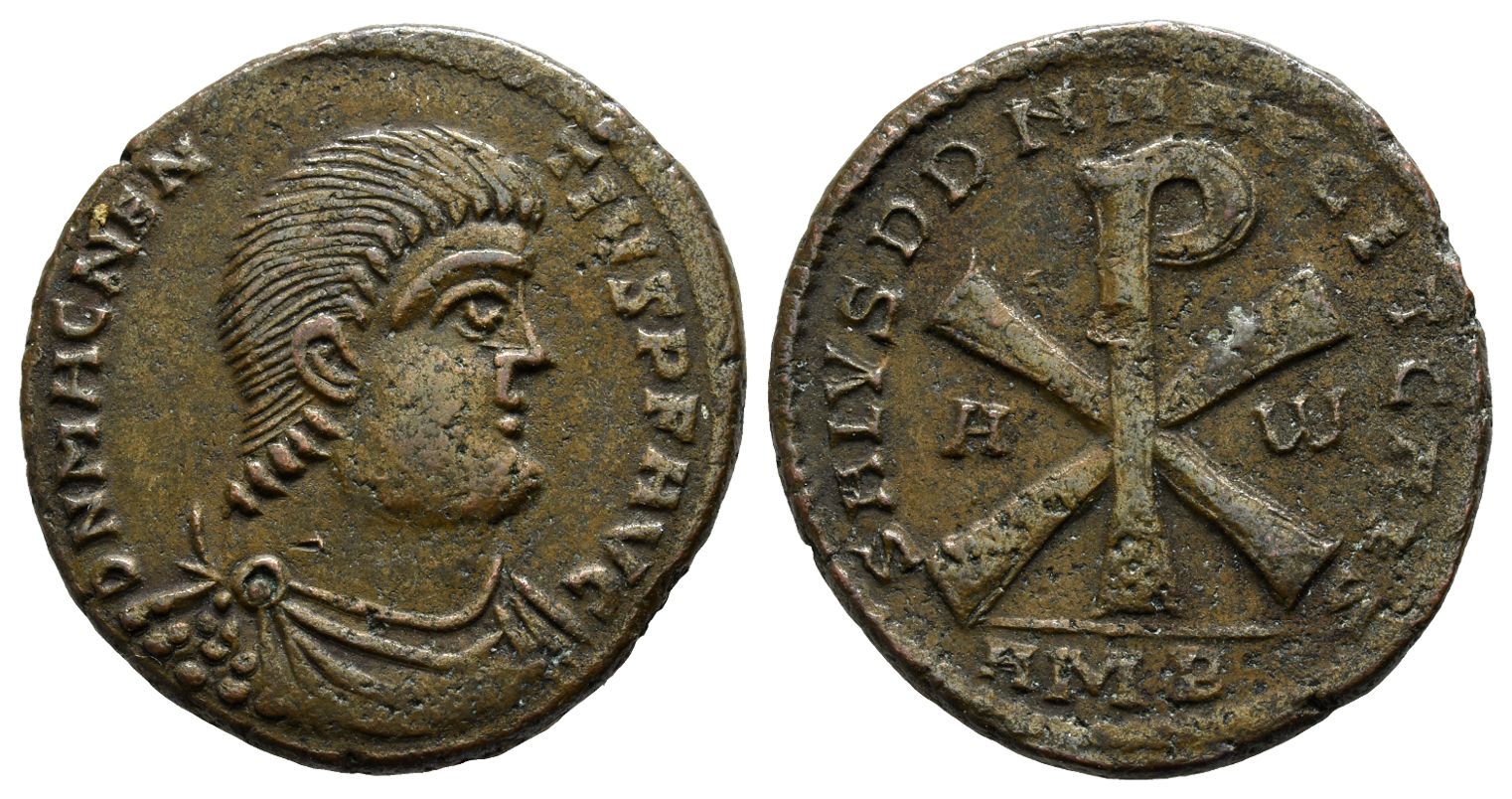
Romano-British Imitation of Magnentius BI Double Centenionalis. AD 350-353.
Following Ambianum mint; struck circa AD 351-353. D N MAGNENTIVS P F AVG, bare-headed, draped and cuirassed bust to right / SALVS DD NN AVG ET CAES, large Chi-Rho; A ധ (Alpha Omega) across fields, AMB in exergue. For prototype cf. RIC VIII 34; SCBC 612; see also Carson and J.P.C. Kent, 'A Hoard of Roman Fourth-Century Bronze Coins from Heslington, Yorkshire' in NC Vol. 11 (1971), p. 210. Good Very Fine.(11.40gr, 29mm, 6h.).
ProvenanceFound Yorkshire, UK.
From the private collection of Robin Sykes, Yorkshire, UK, formed since the late 1990s.
TimeLine Auctions follows a vetting process to ensure the authenticity and legality of all items, reinforcing our commitment to integrity and responsible trading. Each antiquity, antique, and coin lot undergoes thorough examination by a vetting committee of at least ten external specialists, professional trade association members, scientists, and archaeologists: Our Vetting Process
AUCTIONS:
TimeLine is a leading auction house specialising in antiquities, ancient art, collectables, natural history, coins, medals, and books. Our auctions offer museums, collectors, historians, and enthusiasts the opportunity to acquire unique and historically significant pieces.
LOT 3234
Romano-British Imitation of Magnentius BI Double Centenionalis.
Sold for (Inc. bp): £286
-
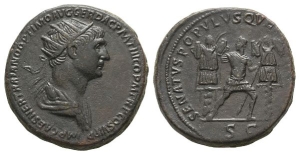
Trajan AE Dupondius. AD 98-117.
Sold for (Inc. bp): £143
Rome mint; struck AD 116-117. IMP CAES NER TRAIANO OPTIMO AVG GER DAC P M THICO P M TR P COS VI P P (sic), radiate and draped bust to right / SENATVS POPVLVSQVE [ROMANVS], emperor standing facing, head to left, between two trophies; S C in exergue. RIC II 676 var. (obverse legend); BMCRE 1052-4 var. (same); Woytek 586v var. (same). 14.12gr, 26mm, 6h.
Good Very Fine. Lightly smoothed and tooled, possibly resulting in variant in obverse legend.
Ex German art market, 2000s. Ex Roma Numismatics Ltd, E-Sale 111, 24 August 2023, lot 821 (company's ticket included). Acquired from an EU collector living in London. From the collection of a Surrey, UK, gentleman. -
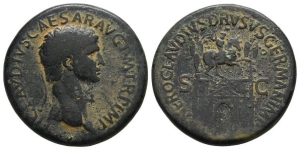
Claudius AE Sestertius. AD 41-54.
Sold for (Inc. bp): £286
Rome mint; struck AD 41-42. TI CLAVDIVS CAESAR AVG P M TR P IMP, laureate head to right / NERO CLAVDIVS DRVSVS GERMAN IMP, The Arch of Nero Claudius Drusus: monumental triumphal arch consisting of a single arch and decorated piers set on raised base with four columns supporting ornate attic; attic containing central pediment decorated with simpulum and litui on either side; clipeus and ewer in flanking panels; attic surmounted by statue of Nero Claudius Drusus on horseback to right between two Germanic trophies, striking downwards with spear held in his right hand; S C across fields. RIC I 98; Cohen 48; BMCRE 122. 28.62gr, 36mm, 6h.
Near Very Fine.
From the collection of a gentleman, acquired on the London art market in the 1990s. -
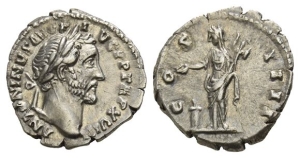
Antoninus Pius AR Denarius. AD 138-161.
Estimate: £80 - 100 (+bp*)
Opening Bid: £45
Rome mint; struck AD 154-155. ANTONINVS AVG PIVS P P TR P XVIII, laureate head to right / COS IIII, Vesta standing facing, head to left, sacrificing over altar with patera and holding palladium. RIC III 238; BMCRE 829-831; RSC 201. 3.30gr, 17mm, 12h.
Near Extremely Fine.
Ex Michael Trenerry, Truro, UK, 1980s. Private North Country, UK, collection.
