
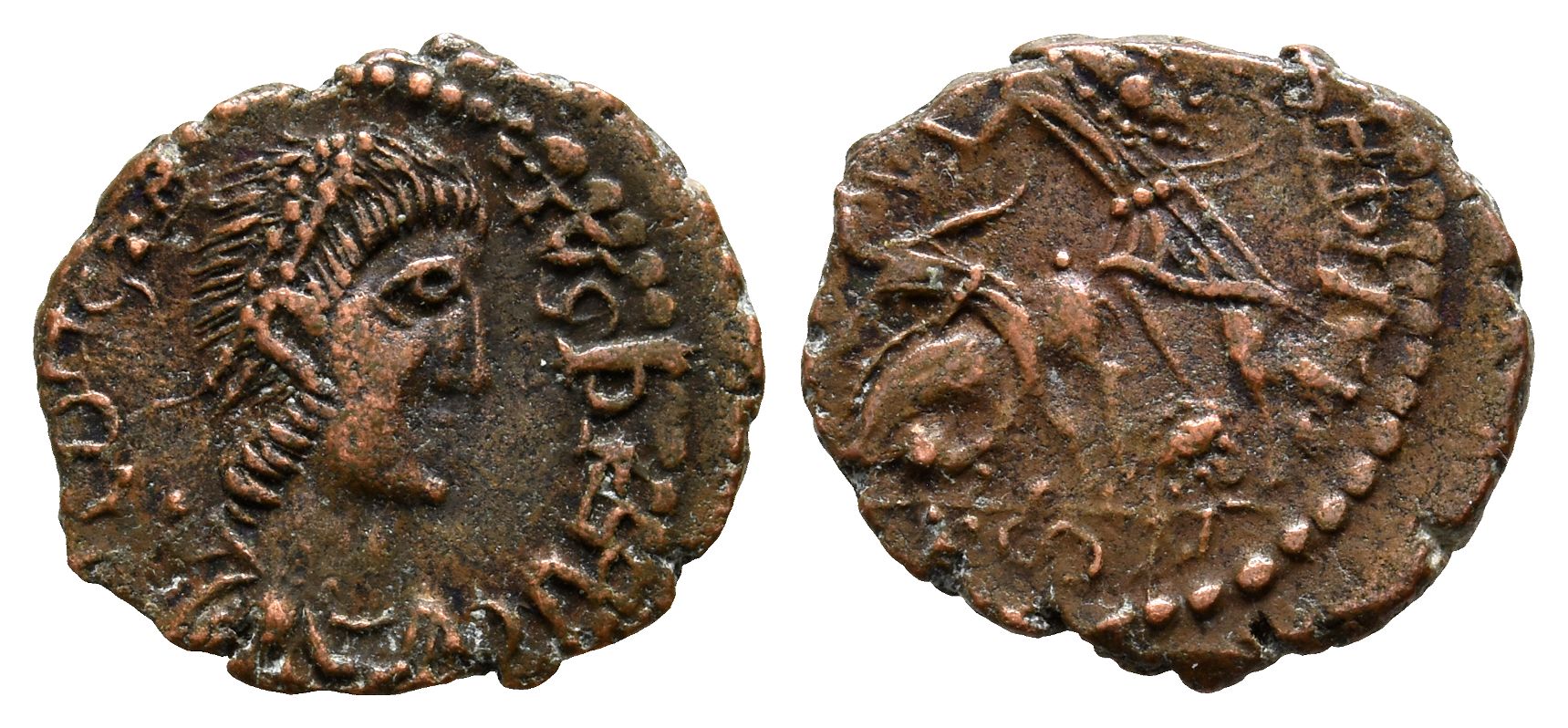
LOT 3218
Romano-British Imitation of Constantius II BI Centenionalis. AD 337-361.
Following Arles mint; struck circa AD 348-354. [...[COΠSTA-TIVS P F ꜸG, pearl-diademed, draped and cuirassed bust to right / [...]PARATIO, soldier standing to left, spearing fallen horseman, round shield below; TCON in exergue. For prototype cf. RIC VIII 215 & 224; SCBC 750; see also Carson and J.P.C. Kent, 'A Hoard of Roman Fourth-Century Bronze Coins from Heslington, Yorkshire' in NC Vol. 11 (1971), p. 224. Very Fine.(1.88gr, 16mm, 6h.).
ProvenanceFound Yorkshire, UK.
From the private collection of Robin Sykes, Yorkshire, UK, formed since the late 1990s.
During the 4th century, the urban life in Britain was in serious decline and the supplies of currency from the Empire temporarily disrupted, so the local imitations of Constantius II and the usurper Magnentius became necessary to cover the deficit.
TimeLine Auctions follows a vetting process to ensure the authenticity and legality of all items, reinforcing our commitment to integrity and responsible trading. Each antiquity, antique, and coin lot undergoes thorough examination by a vetting committee of at least ten external specialists, professional trade association members, scientists, and archaeologists: Our Vetting Process
AUCTIONS:
TimeLine is a leading auction house specialising in antiquities, ancient art, collectables, natural history, coins, medals, and books. Our auctions offer museums, collectors, historians, and enthusiasts the opportunity to acquire unique and historically significant pieces.
LOT 3218
Romano-British Imitation of Constantius II BI Centenionalis.
Sold for (Inc. bp): £91
-
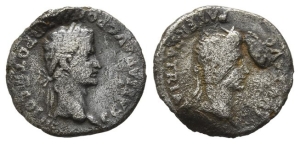
Gaius (Caligula), with Divus Augustus AR Denarius. AD 37-41.
Sold for (Inc. bp): £598
Lugdunum mint. Struck AD 40. C CAESAR • AVG • PON • M • TR • POT • III • COS • III, laureate head of Gaius (Caligula) to right / [DIVVS] AVG PATER PATRIAE, radiate head of Divus Augustus to right. RIC I 24; Lyon 177; RSC 7. 3.20gr, 19mm, 6h.
Near Very Fine. Rare.
Found by Robin Sykes in Yorkshire, UK, on 3 April 2006. Recorded with Simon Holmes at the Yorkshire Museum. Accompanied by an illustrated identification card by Jim Halliday. -
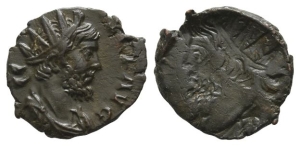
Tetricus I, Romano-Gallic Emperor BI Antoninianus. AD 271-274.
Sold for (Inc. bp): £91
Uncertain mint. [...] AVG, radiate, draped and cuirassed bust to right / Incuse of obverse. 2.22gr, 16mm.
Good Very Fine. Brockage of obverse.
From a private, UK, collection in the 1980s. Property of a London, UK, antiquarian.
Brockage errors are caused when an already minted coin sticks to the coin die and impresses onto another blank that hasn't been struck yet, pressing a mirror image of the other coin into the blank. -
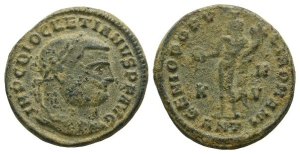
Diocletian BI Nummus. AD 300-301.
Estimate: £30 - 40 (‡+bp*)
Opening Bid: £14
Antioch mint. IMP C DIOCLETIANVS P F AVG, laureate head to right / GENIO POPVLI ROMANI, Genius, wearing modius on head, standing to left, holding cornucopia and patera, from which liquor flows; K in left field, Δ over H in right field, ANT in exergue. RIC VI 54a. 9.67gr, 26mm, 6h.
Very Fine.
Private collection, acquired 1980–1985.
