
Loading, please wait...
LOT 0595
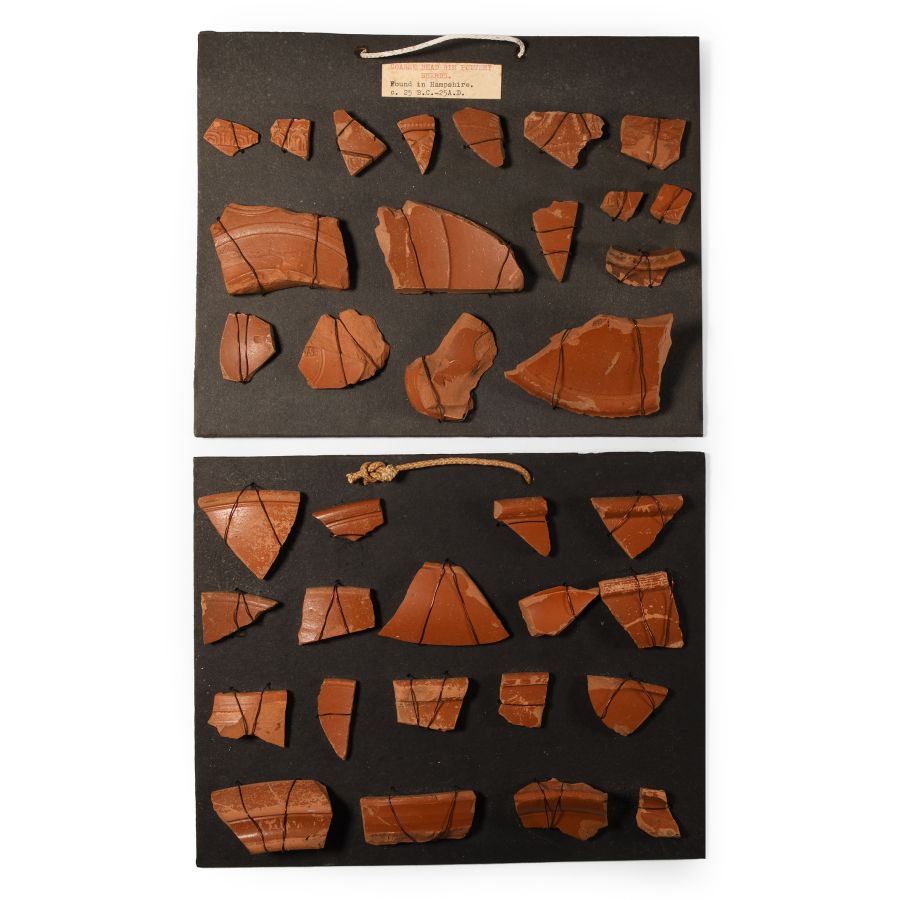
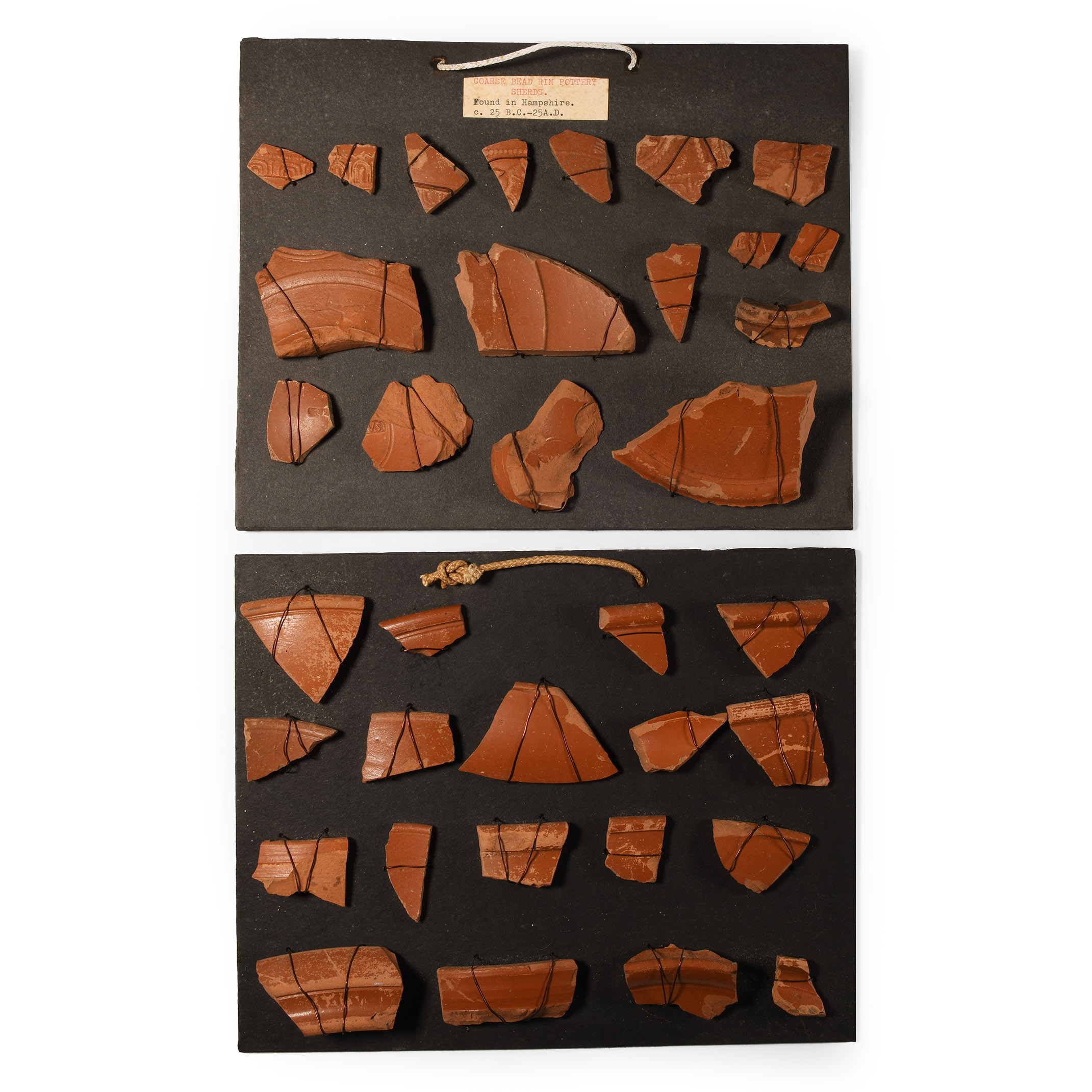
Romano-British 'Hampshire' Samian Ware Sherd Collection on Display Cards
LATE 1ST CENTURY B.C.-EARLY 1ST CENTURY A.D.
10 x 8 in. (534 grams total, 25.5 x 20.5 cm each).
Mixed group of decorated Samian ware fragments mounted on card display boards, one with old typed label: 'COARSE BEAD RIM POTTERY SHERDS. / Found in Hampshire. / c. 25 B.C.-25A.D.'. [2, No Reserve]
ProvenanceFound Hampshire UK.
From the collection of a late East Anglian teacher and antiquarian who retired to the Isle of Wight in Hampshire, UK.
He amassed a large collection of objects between the 1960s-1980s.
TimeLine Auctions follows a vetting process to ensure the authenticity and legality of all items, reinforcing our commitment to integrity and responsible trading. Each antiquity, antique, and coin lot undergoes thorough examination by a vetting committee of at least ten external specialists, professional trade association members, scientists, and archaeologists: Our Vetting Process
AUCTIONS:
TimeLine is a leading auction house specialising in antiquities, ancient art, collectables, natural history, coins, medals, and books. Our auctions offer museums, collectors, historians, and enthusiasts the opportunity to acquire unique and historically significant pieces.
LOT 0595
Romano-British 'Hampshire' Samian Ware Sherd Collection on Display Cards
Sold for (Inc. bp): £59
-
Roman Iridescent Glass Unguentarium
1st-4th century A.D.Sold for (Inc. bp): £65
Tall and slender iridescent vessel with bulb to the base and flared rim. 7.47 grams, 10.5 cm
Acquired 1980-2015. Ex Abelita family collection. -
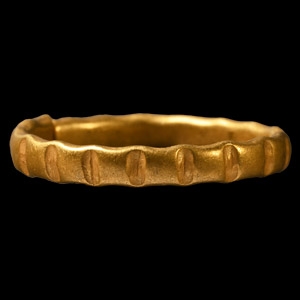
Roman Gold Barred Ring
1st-2nd century A.D.Sold for (Inc. bp): £572
Penannular hoop with segmented design, butted ends. 2.12 grams, 17.45 mm overall, 14.80 mm internal diameter (approximate size British G, USA 3 1/4, Europe 4.92, Japan 4)
Ex property of a late Japanese collector, 1970-2000s. -
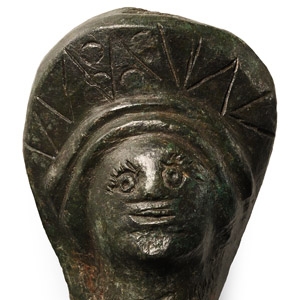
Roman Bronze Figural Attachment
3rd-4th century A.D.Sold for (Inc. bp): £33
Piriform mount with stylised facial features, broad band of hair with incised zigzag and roundels, hollow to the reverse. 71.6 grams, 66 mm
Ex German art market, 2000s. Acquired from an EU collector living in London. From the collection of Surrey, UK, gentleman.
