
Loading, please wait...
LOT 0740
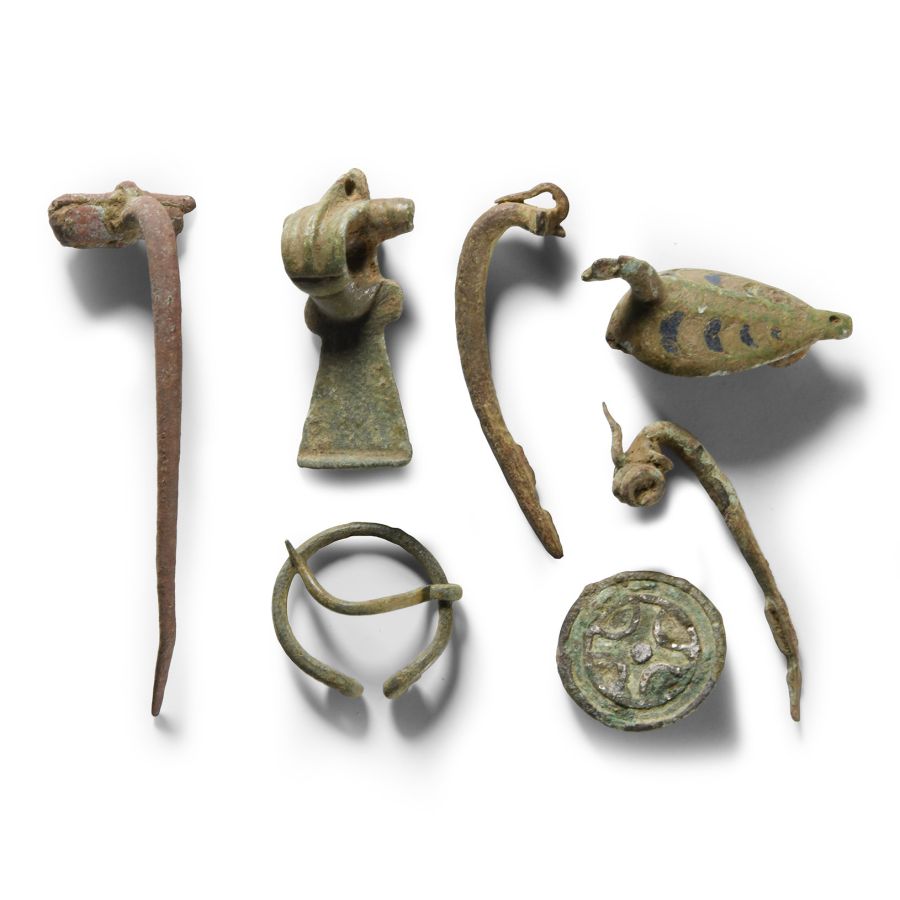
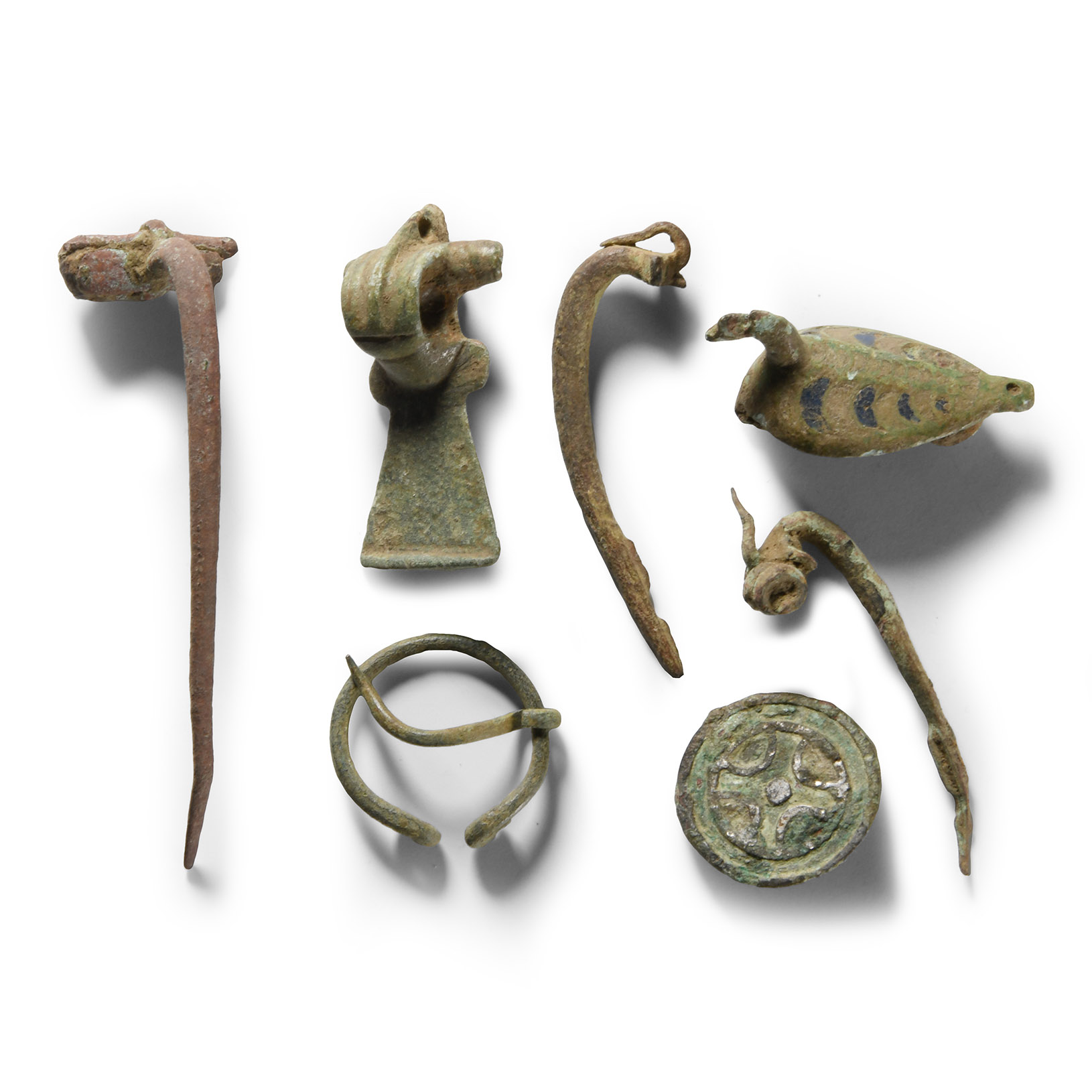
Romano-British 'Gloucestershire' Mixed Brooch Collection
CIRCA 1ST-3RD CENTURY A.D.
7/8 - 2 7/8 in. (52 grams total, 23-74 mm).
Including bow-and-fantail, enamelled bird plate brooch and other types. [7, No Reserve]
ProvenanceFound Gloucestershire, UK.
CONDITIONTimeLine Auctions follows a vetting process to ensure the authenticity and legality of all items, reinforcing our commitment to integrity and responsible trading. Each antiquity, antique, and coin lot undergoes thorough examination by a vetting committee of at least ten external specialists, professional trade association members, scientists, and archaeologists: Our Vetting Process
AUCTIONS:
TimeLine is a leading auction house specialising in antiquities, ancient art, collectables, natural history, coins, medals, and books. Our auctions offer museums, collectors, historians, and enthusiasts the opportunity to acquire unique and historically significant pieces.
LOT 0740
Romano-British 'Gloucestershire' Mixed Brooch Collection
Sold for (Inc. bp): £104
-
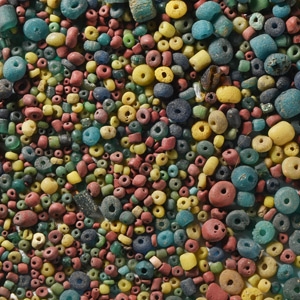
Roman and Other Mixed Glass Bead Group
1st-4th century A.D. and laterSold for (Inc. bp): £91
Including spherical, annular and other types including some 'trade wind beads'. 140 grams total, 1-9 mm
From the private collection of the late Mrs Belinda Ellison, a long time member of the Egyptian Exploration Society, c.1940-2020. -
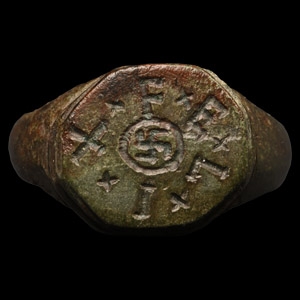
Roman Bronze Ring with FELIX and Gammadion
4th-5th century A.D.Sold for (Inc. bp): £260
Tiered disc bezel with central gammadion within a ring, surrounded by '+F+E+L+I+X' legend (in Latin, 'happy' or 'fortunate'). 8.11 grams, 24.40 mm overall, 18.18 mm internal diameter (approximate size British P 1/2, USA 7 3/4, Europe 16.86, Japan 16)
Ex German art market, 2000s. Acquired from an EU collector living in London. From the collection of Surrey, UK, gentleman.
The ring was probably a gift to wish happiness and good luck, the inscription being a short form of 'utere felix'. -
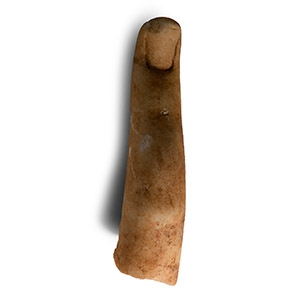
Life-Size Roman Marble Finger
1st-4th century A.D.Sold for (Inc. bp): £286
Modelled in the round with spur to the reverse of the first joint for attachment. 96 grams, 10 cm
Ex M. Cummings collection, Lincolnshire, UK, 1990s.
