
Loading, please wait...
LOT 0196
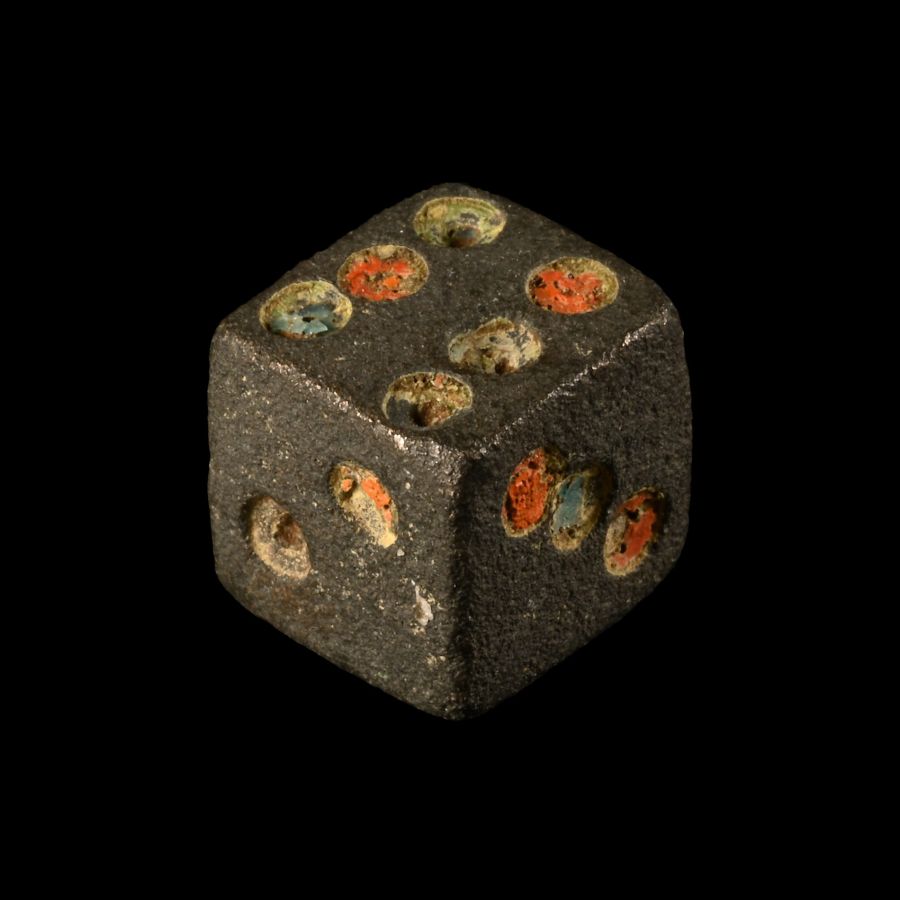
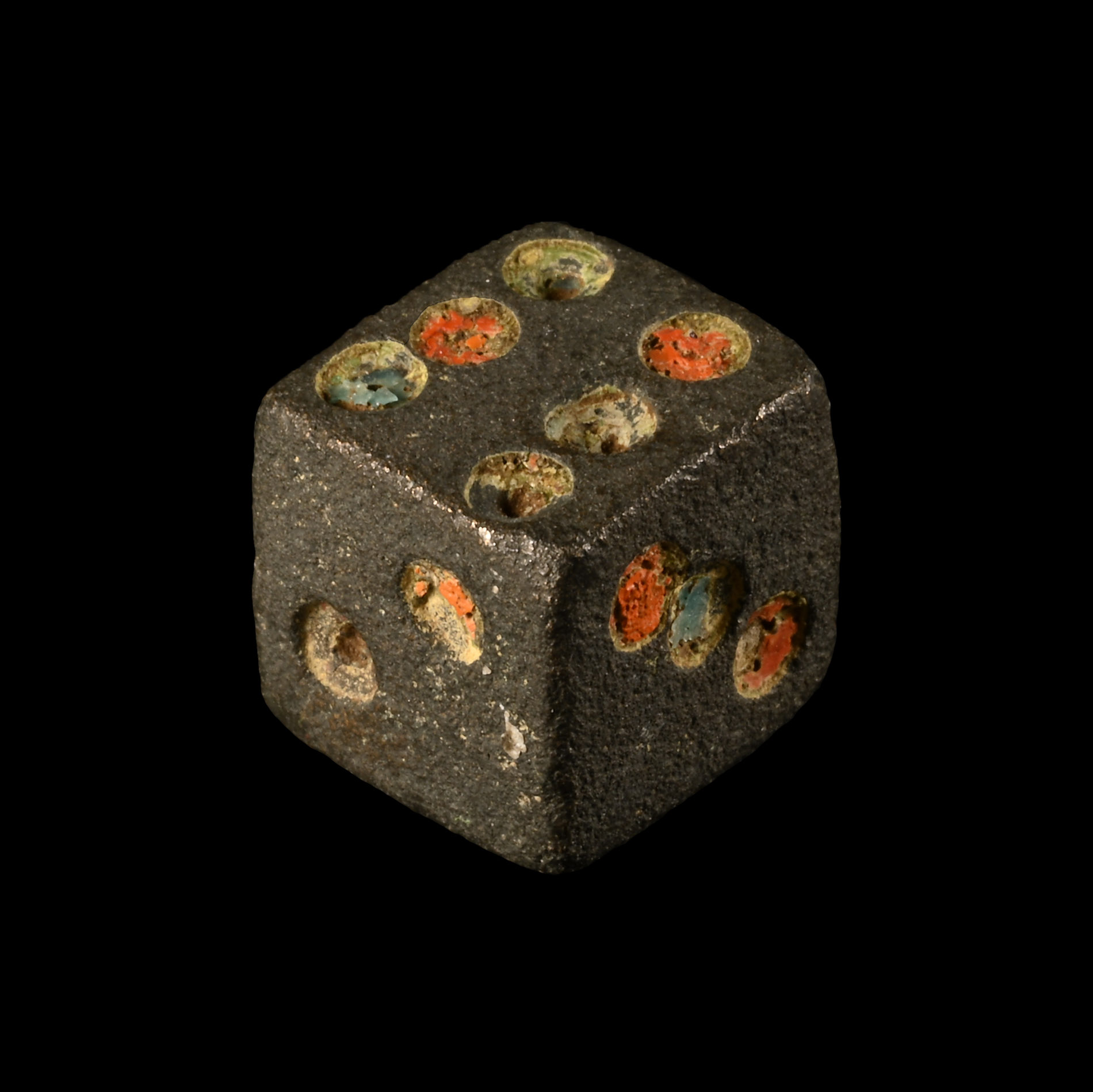
Romano-British Enamelled 'Gloucester' Bronze Gaming Dice
CIRCA 2ND CENTURY A.D.
4 in. (9 grams, 10.7 mm).
Cuboid with enamel-filled spots disposed 1:6, 2:5, 3:4. [No Reserve]
ProvenanceFound at Gloucester, UK.
Ex N. Du Quesne Bird collection.
From the important private collection of dice and gaming pieces of Colin Narbeth, London, UK, collection no.23.
Accompanied by a Colin Narbeth catalogue identification card.
TimeLine Auctions follows a vetting process to ensure the authenticity and legality of all items, reinforcing our commitment to integrity and responsible trading. Each antiquity, antique, and coin lot undergoes thorough examination by a vetting committee of at least ten external specialists, professional trade association members, scientists, and archaeologists: Our Vetting Process
AUCTIONS:
TimeLine is a leading auction house specialising in antiquities, ancient art, collectables, natural history, coins, medals, and books. Our auctions offer museums, collectors, historians, and enthusiasts the opportunity to acquire unique and historically significant pieces.
LOT 0196
Romano-British Enamelled 'Gloucester' Bronze Gaming Dice
Sold for (Inc. bp): £598
-
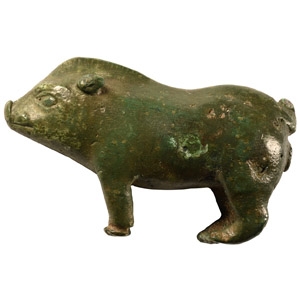
Roman Bronze Boar Statuette
1st-2nd century A.D.Sold for (Inc. bp): £312
Modelled in the round figure of a barrow (young boar) with serrated line of bristles along the dorsal ridge. 18.5 grams, 51 mm
From a collection acquired on the UK art market from various auction houses and collections mostly before 2000. From an important Cambridgeshire estate; thence by descent. -
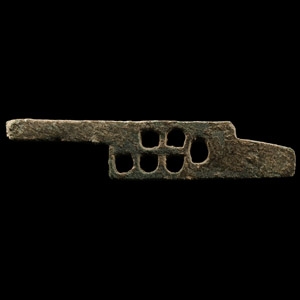
Roman Bronze Padlock Mechanism Plate
1st-2nd century A.D.Sold for (Inc. bp): £65
Locking plate with six circular and D-shaped piercings to accept the bits of a key. 14.4 grams, 67 mm
Acquired on the London art market in the late 1980s-1990s. From the family collection of an East London, UK, gentleman. -
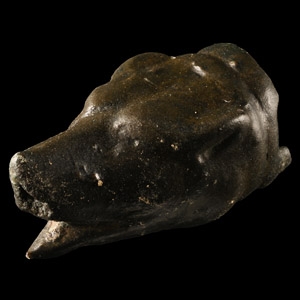
Roman Bronze Bear-Head Dagger Pommel
1st-2nd century A.D.Sold for (Inc. bp): £59
Hollow-formed with acute lower jaw, triangular muzzle, gusset and rounded rim to the socket-mouth. 29.5 grams, 44 mm
Property of a Gloucestershire, UK, collector. Property of an East Sussex, UK, gentleman.
