
Loading, please wait...
LOT 0906
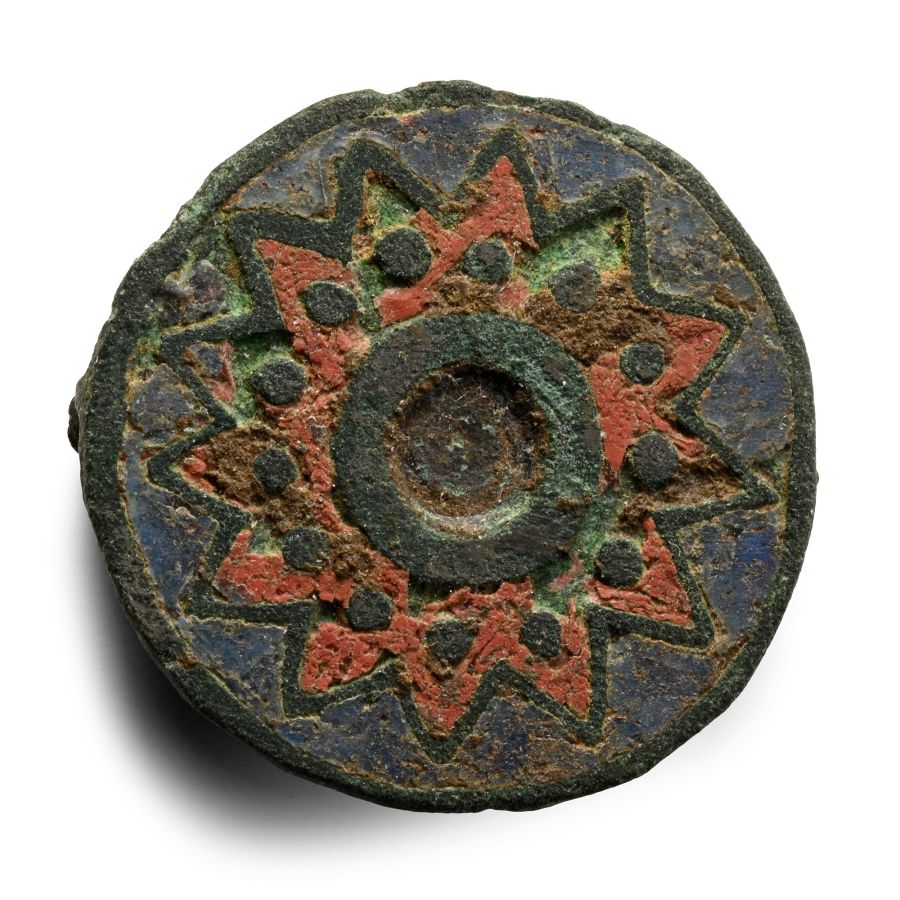
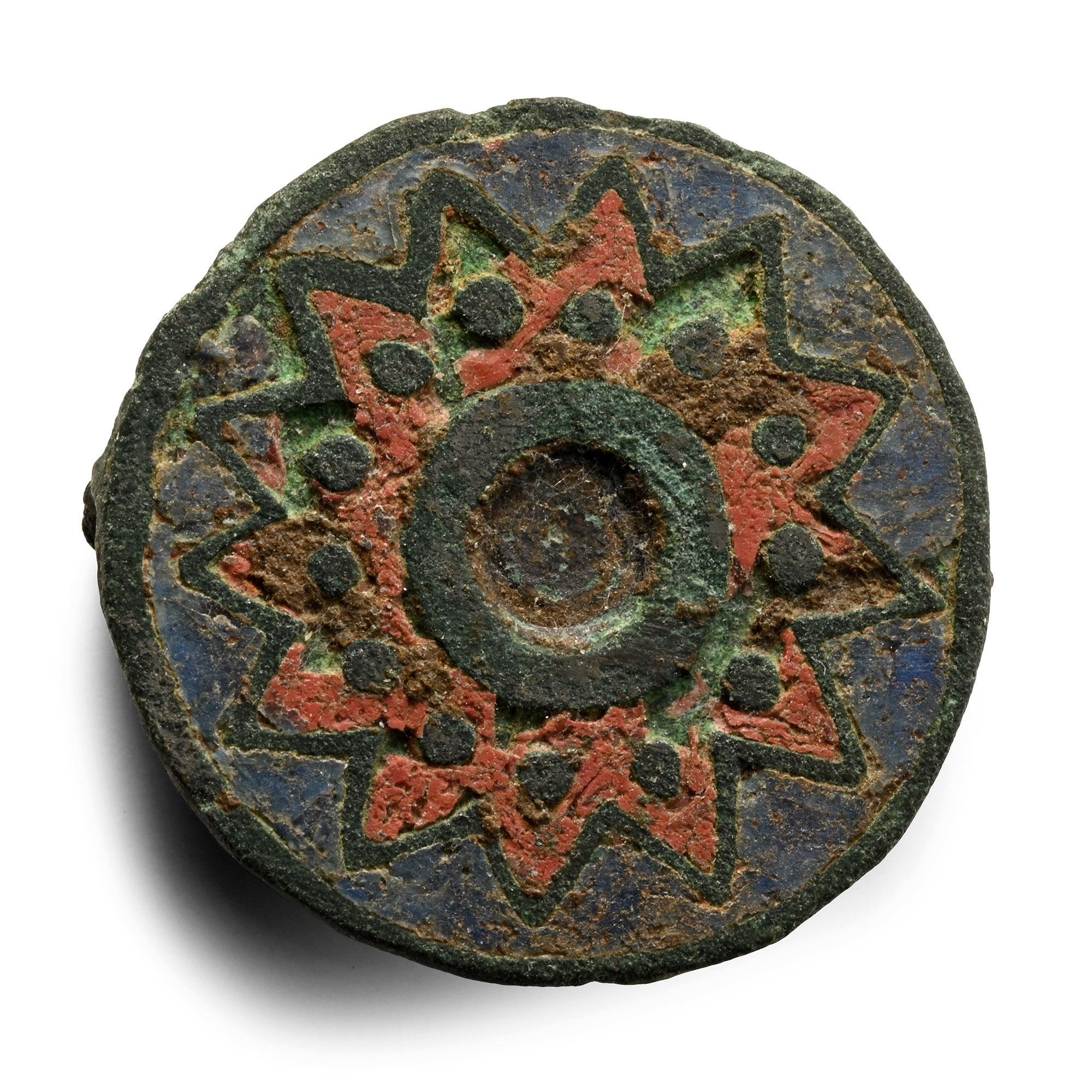
Romano-British Enamelled Bronze 'Sunburst' Plate Brooch
2ND CENTURY A.D.
1 in. (3.68 grams, 23 mm).
Discoid with a thirteen-pointed red star with thirteen pellets within, blue enamelled background; pin-lugs and catchplate on the reverse. [No Reserve]
ProvenanceFound Norfolk, UK.
From a Kent collection formed in the 1990s.
See Hattatt, vol. 1, p. 138, no. 119, for identical but different coloured enamels (found near Ipswich).
CONDITIONTimeLine Auctions follows a vetting process to ensure the authenticity and legality of all items, reinforcing our commitment to integrity and responsible trading. Each antiquity, antique, and coin lot undergoes thorough examination by a vetting committee of at least ten external specialists, professional trade association members, scientists, and archaeologists: Our Vetting Process
AUCTIONS:
TimeLine is a leading auction house specialising in antiquities, ancient art, collectables, natural history, coins, medals, and books. Our auctions offer museums, collectors, historians, and enthusiasts the opportunity to acquire unique and historically significant pieces.
LOT 0906
Romano-British Enamelled Bronze 'Sunburst' Plate Brooch
Sold for (Inc. bp): £195
-
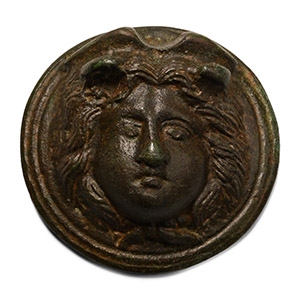
Roman Bronze Phalera
2nd-4th century A.D.Sold for (Inc. bp): £416
Discoid in plan with raised lip to the rim, central gorgoneion motif in high relief. 203 grams, 73 mm
From a private Tyneside collection, formed since the early 2000s. -
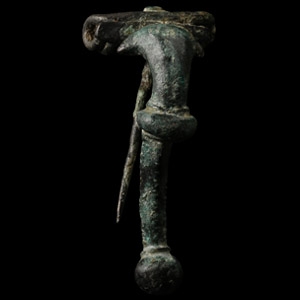
Roman Bronze Bow Brooch
2nd century A.D.Estimate: £100 - 140 (+bp*)
Opening Bid: £40
With chord and pin (now detached) at the head, D-section bow with lateral spurs, collar and swept foot with notched detailing, bulb finial, catch to the reverse. 26.6 grams, 54 mm
Ex important German collection, 1990s. This lot is accompanied by an illustrated lot declaration signed by the Head of the Antiquities Department, Dr Raffaele D’Amato.
This type of fibula, common in Pannonia, was typically worn in men's clothing. It closed the paenula on the chest, arranged horizontally. Naturally, it could also be worn with military attire. -
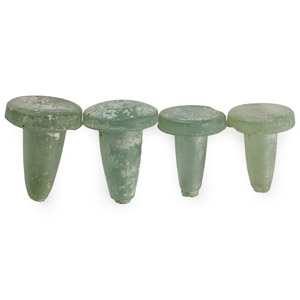
Roman Glass Bottle Stopper Collection
2nd-3rd century A.D.Sold for (Inc. bp): £98
Each an aqua glass disc with shallow depression, integral tapering shank. 68 grams total, 32.5-39 mm
with Archaeologia, Switzerland, before 1983. Ex private North American collection. London private collection, 2016.
