
Loading, please wait...
LOT 0829
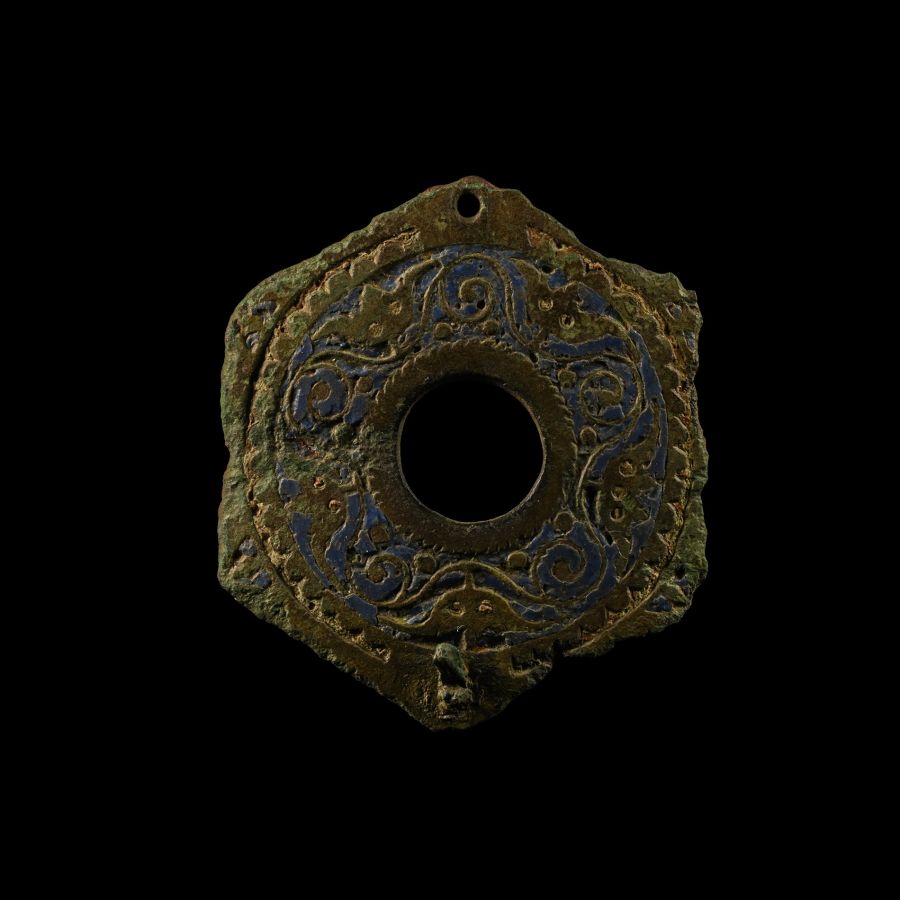
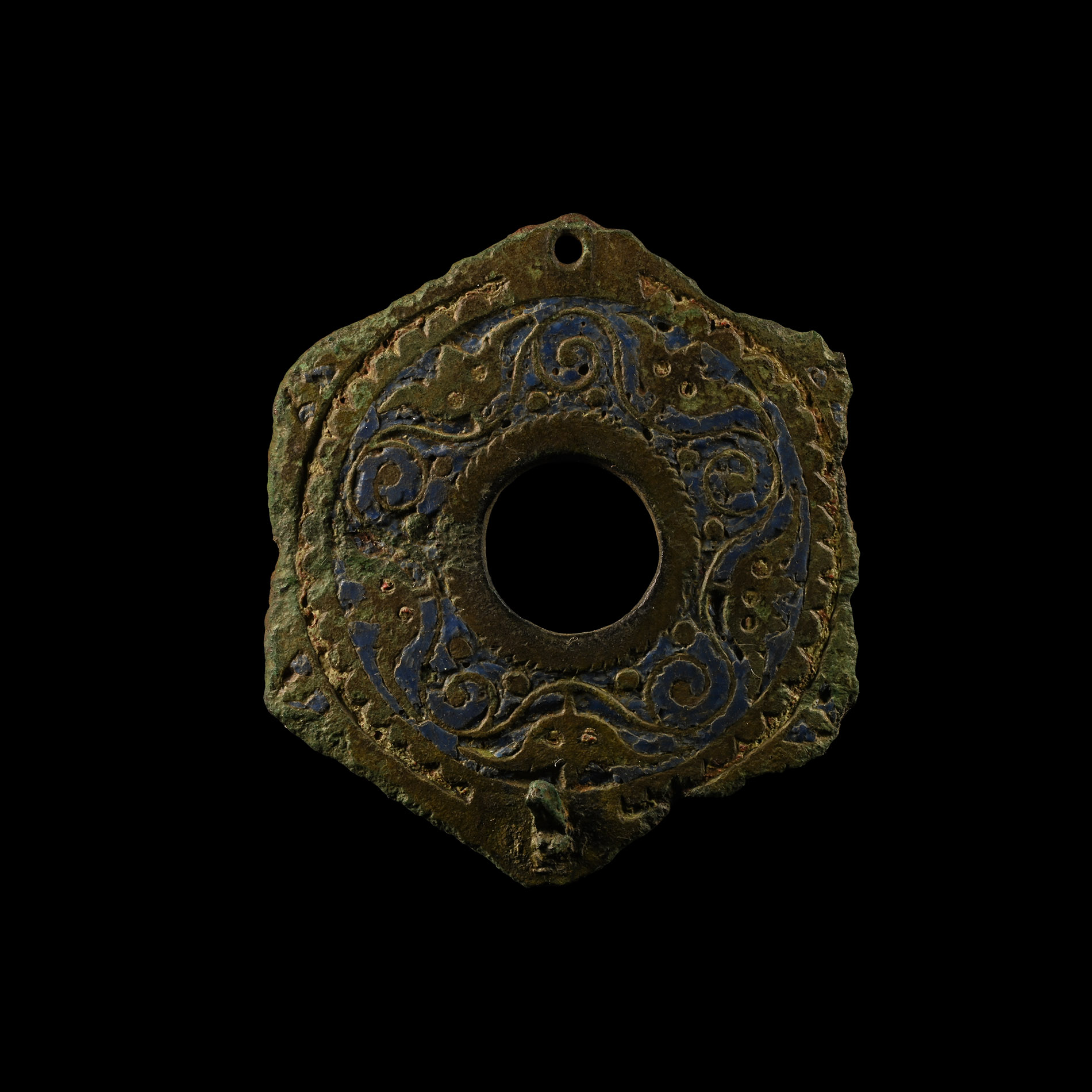
Romano-British Enamelled Bronze Lid of a Pyxis
2ND-3RD CENTURY A.D.
2 1/2 in. (43.9 grams, 64 mm).
Hexagonal in plan with fastening holes, a band of cobalt blue enamelled spirals around the central aperture, interspersed with floral motifs, all enclosed within a scalloped border. [No Reserve]
ProvenanceAcquired 1980s-1990s.
Private collection of H. N., Milton Keynes, Berkshire, UK.
Cf. Henderson, J., 'Technological characteristics of Roman enamels' in Jewellery Study, 5, 1991, pp.64-76, fig.6, for similar decoration.
FootnotesScholars have been able to establish the extent to which the manufacture of glass for enamel production was standardised through the Roman Empire during the 1st to 4th centuries. Enamels were probably fused from primary raw materials in specific production centres, one of which has been located in the Gallo-Roman villa of Anthee, France. The decoration with its undulating tendril and pellets in contrasting enamel is influenced by La Tène design of the 1st century B.C.-1st century A.D.
CONDITIONTimeLine Auctions follows a vetting process to ensure the authenticity and legality of all items, reinforcing our commitment to integrity and responsible trading. Each antiquity, antique, and coin lot undergoes thorough examination by a vetting committee of at least ten external specialists, professional trade association members, scientists, and archaeologists: Our Vetting Process
AUCTIONS:
TimeLine is a leading auction house specialising in antiquities, ancient art, collectables, natural history, coins, medals, and books. Our auctions offer museums, collectors, historians, and enthusiasts the opportunity to acquire unique and historically significant pieces.
-
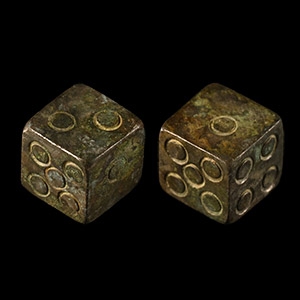
Roman Silver Gaming Dice Pair
1st-4th century A.D.Sold for (Inc. bp): £624
Each cuboid with ring-and-dor markings disposed: 1:6, 2:4, 3:5. 11 grams total, 8.55 mm
Ex German art market, 2000s. Acquired from an EU collector living in London. From the collection of Surrey, UK, gentleman. -
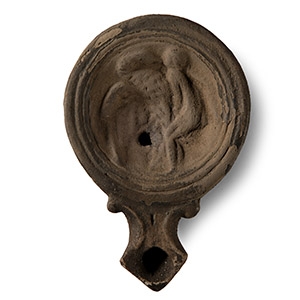
Roman Erotic Leda and the Swan Terracotta Oil Lamp
Circa 1st-2nd century A.D.Sold for (Inc. bp): £572
With a long canal nozzle with volutes, discus with one filling hole and three concentric lines enclosing a central scene of Leda and the swan, softly rendered anatomical details and carefully modelled plumage; two old stickers to base. 74 grams, 11.7 cm
From the collection of Arno Jumpertz, Leverkusen, Germany, 1924-1984; much of the collection was exhibited at the Neus Museum, 1985. Accompanied by a previous catalogue information slip.
The lamp's style refers to the Loeschcke type I, a style popular during the Augustan and Imperial times. -
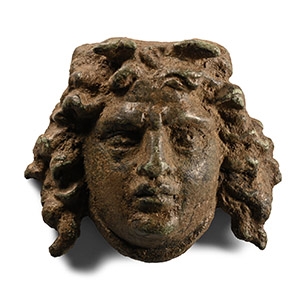
Roman Mask of Medusa
3rd century A.D.Estimate: £1,000 - 1,400 (‡+bp*)
Opening Bid: £500
Modelled in the half-round, facing mask with lateral hanks of curly hair, two small wings above the brow, farme beneath the chin; slot to the reverse for attachment. 179 grams, 59 mm
Acquired on the German art market, 2002. European private collection.
