
Loading, please wait...
LOT 0596
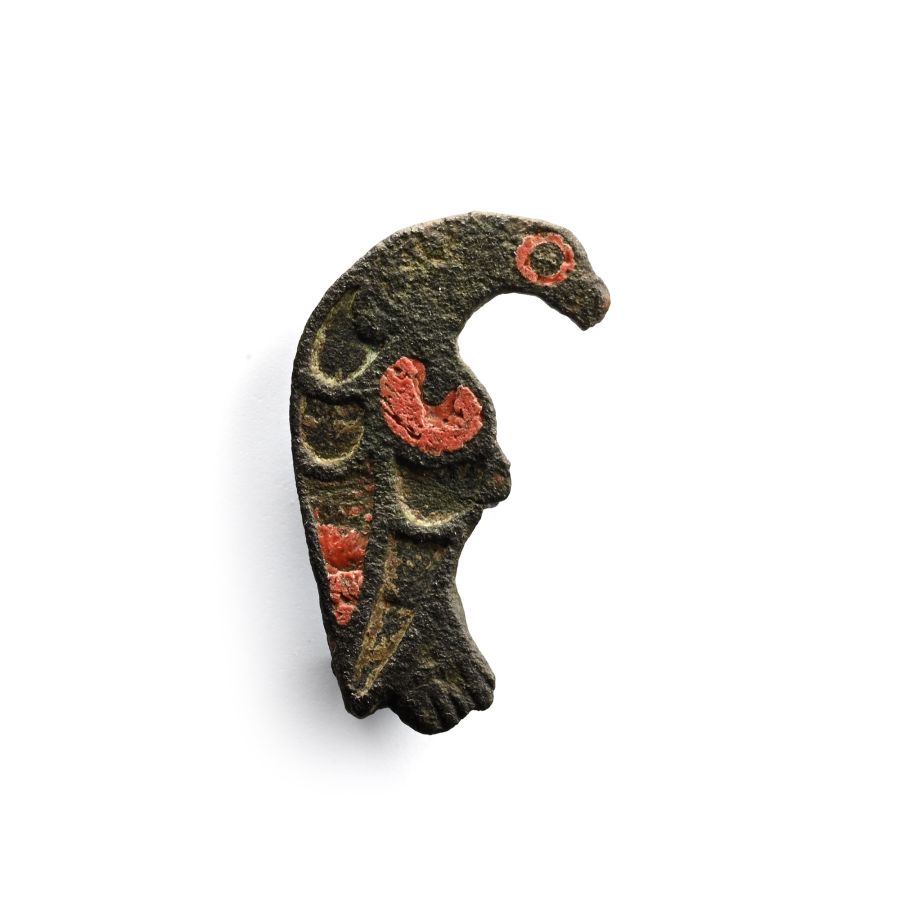
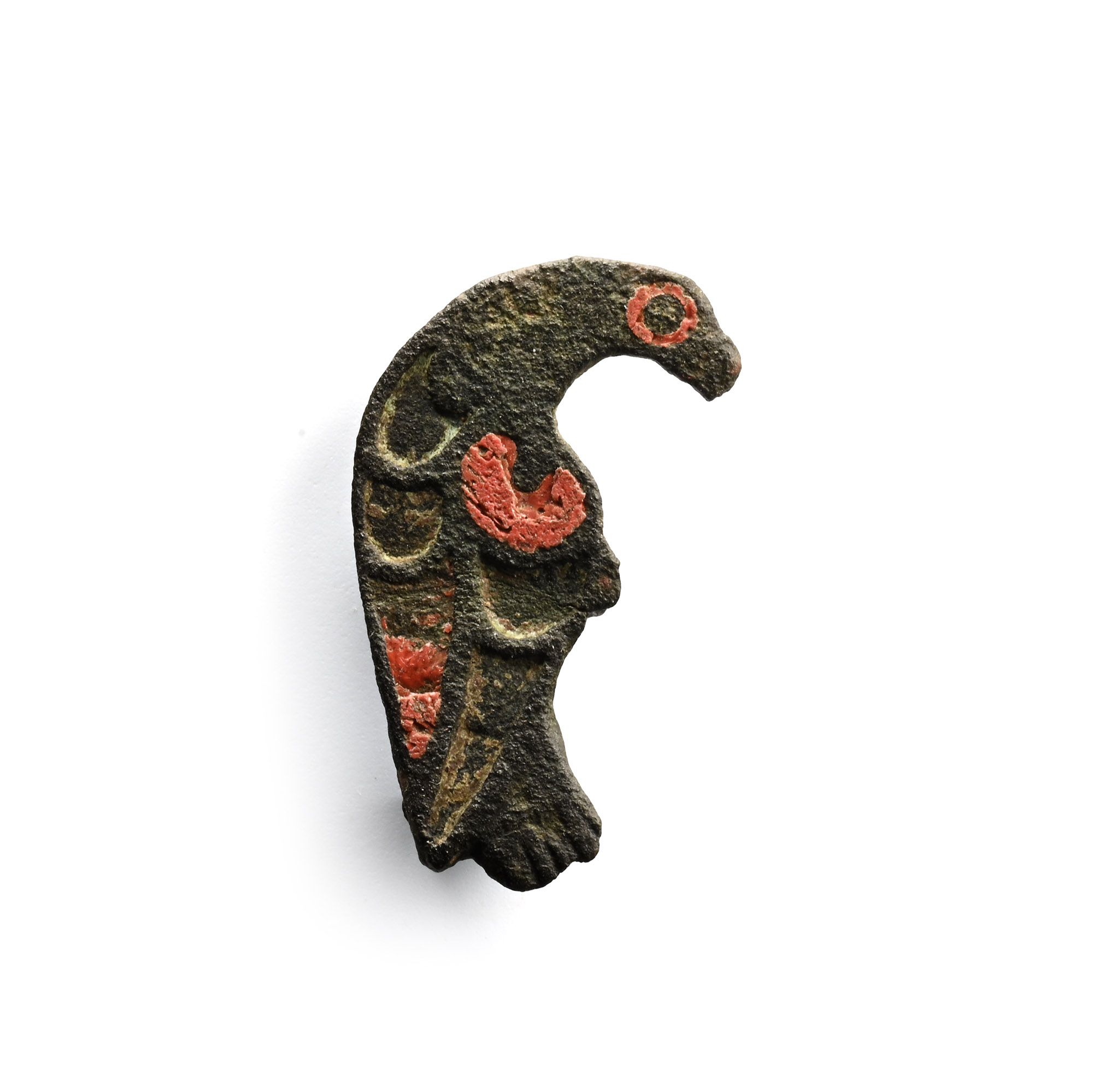
Romano-British Enamelled Bronze Eagle Brooch
CIRCA 2ND CENTURY A.D.
1 1/8 in. (2.6 grams, 29.3 mm).
Plate brooch formed as a raptor with champlevé red and green enamelled cells to the body, eye and wing; to the reverse, the pin-lugs, bar and catchplate. [No Reserve]
ProvenanceFound near Droxford, Hampshire, UK.
From an old Hampshire collection.
Recorded with Winchester Museum.
Private collection, London.
This lot is accompanied by an illustrated lot declaration signed by the Head of the Antiquities Department, Dr Raffaele D'Amato.
Cf. Mackreth, D.F., Brooches in Late Iron Age and Roman Britain, Oxford, 2011, vol.2, items 8043, 12694 (plate 126).
CONDITIONTimeLine Auctions follows a vetting process to ensure the authenticity and legality of all items, reinforcing our commitment to integrity and responsible trading. Each antiquity, antique, and coin lot undergoes thorough examination by a vetting committee of at least ten external specialists, professional trade association members, scientists, and archaeologists: Our Vetting Process
AUCTIONS:
TimeLine is a leading auction house specialising in antiquities, ancient art, collectables, natural history, coins, medals, and books. Our auctions offer museums, collectors, historians, and enthusiasts the opportunity to acquire unique and historically significant pieces.
-
.jpg)
Roman Bronze Furniture Applique
1st-2nd century A.D.Estimate: £120 - 170 (+bp*)
Opening Bid: £60
Discoid in plan with low-relief facing bust. 4.75 grams, 16 mm
Acquired 1980-2015. Ex Abelita family collection. This lot is accompanied by an illustrated lot declaration signed by the Head of the Antiquities Department, Dr Raffaele D'Amato. -
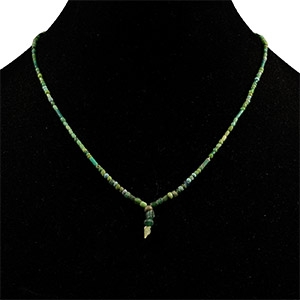
Roman Green Glass Bead Necklace String
1st-4th century A.D. and laterSold for (Inc. bp): £72
Restrung group of annular, cylindrical, biconical and other beads. 5.18 grams, 41.5 cm
Ex London, UK, collection, 1990s. This lot is accompanied by an illustrated lot declaration signed by the Head of the Antiquities Department, Dr Raffaele D'Amato. -
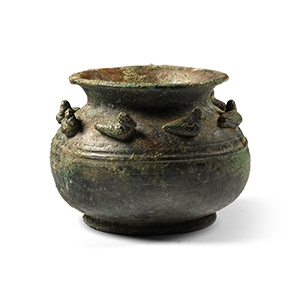
Romano-Celtic Bronze Vessel with Ducks
1st-2nd century A.D.Sold for (Inc. bp): £351
Bulbous vessel with applied foot formed of concentric circles, raised circumferential band on the shoulder with a frieze of applied swimming ducks above. 216 grams, 64 mm
Ex German art market, 2000s. Acquired from an EU collector living in London. From the collection of a Surrey, UK, gentleman. This lot is accompanied by an illustrated lot declaration signed by the Head of the Antiquities Department, Dr Raffaele D'Amato.
