
Loading, please wait...
LOT 0891
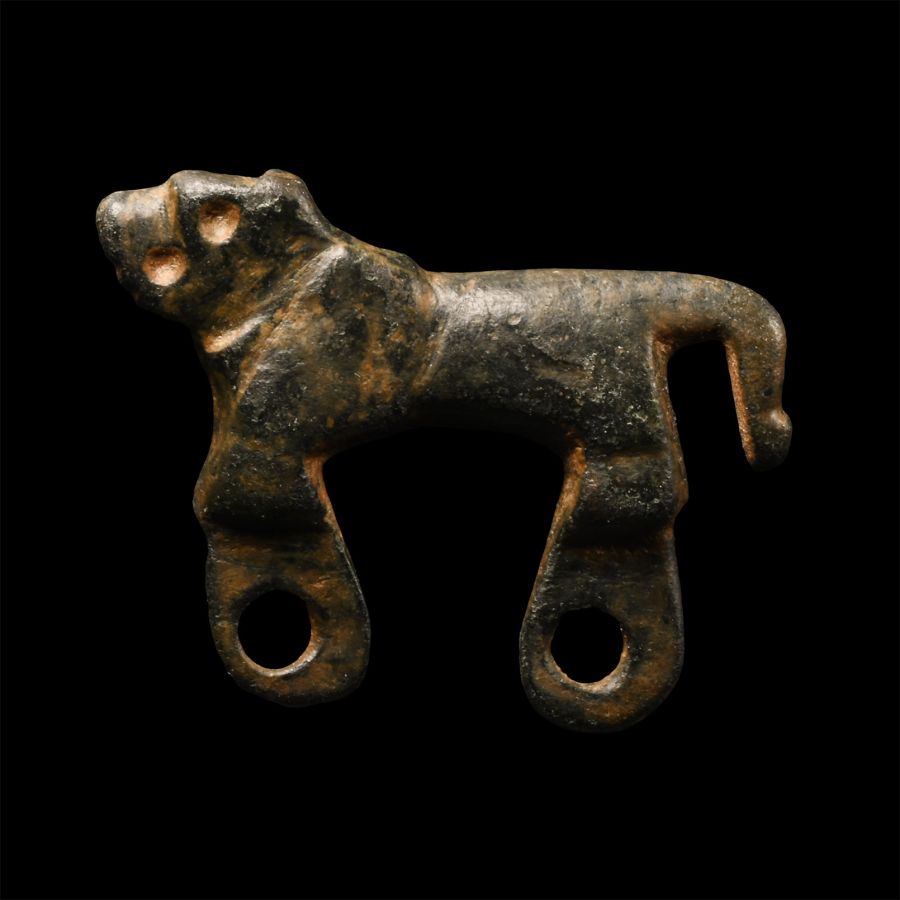
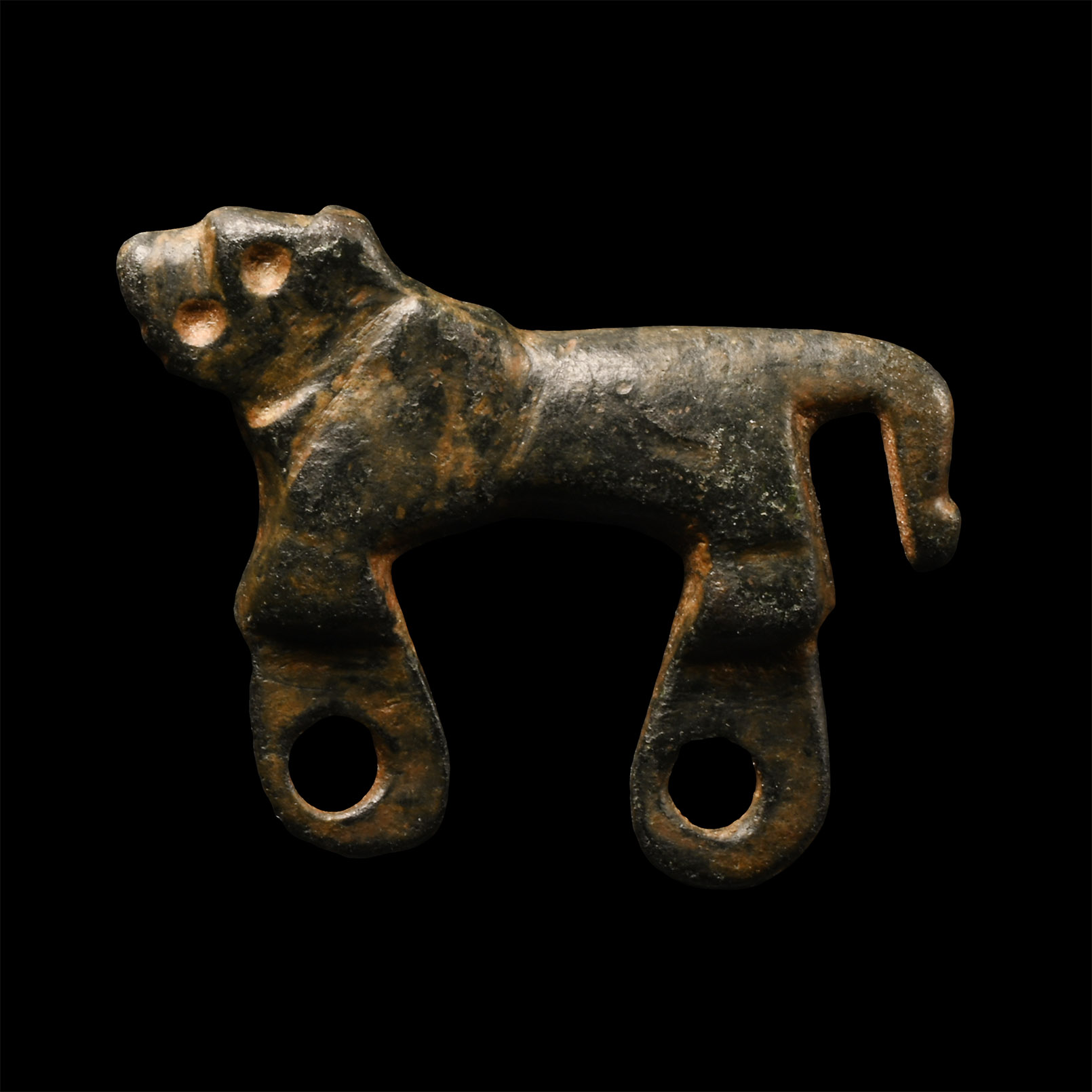
Romano-British 'Corbridge' Bronze Lion Mount
CIRCA 3RD CENTURY A.D.
1 3/8 in. (14.9 grams, 36 mm).
With pierced lobe below the legs, arched body forming the bow. [No Reserve]
ProvenanceFound near Corbridge, Northumberland, UK.
Property of a Gloucestershire, UK, collector.
Property of an East Sussex, UK, gentleman.
Cf. Hattatt, R., Ancient Brooches and Other Artefacts, Oxford, 1989, item 1465, for type.
CONDITIONTimeLine Auctions follows a vetting process to ensure the authenticity and legality of all items, reinforcing our commitment to integrity and responsible trading. Each antiquity, antique, and coin lot undergoes thorough examination by a vetting committee of at least ten external specialists, professional trade association members, scientists, and archaeologists: Our Vetting Process
AUCTIONS:
TimeLine is a leading auction house specialising in antiquities, ancient art, collectables, natural history, coins, medals, and books. Our auctions offer museums, collectors, historians, and enthusiasts the opportunity to acquire unique and historically significant pieces.
-
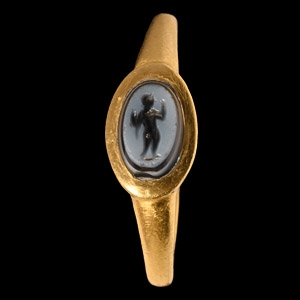
Roman Gold Ring with Apollo Gemstone
2nd-3rd century A.D.Estimate: £2,000 - 3,000 (+bp*)
Opening Bid: £1,100
With a solid ellipsoid hoop expanding at the shoulders from the mid 3rd century, with oval bezel set with a blue nicolo gemstone engraved with the figure of standing crowned god Apollo, depicted nude and holding a staff (or lyre?) in his raised right hand, gazing towards his raised left hand. 4.49 grams, 26.13 mm overall, 21.70 mm internal diameter (approximate size British L 1/2, USA 6, Europe 11.87, Japan 11)
From the private collection of the late A.B., London, UK; acquired before 1989. Accompanied by an academic report by Dr Raffaele D’Amato. This lot has been checked against the Interpol Database of stolen works of art and is accompanied by a search certificate number no.12005-213036.
The god’s body is depicted in three-quarter view, whereas the head is in full profile. The casual posture of the figure on the gemstone is taken from the common iconography of the god. Apollo is frequently portrayed in this fashion, although often leaning against a small column. -
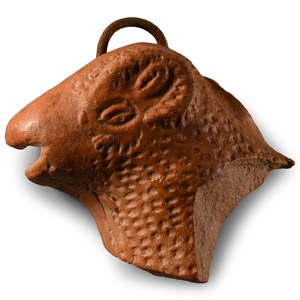
Roman Redware Ram Pottery Sherd
Circa 4th-5th century A.D.Sold for (Inc. bp): £39
Fragment of a terracotta votive statuette representing a ram, detail to the horns, ears and fleece; set with a suspension ring on the reverse. 50 grams, 77 mm wide
Acquired 1960s-1990s. From the late Alison Barker collection, a retired London barrister.
Many figurines of this type have been found in the Hellenised Roman provinces of the east and one identical in the Athenian Agora. They are all rendered with incisions that are characteristic of the technique of the late fourth century. Many similar examples were found in the Kerameikos and some are in the National Museum of Archaeology, Athens. A similar technique is observable in the plastic handles representing animal heads which occur on red pottery ornamented with white paint. -
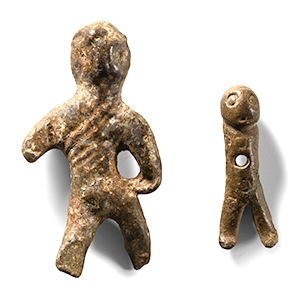
Roman Bronze Statuette Group
2nd century B.C-1st century A.D.Sold for (Inc. bp): £78
Comprising: small figure pierced at the middle wit pellet detailing to face and body, legs spread; figure in active pose with slanting stripes across the body, possibly intended for Hercules; probably votives for deposition at a temple. 42 grams total, 30-47 mm
From a collection acquired on the UK art market from various auction houses and collections mostly before 2000. From an important Cambridgeshire estate; thence by descent.
