
Loading, please wait...
LOT 0625
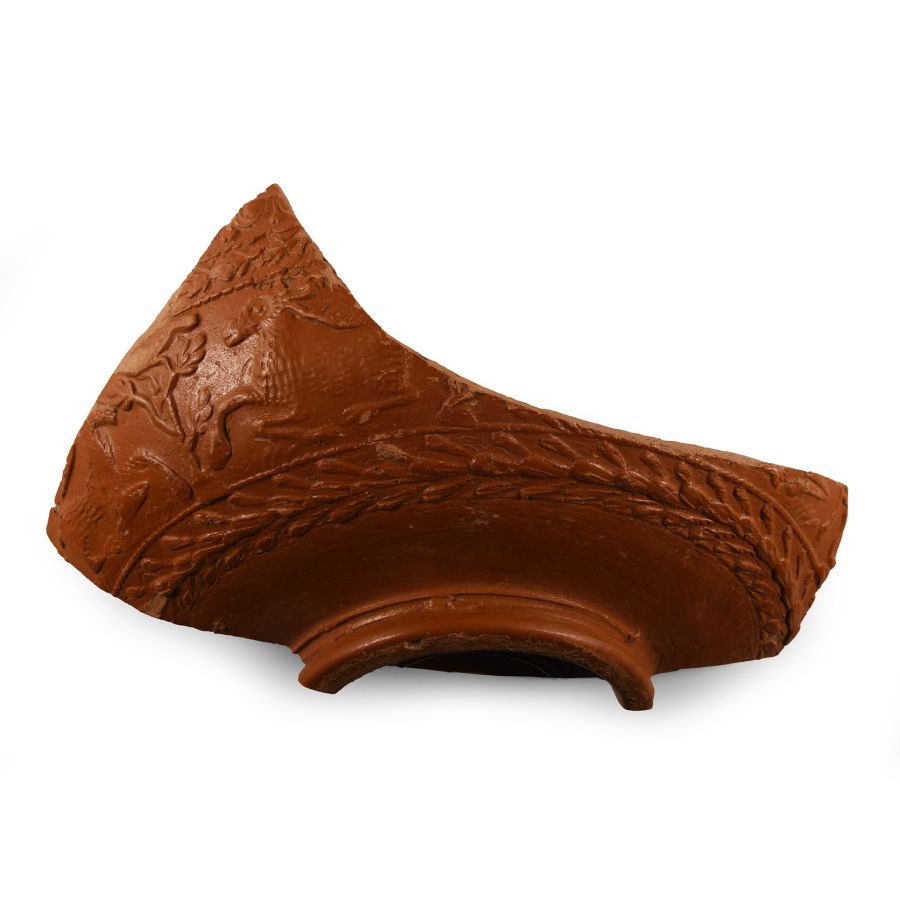
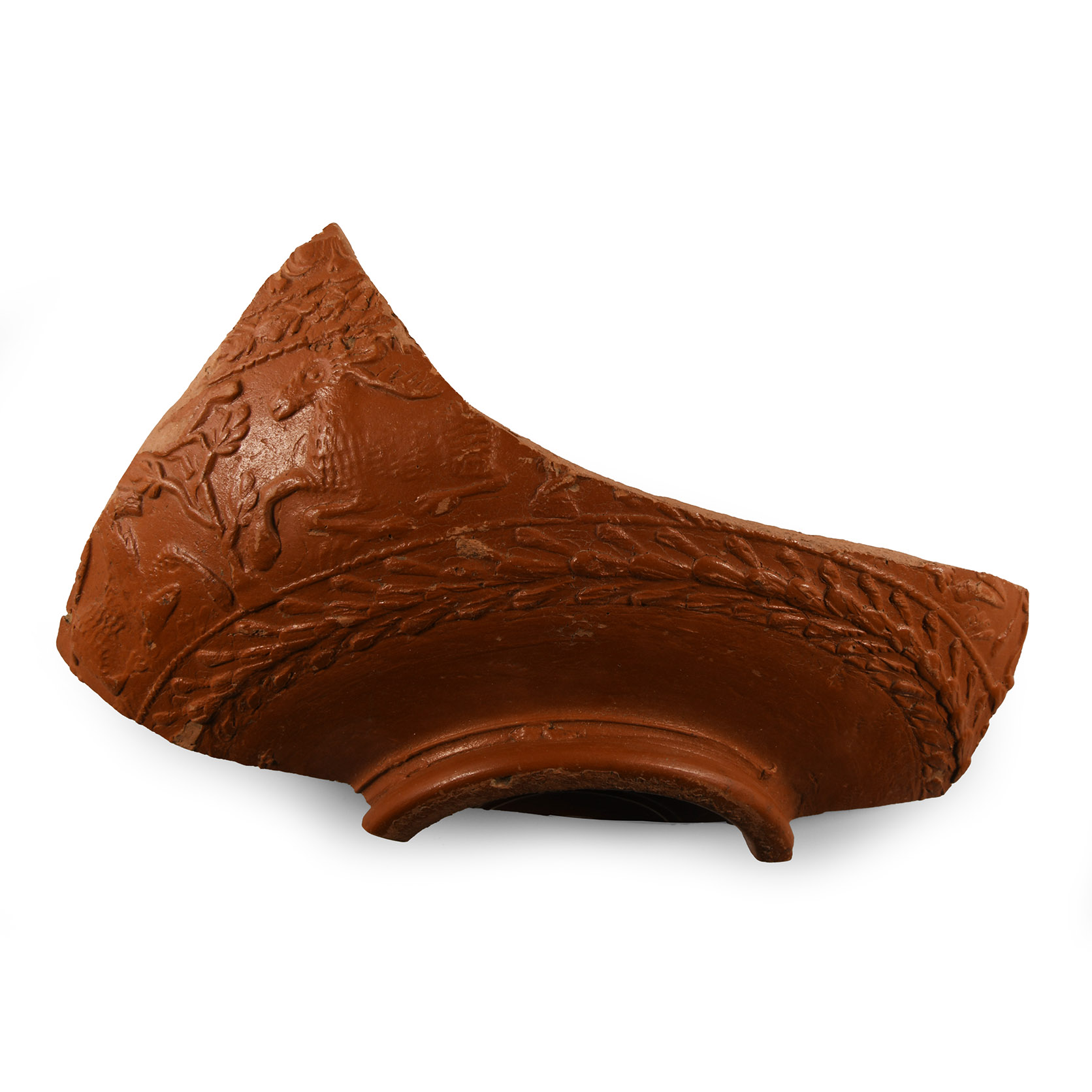
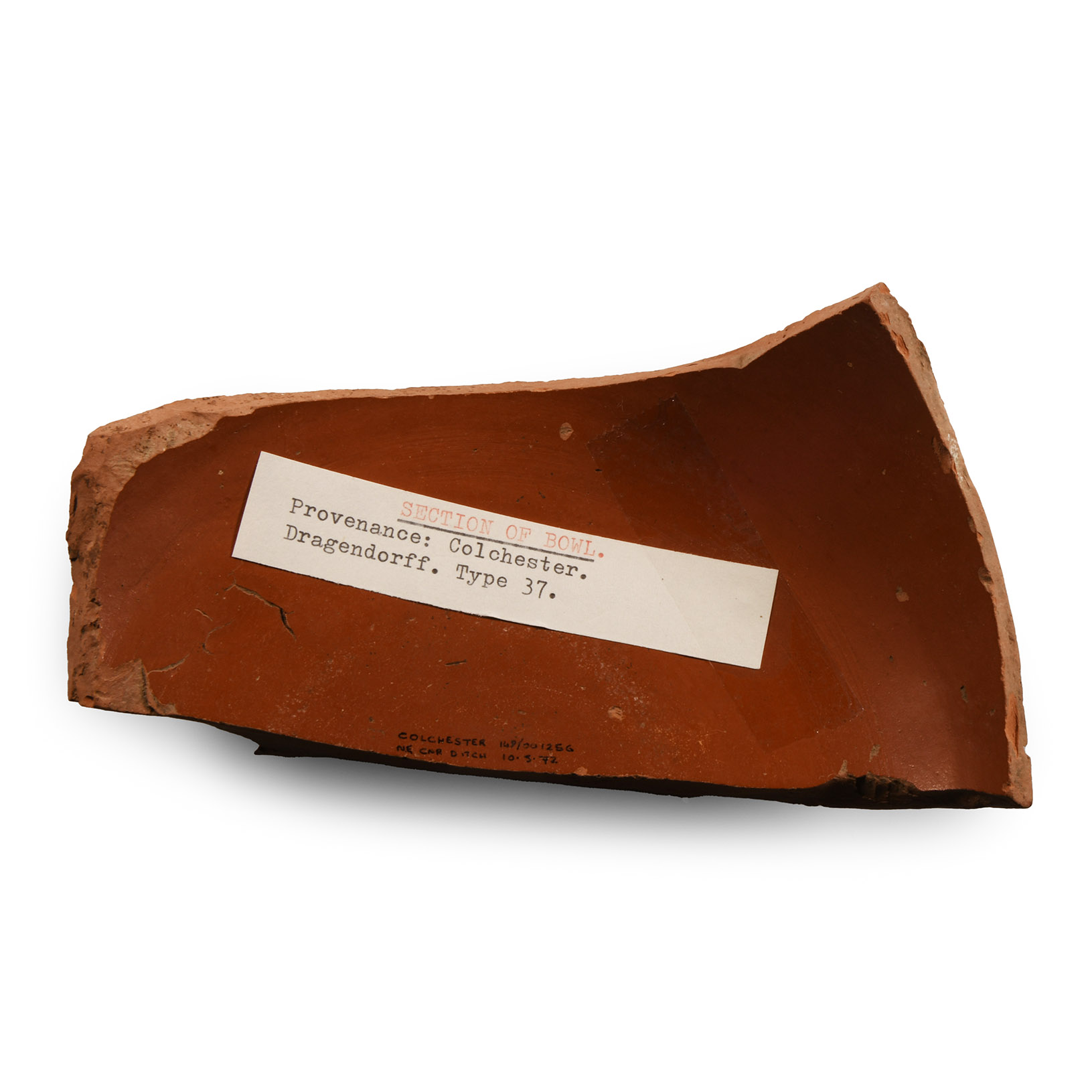
Romano-British 'Colchester' Samian Ware Sherd
1ST CENTURY A.D.
6 1/8 in. (155 grams, 15.7 cm).
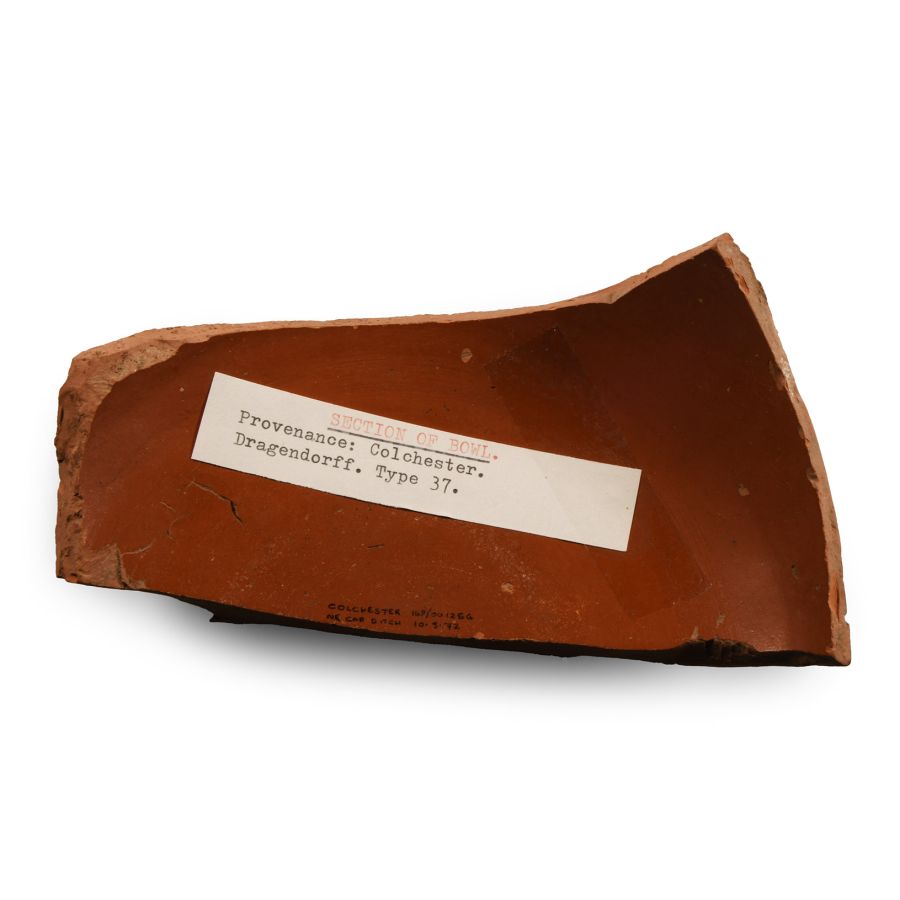
Large fragment with portion of base and low-relief laurel wreath, stags, tree and other ornament; inked inscription 'Colchester 149/001256 / NE Car Ditch 10.5.72' and typed record card 'Section of Bowl. / Provenance: Colchester. / Dragendorff. Type 37.'. [No Reserve]
ProvenanceFound Colchester, Essex, UK, 1972.
From the collection of a late East Anglian teacher and antiquarian who retired to the Isle of Wight in Hampshire, UK.
He amassed a large collection of objects between the 1960s-1980s.
TimeLine Auctions follows a vetting process to ensure the authenticity and legality of all items, reinforcing our commitment to integrity and responsible trading. Each antiquity, antique, and coin lot undergoes thorough examination by a vetting committee of at least ten external specialists, professional trade association members, scientists, and archaeologists: Our Vetting Process
AUCTIONS:
TimeLine is a leading auction house specialising in antiquities, ancient art, collectables, natural history, coins, medals, and books. Our auctions offer museums, collectors, historians, and enthusiasts the opportunity to acquire unique and historically significant pieces.
-
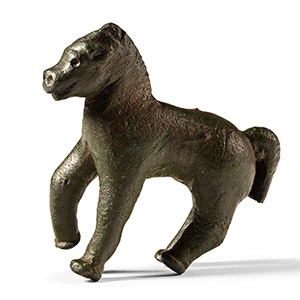
Romano-British Bronze Horse Statuette
Circa 1st century A.D.Sold for (Inc. bp): £351
Modelled in the round and in advancing pose with one foreleg raised, dressed tail. stiff mane, incised facial detailing; ferrous remains to the back where the rider was positioned. 195 grams, 72 mm
Found Peterborough, Cambridgeshire, UK. From an East Anglian private collection. -
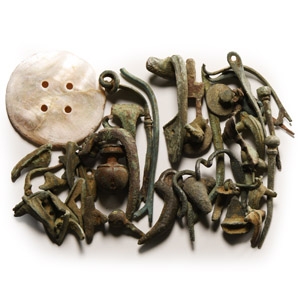
Roman Bronze and Other Artefact Group
1st-4th century A.D.Sold for (Inc. bp): £46
Including Hod Hill brooch, military belt fittings, enamelled stud and other items. 155 grams total, 14-70 mm
Found various sites in Essex, UK. Property of an Essex collector. -
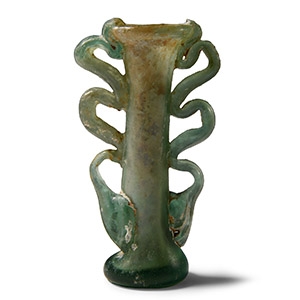
Roman Glass Unguentarium with Waves
1st-3rd century A.D.Estimate: £300 - 400 (+bp*)
Opening Bid: £150
With bulbous flat-bottomed base, tall neck and rolled everted rim applied trail zigzag handles to each side. 62.4 grams, 10.2 cm
Ex property of a late Japanese collector, 1970-2000s.
