
Loading, please wait...
LOT 0624
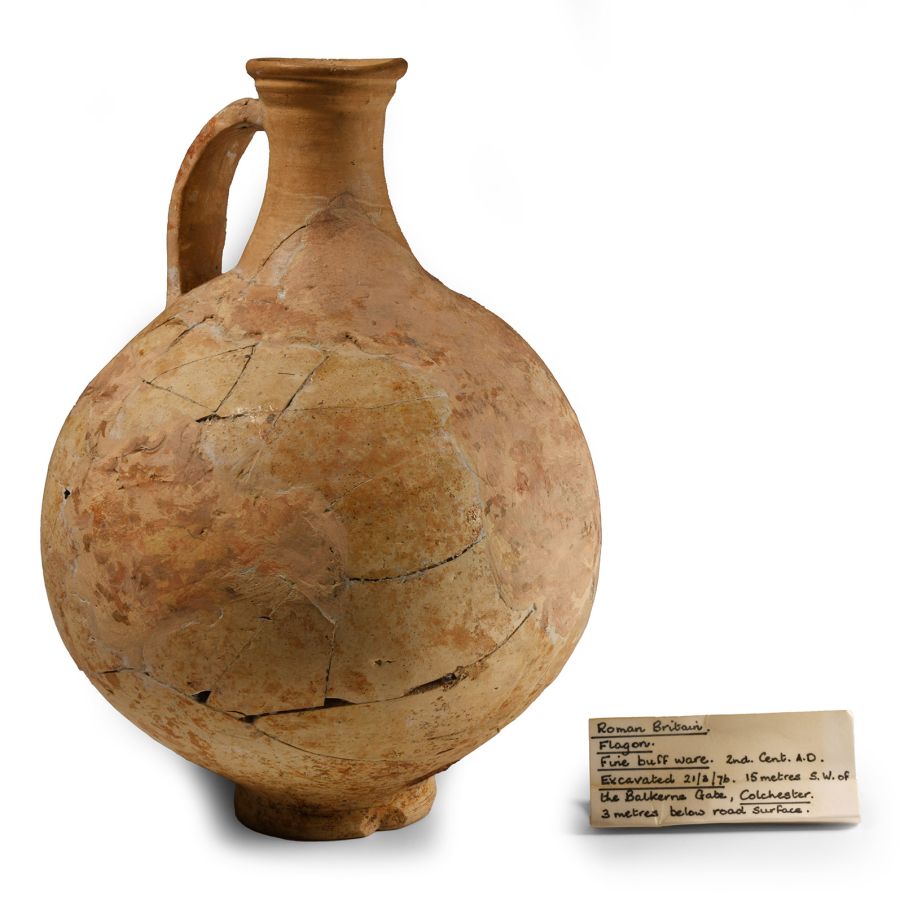
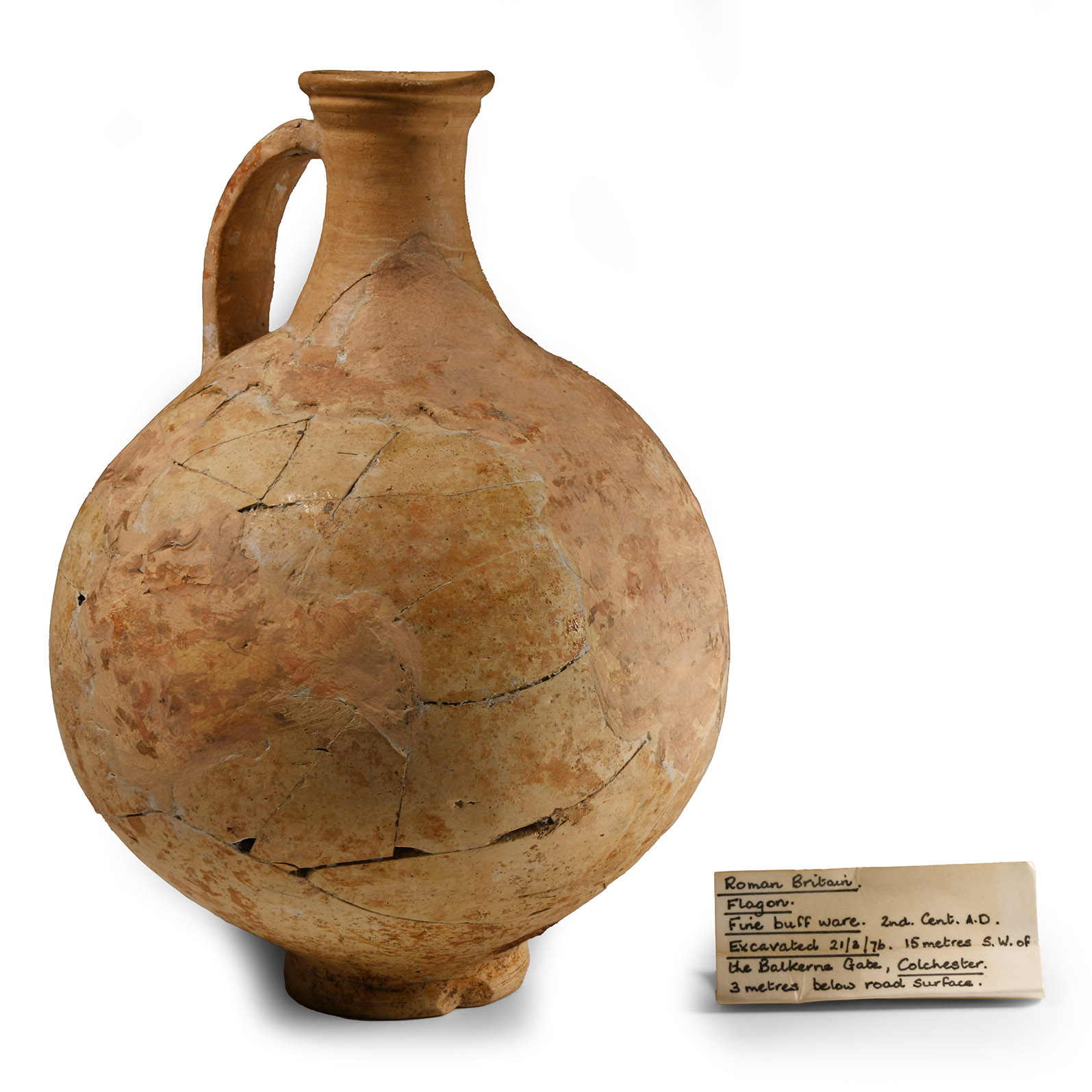
Romano-British 'Colchester' Buff Ware Jug
CIRCA 2ND CENTURY A.D.
8 1/4 in. (640 grams, 22.5 cm).
Globular vessel with gusseted strap handle and trumpet-shaped mouth; accompanied by old collector's display label 'Roman Britain / Flagon / Fine buff ware 2nd. Cent. A.D. / Excavated 21/3/76. 15 metres S.W of / the Balkerne gate, Colchester / 3 metres below road surface'. [No Reserve]
ProvenanceExcavated near Balkerne Gate, Colchester, UK, on 21st March 1976, by R.
McCluskey.
From the collection of a late East Anglian teacher and antiquarian who retired to the Isle of Wight in Hampshire, UK.
He amassed a large collection of objects between the 1960s-1980s.
Accompanied by an old handwritten information card.
TimeLine Auctions follows a vetting process to ensure the authenticity and legality of all items, reinforcing our commitment to integrity and responsible trading. Each antiquity, antique, and coin lot undergoes thorough examination by a vetting committee of at least ten external specialists, professional trade association members, scientists, and archaeologists: Our Vetting Process
AUCTIONS:
TimeLine is a leading auction house specialising in antiquities, ancient art, collectables, natural history, coins, medals, and books. Our auctions offer museums, collectors, historians, and enthusiasts the opportunity to acquire unique and historically significant pieces.
-
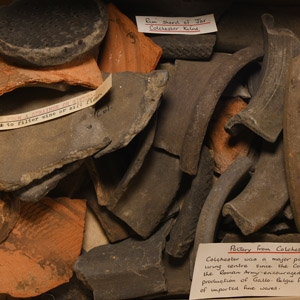
Romano-British Decorated 'Colchester' Pottery Sherds
1st-4th century A.D.Sold for (Inc. bp): £52
Including rim- and base-fragments with moulded or applied decorative detailing, some with inked inscriptions including: 'Col' for Colchester. 1.42 kg total, 3-11.4 cm
Found Colchester, UK. From the collection of a late East Anglian teacher and antiquarian who retired to the Isle of Wight in Hampshire, UK. He amassed a large collection of objects between the 1960s-1980s. Accompanied by a hand written information display card entitled 'Pottery from Colchester ...', and two other display cards, one typed one handwritten. -
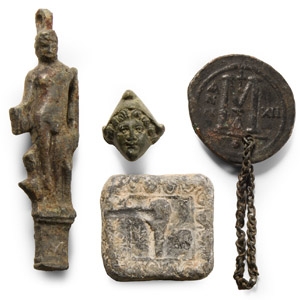
Roman and Later Artefact Group
2nd century A.D. and laterSold for (Inc. bp): £221
Including a figure of Mars, head of Mithras appliqué and other items. 192 grams total, 23-90 mm
Acquired on the European art market. Property of a European gentleman. -
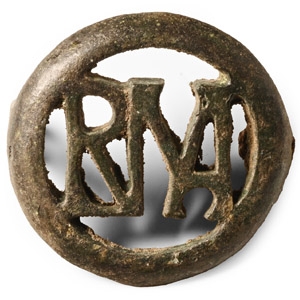
Roman Bronze ROMA Brooch
2nd-3rd century A.D.Sold for (Inc. bp): £208
The discoid body formed as an openwork monogram ROMA in Latin letters, the M and A ligated, the O formed by the brooch frame itself; ROMA also a palindrome for AMOR. 13.9 grams, 32 mm
Ex German art market, 2000s. Acquired from an EU collector living in London. From the collection of Surrey, UK, gentleman.
The brooch is engraved with stylised letters ‘RMA’. When viewed from the default side, RMA + the circle of the brooch form a monogram for ‘Roma’. Roma refers to both the city and its divine personification, the Dea Roma. When RMA is read from right to left (or the brooch is viewed from the opposite side), the letters form a monogram for ‘AMOR’, the Latin name for Cupid, the god of love. The phrase pertains to Roma-Amor, a widely recognised palindrome espousing Roman wordplay in the ancient times.
