
Loading, please wait...
LOT 0634
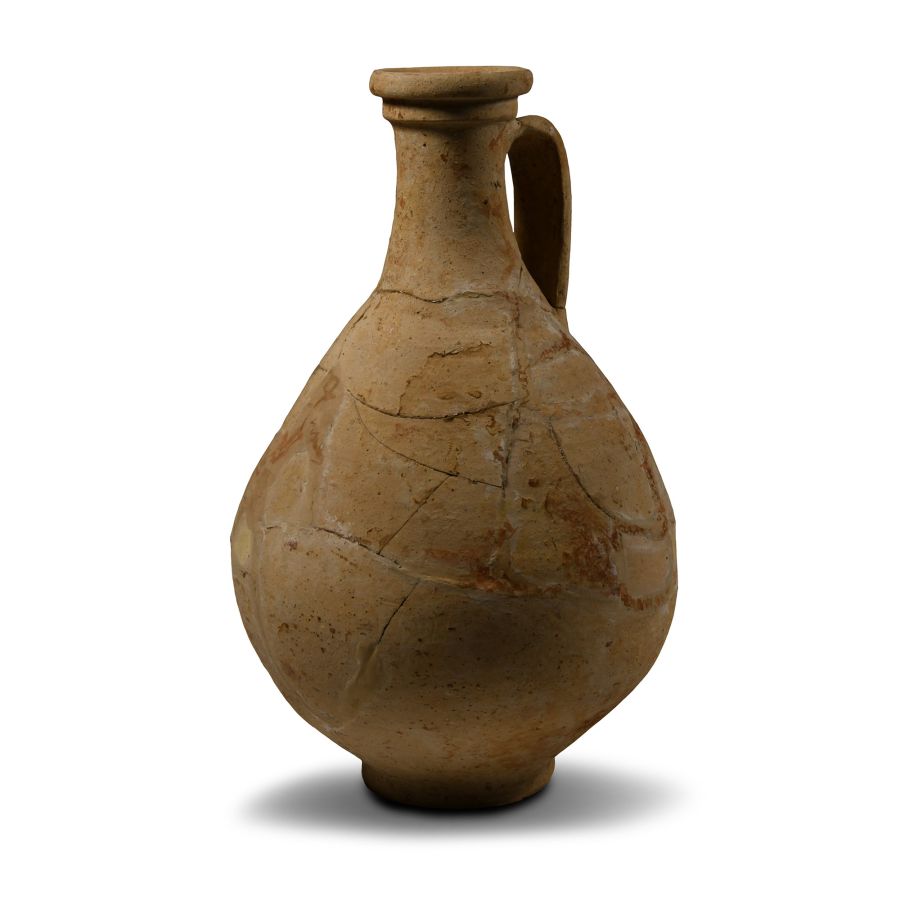
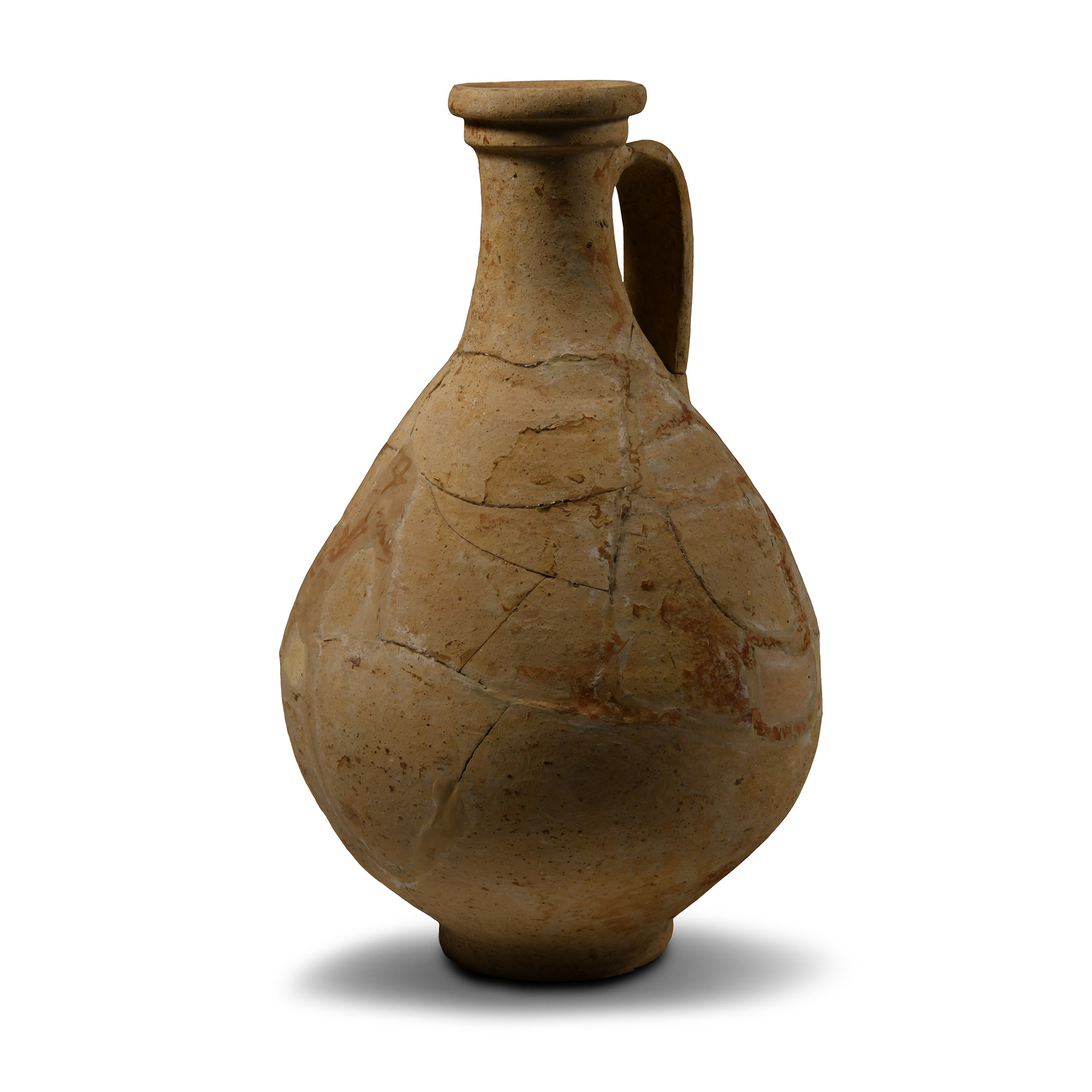
Romano-British 'Colchester' Buff Ware Jug
CIRCA 2ND CENTURY A.D.
12 1/2 in. (1.23 kg, 31.5 cm).
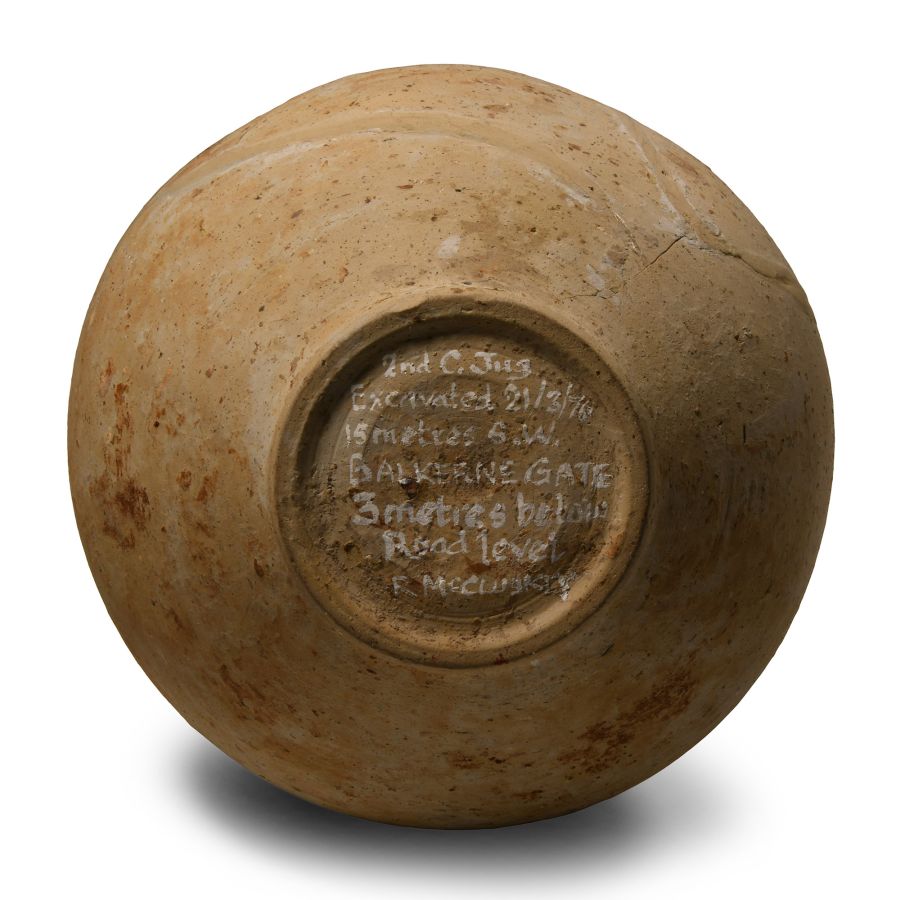
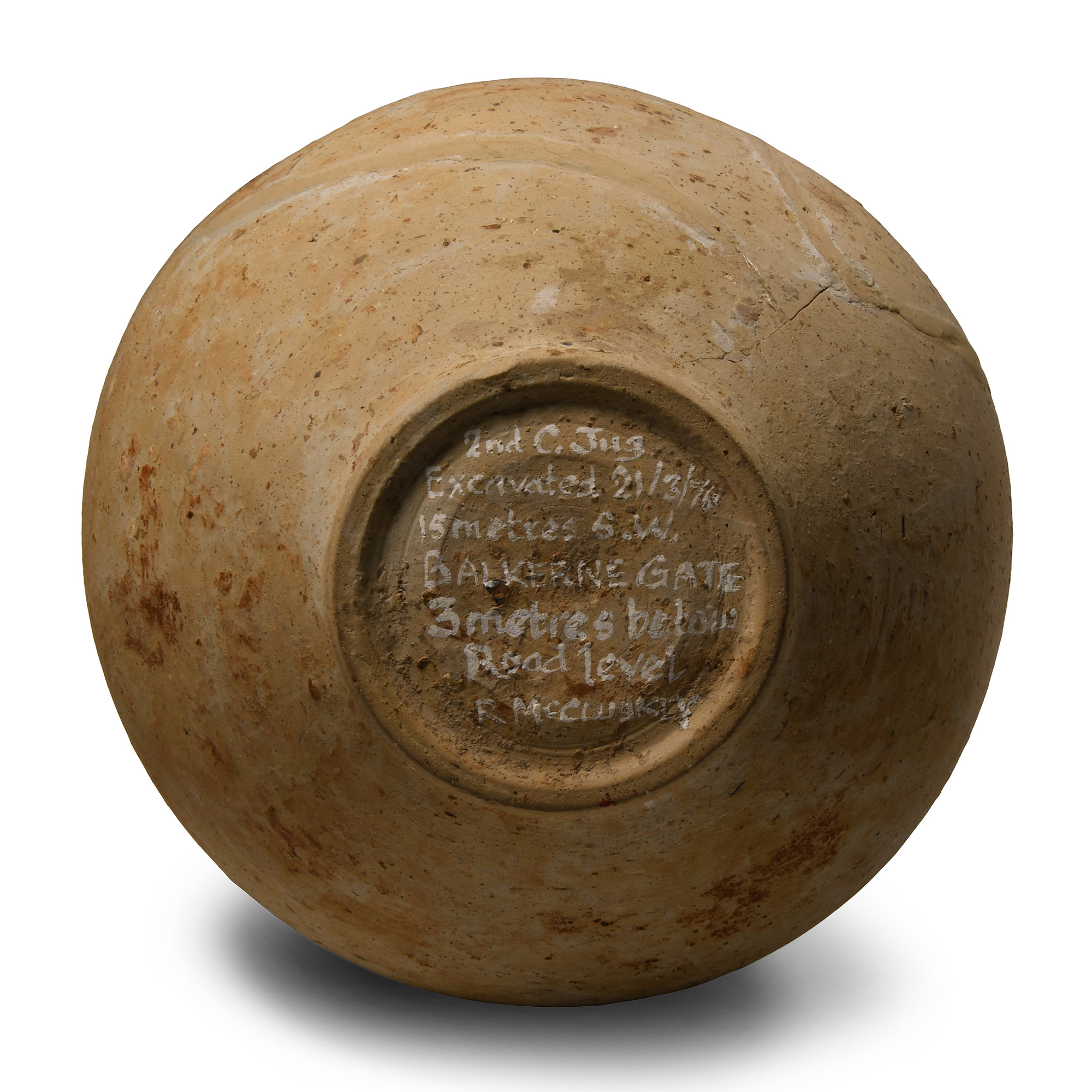
Piriform jug with strap handle and stepped rim to the mouth; ol inked inscription to the underside: '2nd C. Jug / Excavated 21/3/76. 15 metres S.W. Balkerne gate / 3 metres below Road level. R. McCluskey'; repaired. [No Reserve]
ProvenanceExcavated near Balkerne Gate, Colchester, UK, on 21st March 1976, by R. McCluskey.
From the collection of a late East Anglian teacher and antiquarian who retired to the Isle of Wight in Hampshire, UK.
He amassed a large collection of objects between the 1960s-1980s.
TimeLine Auctions follows a vetting process to ensure the authenticity and legality of all items, reinforcing our commitment to integrity and responsible trading. Each antiquity, antique, and coin lot undergoes thorough examination by a vetting committee of at least ten external specialists, professional trade association members, scientists, and archaeologists: Our Vetting Process
AUCTIONS:
TimeLine is a leading auction house specialising in antiquities, ancient art, collectables, natural history, coins, medals, and books. Our auctions offer museums, collectors, historians, and enthusiasts the opportunity to acquire unique and historically significant pieces.
-
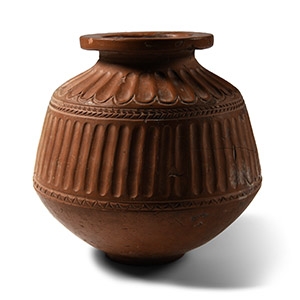
Roman Redware Pottery Vessel
4th-5th century A.D.Sold for (Inc. bp): £2,860
Biconvex in profile with narrow foot, broad shoulder and everted rim; radiating low-relief rosette pattern to the shoulder, fluted upper body, old gallery label to verso. 340 grams, 11.8 cm high
with a London, UK gallery 1971-early 2000s. -
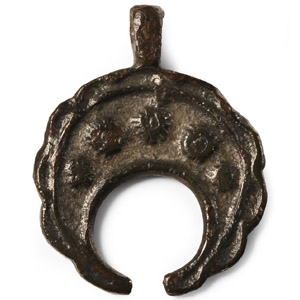
Roman Bronze Lunar Pendant
4th-5th century A.D.Sold for (Inc. bp): £143
A bifacial pendant with raised pellets to both faces. 2.78 grams, 26 mm
Ex German art market, 2000s. Acquired from an EU collector living in London. From the collection of Surrey, UK, gentleman. -
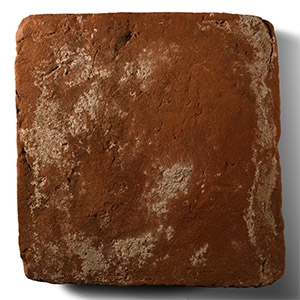
Romano-British 'Waldingham' Floor Tile
1st-4th century A.D.Sold for (Inc. bp): £78
Square terracotta tegula with accretion to underside, old collector's label 'Roman Floor Tile (with original cement) from the Bathhouse / Woldingham, Surrey'. 17.5 kg, 28 x 29 cm
Found Woldingham, Surrey, UK. From the collection of a late East Anglian teacher and antiquarian who retired to the Isle of Wight in Hampshire, UK. He amassed a large collection of objects between the 1960s-1980s.
