
Loading, please wait...
LOT 0618
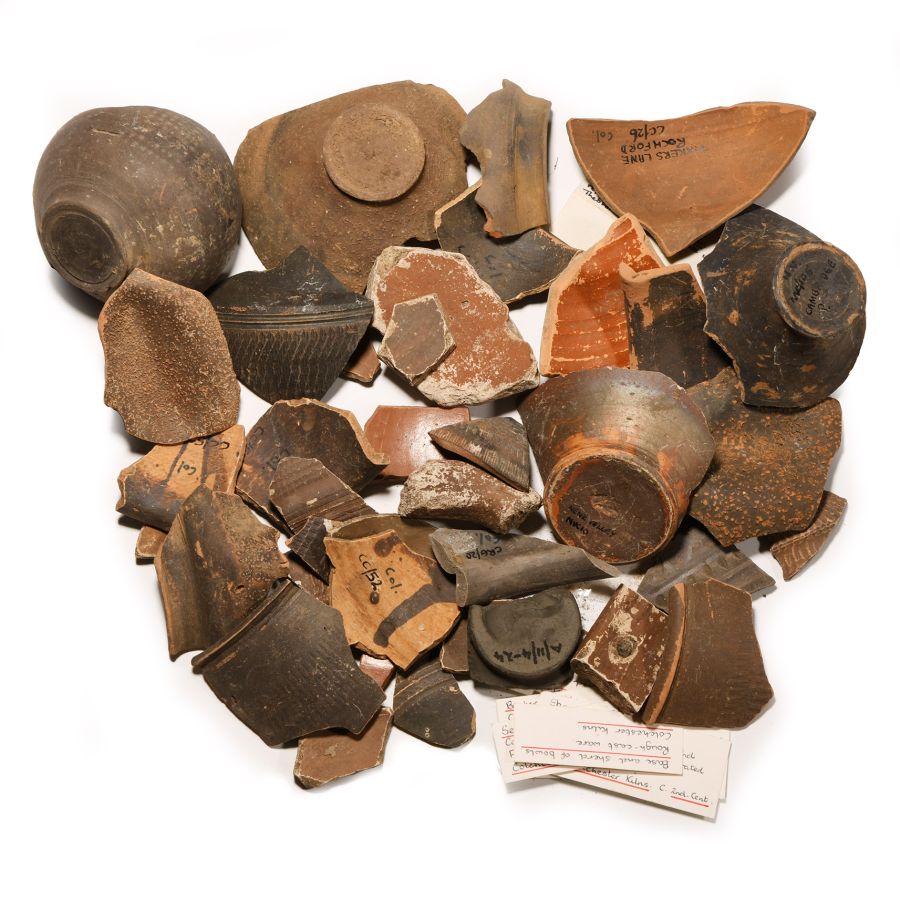
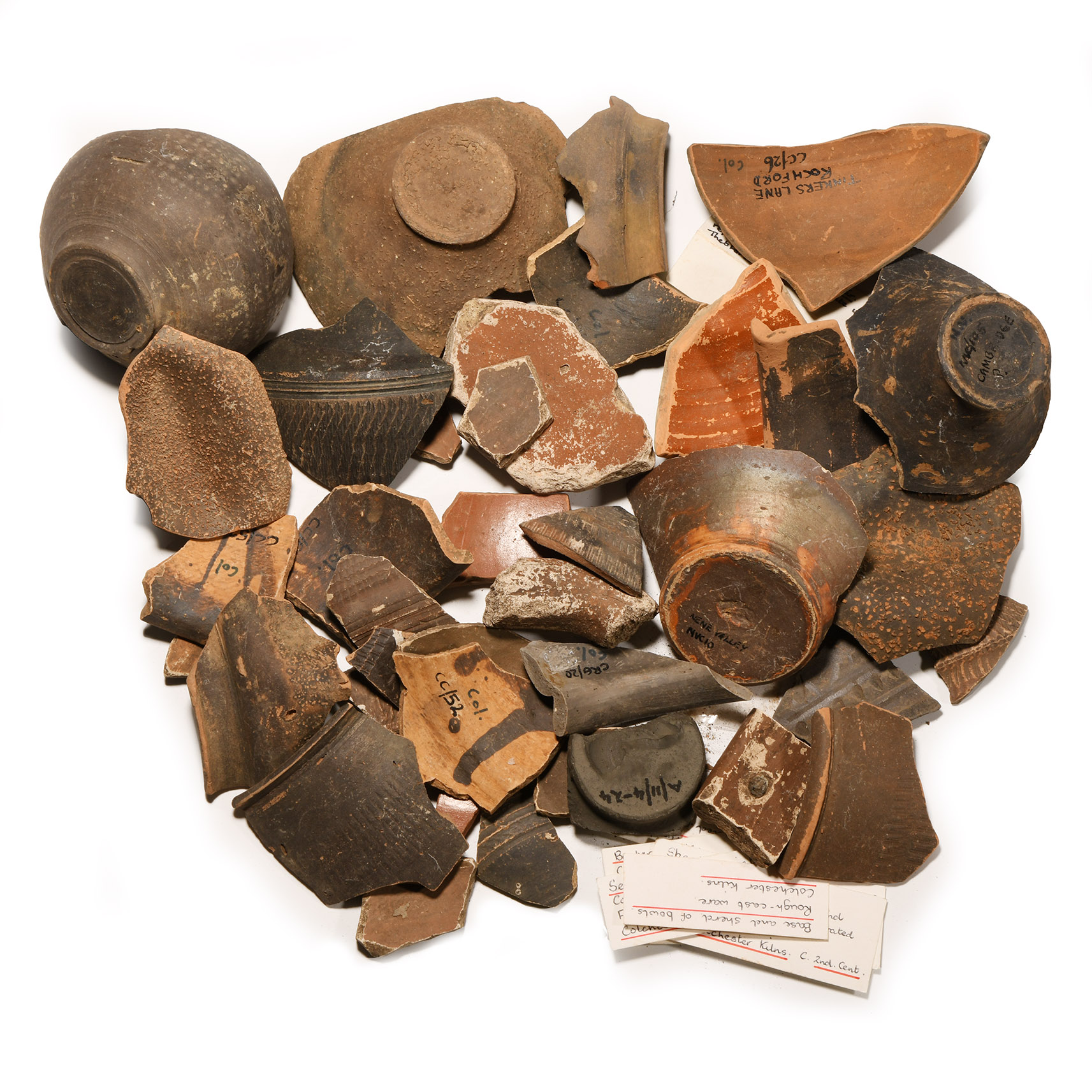
Romano-British Castor Ware and Other Sherd Group
1ST-4TH CENTURY A.D.
1 - 4 in. (804 grams total, 2.5-10 cm).
Mixed group of sherds, many with inked reference number, and collector's display cards including 'Sherd of calcite gritted bowl. Indented rim. Colchester kilns. 4th Cent.', 'NENE VALLEY / NVCIO', 'Col' for Colchester, 'CANVEY ISLAND / CC/6', 'MG/105 / CAMBRIDGE / P.', LONDON / CC/27', 'TINKERS LANE / ROCHFORD / CC/26'. [40, No Reserve]
ProvenanceFound UK.
From the collection of a late East Anglian teacher and antiquarian who retired to the Isle of Wight in Hampshire, UK.
He amassed a large collection of objects between the 1960s-1980s.
Accompanied by handwritten information display cards.
TimeLine Auctions follows a vetting process to ensure the authenticity and legality of all items, reinforcing our commitment to integrity and responsible trading. Each antiquity, antique, and coin lot undergoes thorough examination by a vetting committee of at least ten external specialists, professional trade association members, scientists, and archaeologists: Our Vetting Process
AUCTIONS:
TimeLine is a leading auction house specialising in antiquities, ancient art, collectables, natural history, coins, medals, and books. Our auctions offer museums, collectors, historians, and enthusiasts the opportunity to acquire unique and historically significant pieces.
-
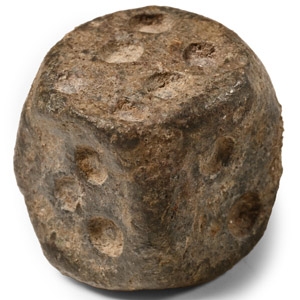
large Roman Lead Gaming Dice
1st-4th century A.D.Sold for (Inc. bp): £85
Cuboid with irregular impressed point markings disposed 1:3, 2:4, 5:6. 20 grams, 14 mm
Acquired 21 July 1997. From the important private collection of dice and gaming pieces of Colin Narbeth, London, UK, collection no.89. Accompanied by a Colin Narbeth catalogue identification slip. -
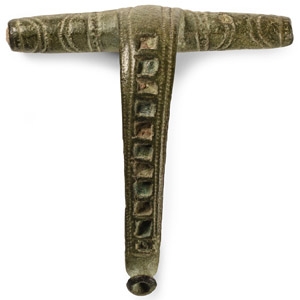
Roman Enamelled Bronze Bow Brooch
Circa 2nd century A.D.Sold for (Inc. bp): £91
Dolphin-type T-shaped bow brooch with barrel-shaped crossbar, ornamented with punched segmentation to the obverse, imitation spring-coil to the reverse; shallow bow with lateral bands of pointillé detailing flanking a column of square cells to accept enamel fill; trumpet-shaped lobe finial; catch to reverse with openwork ornament; hinged pin to reverse. 21.8 grams, 49 mm
Found Wiltshire, UK, before 1974.
The brooch features a hinged pin but the ribbed ornament on the crossbar replicates the coiled spring of contemporary Colchester-type bow brooches. -
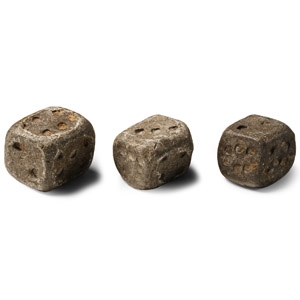
Large Roman Lead Gaming Dice Group
1st-4th century A.D.Sold for (Inc. bp): £130
Cuboid and rectangular types with impressed point markings irregularly disposed 1:4, 3:6, 3:5; 1:2, 3:5, 4:6; 2:2, 5:5, 3:6. 79 grams total, 14-17 mm
From the important private collection of dice and gaming pieces of Colin Narbeth, London, UK, collection no.27.
