
Loading, please wait...
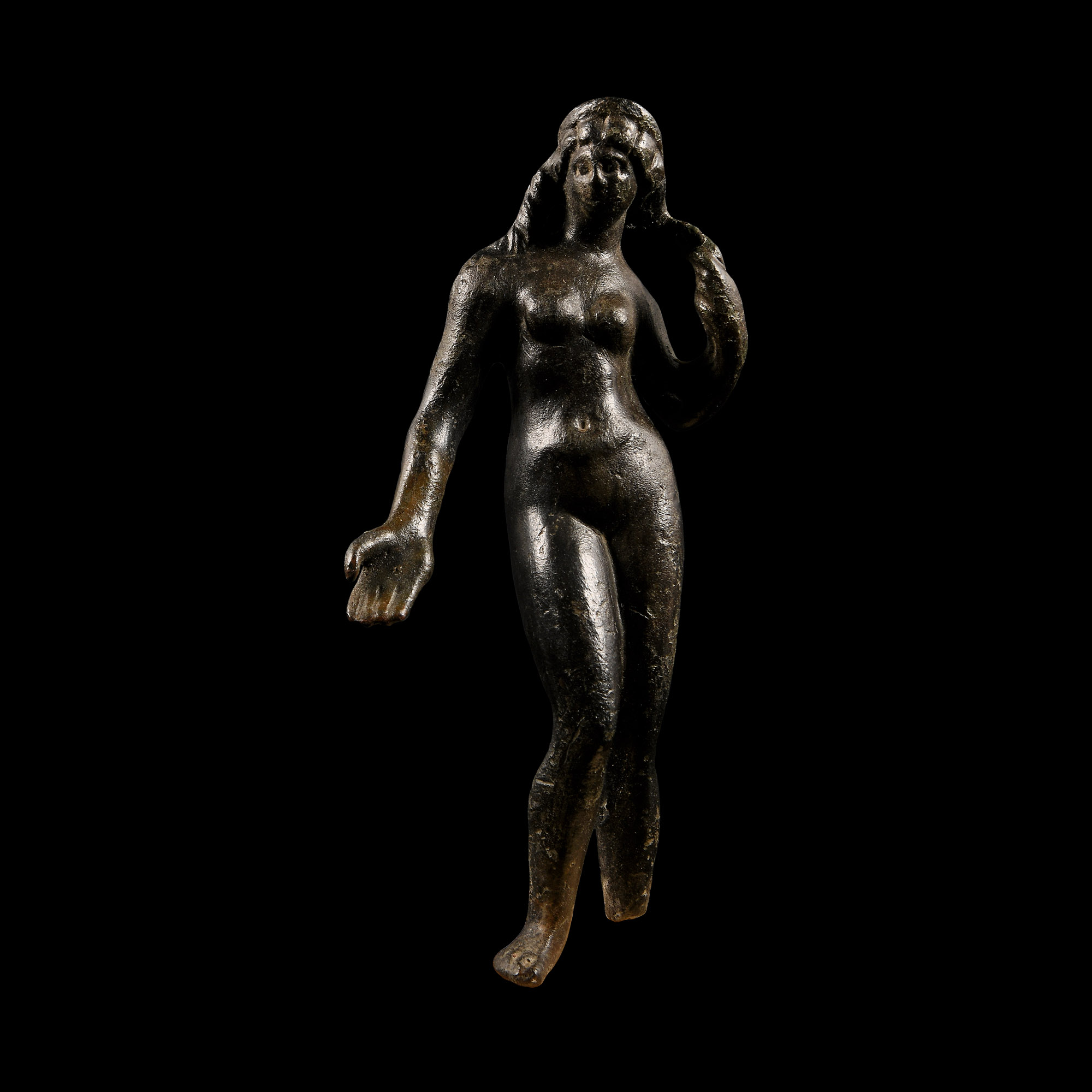
_900x900.jpg "Romano-British Bronze Statuette of Venus")
_200x200.jpg "Romano-British Bronze Statuette of Venus")
.jpg "Romano-British Bronze Statuette of Venus")
LOT 0156
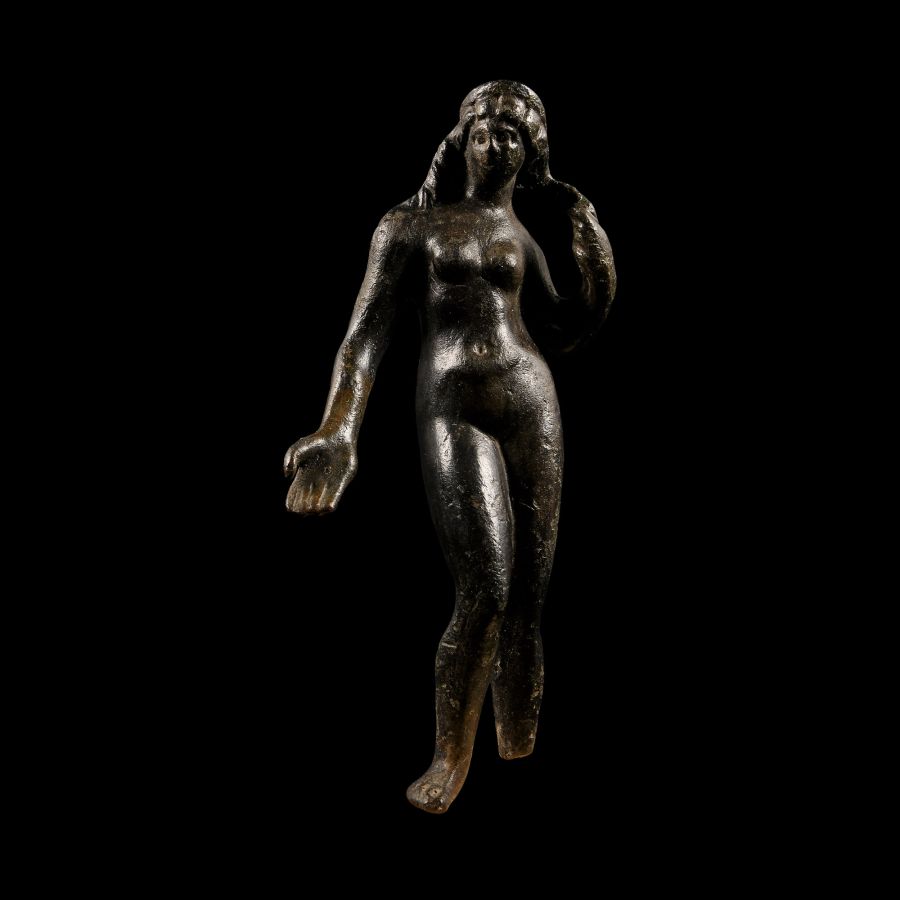
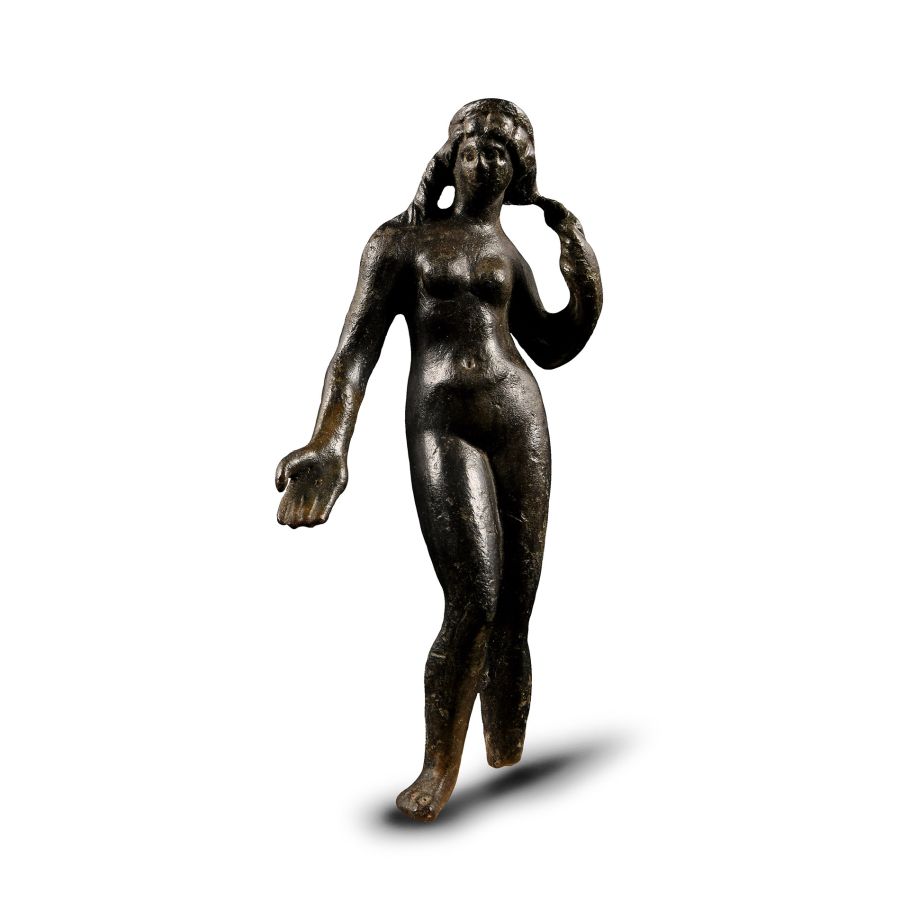
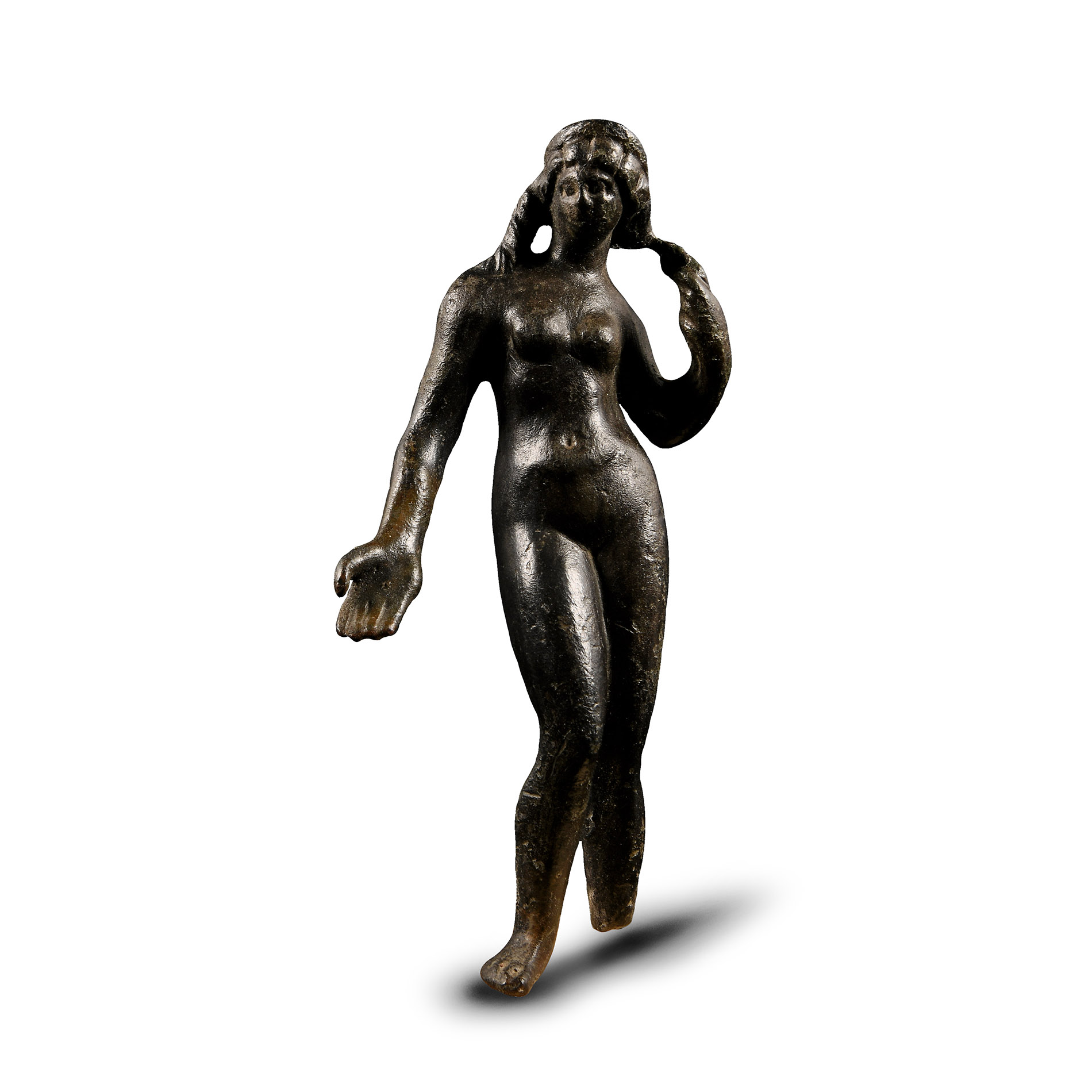
Romano-British Bronze Statuette of Venus
CIRCA 1ST-2ND CENTURY A.D.
4 3/4 in. (235 grams total, 12 cm including stand).
The goddess modelled standing nude with her hair dressed in loose hanks at the sides and a transverse braid above the brow; left hand raised to one hank of hair, right hand extended with palm open to accept a patera; provincial workmanship; mounted on a custom-made stand. [No Reserve]
ProvenanceBy repute found UK.
From a collection acquired on the UK art market from various auction houses and collections mostly before 2000.
From an important Cambridgeshire estate; thence by descent.
Cf. Durham, E., Metal Figurines in Roman Britain, vol. 2, Reading, 2010, pl.224.
CONDITIONTimeLine Auctions follows a vetting process to ensure the authenticity and legality of all items, reinforcing our commitment to integrity and responsible trading. Each antiquity, antique, and coin lot undergoes thorough examination by a vetting committee of at least ten external specialists, professional trade association members, scientists, and archaeologists: Our Vetting Process
AUCTIONS:
TimeLine is a leading auction house specialising in antiquities, ancient art, collectables, natural history, coins, medals, and books. Our auctions offer museums, collectors, historians, and enthusiasts the opportunity to acquire unique and historically significant pieces.
-
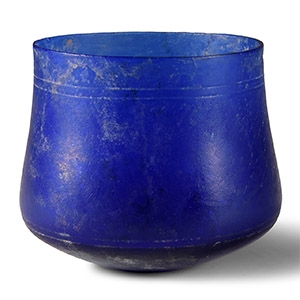
Roman Cobalt Blue Glass Wine Beaker
Circa 2nd century A.D.Estimate: £2,000 - 3,000 (+bp*)
Opening Bid: £1,000
Wheel-cut with a narrow base and cylindrical body with gently tapering walls, concentric line decoration to the rim, body and around the base; in exquisite deep colour. 67.6 grams, 56 mm
Previously with a London, UK, gallery, 1990s. Ex JL collection Surrey, UK, early 2000s. This lot has been checked against the Interpol Database of stolen works of art and is accompanied by search certificate no.12035-214140. -
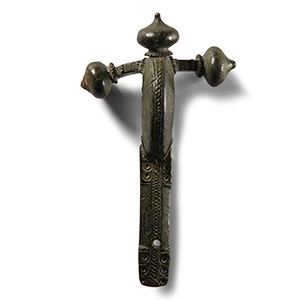
Roman Bronze Crossbow Brooch
4th century A.D.Sold for (Inc. bp): £85
With onion-knop terminals, carinated bow with a median band of guilloche decoration; the footplate with ring-and-dot decoration to each end, central guilloche panel with chamfered sides; hinged pin and pierced catch-plate to reverse. 64 grams total, 90 mm
Property of a Gloucestershire, UK, collector. Property of an East Sussex, UK, gentleman.
The piercing runs through both the body and catchplate. Such alterations, for the attachment of a securing chain or thong, are not uncommon on heavy brooches, but the hole is usually restricted to the reverse (the catch). -
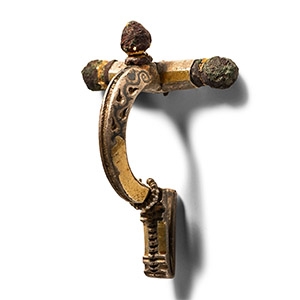
Roman Silver Crossbow Brooch
3rd-4th century A.D.Sold for (Inc. bp): £1,170
Parcel-gilt crossbow brooch with onion-shaped knops to the ends of the headplate and medially along the top edge; deep trapezoidal-section bow with median gusset; D-section footplate with chamfered sides open to one edge; upper part of one face of the bow with niello-filled running scroll design, lower part of the other face with running guilloche; beaded wire collar at the end. 14.6 grams, 46 mm
Ex N.C. collection. Acquired on the Swiss art market in 2000. European private collection.
Crossbow fibulae of this type were worn by high officers and, if in gold, even emperors, from Constantine to Justinian, as symbols of military rank. These fibulae are an important element in the graves, for the classification of the category of the dead, as belonging to the militia (armed or not); many of them were in gold, or gilded silver, and decorated with an inscription.
