
Loading, please wait...
LOT 0996
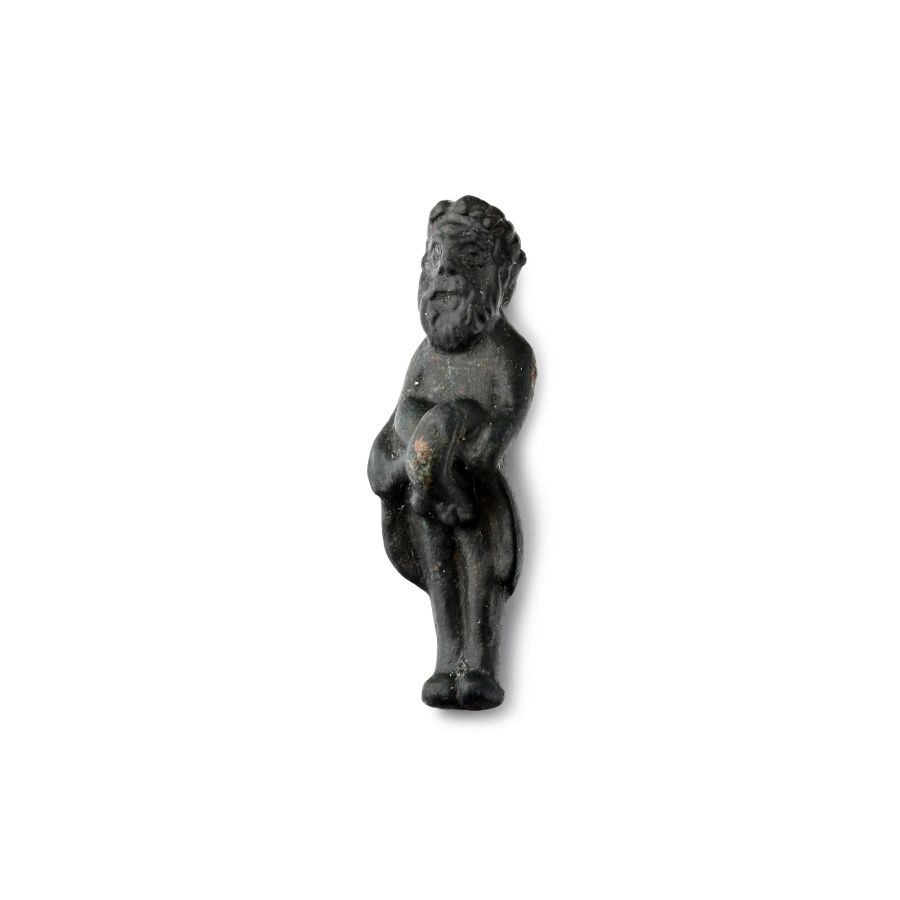
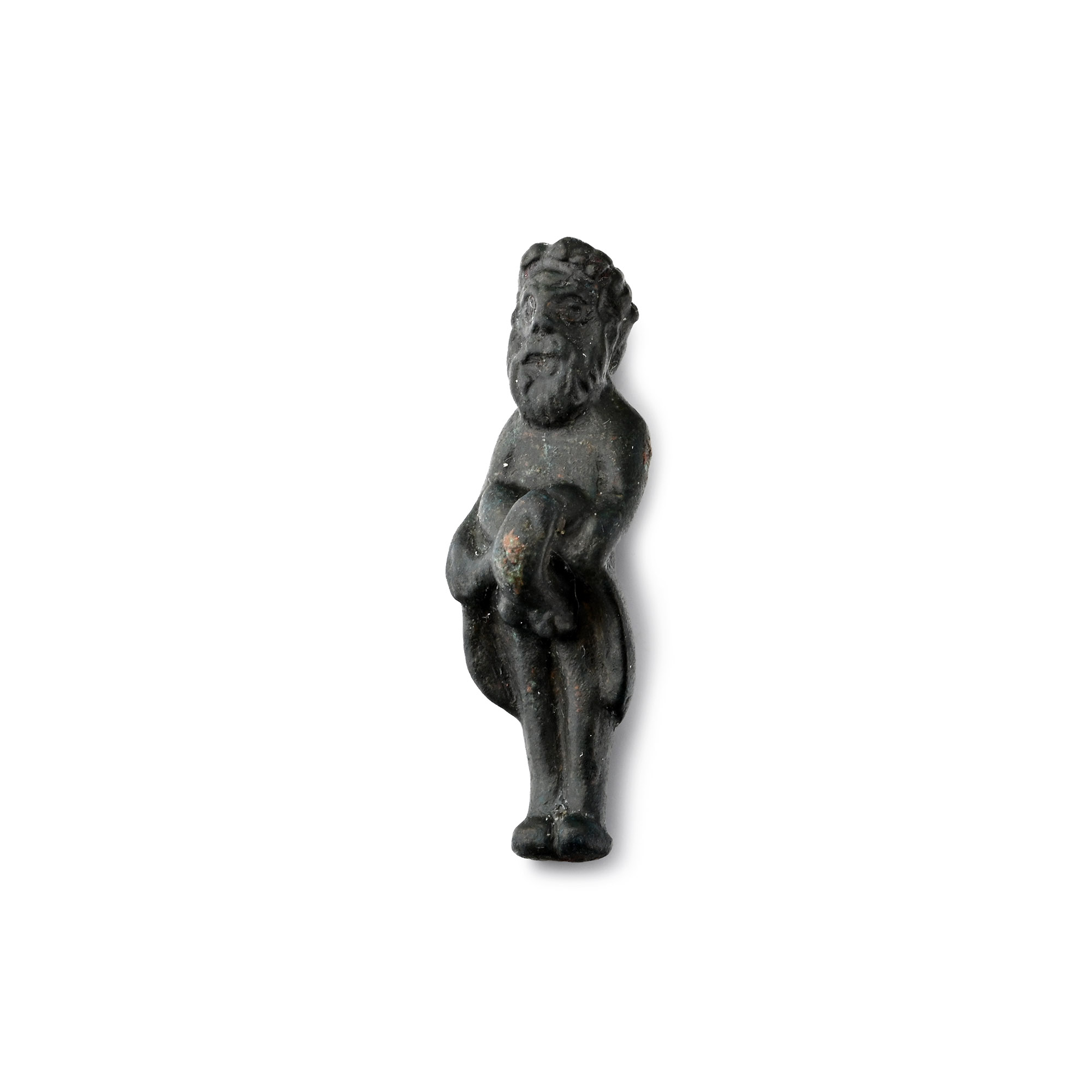
Romano-British Bronze Priapus Statuette
2ND-3RD CENTURY A.D.
1 1/2 in. (14.1 grams, 40 mm).
Modelled in the round, standing, wearing a paenula, his hands holding up the hem to support a pile of fruits on his erect penis.
ProvenanceFound Lincolnshire, UK.
LiteratureCf. Rolland, H., Bronzes Antiques de Haute Provence, Paris, 1965, item 136, for type.
FootnotesThis is one of the most characteristic representations of Priapus: standing, with long, smooth hair. With his hands, he raises his tunic, revealing his phallus, a symbol of fertility and good luck, and carries the first fruits of the earth on the hem of his tunic.
CONDITIONTimeLine Auctions follows a vetting process to ensure the authenticity and legality of all items, reinforcing our commitment to integrity and responsible trading. Each antiquity, antique, and coin lot undergoes thorough examination by a vetting committee of at least ten external specialists, professional trade association members, scientists, and archaeologists: Our Vetting Process
AUCTIONS:
TimeLine is a leading auction house specialising in antiquities, ancient art, collectables, natural history, coins, medals, and books. Our auctions offer museums, collectors, historians, and enthusiasts the opportunity to acquire unique and historically significant pieces.
-
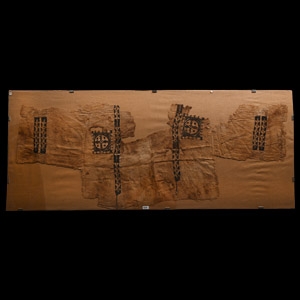
Large Mounted Roman Linen Tunic
Circa 4th-5th century A.D.Sold for (Inc. bp): £5,200
Comprising half of the upper part of a tunica manicata in light fabric, S-twist tapestry, ornamented with dark purple clavi with orbiculi and tablia, wool over linen; mounted in fabric backing and perspex display frame. 7.7 kg total, mount: 1.64 m
Acquired 1970s-1996. Property of a North American collector. London collection, 2016.
The tunic is decorated in purple with opus phrygium embroidery. The archaeological evidence from the dry desert cemeteries of Egypt offers striking confirmation of pictorial sources about late Roman clothing around the empire. -
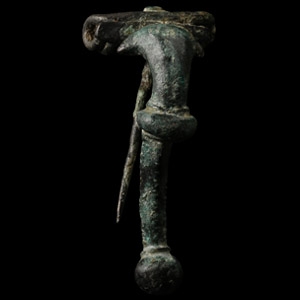
Roman Bronze Bow Brooch
2nd century A.D.Estimate: £100 - 140 (+bp*)
Opening Bid: £40
With chord and pin (now detached) at the head, D-section bow with lateral spurs, collar and swept foot with notched detailing, bulb finial, catch to the reverse. 26.6 grams, 54 mm
Ex important German collection, 1990s. This lot is accompanied by an illustrated lot declaration signed by the Head of the Antiquities Department, Dr Raffaele D’Amato.
This type of fibula, common in Pannonia, was typically worn in men's clothing. It closed the paenula on the chest, arranged horizontally. Naturally, it could also be worn with military attire. -
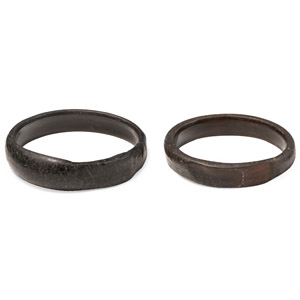
Roman Glass Bracelet Pair
1st-4th century A.D.Sold for (Inc. bp): £65
A matching pair of thick black glass bangles with rounded edges. 75 grams total, 73-79 mm
Ex German art market, 2000s. Acquired from an EU collector living in London. From the collection of a Surrey, UK, gentleman.
