
Loading, please wait...
LOT 0948
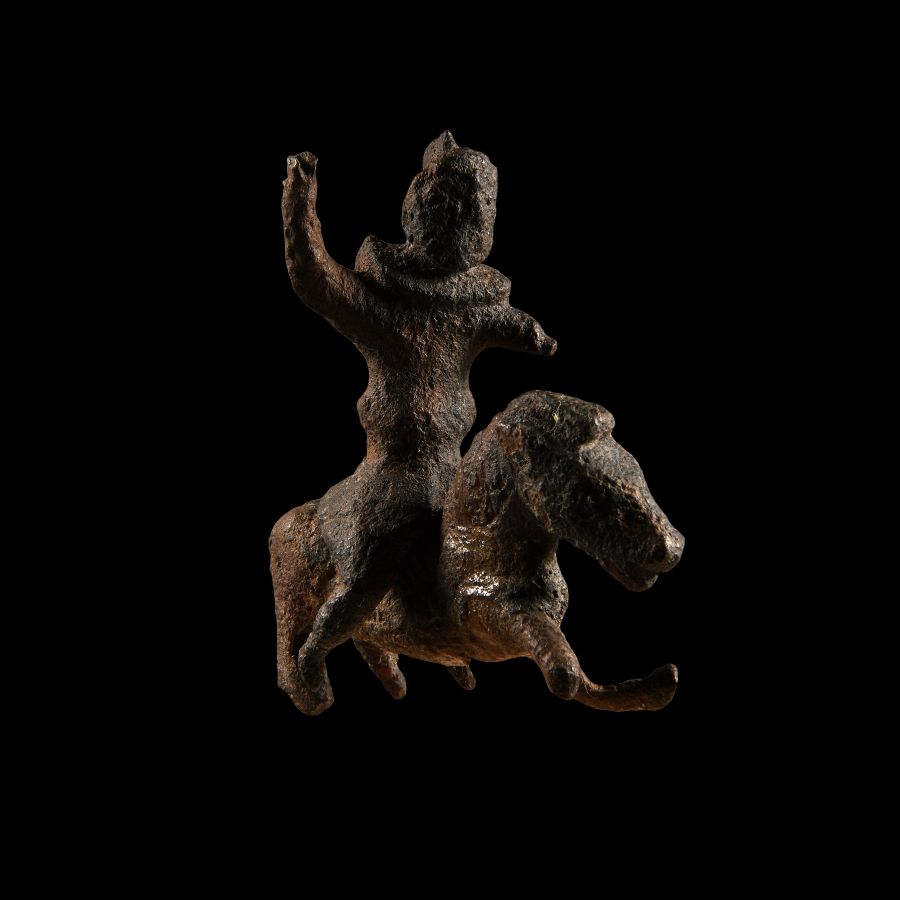
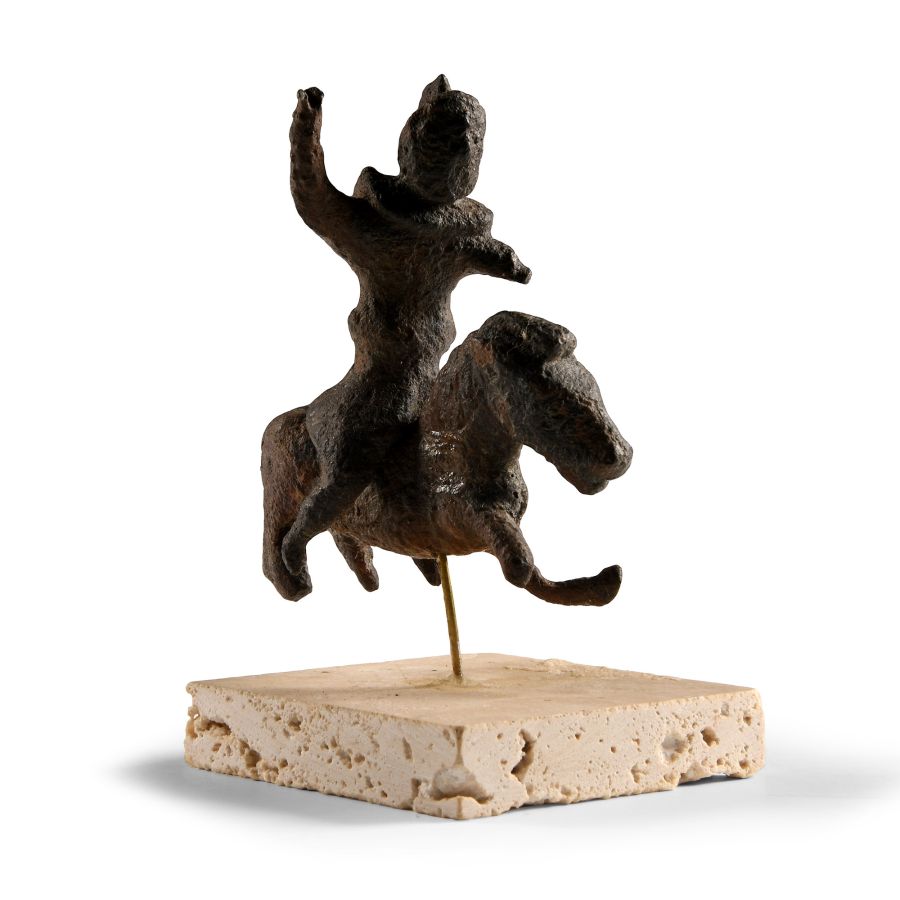
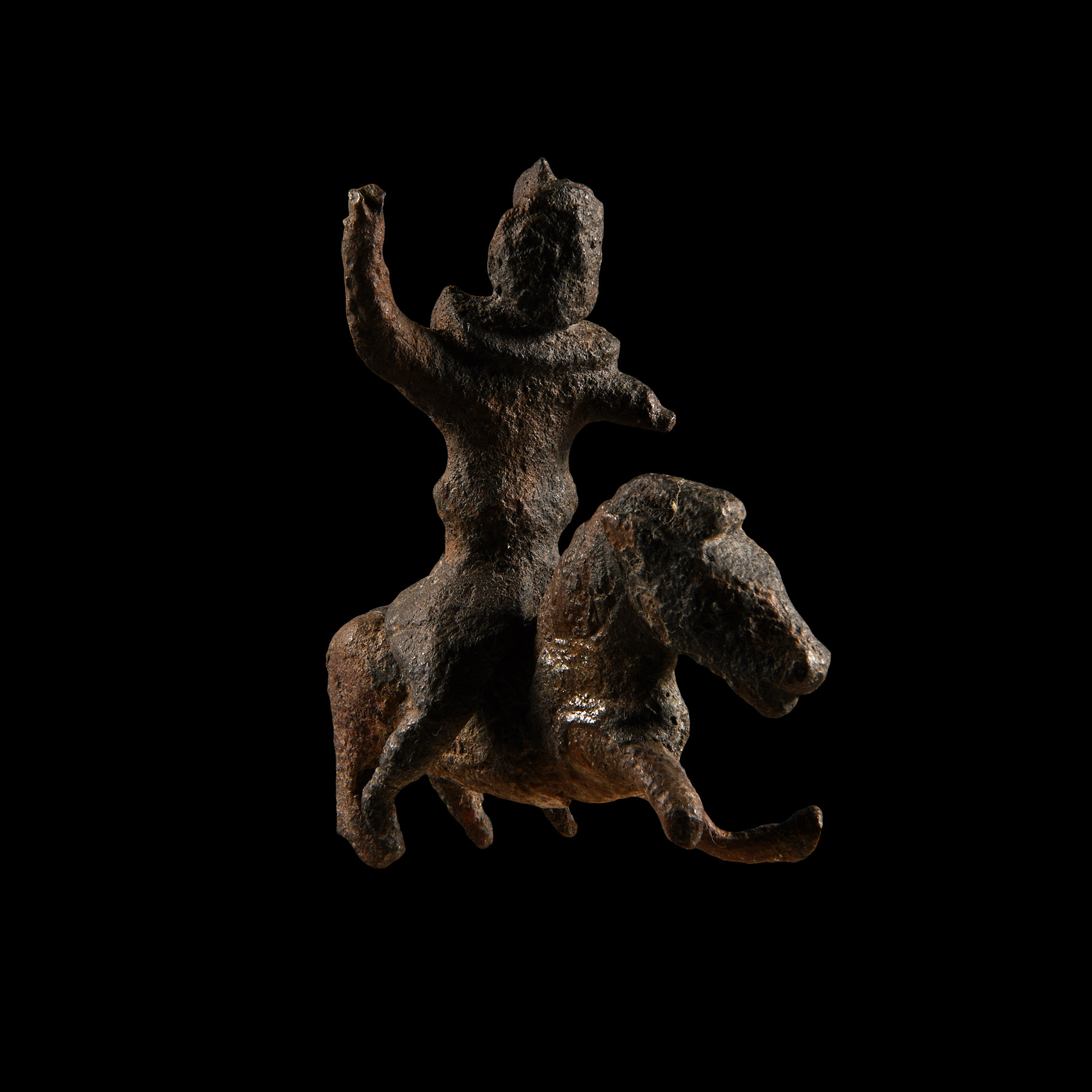
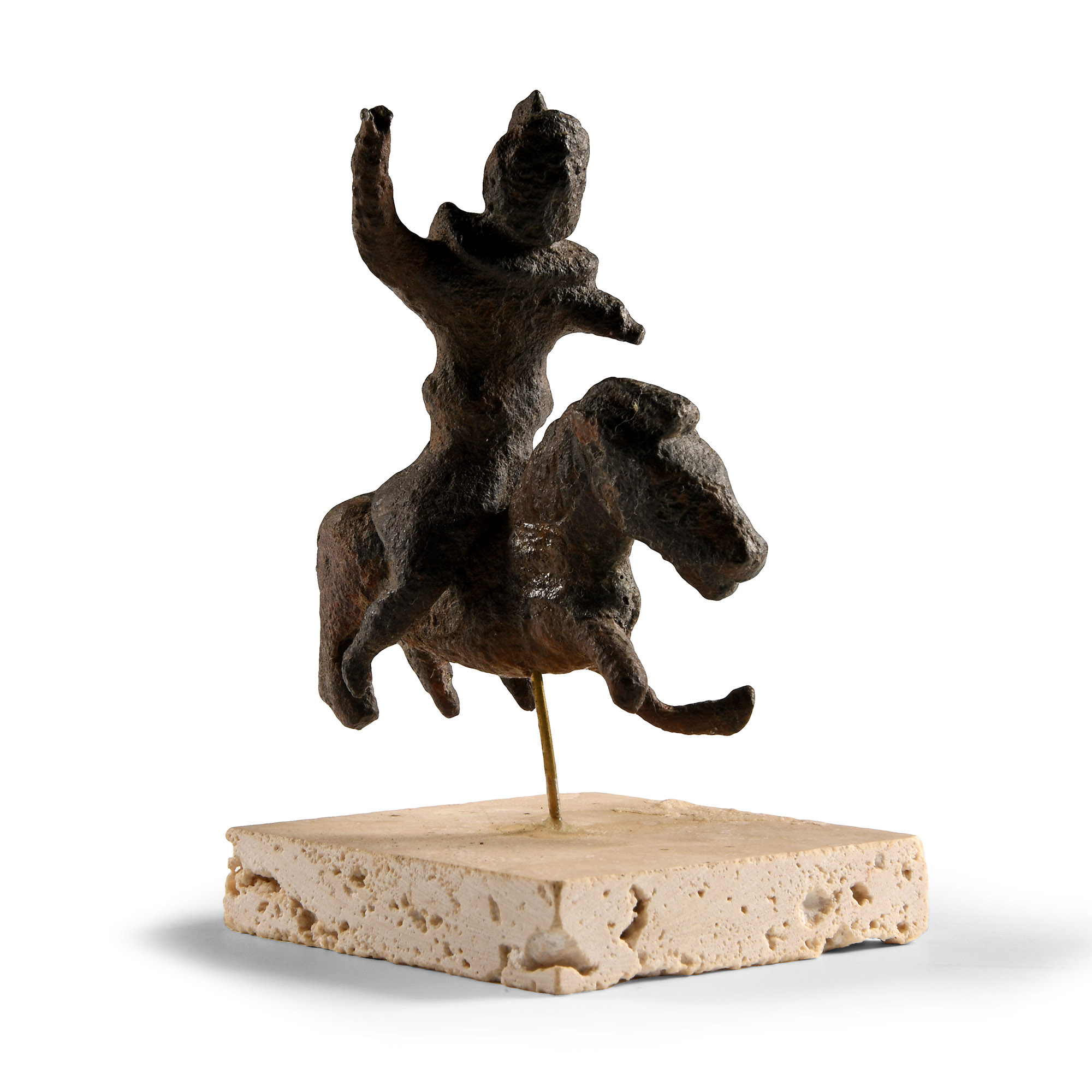
Romano-British Bronze Horse and Celtic Warrior Rider Statuette
CIRCA 1ST-2ND CENTURY A.D.
3 5/8 in. (189 grams total, 92 mm including stand).
Two-part model comprising: galloping horse with fore-legs extended, detailed mane; rider wearing a crested helmet, cloak billowing to the rear, knee-length tunic with gathered waist, legs curved to the rear; mounted on a custom-made stand. [No Reserve]
ProvenanceFound UK.
From a collection acquired on the UK art market from various auction houses and collections mostly before 2000.
From an important Cambridgeshire estate; thence by descent.
Cf. Durham, E., Metal Figurines in Roman Britain, vol. 2, Reading, 2010, pl.87a,b, for type.
CONDITIONTimeLine Auctions follows a vetting process to ensure the authenticity and legality of all items, reinforcing our commitment to integrity and responsible trading. Each antiquity, antique, and coin lot undergoes thorough examination by a vetting committee of at least ten external specialists, professional trade association members, scientists, and archaeologists: Our Vetting Process
AUCTIONS:
TimeLine is a leading auction house specialising in antiquities, ancient art, collectables, natural history, coins, medals, and books. Our auctions offer museums, collectors, historians, and enthusiasts the opportunity to acquire unique and historically significant pieces.
LOT 0948
Romano-British Bronze Horse and Celtic Warrior Rider Statuette
Sold for (Inc. bp): £169
-
Roman Marble Statue Head
Circa 2nd-3rd century A.D.Sold for (Inc. bp): £1,170
Carved with a rounded face and small mouth, hair arranged in neat curls with central partition; mounted on a custom-made display stand. 7.1 kg total, 29 cm including stand
From a private French collection. Acquired in France before 1993. From the personal collection of Gordon Gridley. Gordon Gridley was a founding member of the Camden Passage antique dealers’ association. Trading in antiques from the late 1960s, he opened his first shop in 1971 and remained a well-known and respected figure in the antiques world until his retirement. -
Roman Iridescent Glass Vial
3rd-4th century A.D.Sold for (Inc. bp): £117
Greenish-light blue glass, long and narrow body, splayed rim. 7.72 grams, 88 mm high
Acquired 1980-2015. Ex Abelita family collection.
During the early Roman period the glass-making techniques used by the Greeks were continued. Much of the glass was buried and as a result acquired an attractive lustrous patination. Roman glass became a medium for the promotion of the emperor and imperial propaganda, as well as being used as containers for various uses. Glass blowing, a new technique, meant that quantities of identical bottles could be produced. -
.jpg)
Roman Yellow Glass Flask
Circa 3rd-4th century A.D.Estimate: £1,800 - 2,400 (+bp*)
Opening Bid: £1,000
Mould-blown from translucent glass, the globular body on a circular flat base tapering at the shoulders to a cylindrical neck with an everted rim; a single applied handle; the body decorated with a horizontal band of a continuous Vitruvian wave framed by a double circumferential line, decorative ridges above and below; accompanied by a custom-made display stand. 16.7 grams, 66 mm (33.9 grams total, 79.4 mm high including stand)
From the property of the late Mr SM, London, UK, 1948-2000. Ex J.L. collection Surrey, UK.
The pitcher belongs to a late Roman group decorated with granulated circles forming like volutes. The shape of these globular pitchers is well known since the 1st-2nd century A.D., with the rim folded up and the handle applied to the shoulders, but the decoration is more typical of a later age.
