
Loading, please wait...
LOT 0835
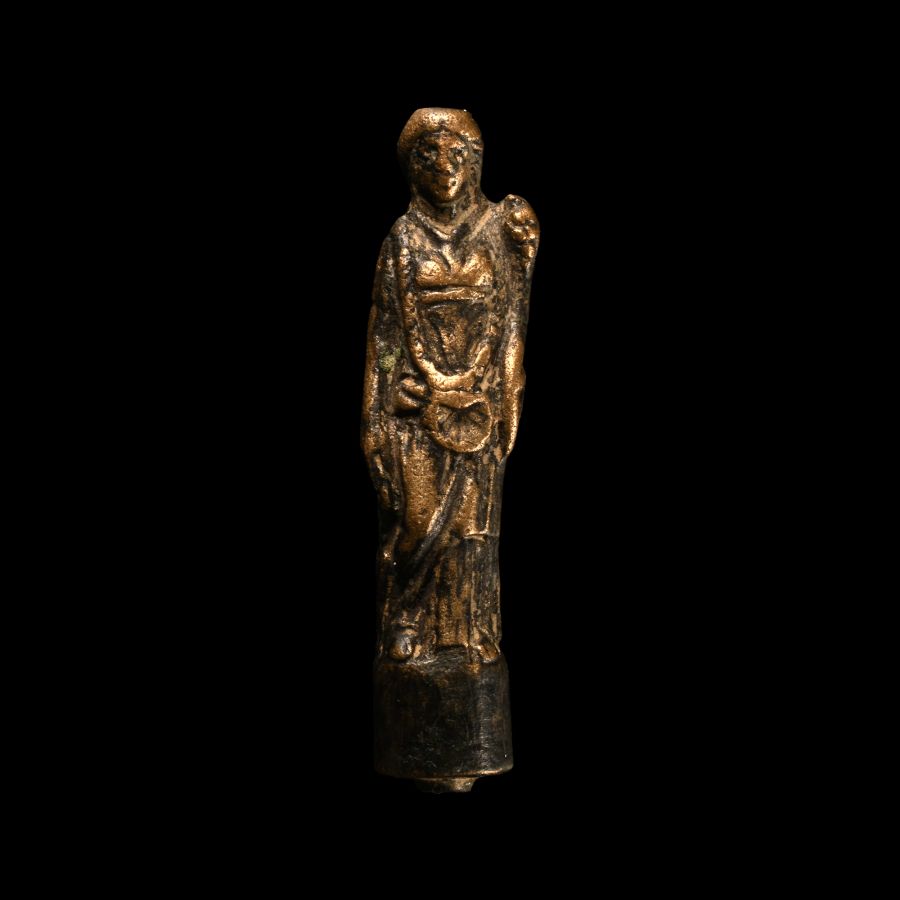
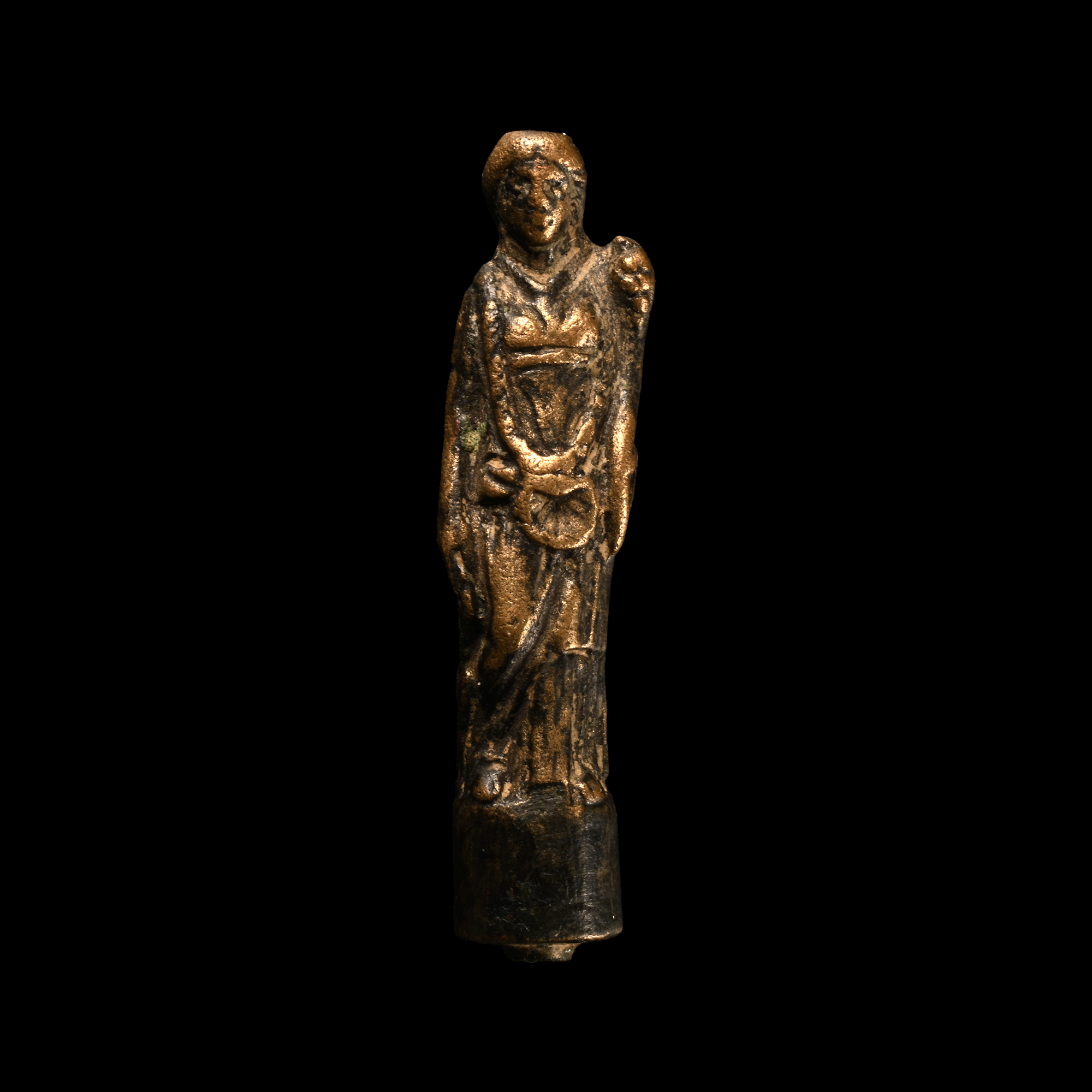
Romano-British Bronze Figural Knife Handle
2ND CENTURY A.D.
2 1/8 in. (28.5 grams, 55 mm).
Standing female modelled in the round wearing a floor-length robe and a draped mantle; with scallop-shaped purse on a shoulder-strap, holding a cornucopia in the left hand; handle or finial with round block and peg beneath. [No Reserve]
ProvenanceReportedly found in the Thames in the 1920s.
Accompanied by a previous CNG catalogue information ticket.
TimeLine Auctions follows a vetting process to ensure the authenticity and legality of all items, reinforcing our commitment to integrity and responsible trading. Each antiquity, antique, and coin lot undergoes thorough examination by a vetting committee of at least ten external specialists, professional trade association members, scientists, and archaeologists: Our Vetting Process
AUCTIONS:
TimeLine is a leading auction house specialising in antiquities, ancient art, collectables, natural history, coins, medals, and books. Our auctions offer museums, collectors, historians, and enthusiasts the opportunity to acquire unique and historically significant pieces.
-
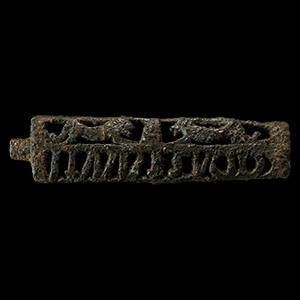
Roman Decorated and Inscribed Animal Hilt
3rd-4th century A.D.Sold for (Inc. bp): £715
Openwork rectangular bifacial dagger- or knife-hilt with lobe pommel and blade-socket; Side A: two rectangular openwork panels, above an inverted openwork inscription 'VTERE FELIX' and below two opposed running hounds; Side B: two opposed running hounds above inverted inscription: 'CONSTANTI' (use [this] with good fortune for Constantine). 87 grams, 11 cm
Private collection 1990s. Ex London, UK, gallery. -
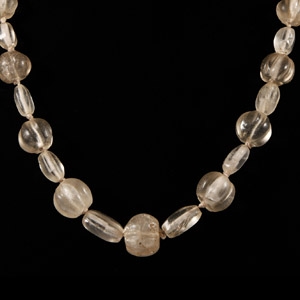
Roman Rock Crystal Bead Necklace
2nd-3rd century A.D.Sold for (Inc. bp): £468
Restrung group of clear quartz melon bead and hexagonal-section tubular beads. 103 grams, 53.5 cm long
with a London, UK gallery 1971. -
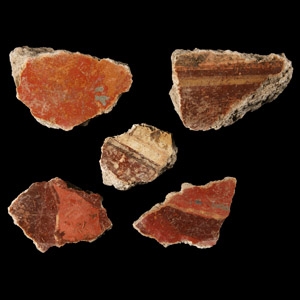
Roman Fresco Painted Wall Plaster Collection
1st century A.D.Sold for (Inc. bp): £169
Comprising five pieces in cream, orange, blue and red with painted architectural lines; one with floral decoration and several with border elements. 212 grams total, 45-69 mm
Acquired in the 19th century. Ex Jeger collection, Switzerland.
