
Loading, please wait...
LOT 0818
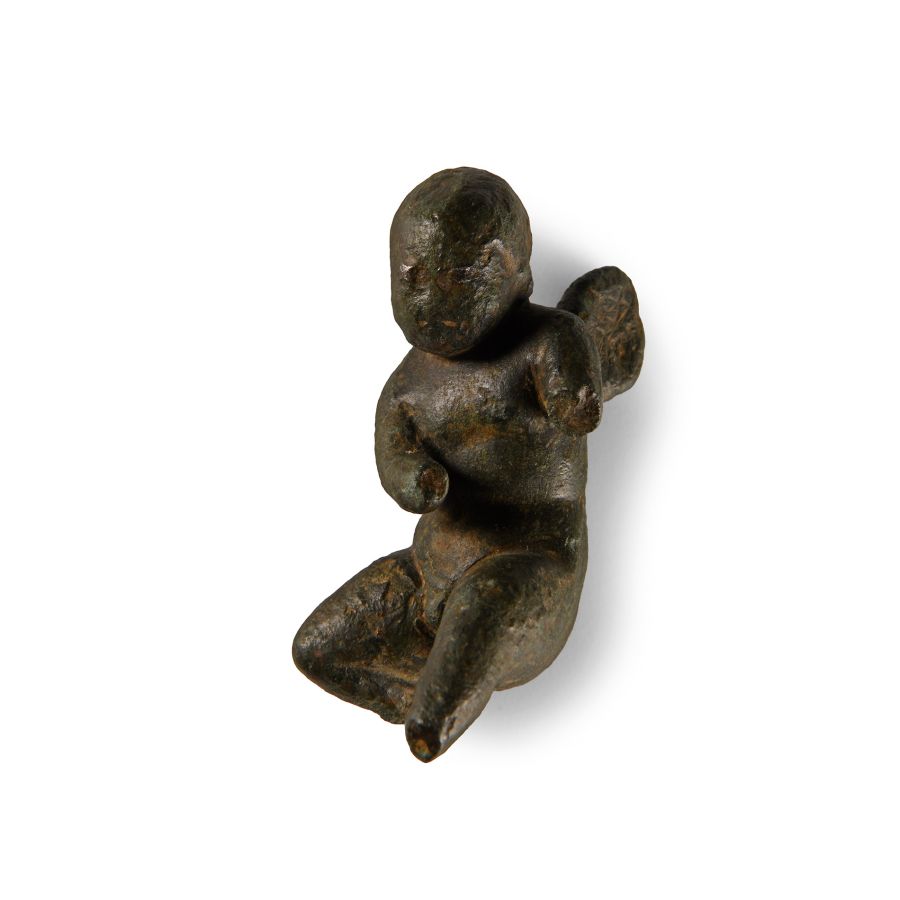
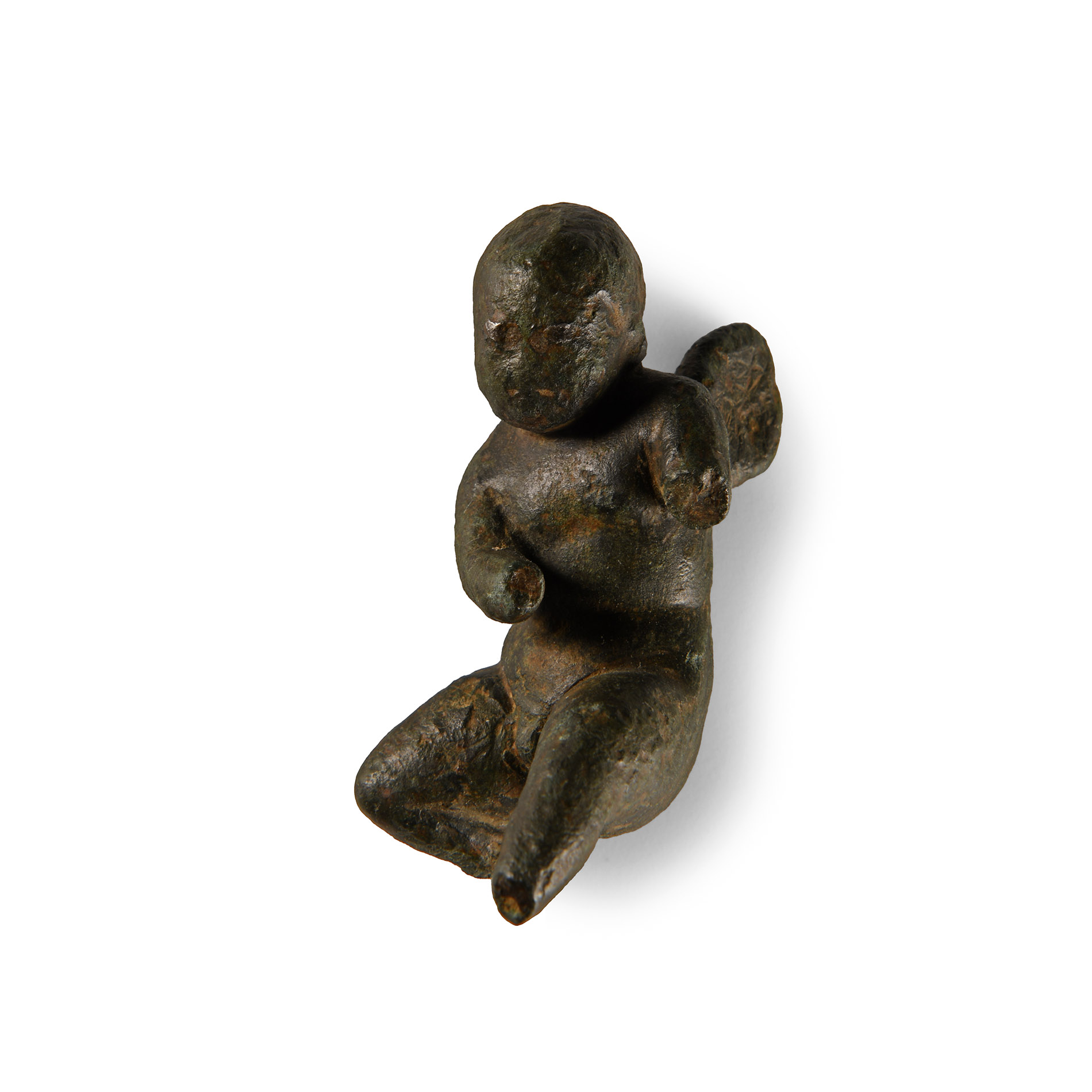
Romano-British Bronze Eros Statuette
CIRCA 1ST-2ND CENTURY A.D.
2 1/4 in. (115 grams, 57 mm).
Modelled in the round with one leg extended, head turned, two small dorsal wings. [No Reserve]
ProvenanceFound UK.
From a collection acquired on the UK art market from various auction houses and collections mostly before 2000.
From an important Cambridgeshire estate; thence by descent.
Cf. Durham, E., Metal Figurines in Roman Britain, vol. 2, Reading, 2010, plate 44 (Cupid from Colchester).
CONDITIONTimeLine Auctions follows a vetting process to ensure the authenticity and legality of all items, reinforcing our commitment to integrity and responsible trading. Each antiquity, antique, and coin lot undergoes thorough examination by a vetting committee of at least ten external specialists, professional trade association members, scientists, and archaeologists: Our Vetting Process
AUCTIONS:
TimeLine is a leading auction house specialising in antiquities, ancient art, collectables, natural history, coins, medals, and books. Our auctions offer museums, collectors, historians, and enthusiasts the opportunity to acquire unique and historically significant pieces.
-
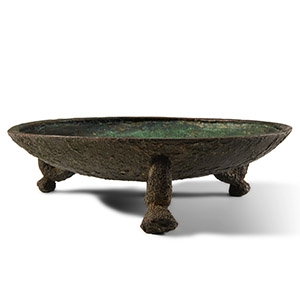
Roman Bronze Tripod Offering Dish
Circa 1st-3rd century A.D.Sold for (Inc. bp): £338
Broad dish with carinated rim, three legs to the underside, each a C-shaped shank with a bun foot. 681 grams, 17.5 cm
From a collection acquired on the UK art market from various auction houses and collections mostly before 2000. From an important Cambridgeshire estate; thence by descent. -
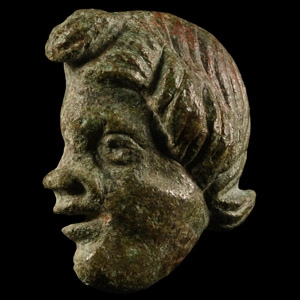
Roman Bronze Face Mount
1st-3rd century A.D.Sold for (Inc. bp): £52
Profile bust of a putto with swept-back hair and fleshy features; studs to the reverse. 8.21 grams, 23 mm
Property of a Gloucestershire, UK, collector. Property of an East Sussex, UK, gentleman. -
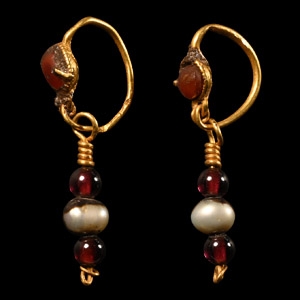
Roman Gold Drop Earrings
Circa 2nd-3rd century A.D.Estimate: £400 - 600 (+bp*)
Opening Bid: £200
Matched pair each with carnelian cabochon on the ring, garnet and pearl seed beads on the dangle. 2.51 grams total, 29-32 mm
From a late Japanese specialist collector, 1970-2000s. Accompanied by a previous catalogue identification card.
