
Loading, please wait...
LOT 0748
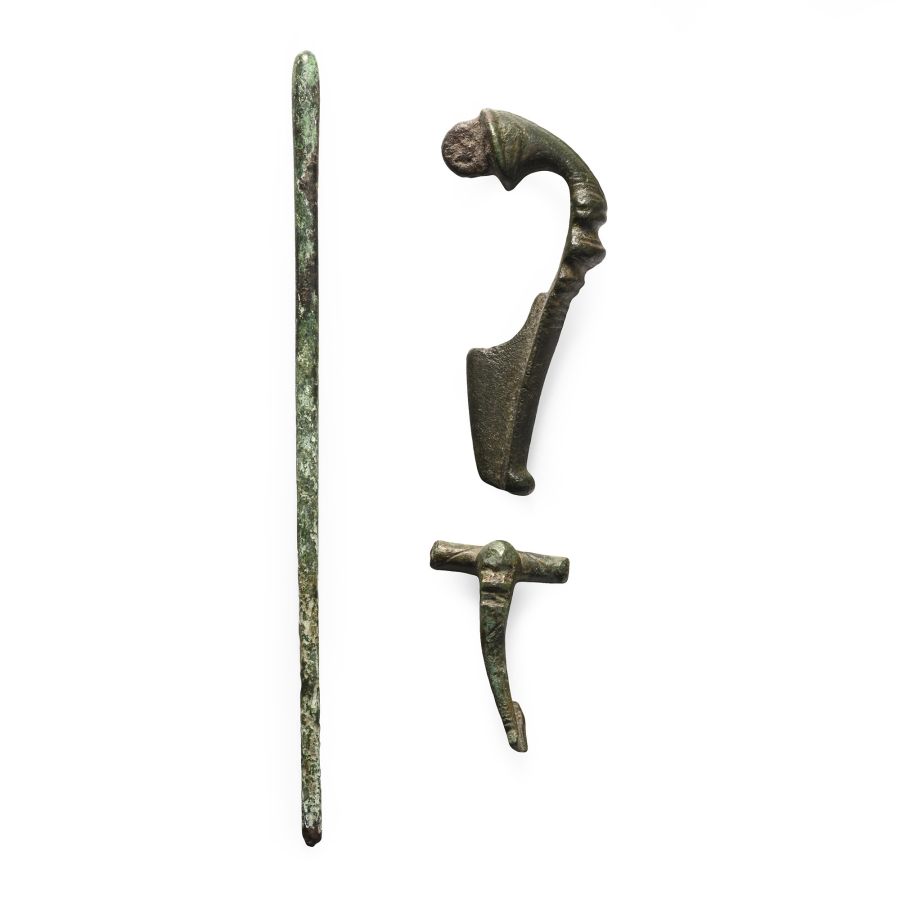
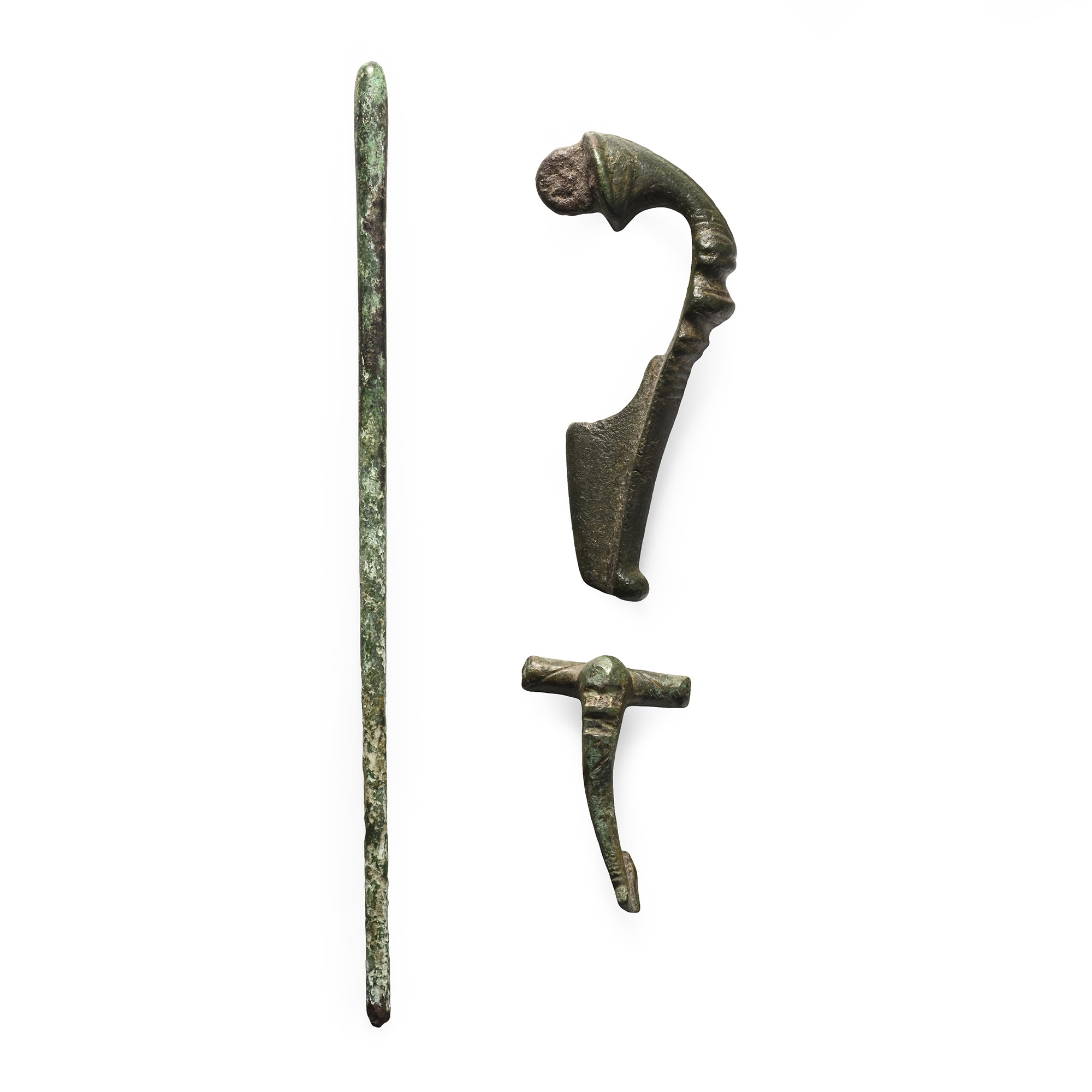
Romano-British Bronze Artefact Group
1ST-2ND CENTURY A.D.
1 1/4 - 5 in. (38.5 grams total, 3.2-12.6 cm).
Comprising a medical probe, and two brooches, both lacking a pin. [3, No Reserve]
ProvenanceFrom a Kent collection formed in the 1990s.
CONDITIONTimeLine Auctions follows a vetting process to ensure the authenticity and legality of all items, reinforcing our commitment to integrity and responsible trading. Each antiquity, antique, and coin lot undergoes thorough examination by a vetting committee of at least ten external specialists, professional trade association members, scientists, and archaeologists: Our Vetting Process
AUCTIONS:
TimeLine is a leading auction house specialising in antiquities, ancient art, collectables, natural history, coins, medals, and books. Our auctions offer museums, collectors, historians, and enthusiasts the opportunity to acquire unique and historically significant pieces.
-
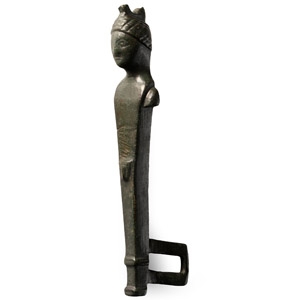
Roman Bronze Figural Lock Hasp
2nd-3rd century A.D.Sold for (Inc. bp): £65
Formed as a herm wearing a headdress, genitalia on the column, the shoulders forming lateral lugs, remains of a suspension ring above, stepped base below and an openwork rectangular plate to the underside. 19.9 grams, 69 mm
Ex German art market, 2000s. Acquired from an EU collector living in London. From the collection of a Surrey, UK, gentleman. -
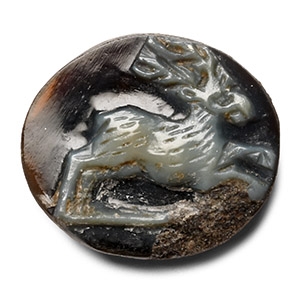
Roman Sardonyx Cameo of a Leaping Stag
2nd-3rd century A.D.Estimate: £500 - 700 (+bp*)
Opening Bid: £250
With a cameo image of a male antelope jumping right; supplied with a museum-quality impression. 0.43 grams, 11 mm
Private English collection, formed between the late 1970s and early 1990s. Private collection, London, UK. -
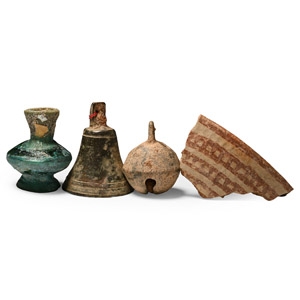
Roman Glass Vessel and Later Artefact Collection
5th-18th century A.D.Sold for (Inc. bp): £46
Comprising: miniature blue glass jar with flared neck; fragment of painted ceramic rim; crotal bell; miniature hand bell with concentric ring decoration. 150 grams total, 43.5-70 mm
From the old private collection of a retired UK gentleman; his collection formed in the 1990s.
