
Loading, please wait...
LOT 0591
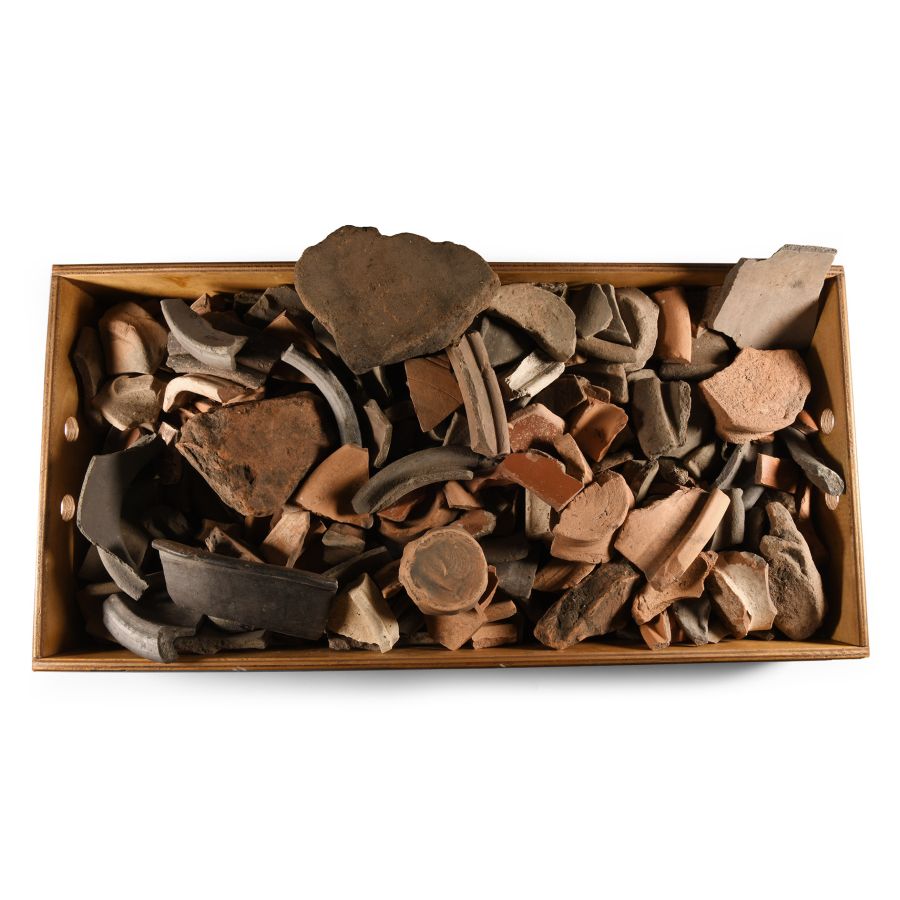
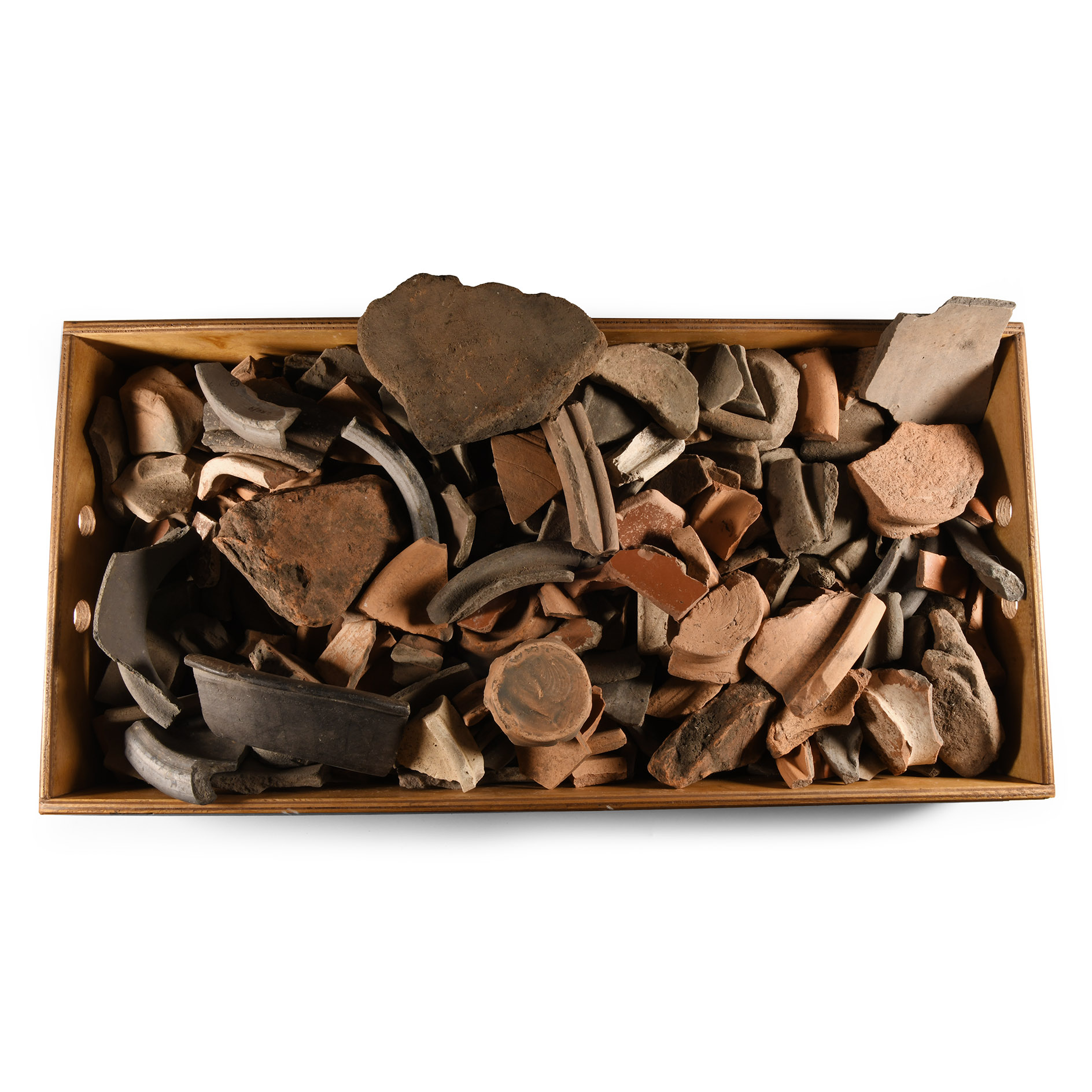
Romano-British British-Found Pottery Sherds
1ST-4TH CENTURY A.D.
3/4 - 5 1/2 in. (9.85 kg total, 2-14 cm).
Mainly domestic ware fragments, mortaria, amphorae and other types; in a wooden collector's tray, some with inked inscriptions including 'Col.' for Colchester. [Large quantity, No Reserve]
ProvenanceFound UK.
From the collection of a late East Anglian teacher and antiquarian who retired to the Isle of Wight in Hampshire, UK.
He amassed a large collection of objects between the 1960s-1980s.
TimeLine Auctions follows a vetting process to ensure the authenticity and legality of all items, reinforcing our commitment to integrity and responsible trading. Each antiquity, antique, and coin lot undergoes thorough examination by a vetting committee of at least ten external specialists, professional trade association members, scientists, and archaeologists: Our Vetting Process
AUCTIONS:
TimeLine is a leading auction house specialising in antiquities, ancient art, collectables, natural history, coins, medals, and books. Our auctions offer museums, collectors, historians, and enthusiasts the opportunity to acquire unique and historically significant pieces.
-
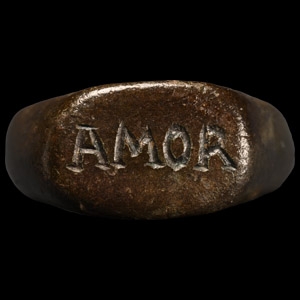
Roman Bronze Signet Ring with AMOR
1st-3rd century A.D.Sold for (Inc. bp): £468
Ellipsoid bezel with incised 'AMOR' legend. 8.37 grams, 23.06 mm overall, 17.39 mm internal diameter (approximate size British N, USA 6 1/2, Europe 13.72, Japan 13)
Ex German art market, 2000s. Acquired from an EU collector living in London. From the collection of Surrey, UK, gentleman. -
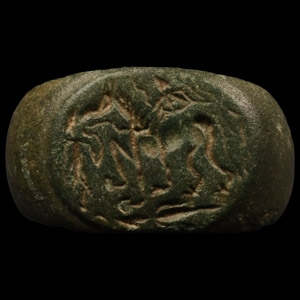
Roman Bronze Signet Ring with Horse
1st-3rd century A.D.Sold for (Inc. bp): £117
Broad plaque with incuse image of a horse with walking attendant, objects in the field. 7.30 grams, 24.71 mm overall, 19.11 mm internal diameter (approximate size British O 1/2, USA 7 1/4, Europe 15.61, Japan 15)
Ex German art market, 2000s. Acquired from an EU collector living in London. From the collection of Surrey, UK, gentleman. -
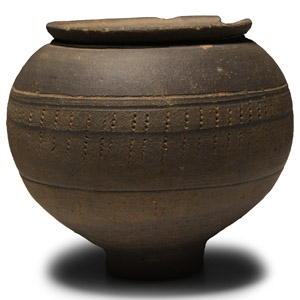
Romano-British Grey Ware Vessel
1st-4th century A.D.Sold for (Inc. bp): £325
With broad body and narrow foot, everted rim; incised bands flanking the median panel with vertical groups of points. 252 grams, 11.5 cm wide
Found UK. From the collection of a late East Anglian teacher and antiquarian who retired to the Isle of Wight in Hampshire, UK. He amassed a large collection of objects between the 1960s-1980s.
