
Loading, please wait...
LOT 0884
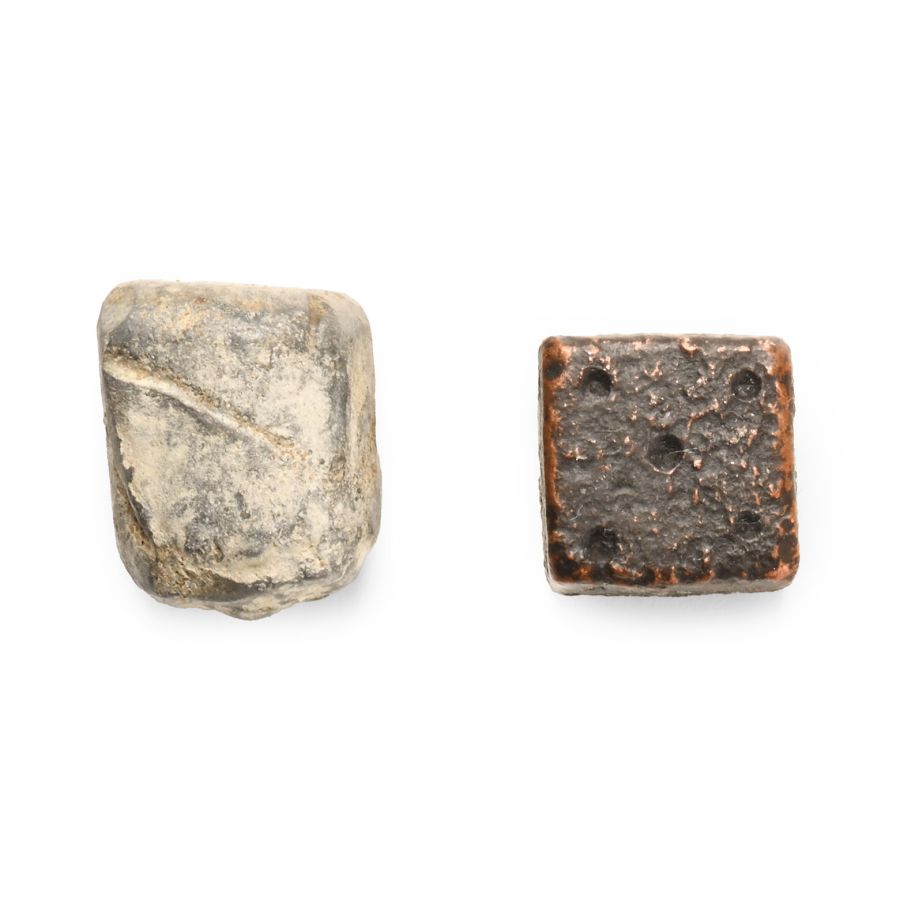
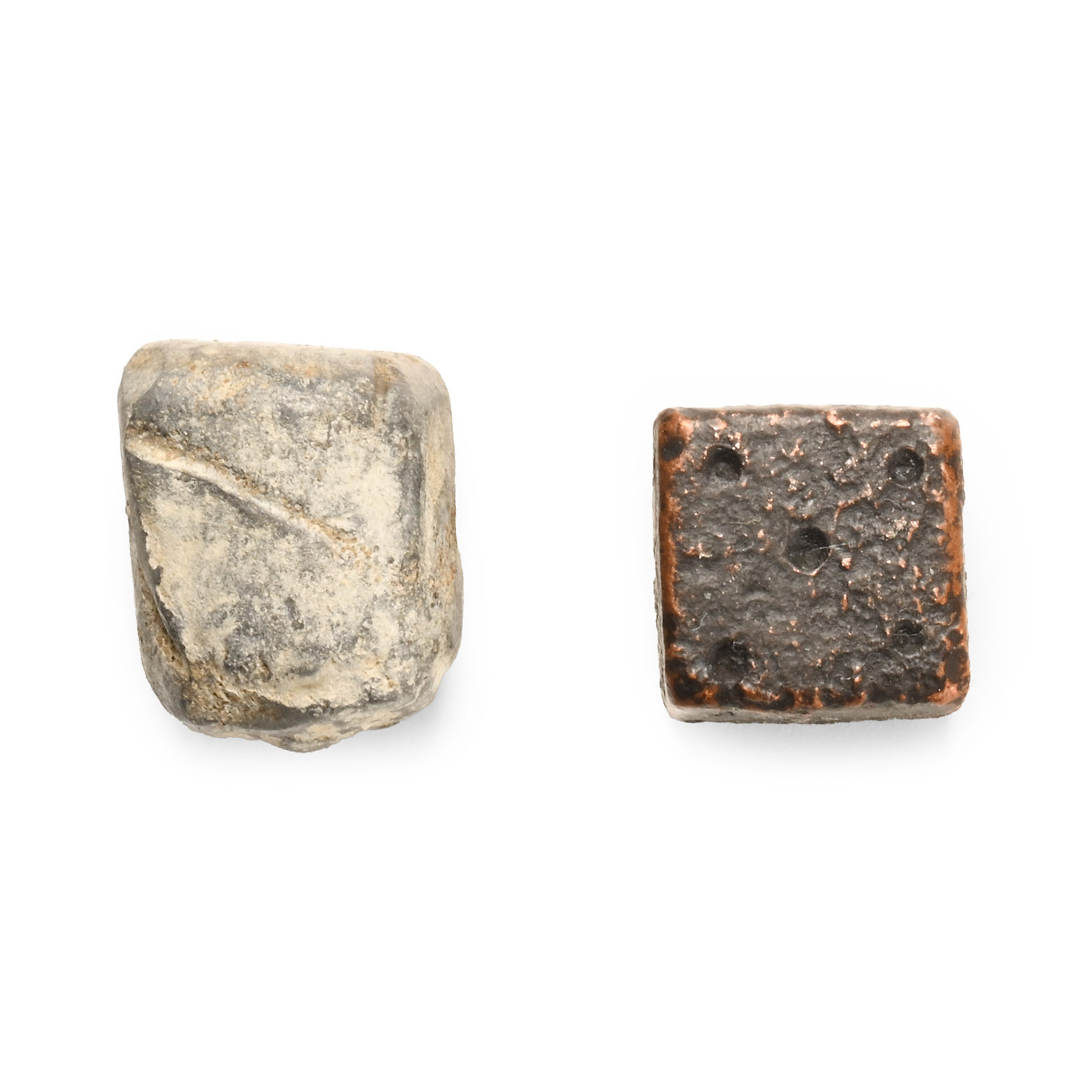
Roman 'Yorkshire' Bronze and Lead Gaming Dice Group
2ND-4TH CENTURY A.D.
1/2 - 1 5/8 in. (36.9 grams total, 12-16 mm).
Comprising one cuboid dice with markings disposed 1:6, 2:5, 3:4; one rectangular block with sprue to one end, surface abraded. [2, No Reserve]
ProvenanceFound whilst searching with a metal detector in Yorkshire, UK.
CONDITIONTimeLine Auctions follows a vetting process to ensure the authenticity and legality of all items, reinforcing our commitment to integrity and responsible trading. Each antiquity, antique, and coin lot undergoes thorough examination by a vetting committee of at least ten external specialists, professional trade association members, scientists, and archaeologists: Our Vetting Process
AUCTIONS:
TimeLine is a leading auction house specialising in antiquities, ancient art, collectables, natural history, coins, medals, and books. Our auctions offer museums, collectors, historians, and enthusiasts the opportunity to acquire unique and historically significant pieces.
-
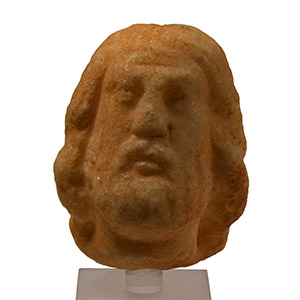
Roman Marble Head of Asclepius
1st-3rd century A.D.Sold for (Inc. bp): £910
The bust of the bearded god Asclepius (Greek Asklepios), with long hair and moustache. 185 grams total, 54 mm high (11.5 cm high including stand))
Ex private collection, Israel. with Archaeological Center, Tel-Aviv, 30 September 2015, no.489. European private collection. Accompanied by a copy of the Israel Antiquities Authority export licence. -
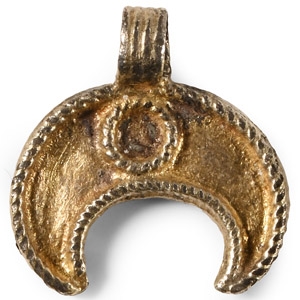
Roman Silver-Gilt Lunar Pendant
2nd-4th century A.D.Sold for (Inc. bp): £117
A miniature pendant with filigree borders and an annulet to both faces, ribbed suspension loop. 0.32 grams, 10 mm
Ex German art market, 2000s. Acquired from an EU collector living in London. From the collection of Surrey, UK, gentleman. -
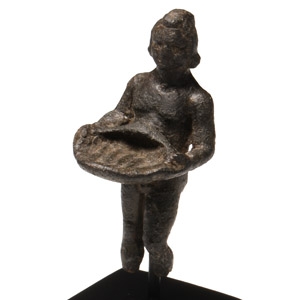
Roman Bronze Statuette of a Servant with Offering
3rd century A.D.Sold for (Inc. bp): £312
Standing nude with both arms supporting a scallop shell, the hair dressed in the manner of a putto; mounted on a custom-made display stand. 38 grams total, 67 mm including stand
From a collection acquired on the UK art market from various auction houses and collections mostly before 2000. From an important Cambridgeshire estate; thence by descent.
Although inspired by statuettes of Eros, the representation is that of a body with a musculature of a mature man, with a well-shaped torso and strong pectorals. Probably of Gallo-Roman workmanship.
