
Loading, please wait...
_900x900.jpg "Roman Yellow Glass Flask")
_200x200.jpg "Roman Yellow Glass Flask")
.jpg "Roman Yellow Glass Flask")
LOT 0175
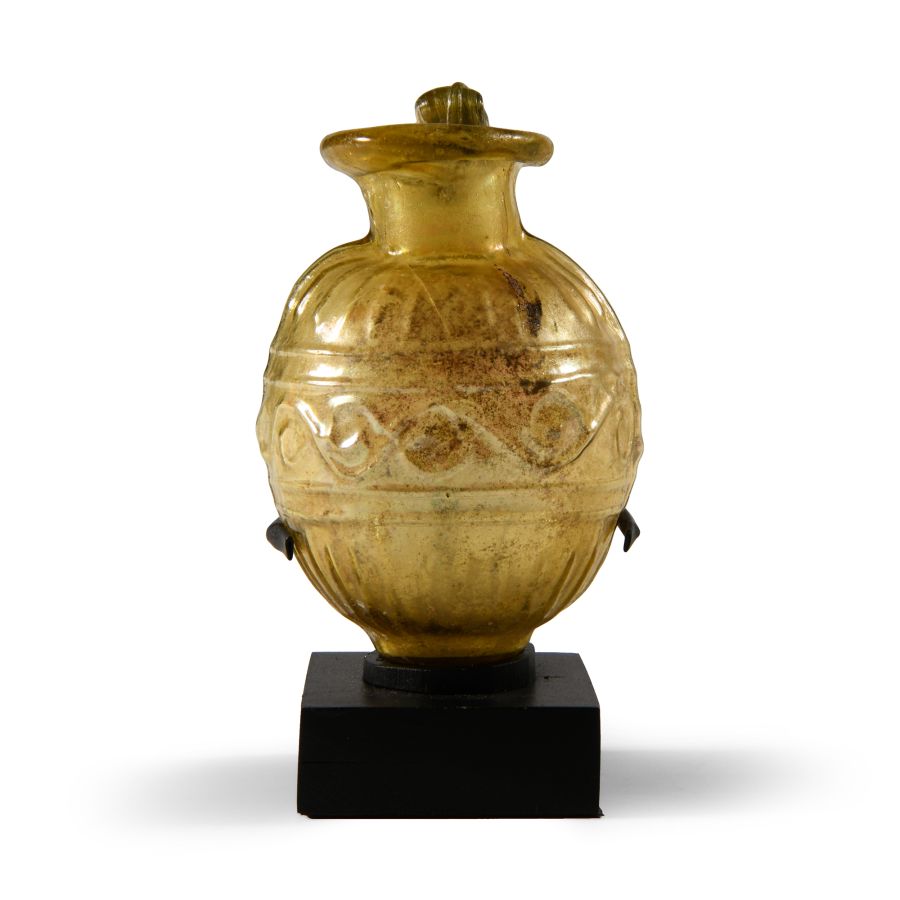
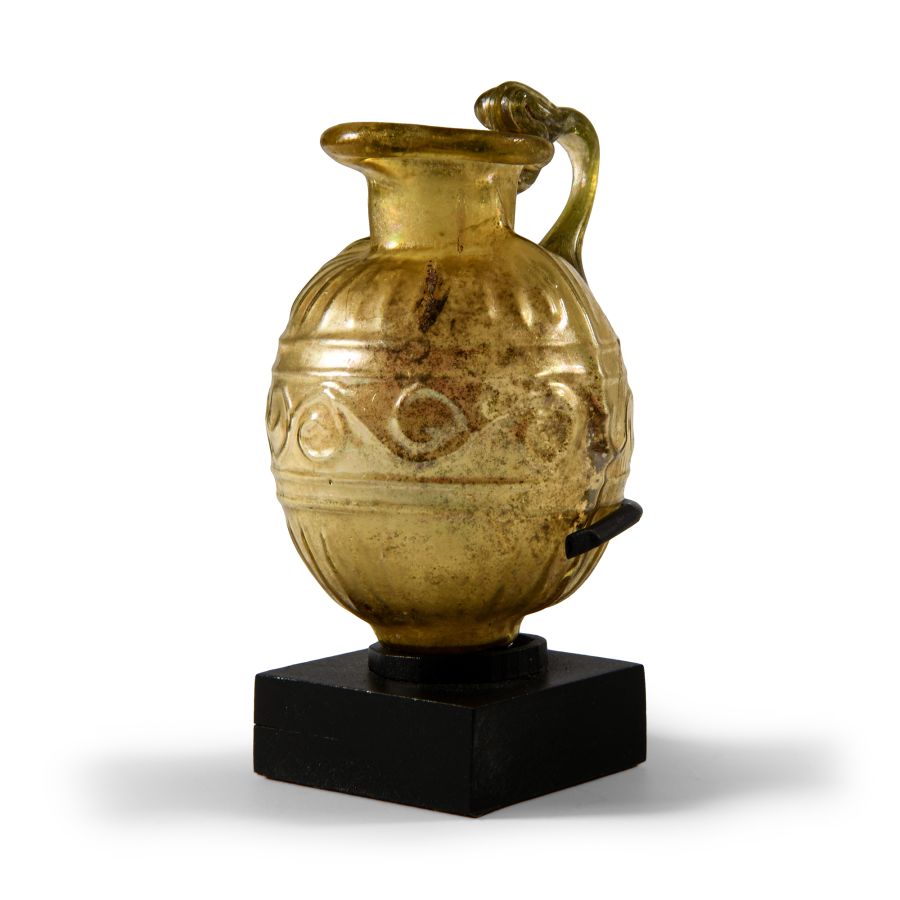
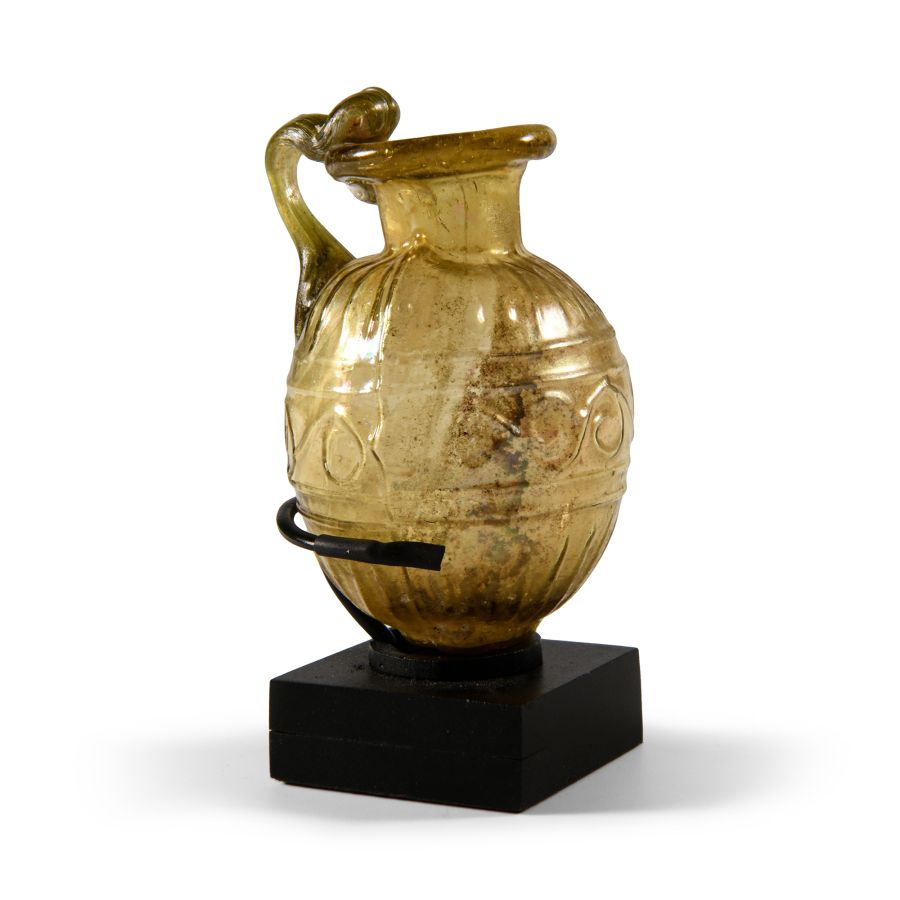
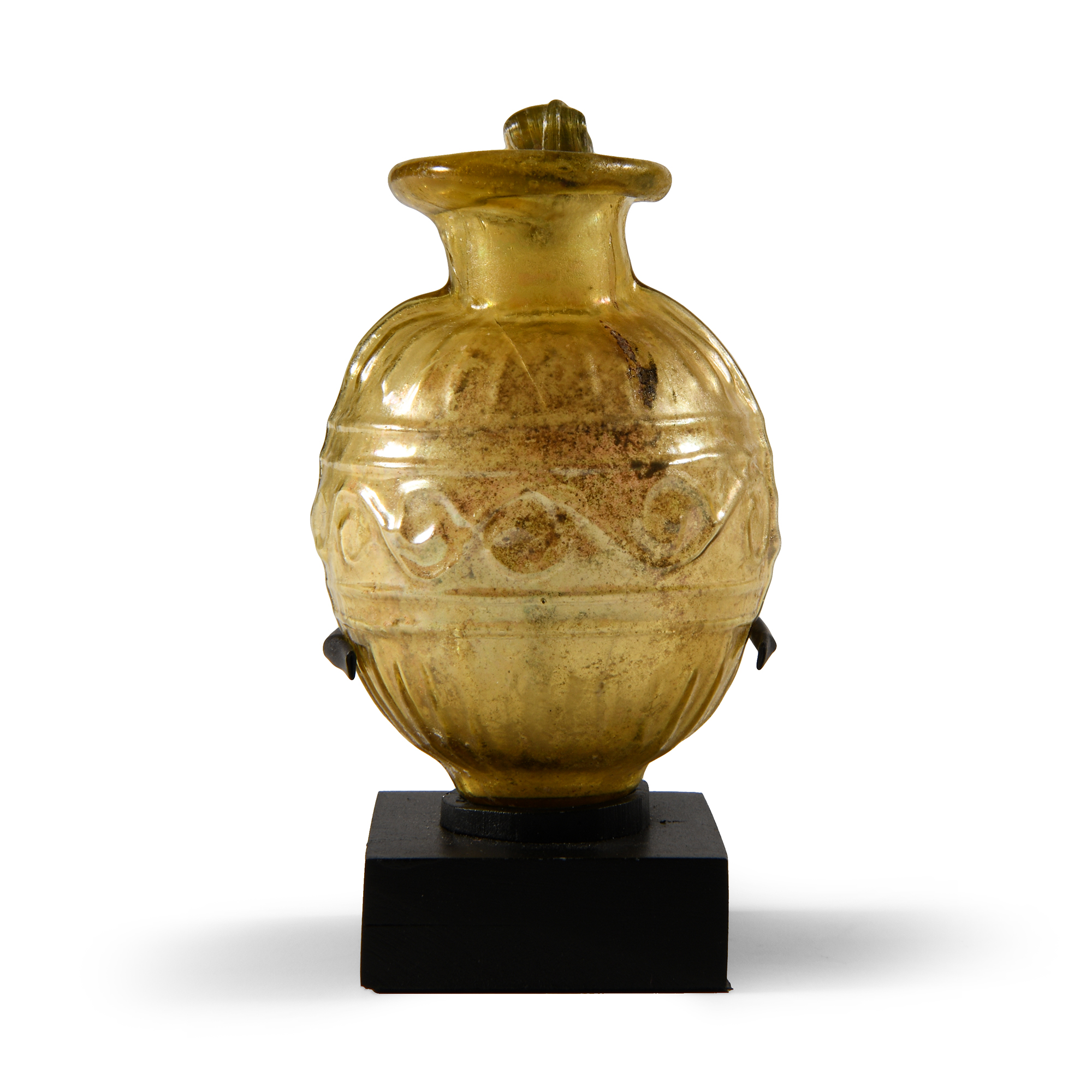
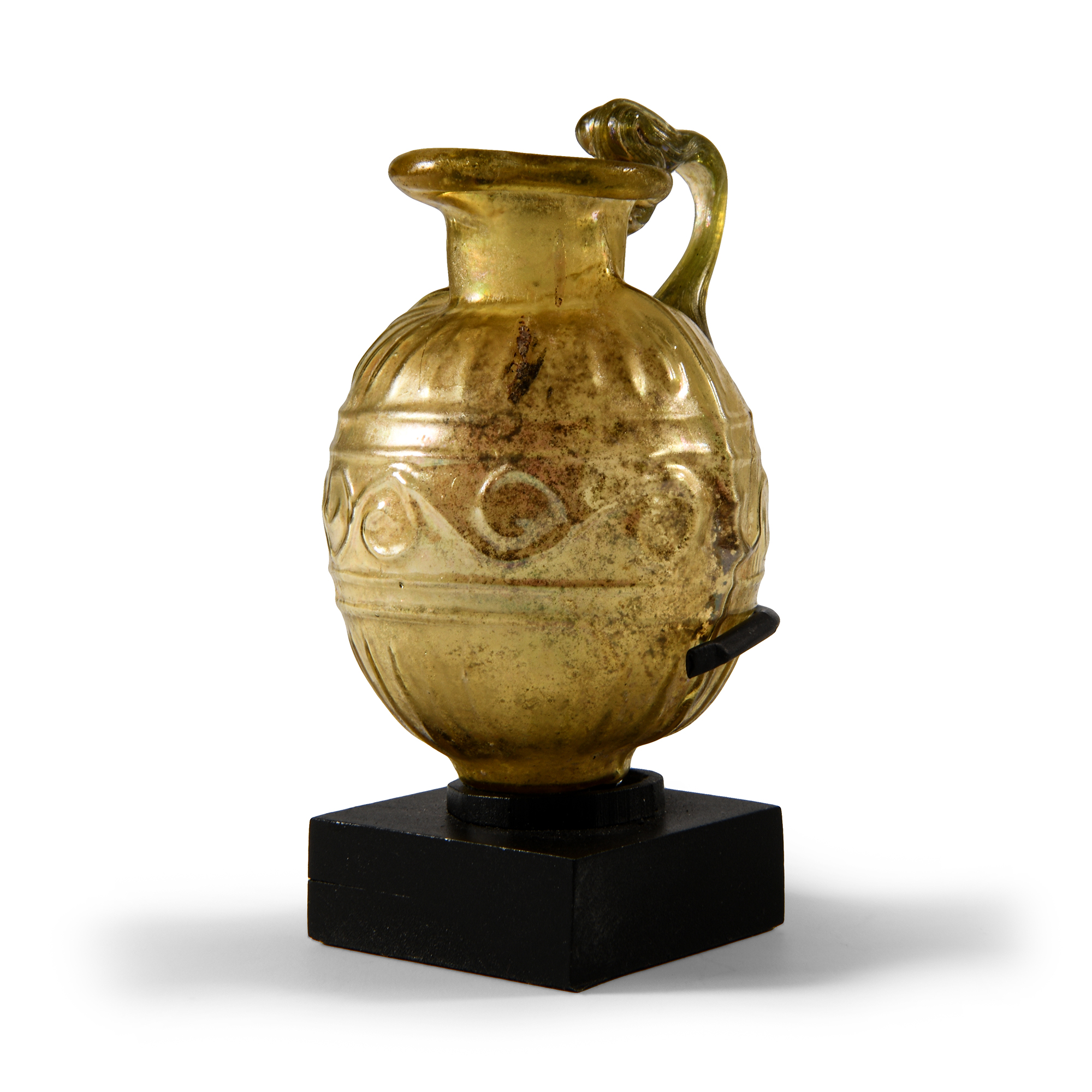
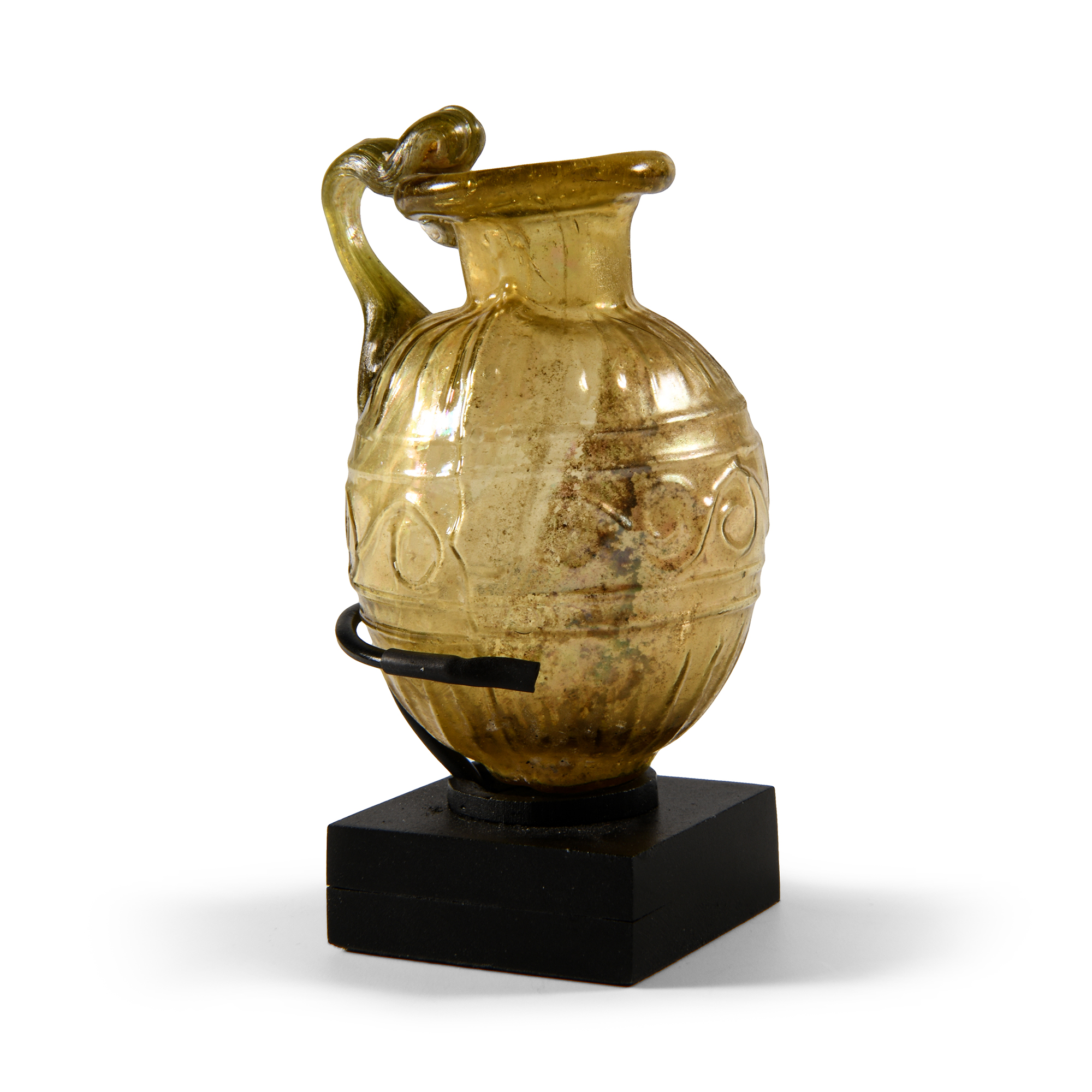
Roman Yellow Glass Flask
CIRCA 3RD-4TH CENTURY A.D.
2 5/8 in. (3 1/8 in.) (16.7 grams, 66 mm (33.9 grams total, 79.4 mm high including stand)).
Mould-blown from translucent glass, the globular body on a circular flat base tapering at the shoulders to a cylindrical neck with an everted rim; a single applied handle; the body decorated with a horizontal band of a continuous Vitruvian wave framed by a double circumferential line, decorative ridges above and below; accompanied by a custom-made display stand.
ProvenanceFrom the property of the late Mr SM, London, UK, 1948-2000.
Ex J.L. collection Surrey, UK.
Cf. Whitehouse, D., Roman Glass in The Corning Museum of Glass, New York, vol.II, nos.640-641, for similar.
FootnotesThe pitcher belongs to a late Roman group decorated with granulated circles forming like volutes. The shape of these globular pitchers is well known since the 1st-2nd century A.D., with the rim folded up and the handle applied to the shoulders, but the decoration is more typical of a later age.
CONDITIONTimeLine Auctions follows a vetting process to ensure the authenticity and legality of all items, reinforcing our commitment to integrity and responsible trading. Each antiquity, antique, and coin lot undergoes thorough examination by a vetting committee of at least ten external specialists, professional trade association members, scientists, and archaeologists: Our Vetting Process
AUCTIONS:
TimeLine is a leading auction house specialising in antiquities, ancient art, collectables, natural history, coins, medals, and books. Our auctions offer museums, collectors, historians, and enthusiasts the opportunity to acquire unique and historically significant pieces.
LOT 0175
Roman Yellow Glass Flask
Estimate £1,800 - 2,400€2,090 - 2,780 (for guidance only)$2,430 - 3,240 (for guidance only)
-
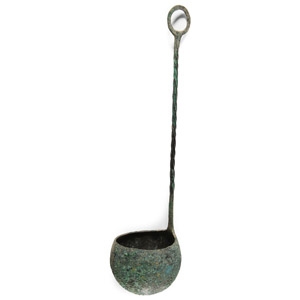
Roman Bronze Ladle with Twisted Handle
2nd century B.C.- 1st century A.D.Sold for (Inc. bp): £286
With deep bowl, integral bronze handle twisted about it own axis, loop finial. 77 grams, 26.2 cm
UK private collection before 2000. UK art market. Property of a London gentleman. -
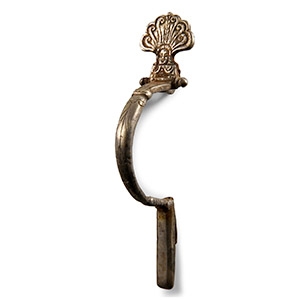
Large Roman Silver Bow Brooch
Circa 2nd-3rd century A.D.Sold for (Inc. bp): £130
With incised foliage detail to the high arched bow and flat head plate with human face and radiating floral pattern engraved on both sides; catchplate and pin-loop to the reverse. 36.5 grams, 10.5 cm
Ex European collection, 1990s. Ex Den of Antiquity, Cambridgeshire, UK. Accompanied by a dealer's catalogue information card.
The fibula seems to be provincial type, of Romano-Germanic inspiration. This particularly characteristic fibula shape of the Romano-Germanic army, worn probably by the Germanic mercenaries of the Roman army, appeared in the later 2nd and partly at the beginning of the 3rd century A.D., under a form of large bow brooches with various types of head plates or spiral sleeves. -
.jpg)
Roman 'Essex' Bronze Brooch Collection
1st-4th century A.D.Sold for (Inc. bp): £59
Six brooches of various types, including one example with remains of polychrome enamelling; incomplete. 46 grams total, 22-62 mm
Found Essex, UK.
