
Loading, please wait...
LOT 0844
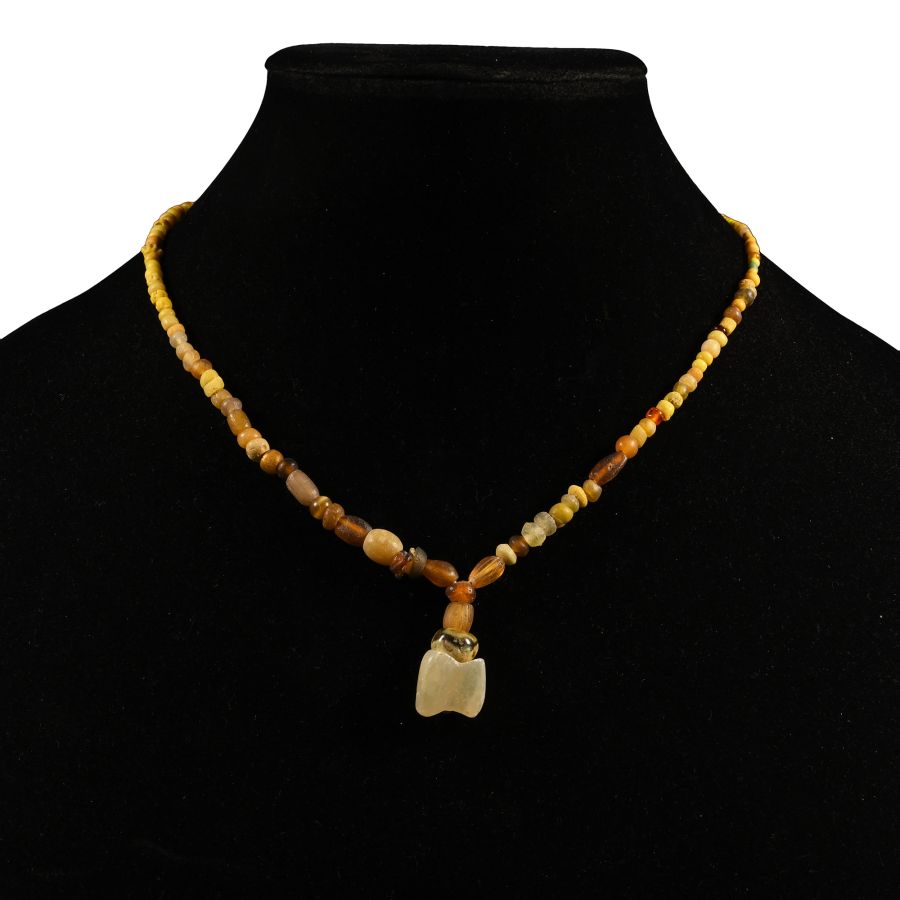
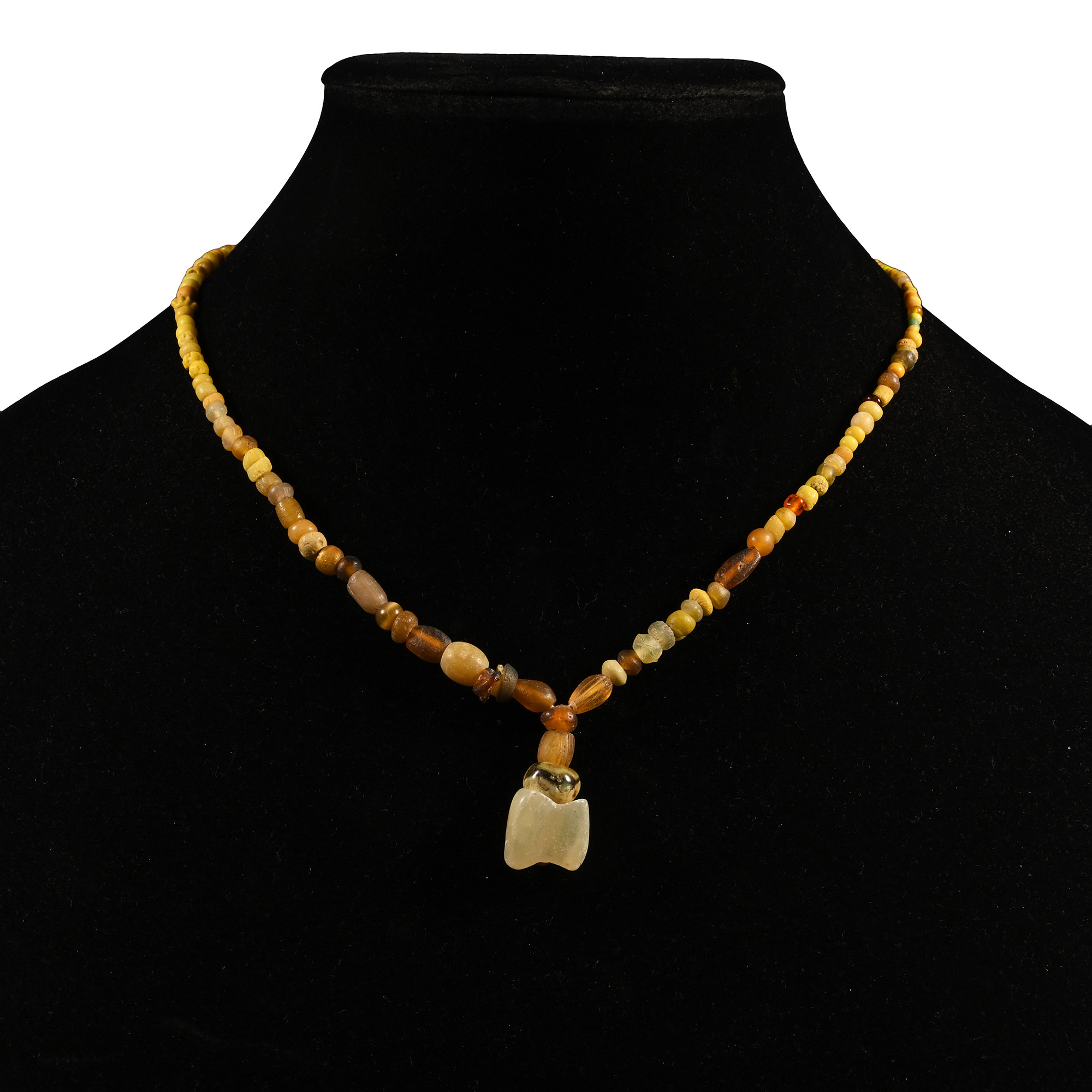
Roman Yellow Glass Bead Necklace String
1ST-4TH CENTURY A.D. AND LATER
14 in. (14.6 grams, 35.5 cm).
Restrung group of melon, cylindrical, oblate and other beads. [No Reserve]
ProvenanceEx London, UK, collection, 1990s.
This lot is accompanied by an illustrated lot declaration signed by the Head of the Antiquities Department, Dr Raffaele D'Amato.
TimeLine Auctions follows a vetting process to ensure the authenticity and legality of all items, reinforcing our commitment to integrity and responsible trading. Each antiquity, antique, and coin lot undergoes thorough examination by a vetting committee of at least ten external specialists, professional trade association members, scientists, and archaeologists: Our Vetting Process
AUCTIONS:
TimeLine is a leading auction house specialising in antiquities, ancient art, collectables, natural history, coins, medals, and books. Our auctions offer museums, collectors, historians, and enthusiasts the opportunity to acquire unique and historically significant pieces.
-
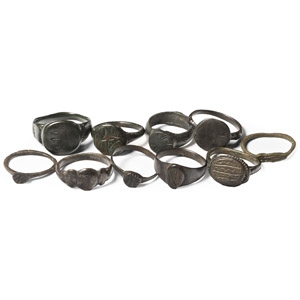
Roman to Medieval Bronze Ring Collection
1st-16th century A.D.Sold for (Inc. bp): £117
Comprising ten rings with bezels, including one with a dagger-shaped bezel. 41.93 grams total, 21-26 mm
Ex German art market, 2000s. Acquired from an EU collector living in London. From the collection of a Surrey, UK, gentleman. This lot is accompanied by an illustrated lot declaration signed by the Head of the Antiquities Department, Dr Raffaele D'Amato. -
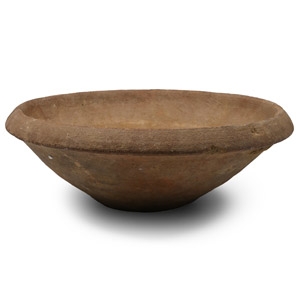
Roman Terracotta Mortarium
1st-4th century A.D.Sold for (Inc. bp): £156
With dimple base, broad body and carinated rim. 1.19 kg, 22 cm wide
Acquired in the 1990s. Ex Abelita family collection. This lot is accompanied by an illustrated lot declaration signed by the Head of the Antiquities Department, Dr Raffaele D'Amato. -
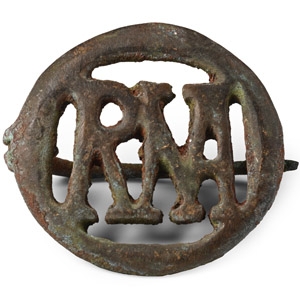
Roman Bronze ROMA Openwork Brooch
2nd-3rd century A.D.Sold for (Inc. bp): £169
The discoid body formed as an openwork monogram ROMA in Latin letters, the M and A ligated, the O formed by the brooch frame itself; ROMA also a palindrome for AMOR. 12.5 grams, 34 mm
Ex German art market, 2000s. Acquired from an EU collector living in London. From the collection of a Surrey, UK, gentleman. This lot is accompanied by an illustrated lot declaration signed by the Head of the Antiquities Department, Dr Raffaele D'Amato.
When viewed from the default side, RMA + the circle of the brooch form a monogram for ‘Roma’. Roma refers to both the city and its divine personification, the Dea Roma. When RMA is read from right to left (or the brooch is viewed from the opposite side), the letters form a monogram for ‘AMOR’, the Latin name for Cupid, the god of love. The phrase pertains to Roma-Amor, a widely recognised palindrome espousing Roman wordplay in the ancient times.
