
Loading, please wait...
LOT 0136
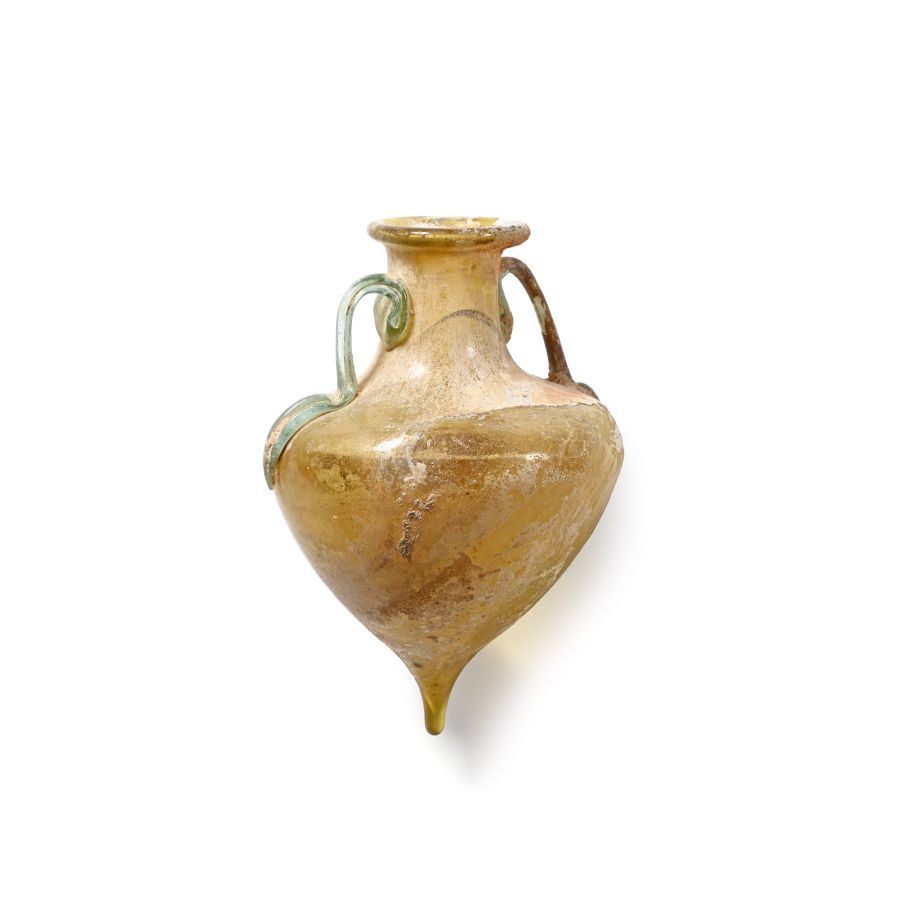
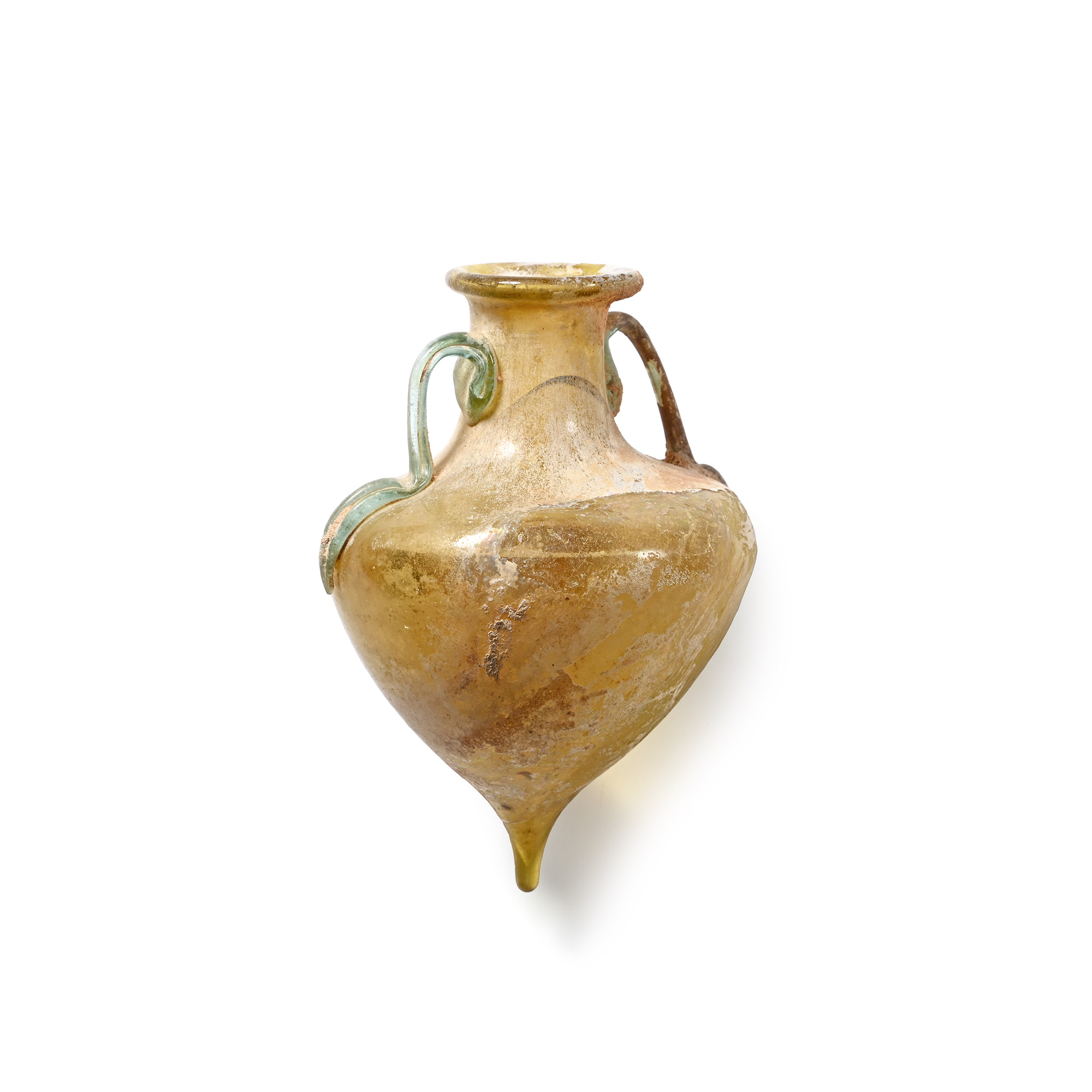
Roman Yellow Glass Amphora
3RD-4TH CENTURY A.D.
3 5/8 in. (31.08 grams, 92 mm).
With broad rounded shoulder tapering to a conical foot, cylindrical neck and everted mouth with rolled rim, applied trail handles and collar.
ProvenanceFrom an important London collection of glass, 1990s.
This lot is accompanied by an illustrated lot declaration signed by the Head of the Antiquities Department, Dr Raffaele D'Amato.
Cf. Lightfoot, C.S., Ancient Glass in the National Museums of Scotland, Edinburgh, 2007, item 307, for type.
CONDITIONTimeLine Auctions follows a vetting process to ensure the authenticity and legality of all items, reinforcing our commitment to integrity and responsible trading. Each antiquity, antique, and coin lot undergoes thorough examination by a vetting committee of at least ten external specialists, professional trade association members, scientists, and archaeologists: Our Vetting Process
AUCTIONS:
TimeLine is a leading auction house specialising in antiquities, ancient art, collectables, natural history, coins, medals, and books. Our auctions offer museums, collectors, historians, and enthusiasts the opportunity to acquire unique and historically significant pieces.
LOT 0136
Roman Yellow Glass Amphora
Estimate £1,000 - 1,400€1,160 - 1,620 (for guidance only)$1,350 - 1,890 (for guidance only)
-
.jpg)
Roman Silver Ring with Separate Gemstone
2nd-3rd century A.D.Sold for (Inc. bp): £65
Comprising: a ring with D-section hoop widening at the shoulders, oval cell to the bezel to accept an insert; a red glass intaglio with a stylised profile bust(?) set in a bronze mount. 12.70 grams, 24.03 mm overall, 16.67 mm internal diameter (approximate size British H, USA 3 3/4, Europe 6.18, Japan 6)
Property of a Cambridgeshire, UK, collector. From his private collection since the 1970s; thence by descent circa 2000. Ex private collection of a Bedfordshire gentleman. This lot is accompanied by an illustrated lot declaration signed by the Head of the Antiquities Department, Dr Raffaele D'Amato. -
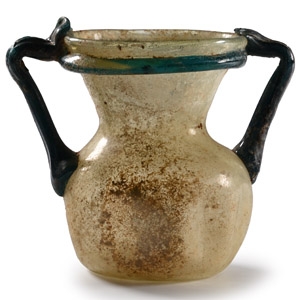
Roman Glass Handled Jar
1st-4th century A.D.Estimate: £350 - 450 (+bp*)
Opening Bid: £175
With dimpled base, bulbous body with opposed dimples to the sidewall, applied flange to the neck, applied trails forming lateral handles. 39.4 grams, 78 mm wide
From an important London collection of glass, 1990s. This lot is accompanied by an illustrated lot declaration signed by the Head of the Antiquities Department, Dr Raffaele D'Amato. -
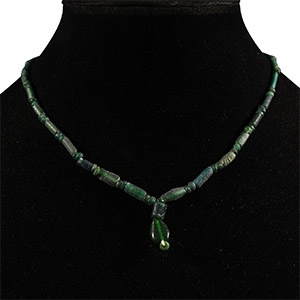
Roman Green Glass Bead Necklace String
1st-4th century A.D. and laterSold for (Inc. bp): £39
Restrung group of tubular, cylindrical, tabular and other beads. 11.1 grams, 36.2 cm
Ex London, UK, collection, 1990s. This lot is accompanied by an illustrated lot declaration signed by the Head of the Antiquities Department, Dr Raffaele D'Amato.
