
Loading, please wait...
LOT 0095
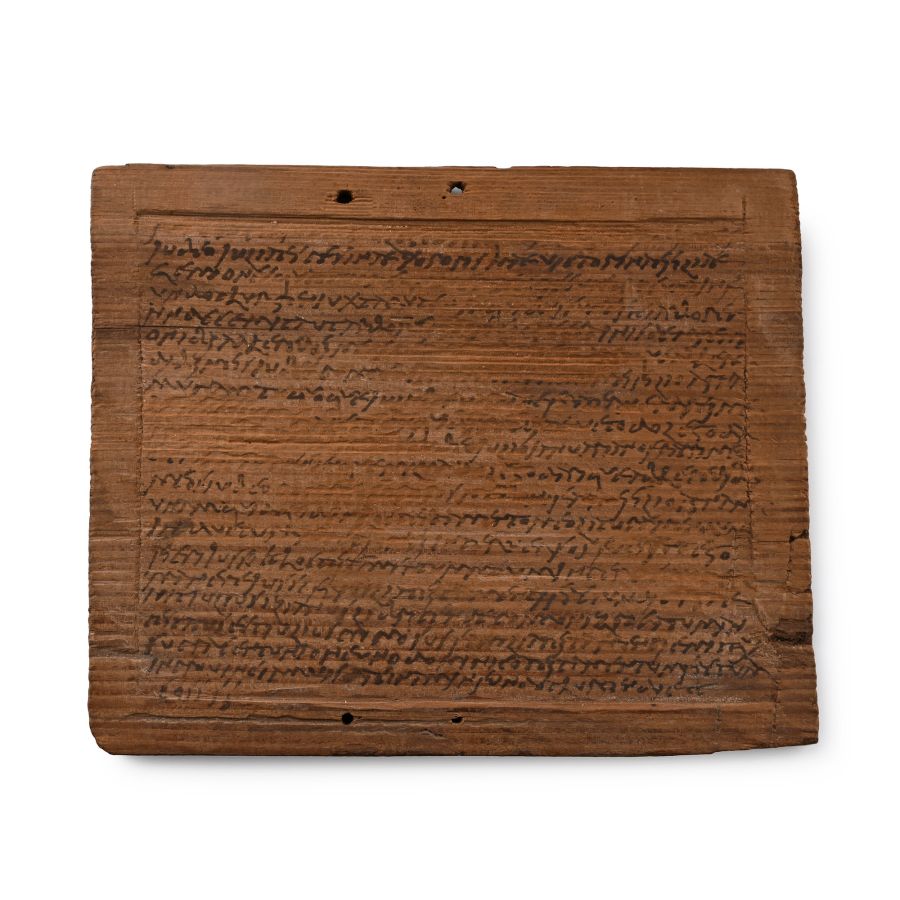
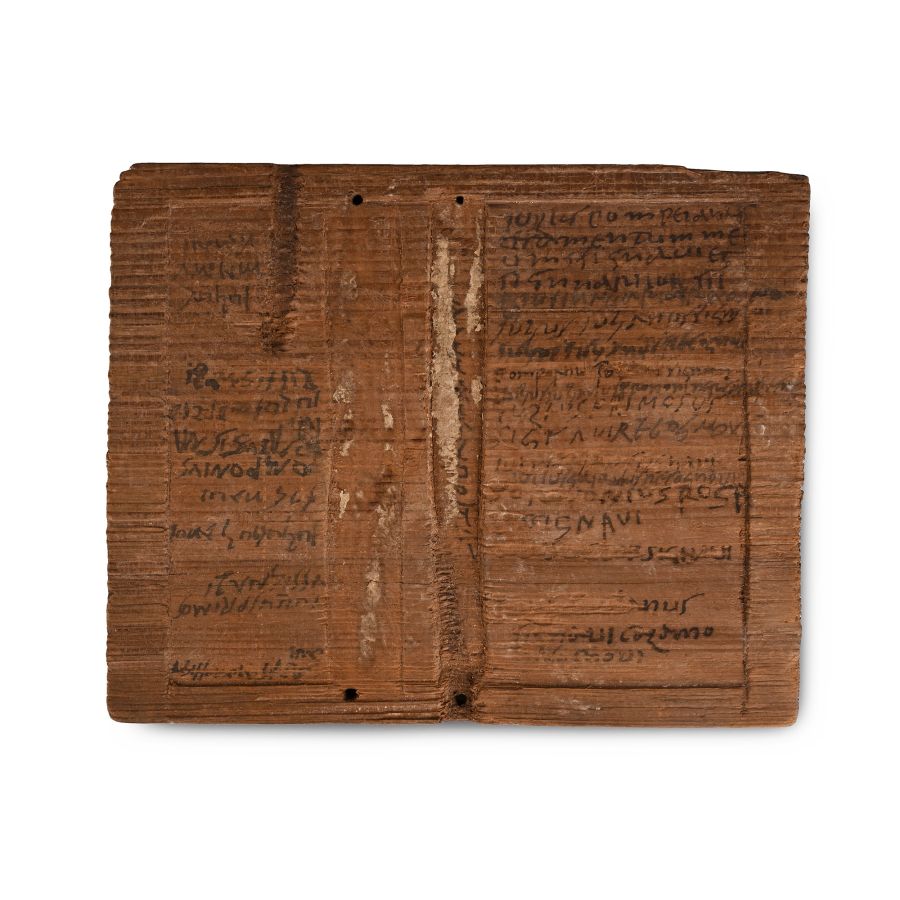
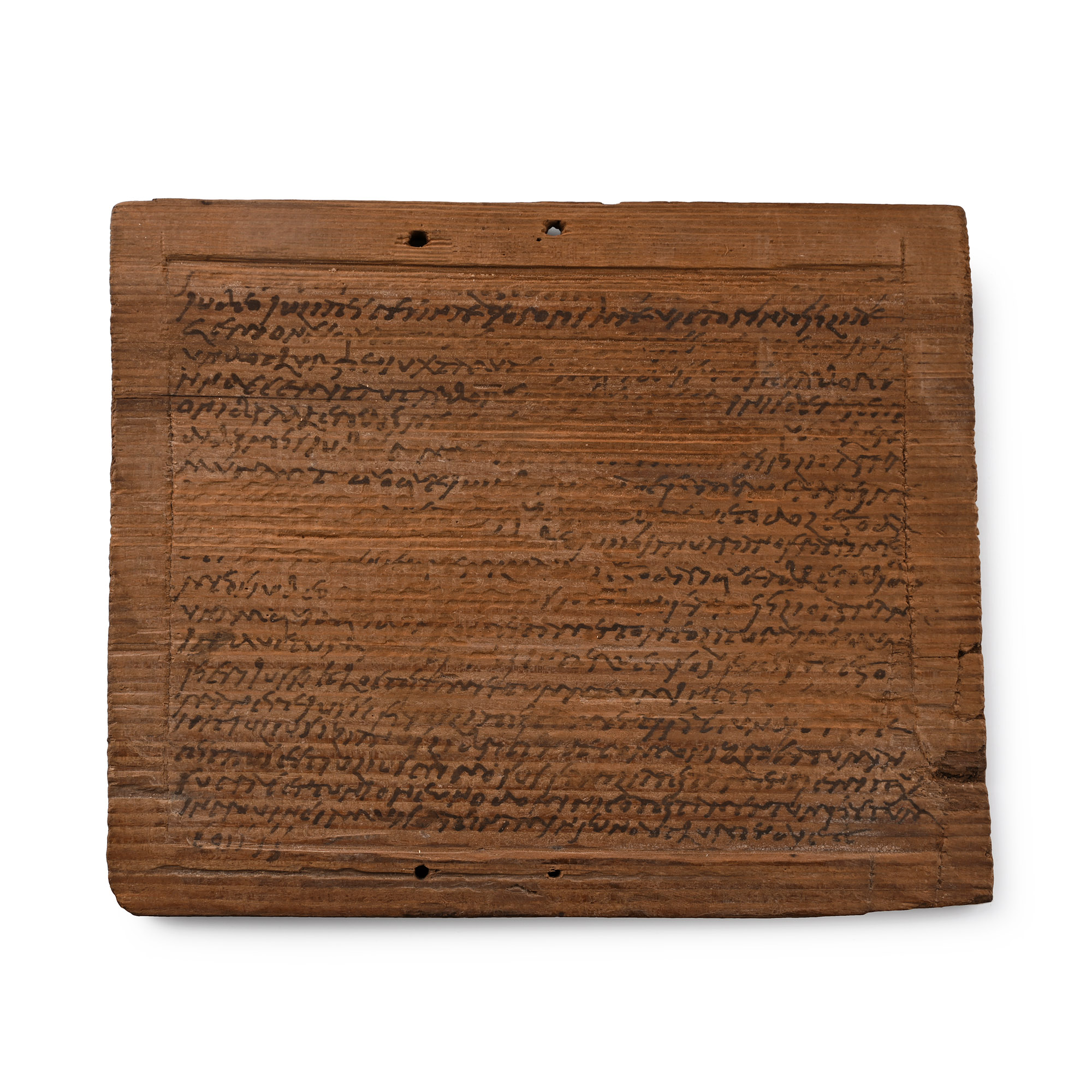
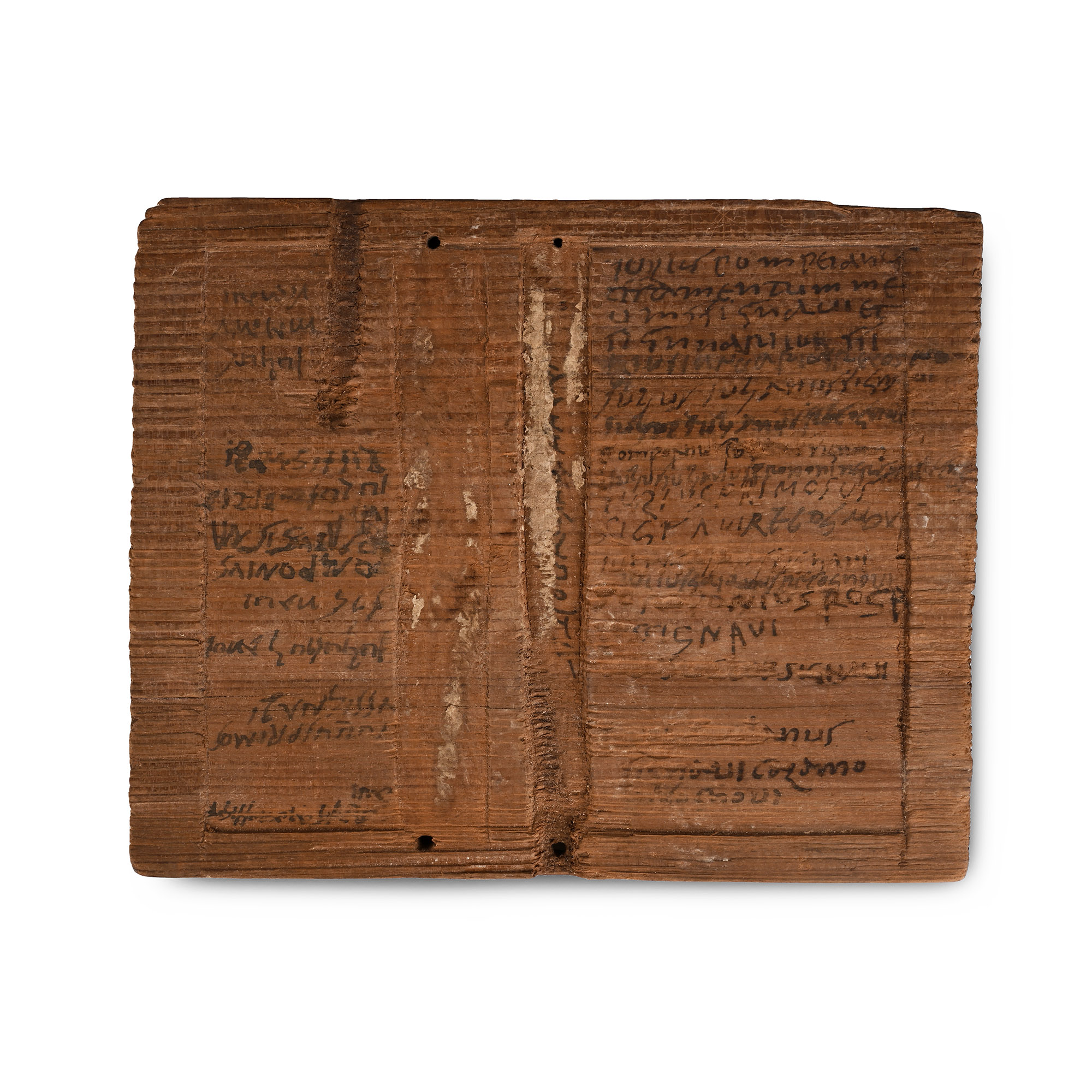
Roman Wooden Tablet with Testamentary Dispositions of Iulius Pomp(onius)
MID 4TH CENTURY A.D.
8 x 6 3/8 in. (106 grams, 20.2 x 16.2 cm).
The third and last tablet of a Roman will made by Iulius Pomp(onius?), parts of lost surface on the inner face, two small holes both at the upper and lower rim (for binding the tablets of this document together); on the inner face the recess inscribed with twenty-one lines of Roman cursive script consisting of testamentary dispositions regarding a special category of fields (gemiones), ending with the mancipatory formula of Roman testaments; on the outer face two sulci and signatures of witnesses. [No Reserve]
ProvenanceAcquired by Albert Sfez in the early 1950s.
Formerly the property of Monsieur Alain Sfez, a Belgium collector; acquired by gift from his father Albert Sfez, in 1965.
Acquired by a London dealer in 1973.
From an important London collection since 1975; thence by descent.
Accompanied by a copy of an illustrated academic report by Professor Dr phil. Peter Rothenhöfer.
This lot has been checked against the Interpol Database of stolen works of art and is accompanied by search certificate number no.12601-230811.
Exhibited at the Harwich Museum, Harwich, Essex, UK, 27th August-10th December 2025; accompanied by a copy of a photograph of the artefacts on display.
LiteratureCf. Rothenhöfer, P., and Blänsdorf, J., 'Sana mente sanaque memoria testamentum feci: Eine testamentarische Verfügung vom 12. April 340 n. Chr.', Gephyra 13 (2016), pp.153-163; Rothenhöfer, P., Neues zum Testament des Pomponius Maximus aus dem Jahr 371 n. Chr. (Notes on the Testament of Pomponius Maximus from the Year AD 371); Zeitschrift der Savigny Stiftung für Rechtsgeschichte (Romanistische Abteilung) 142, 2025, pp. 200-232; also see Thomas, J. D., Vindolanda: The Latin Writing Tablets, Britannia Monograph Series No 4, London, 1983, for examples of wooden tabulae re-used as writing surfaces; for examples of testamentary documents on wooden tablets that have survived, see FIRA III, p.47, for Anthony Silvanus from 142 AD, also see BGU VII 1695 for Safinnius Herminus; for another from Transfynydd, North Wales, see Arch. Camb. 150, pp.143-156; and see Bowman, A.K., Life and letters on the Roman frontier: Vindolanda and its people, London, 1994, for discussion of the uses of Roman writing tablets; Rothenhoefer, P., Neue römische Rechtsdokumente aus dem Byzacena-Archiv / New Roman Legal Documents from the Byzacena Archive, (forthcoming).
FootnotesProfessor Dr phil. Peter Rothenhöfer writes: 'Without any doubts this tablet is an original document from Roman times. Because only few Roman testaments have survived this document is of great importance both for Roman Legal and Social History'.
CONDITIONTimeLine Auctions follows a vetting process to ensure the authenticity and legality of all items, reinforcing our commitment to integrity and responsible trading. Each antiquity, antique, and coin lot undergoes thorough examination by a vetting committee of at least ten external specialists, professional trade association members, scientists, and archaeologists: Our Vetting Process
AUCTIONS:
TimeLine is a leading auction house specialising in antiquities, ancient art, collectables, natural history, coins, medals, and books. Our auctions offer museums, collectors, historians, and enthusiasts the opportunity to acquire unique and historically significant pieces.
LOT 0095
Roman Wooden Tablet with Testamentary Dispositions of Iulius Pomp(onius)
Sold for (Inc. bp): £2,600
-
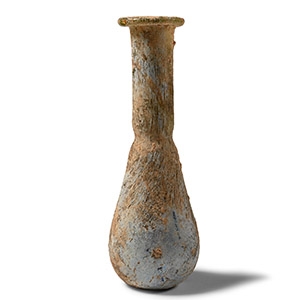
Roman Glass Vessel
1st-2nd century A.D.Estimate: £100 - 140 (+bp*)
Opening Bid: £50
With piriform lower body, extended cylindrical neck and flange rim; iridescent surfaces. 31.4 grams, 10.1 cm
From a London, UK, collection, 1990s. This lot is accompanied by an illustrated lot declaration signed by the Head of the Antiquities Department, Dr Raffaele D’Amato.
This toilet bottle (Clairmont balsamarium type F) is characterised by the cylindrical neck with slight constriction at the bottom. Similar examples have been found in the Wadi Eshari, Jordan (Wadi-Es-Sir). -
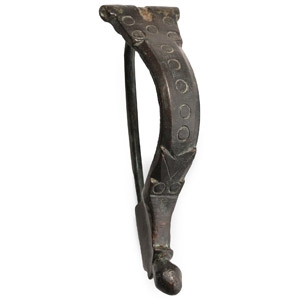
Large Roman Decorated Bronze Bow Brooch
3rd-4th century A.D.Sold for (Inc. bp): £59
Wide bow with punched annulet decoration, short footplate with a knop finial. 28 grams, 72 mm
Ex German art market, 2000s. Acquired from an EU collector living in London. From the collection of a Surrey, UK, gentleman. -
.jpg)
Roman Blue Glass Bead Necklace String
1st-4th century A.D. and laterSold for (Inc. bp): £52
Restrung designer necklace string of tubular, fusiform, oblate and other types with annular pendant centrepiece. 31 grams, 42 cm
London, UK, collection, 2000s.
