
Loading, please wait...
LOT 0094
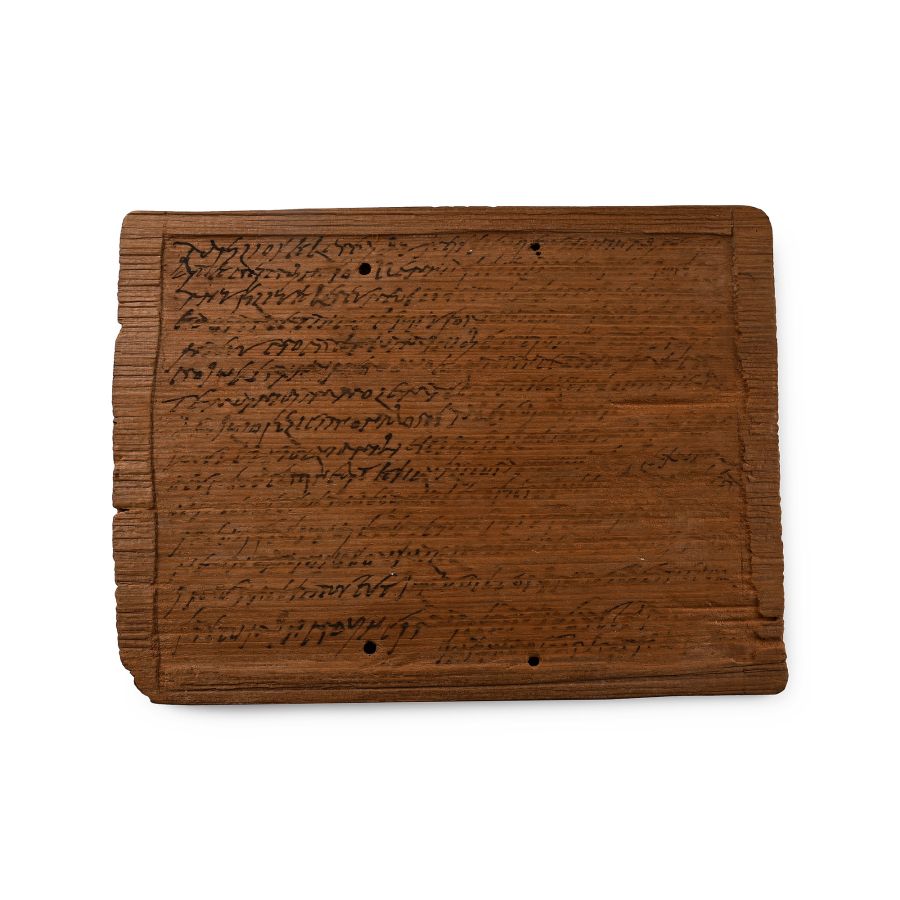
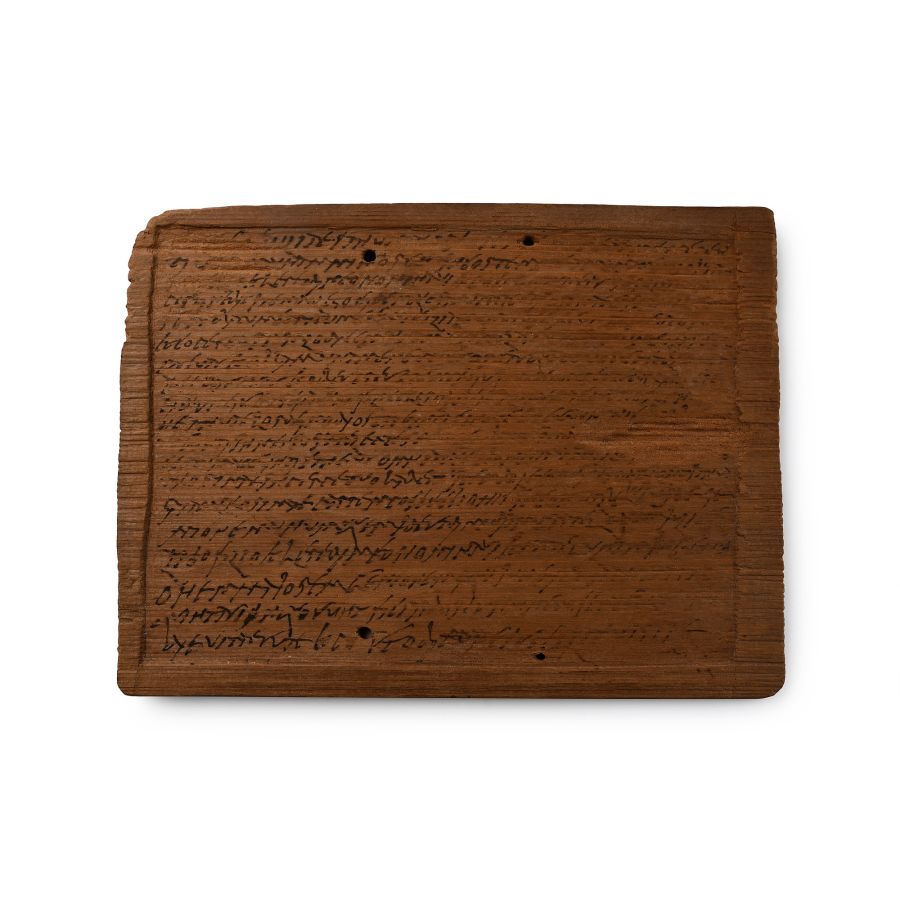
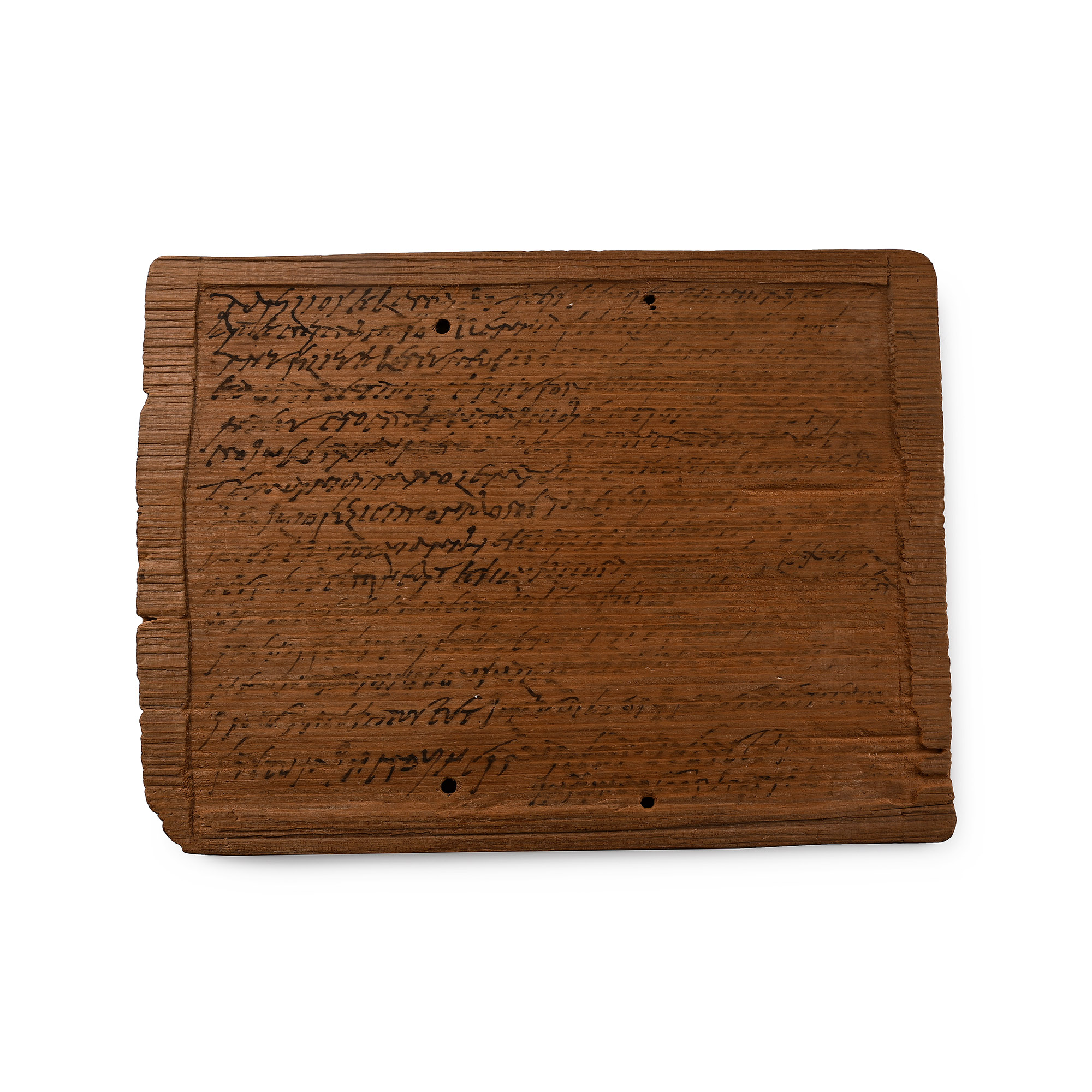
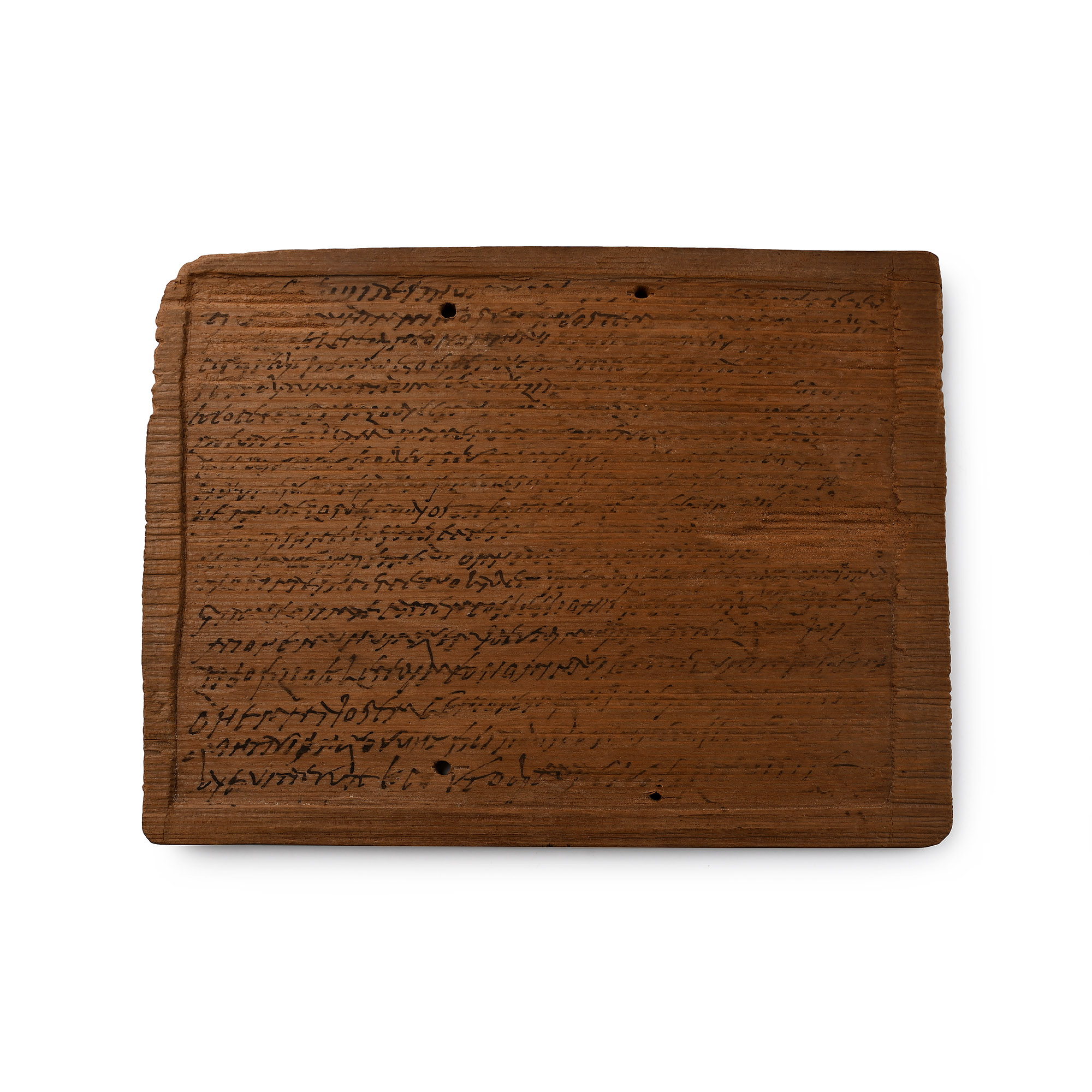
Roman Wooden Tablet from the Will of the Father of Iulia Ianuaria Made on the Goretiano Estate in the Province of Byzacena
EARLY 4TH CENTURY A.D.
9 1/4 x 6 7/8 in. (65 grams, 23.5 x 17.6 cm).
Well preserved rectangular tablet with a recessed panel to each face; the third and last tablet of a Roman will; both sides inscribed in Roman cursive script using ink and calamus, twenty-one lines of Roman cursive script written within the recess, some text is lost on the right half of both the inner and outer face; on the inner face partially damaged surface; on the other side sixteen lines of cursive script with a half-line at the right edge; two small holes both near the upper and lower rim (for binding the tablets of this document together); the text consists of testamentary dispositions and ends with the obligatory mancipatory formula of Roman testaments; mentioned is a Iulius Fortunatus. [No Reserve]
ProvenanceAcquired by Albert Sfez in the early 1950s.
Formerly the property of Monsieur Alain Sfez, a Belgium collector; acquired by gift from his father Albert Sfez, in 1965.
Acquired by a London dealer in 1973.
From an important London collection since 1975; thence by descent.
Accompanied by a copy of an illustrated academic report by Professor Dr phil. Peter Rothenhöfer.
This lot has been checked against the Interpol Database of stolen works of art and is accompanied by search certificate number no.12602-230810.
Exhibited at the Harwich Museum, Harwich, Essex, UK, 27th August-10th December 2025; accompanied by a copy of a photograph of the artefacts on display.
LiteratureCf. Rothenhöfer, P., and Blänsdorf, J., 'Sana mente sanaque memoria testamentum feci: Eine testamentarische Verfügung vom 12. April 340 n. Chr.", Gephyra 13 (2016), pp.153-163; Rothenhoefer, P., Bemerkungen zum Testament des Pomponius Maximus aus dem Jahr 371 n. Chr. (Notes on the Testament of Pomponius Maximus from the Year AD 371); Zeitschrift der Savigny Stiftung für Rechtsgeschichte (Romanistische Abteilung) 142, 2025, pp. 200-232); also see Thomas, J. D., Vindolanda: The Latin Writing Tablets, Britannia Monograph Series No 4, London, 1983, for examples of wooden tabulae re-used as writing surfaces; for examples of testamentary documents on wooden tablets that have survived, see FIRA III, p.47, for Anthony Silvanus from 142 AD, also see BGU VII 1695 for Safinnius Herminus; for another from Transfynydd, North Wales, see Arch. Camb. 150, pp.143-156; and see Bowman, A.K., Life and letters on the Roman frontier : Vindolanda and its people, London, 1994, for discussion of the uses of Roman writing tablets; Rothenhoefer, P., Neue römische Rechtsdokumente aus dem Byzacena-Archiv / New Roman Legal Documents from the Byzacena Archive, (forthcoming).
FootnotesProfessor Dr phil. Peter Rothenhöfer writes: 'Without any doubts this tablet is an original document from Roman times. Because only few Roman testaments have survived this document is of great importance both for Roman Legal and Social History'.
CONDITIONTimeLine Auctions follows a vetting process to ensure the authenticity and legality of all items, reinforcing our commitment to integrity and responsible trading. Each antiquity, antique, and coin lot undergoes thorough examination by a vetting committee of at least ten external specialists, professional trade association members, scientists, and archaeologists: Our Vetting Process
AUCTIONS:
TimeLine is a leading auction house specialising in antiquities, ancient art, collectables, natural history, coins, medals, and books. Our auctions offer museums, collectors, historians, and enthusiasts the opportunity to acquire unique and historically significant pieces.
LOT 0094
Roman Wooden Tablet from the Will of the Father of Iulia Ianuaria Made on the Goretiano Estate in the Province of Byzacena
Sold for (Inc. bp): £1,690
-
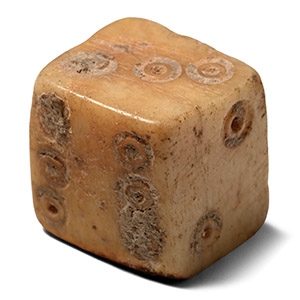
Roman Bone Gaming Dice
1st-2nd century A.D.Sold for (Inc. bp): £130
With incised ring-and-dot markings disposed 1:6, 2:5, 3:4. 4.1 grams, 12 x 13 mm
From a collection of gaming items, formed 1980-1990s. -
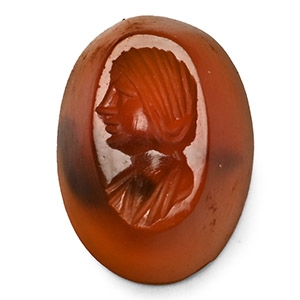
Roman Gemstone with Female Portrait
1st century B.C.-1st century A.D.Sold for (Inc. bp): £117
Ellipsoid in plan with intaglio profile female bust. 0.41 grams, 9 mm
From the collection of a London, UK, gentleman, 1970s onwards. This lot is accompanied by an illustrated lot declaration signed by the Head of the Antiquities Department, Dr Raffaele D’Amato.
Based on similarities with coins and sculptures, the gemstone could date to the Late Hellenistic or Early Roman period. These similarities can be seen in the strongly marked lines of the dress, the pronounced shape of the mouth, and the squareness of the nose. -
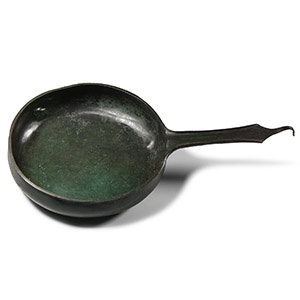
Roman Bronze Patera with Handle
1st century B.C.-1st century A.D.Sold for (Inc. bp): £715
The bowl with a wide flat bottom and convex sides; the inside with incised concentric circles; flat handle with raised edges and hooked finial for suspension. 483 grams, 39.5 cm
German private collection, Mr O., collecting in the 1950s-1960s; thence by descent. with Bonhams, London, 7 July 2016, lot 191 (£3,000-5,000). Accompanied by an academic report by Dr Raffaele D’Amato. Accompanied by copies of the relevant Bonhams printed catalogue pages (full page). This lot has been checked against the Interpol Database of stolen works of art and is accompanied by search certificate number no.11735-201189.
This vessel was part of Roman and provincial bronze instrumentum domesticum, i.e. culinary or domestic utility ware. Such cooking vessels are rare: some are found in central and northern Italy, in Pannonia, Germany and in Britain. The Aylesford Pan, today in the British Museum (inventory no.1886.1112.1), is one of the most important finds. This specimen (Eggers type 130), probably pre-Caesarian or Caesarian, was found in a grave together with a Celtic bucket and a jug.
