
Loading, please wait...
LOT 0936
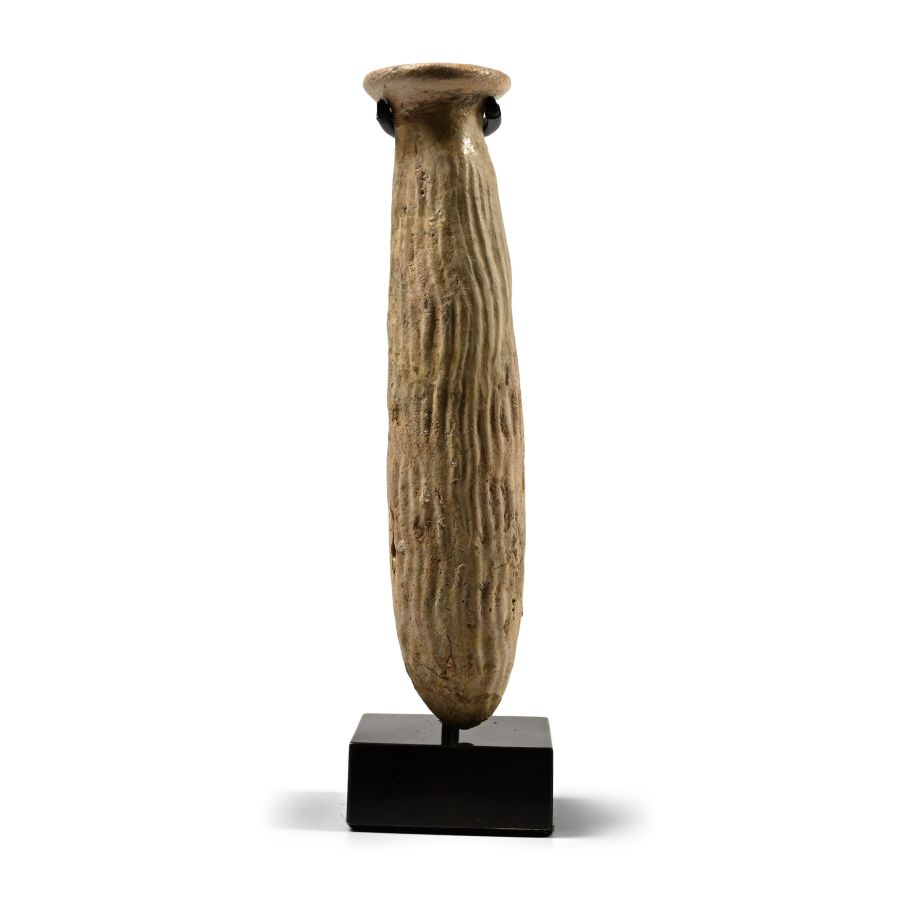
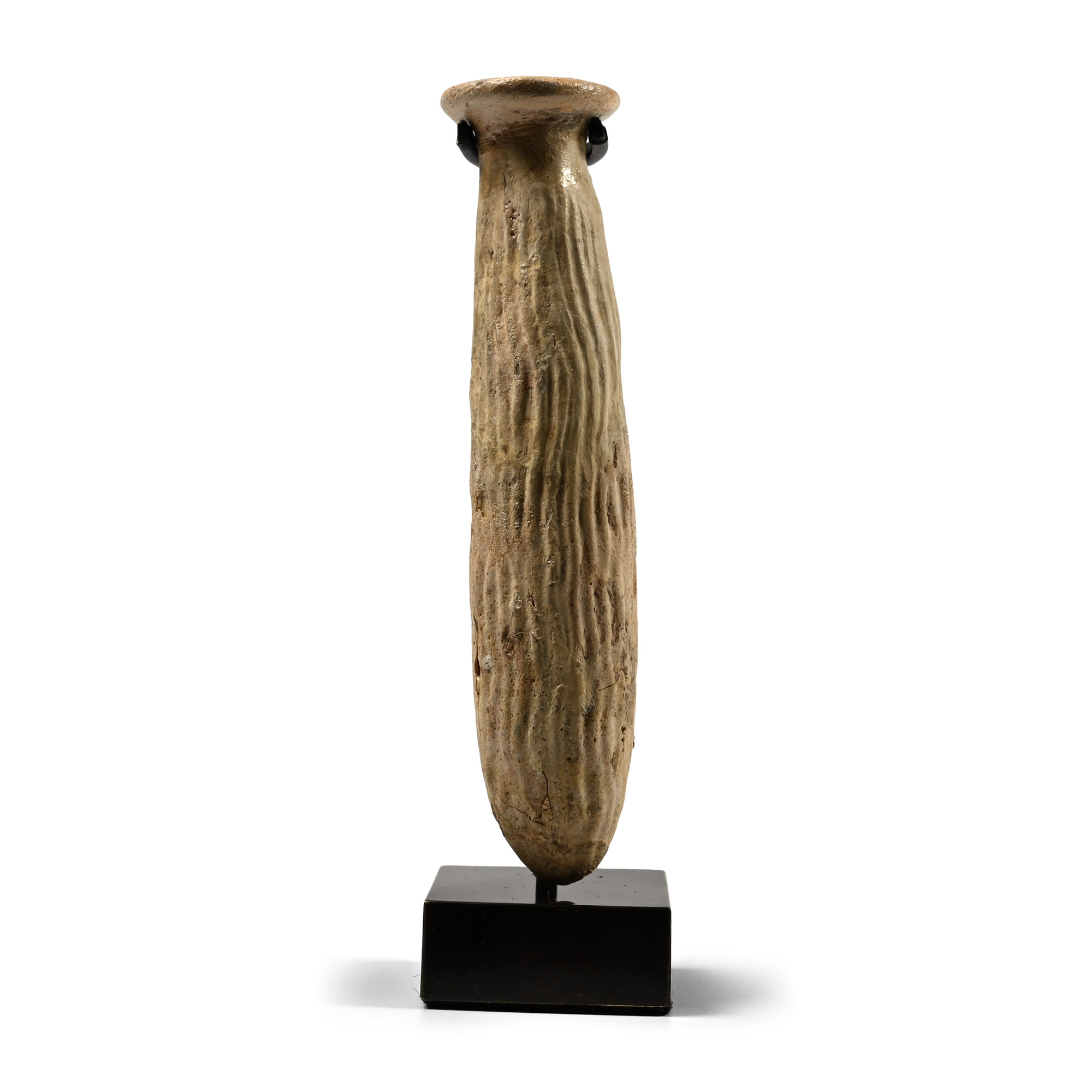
Roman White Elongated Glass Date Flask
1ST CENTURY A.D.
4 1/8 in. (4 3/4 in.) (13 grams, 10.5 cm (46 grams total, 12 cm including stand)).
Mould-blown with elliptical body, short neck and thick everted rim, with modelled wrinkles.
ProvenanceFrom an important glass collection, London, UK, 1980-1990.
LiteratureSee Whitehouse, D., Roman Glass in the Corning Museum of Glass, vol.2, New York, 2001, items 519-520, for type.
FootnotesBottles shaped like dates are among the most common varieties of 1st century mould-blows vessels. Examples have been discovered in most part of the Roman Empire, with a concentration of finds in the Eastern Mediterranean.
CONDITIONTimeLine Auctions follows a vetting process to ensure the authenticity and legality of all items, reinforcing our commitment to integrity and responsible trading. Each antiquity, antique, and coin lot undergoes thorough examination by a vetting committee of at least ten external specialists, professional trade association members, scientists, and archaeologists: Our Vetting Process
AUCTIONS:
TimeLine is a leading auction house specialising in antiquities, ancient art, collectables, natural history, coins, medals, and books. Our auctions offer museums, collectors, historians, and enthusiasts the opportunity to acquire unique and historically significant pieces.
-
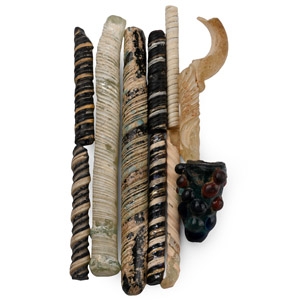
Roman Glass Stirring Rod Group
2nd-3rd century A.D.Sold for (Inc. bp): £130
Mixed group of glass rods and fragments, each with applied ornament in trails or granules. 95 grams total, 3.3-11.3 cm
with Archaeologia, Switzerland, before 1983. Ex private North American collection. London private collection, 2016. -
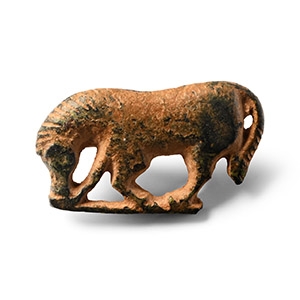
Roman Bronze Horse Brooch
2nd-3rd century A.D.Sold for (Inc. bp): £104
Formed as a horse grazing on a baseline with shaggy mane and drooping tail; hinged pin and catch to the reverse. 13.2 grams, 34 mm
Ex David Miller, Hemel Hempstead, London, UK. From the private collection of a West London, UK, gentleman, formed since the early 2000s. Accompanied by a hand written ticket. -
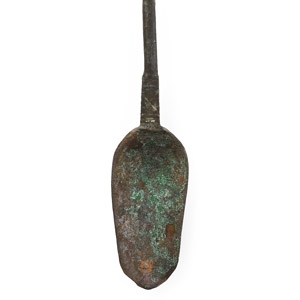
Roman Bronze Ligula Spoon
2nd-3rd century A.D.Sold for (Inc. bp): £65
Round-section tapering stem and ovoid bowl. 15.56 grams, 16.6 cm
Ex German art market, 2000s. Acquired from an EU collector living in London. From the collection of a Surrey, UK, gentleman.
