
Loading, please wait...
LOT 0733
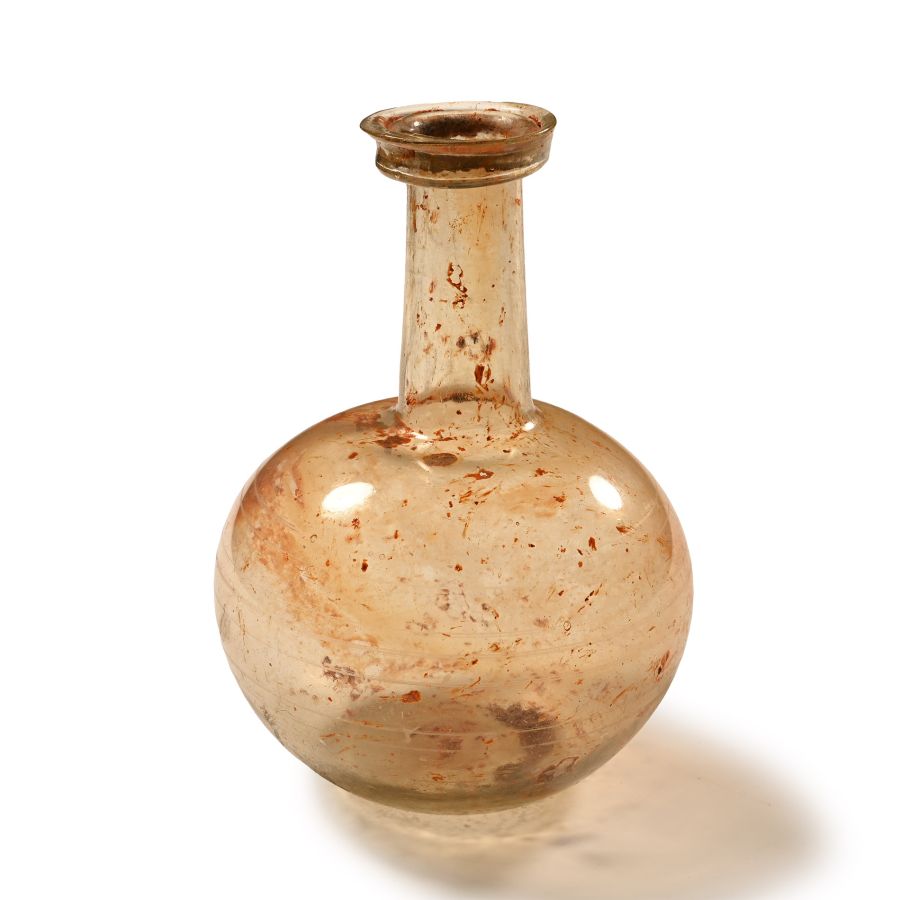
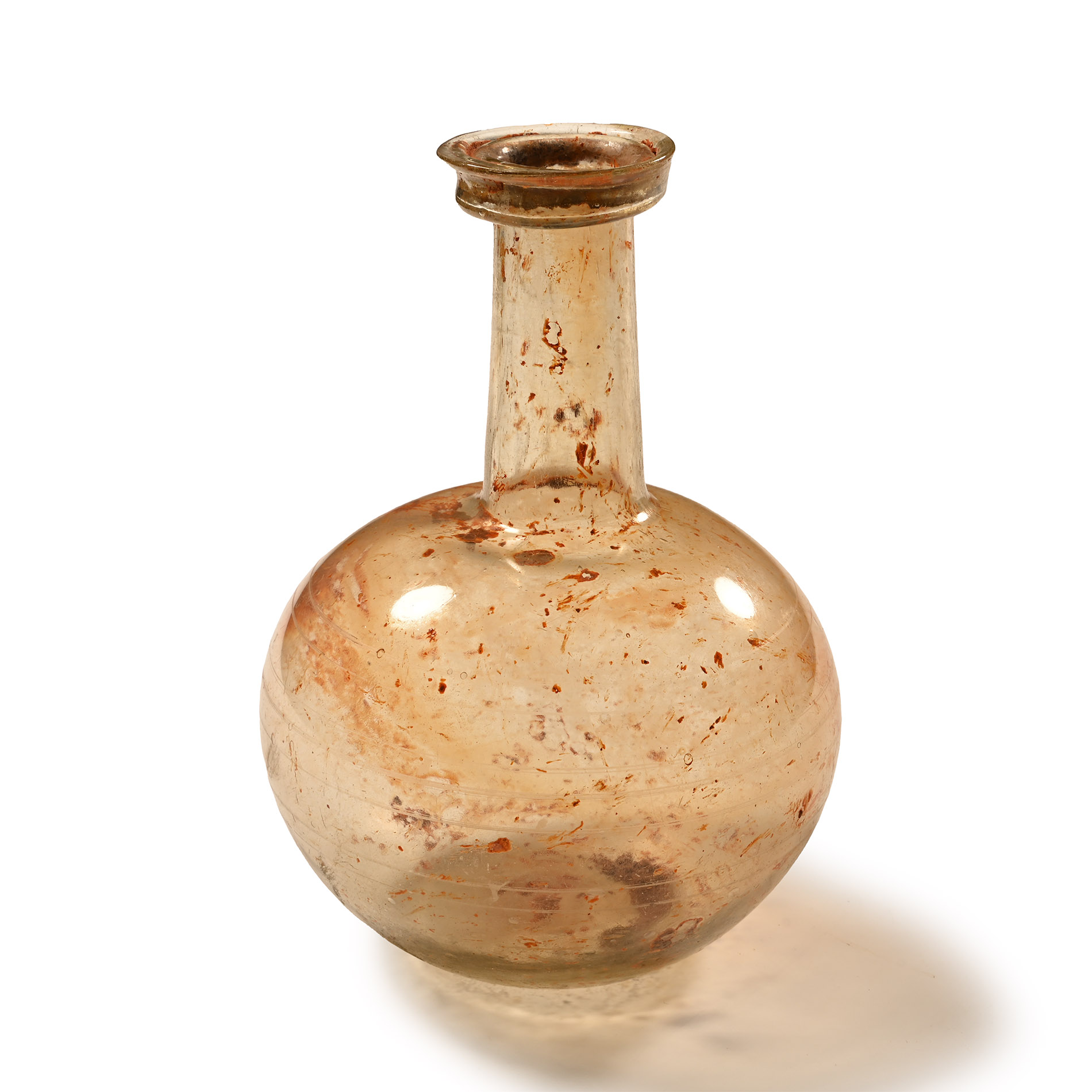
Roman Wheel-Cut Glass Vessel
3RD-4TH CENTURY A.D.
5 in. (82 grams, 12.5 cm).
With globular body and long tubular neck, dimple base, everted rim with gusset to the outer edge; wheel-cut horizontal lines to the body.
ProvenanceEx London, UK, collection, 1980-1990s.
LiteratureCf. Whitehouse, D., Roman Glass in the Corning Museum of Glass, vol.1, New York, 1997, item 433, for the type.
FootnotesThis bottle belongs to a group of globular bottles with cylindrical necks (some longer than others) and plain or collar-like rims, which are decorated with parallel and/or intersecting circles or combinations of circles and other motifs.
CONDITIONTimeLine Auctions follows a vetting process to ensure the authenticity and legality of all items, reinforcing our commitment to integrity and responsible trading. Each antiquity, antique, and coin lot undergoes thorough examination by a vetting committee of at least ten external specialists, professional trade association members, scientists, and archaeologists: Our Vetting Process
AUCTIONS:
TimeLine is a leading auction house specialising in antiquities, ancient art, collectables, natural history, coins, medals, and books. Our auctions offer museums, collectors, historians, and enthusiasts the opportunity to acquire unique and historically significant pieces.
-
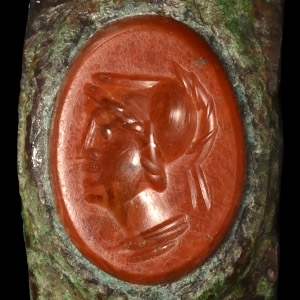
Roman Bronze Ring with Minerva Gemstone
1st-2nd century A.D.Sold for (Inc. bp): £208
With inset jasper gemstone, intaglio profile bust of Minerva (Greek Athena) wearing a crested helmet. 3.39 grams, 21.07 mm overall, 17.61 mm internal diameter (approximate size British L 1/2, USA 6, Europe 11.87, Japan 11)
Ex German art market, 2000s. Acquired from an EU collector living in London. From the collection of Surrey, UK, gentleman. -
.jpg)
Roman Marble Head of a Lady
2nd century A.D. or laterSold for (Inc. bp): £234
Carved in the round with detailed hairstyle comprising a braid and coil to the rear of the head; the facial features soft and rounded, mouth in a half-smile; mounted on a display-stand. 520 grams total, 11.5 cm including stand
4 1/2 in.
Acquired before 2000. From an English private collection. -
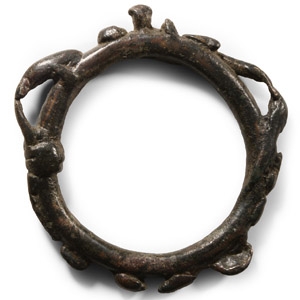
Roman Bronze Chariot Terret Ring with Animals
1st-4th century A.D.Sold for (Inc. bp): £195
Annular in form with integral collar and wreath detailing, animal forms to the outer edge; usage wear. 179 grams, 10.3 cm
From a collection acquired on the UK art market from various auction houses and collections mostly before 2000. From an important Cambridgeshire estate; thence by descent.
