
Loading, please wait...
LOT 0108
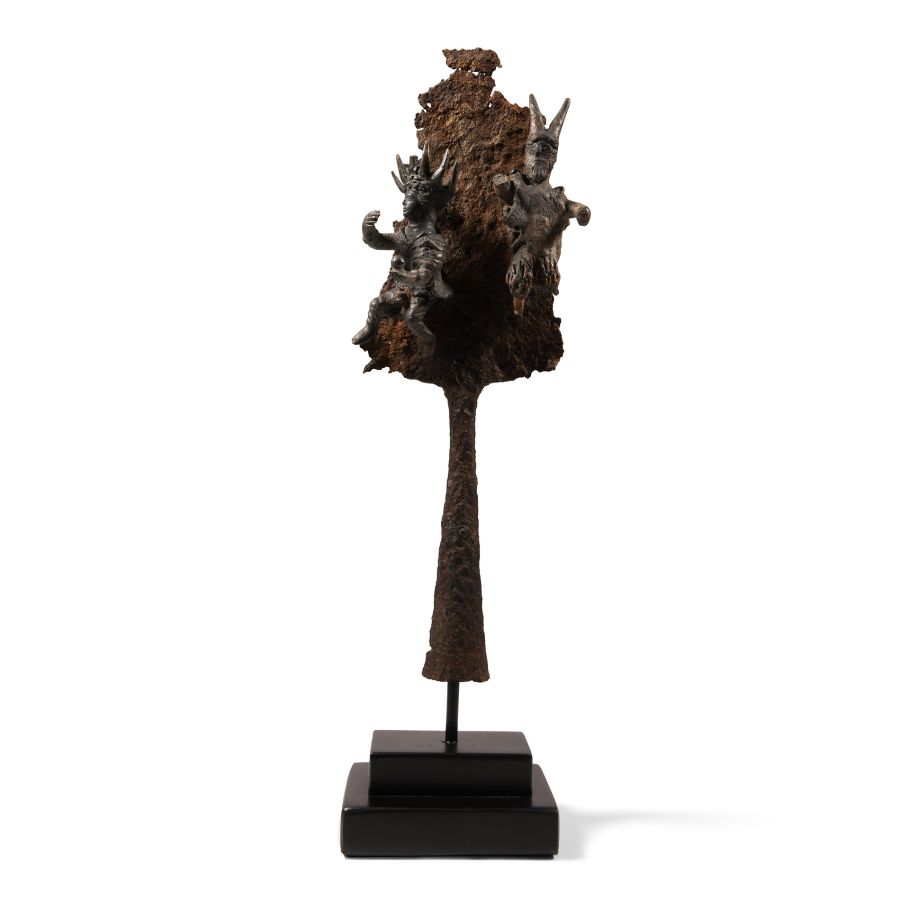
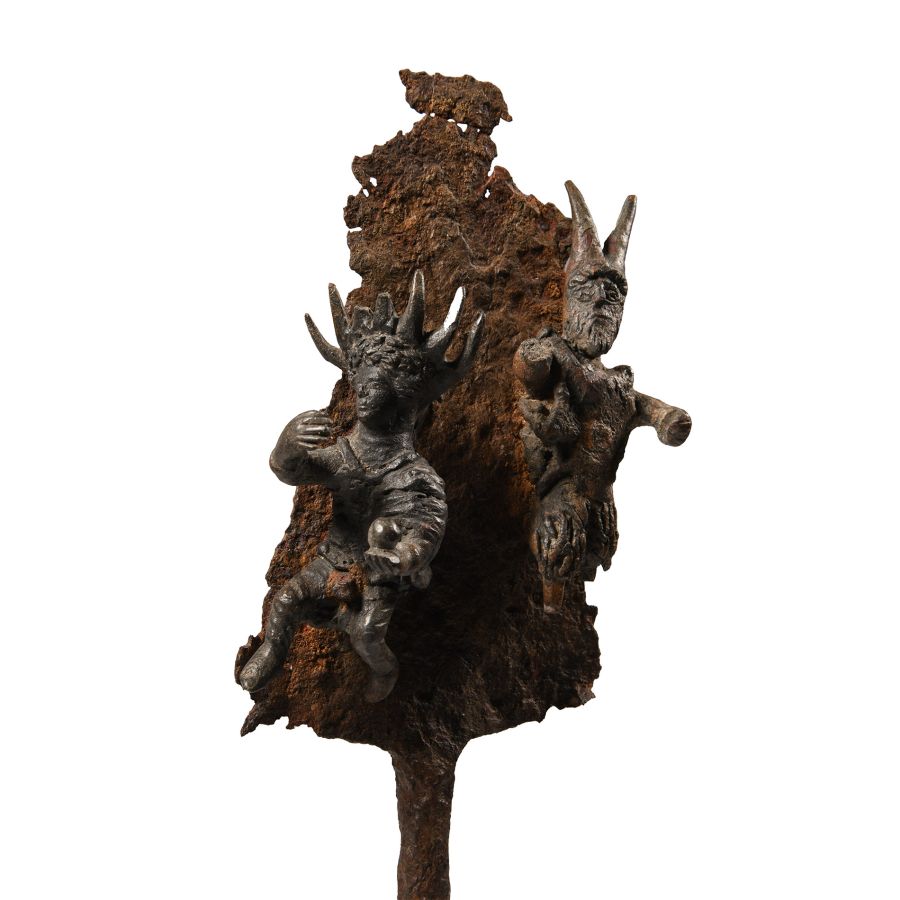
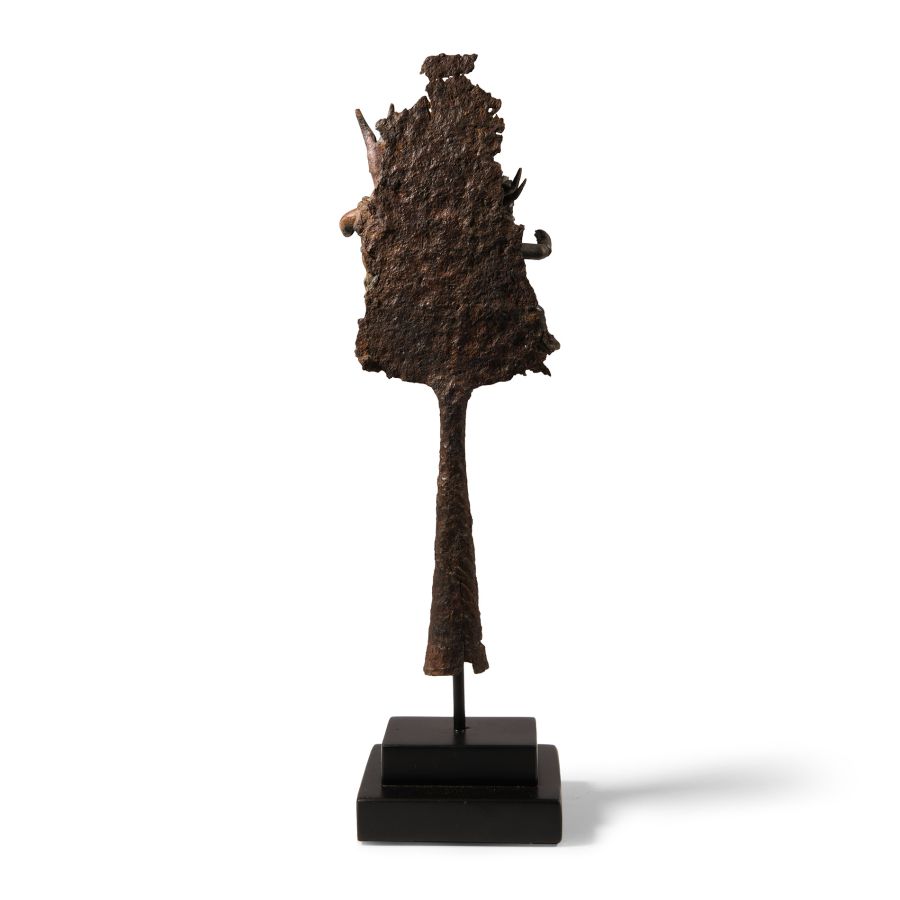
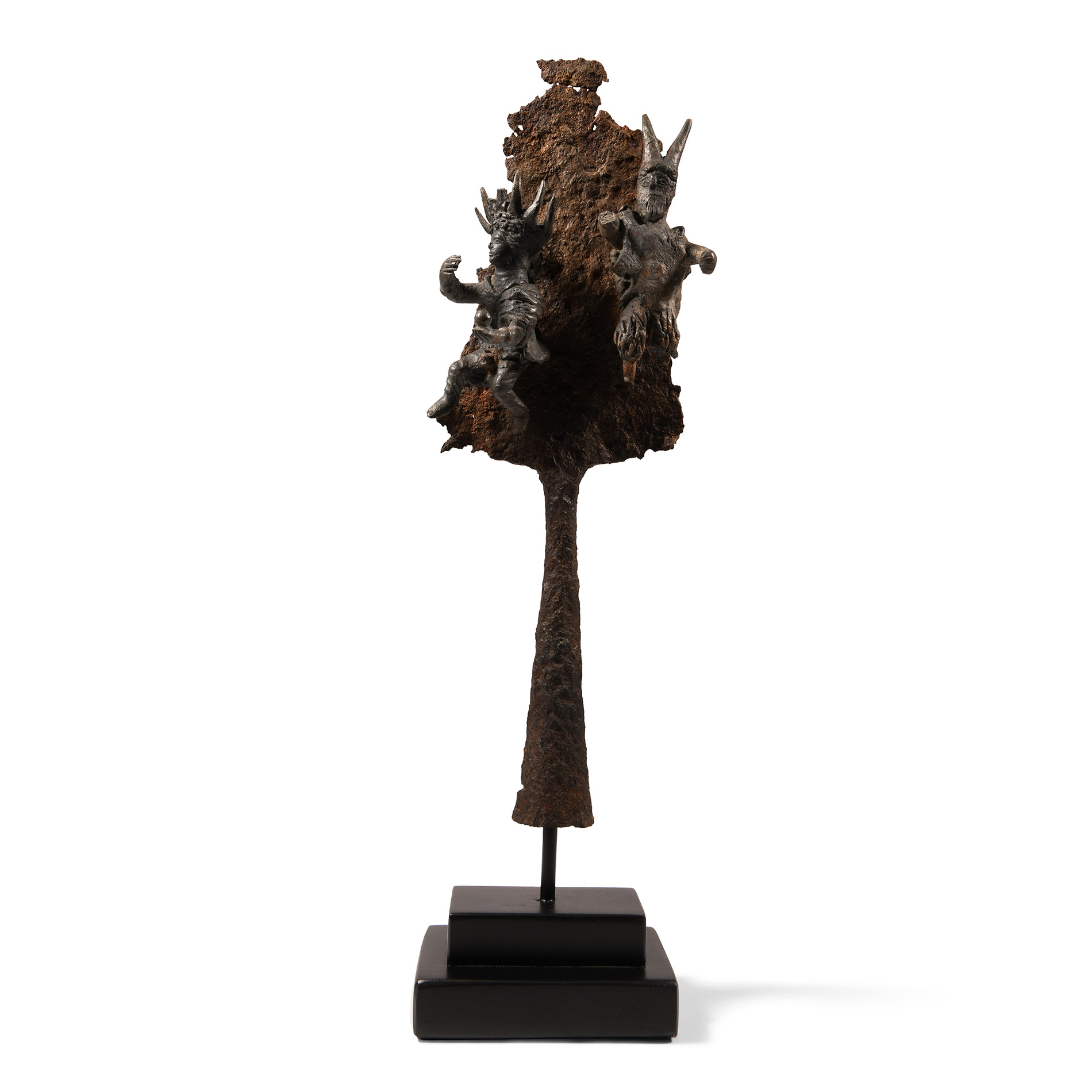
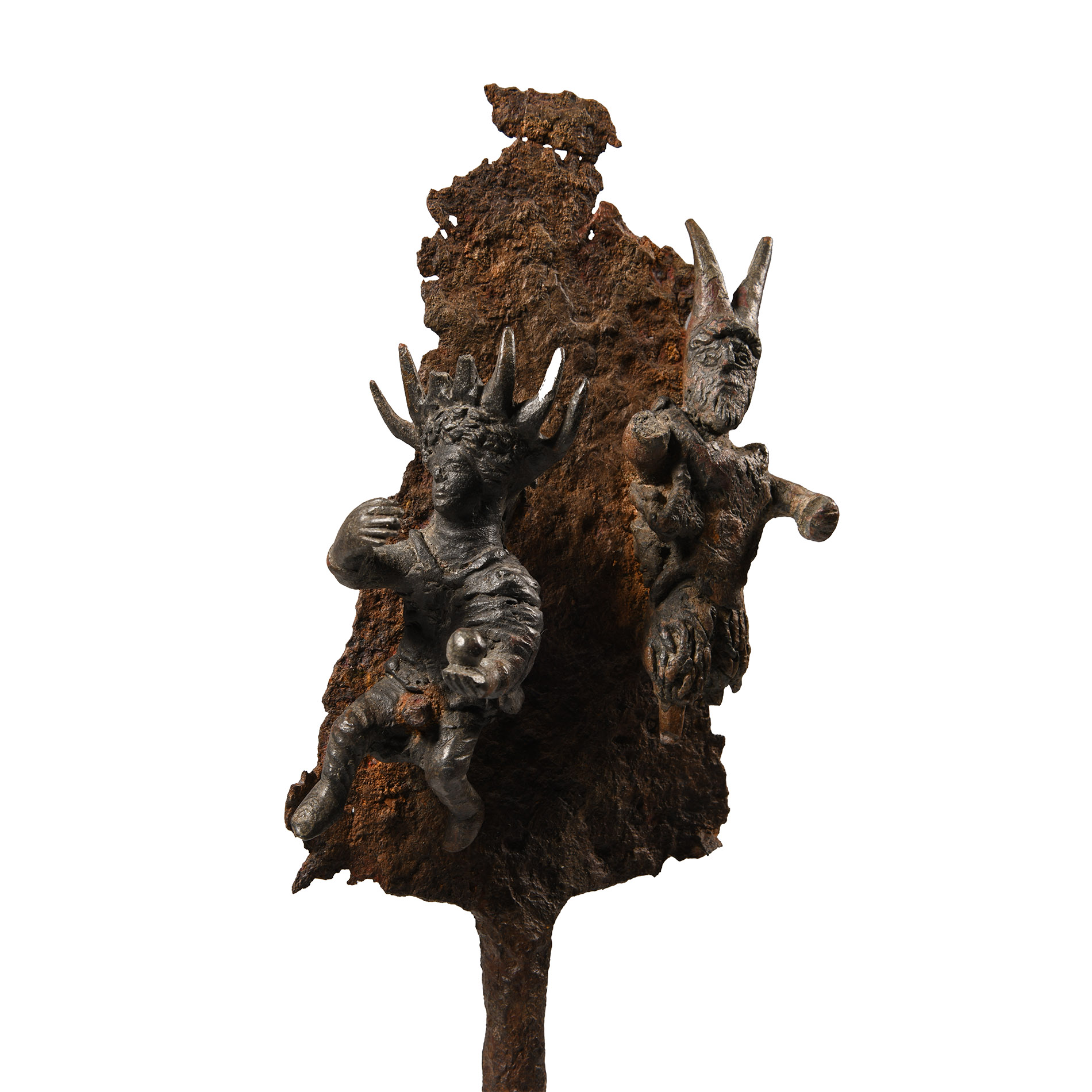
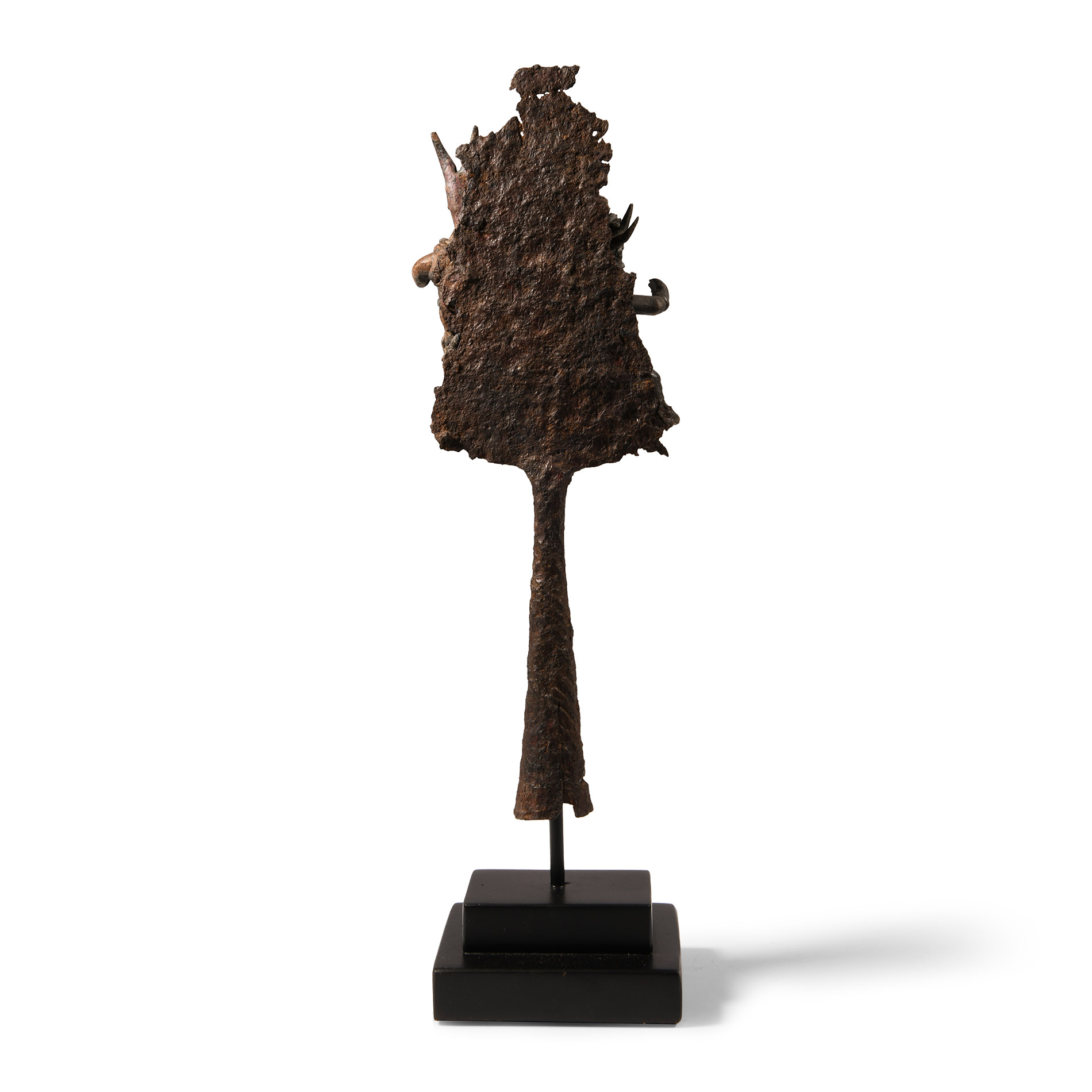
Roman Votive Iron Military Standard with Faunus and Sol Invictus
3RD CENTURY A.D.
15 in. (1.39 kg total, 38 cm including stand).
Comprising a triangular spearhead-shaped panel with flared split socket; two separate figures attached with rivets: on the left Helios (or Sol) with draped mantle and radiant crown, holding a sphere in his left hand; on the right Faunus (Pan) with two curved horns, a short beard, arms bent forwards, the upper body covered by a hide jerkin and the legs with shaggy fur; mounted on a custom-made display stand. [No Reserve]
ProvenanceFrom a collection acquired on the UK art market from various auction houses and collections mostly before 2000.
From an important Cambridgeshire estate; thence by descent.
Cf. similar spearhead in Toepfer K.M., Die römischen Feldzeichen in der Republik und im Prinzipat, Mainz, 2011, NZ11, from Saalburg.
FootnotesThe piece is reminiscent of the votive plates in the Dolichenus cult, or possibly of some other cult.
CONDITIONTimeLine Auctions follows a vetting process to ensure the authenticity and legality of all items, reinforcing our commitment to integrity and responsible trading. Each antiquity, antique, and coin lot undergoes thorough examination by a vetting committee of at least ten external specialists, professional trade association members, scientists, and archaeologists: Our Vetting Process
AUCTIONS:
TimeLine is a leading auction house specialising in antiquities, ancient art, collectables, natural history, coins, medals, and books. Our auctions offer museums, collectors, historians, and enthusiasts the opportunity to acquire unique and historically significant pieces.
LOT 0108
Roman Votive Iron Military Standard with Faunus and Sol Invictus
Sold for (Inc. bp): £2,470
-
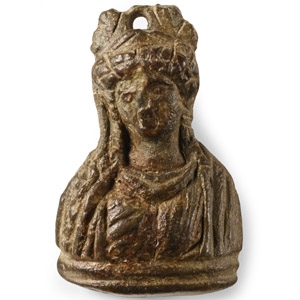
Roman Bronze Steelyard Weight
3rd-4th century A.D.Sold for (Inc. bp): £338
Formed as a female bust with stola and tunic, braided hair dressed in a chignon; transverse ribbing above the flat base, pierced lug forming part of the hairstyle. 22.5 grams, 33 mm
Found Wiltshire, UK, before 1974. -
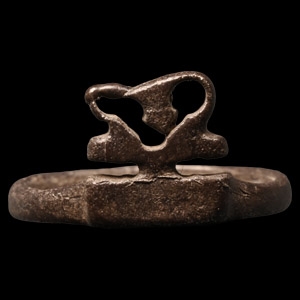
Roman Silver Key Ring with Fretwork Heart
1st century A.D.Estimate: £100 - 140 (+bp*)
Opening Bid: £50
The bezel formed with an openwork vine and leaf motif. 2.11 grams, 18.62 mm overall, 16.39 mm internal diameter (approximate size British L, USA 5 3/4, Europe 11.24, Japan 10)
Acquired 1980-2015. Ex Abelita family collection. -
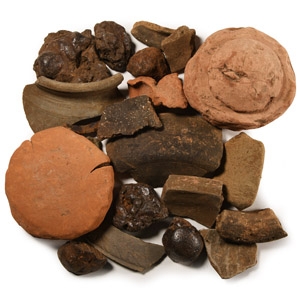
Roman 'Wetwang' Artefact Collection
1st-4th century A.D.Sold for (Inc. bp): £4
Including ceramic rim fragments, terracotta figurine fragments, iron slag, decorated sherds and other items. 1.82 kg total, 2-10 cm
Found near Wetwang, East Yorkshire, UK. Acquired 2005. Ian Wilkinson collection, Nottinghamshire, UK.
