
Loading, please wait...
_900x900.jpg "Roman Votive Hand to God Sabazios")
_200x200.jpg "Roman Votive Hand to God Sabazios")
_900x900.jpg "Roman Votive Hand to God Sabazios")
_200x200.jpg "Roman Votive Hand to God Sabazios")
.jpg "Roman Votive Hand to God Sabazios")
.jpg "Roman Votive Hand to God Sabazios")
LOT 0131
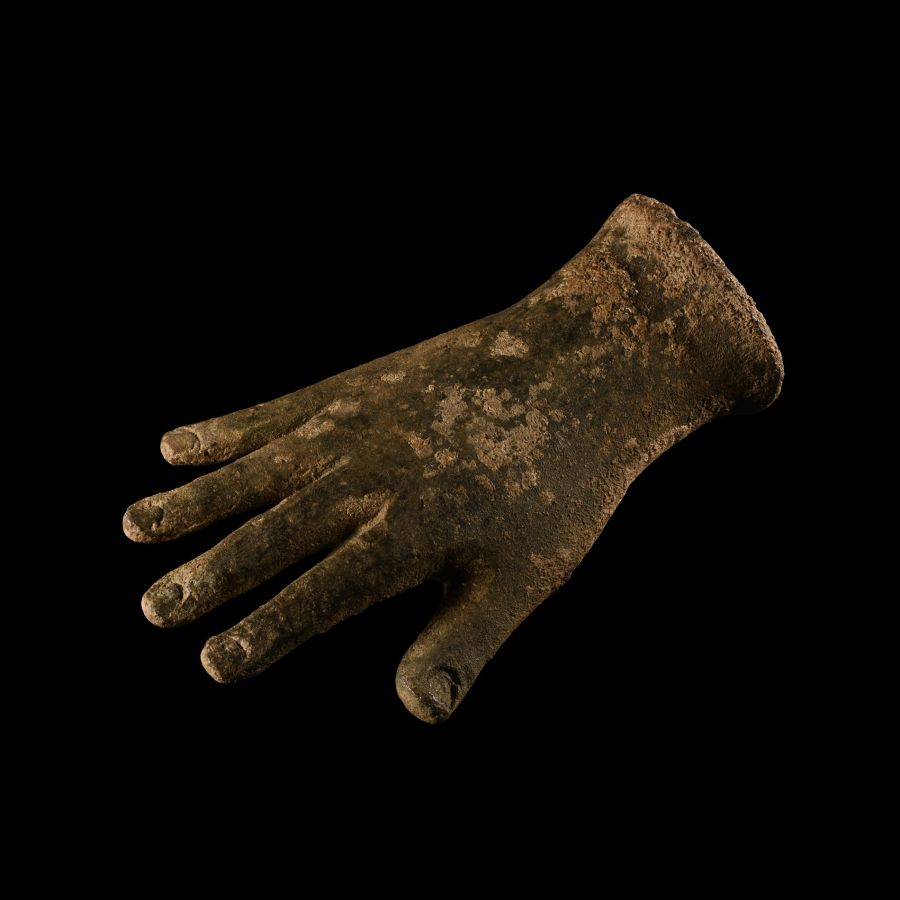
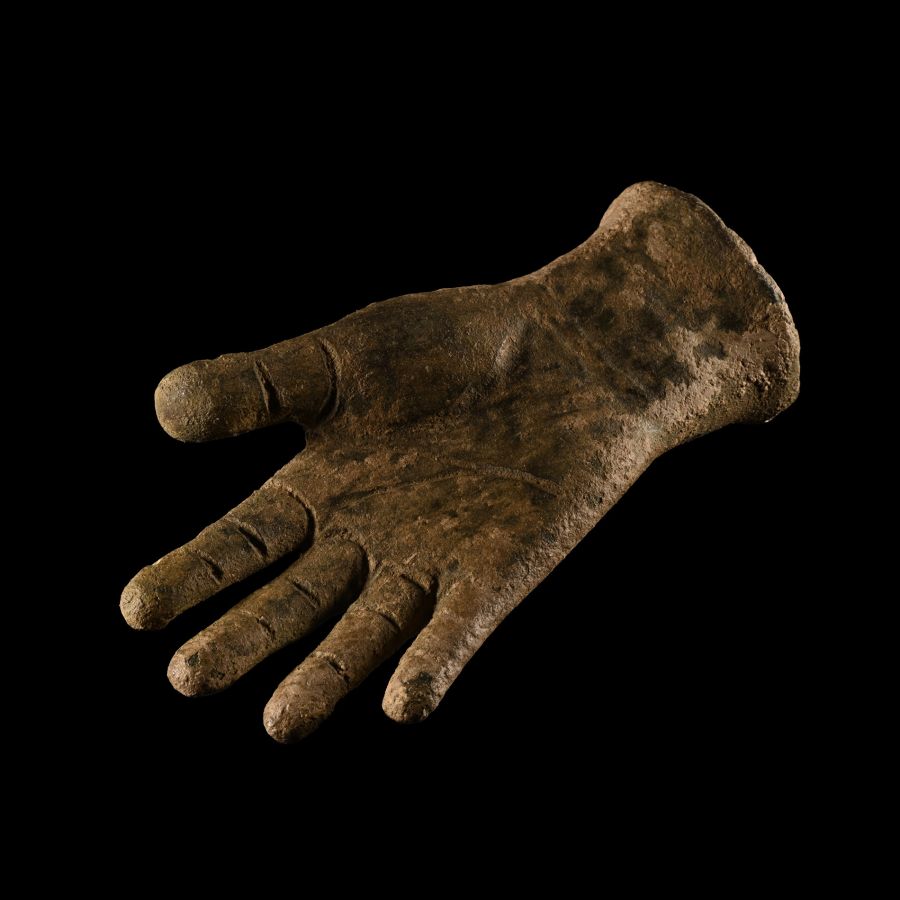
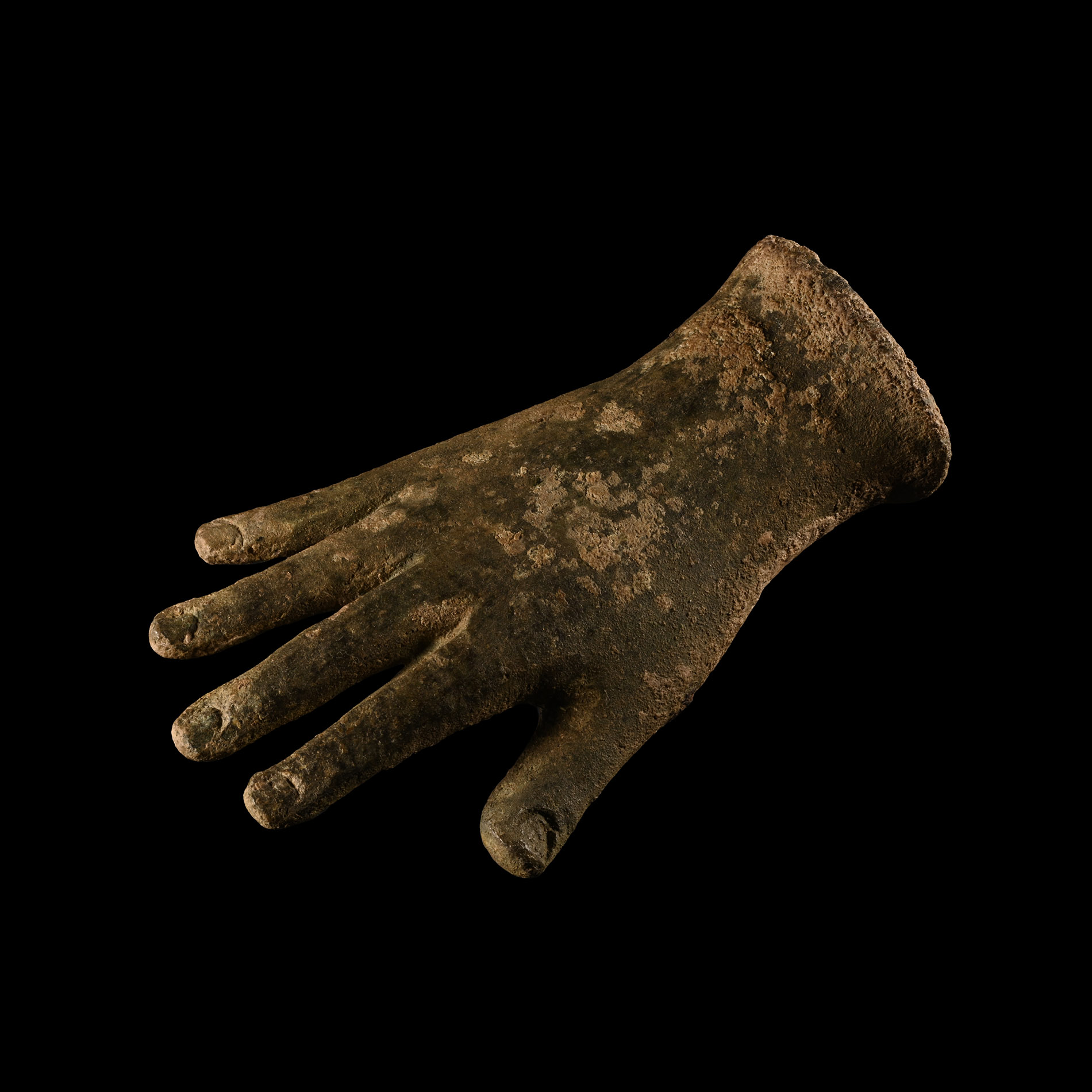
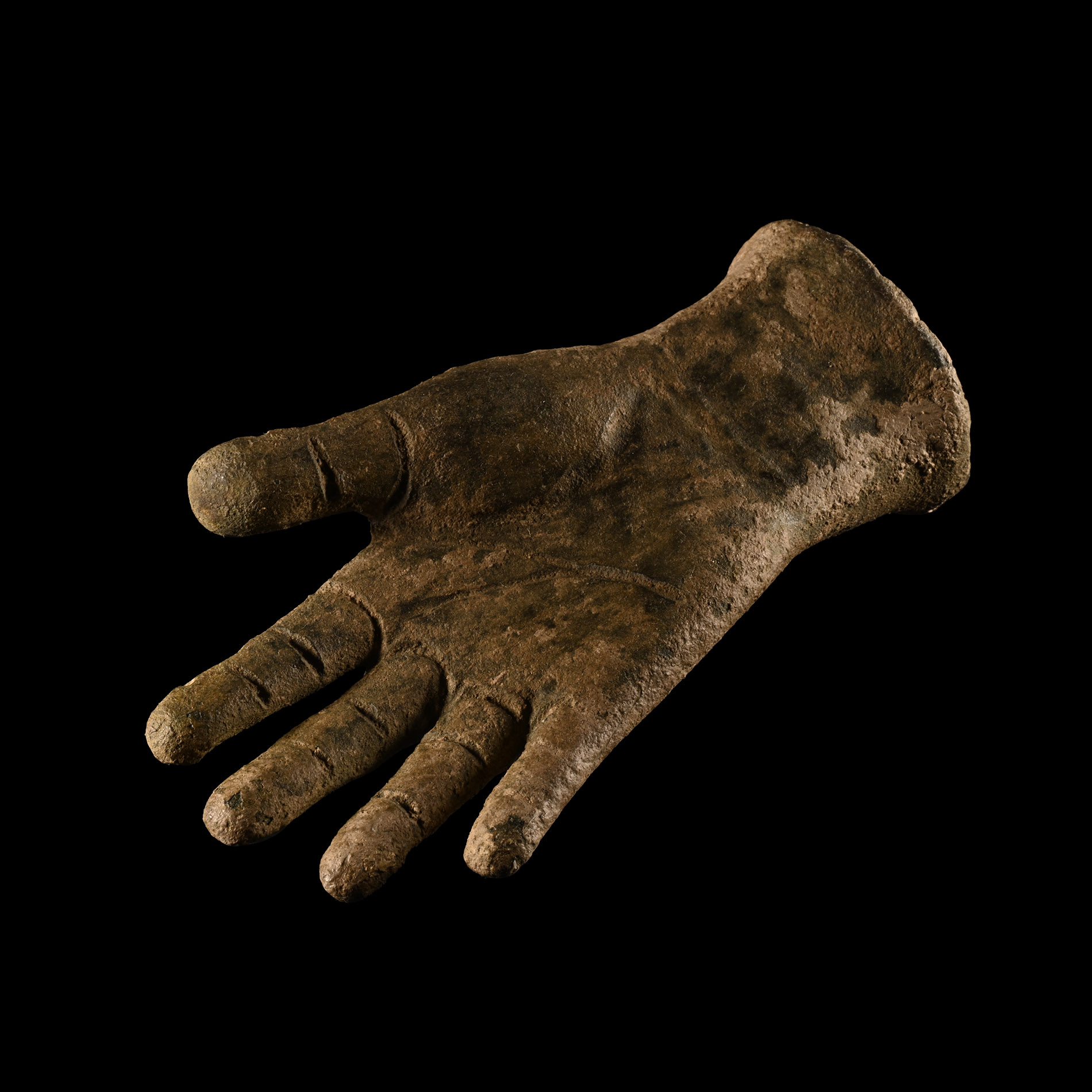
Roman Votive Hand to God Sabazios
2ND-3RD CENTURY A.D.
4 3/4 in. (362 grams, 12.1 cm).
Hollow-formed right hand from a statuette, with fingers splayed and flat palm, good anatomical detailing.
ProvenancePrivate collection 1990s.
Ex London, UK, gallery.
Cf. Ersöz, S.B., ‘The hand gesture and symbols of Sabazios’ in Opuscula, Annual of the Swedish Institutes at Athens and Rome, 11, 2018, figs.1, 4, 7, 11, 12.
FootnotesThe votive character of the hand could link it to the God Sabazios, often associated with a number of archaeological finds depicting a bronze, right hand in the benedictio latina gesture. The hand appears to have had ritual significance and may have been affixed to a sceptre (as the one carried by Sabazios on a slab, one from Philippopolis, nowadays Plovdiv in Bulgaria). The association with Sabazios is sometimes suggested in similar hands, by the presence of a snake embossed around the circumference of the hand, because the iconic image of the god or hero on horseback battling the chthonic serpent, appears on Celtic-Roman votive columns, and with the coming of Christianity it was easily adapted to the representations of Saint George fighting the Dragon.
CONDITIONTimeLine Auctions follows a vetting process to ensure the authenticity and legality of all items, reinforcing our commitment to integrity and responsible trading. Each antiquity, antique, and coin lot undergoes thorough examination by a vetting committee of at least ten external specialists, professional trade association members, scientists, and archaeologists: Our Vetting Process
AUCTIONS:
TimeLine is a leading auction house specialising in antiquities, ancient art, collectables, natural history, coins, medals, and books. Our auctions offer museums, collectors, historians, and enthusiasts the opportunity to acquire unique and historically significant pieces.
-
Roman Gold Pendant with Beads
1st-4th century A.D.Sold for (Inc. bp): £195
Vertical gold shank with loop above, cell with inset garnet cabochon and three annular beads. 0.62 grams, 22 mm
From a late Japanese specialist collector, 1970-2000s. -
Roman Bronze Ring with Rabbit
3rd century A.D.Sold for (Inc. bp): £234
With integral ellipsoid bezel, intaglio crouching rabbit motif. 2.63 grams, 20.35 mm overall, 18.78 mm internal diameter (approximate size British P 1/2, USA 7 3/4, Europe 16.86, Japan 16)
Ex German art market, 2000s. Acquired from an EU collector living in London. From the collection of Surrey, UK, gentleman. -
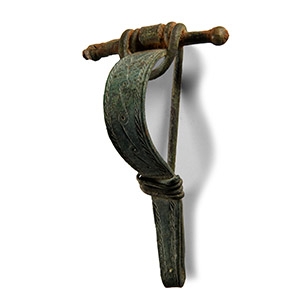
Large Roman Decorated Bronze Bow Brooch
2nd-3rd century A.D.Sold for (Inc. bp): £85
P-shaped with wide bow and foot, hatched to the edges with ring-and-dot ornament to the centre of the bow, bar above to hold the sprung pin, foot returning to form the catchplate, the upper edge of which is hammered into a flat wire coiled around the bottom of the bow. 56 grams, 95 mm
Ex property of an Austrian private collector since the 1970s.
