
Loading, please wait...

LOT 0874
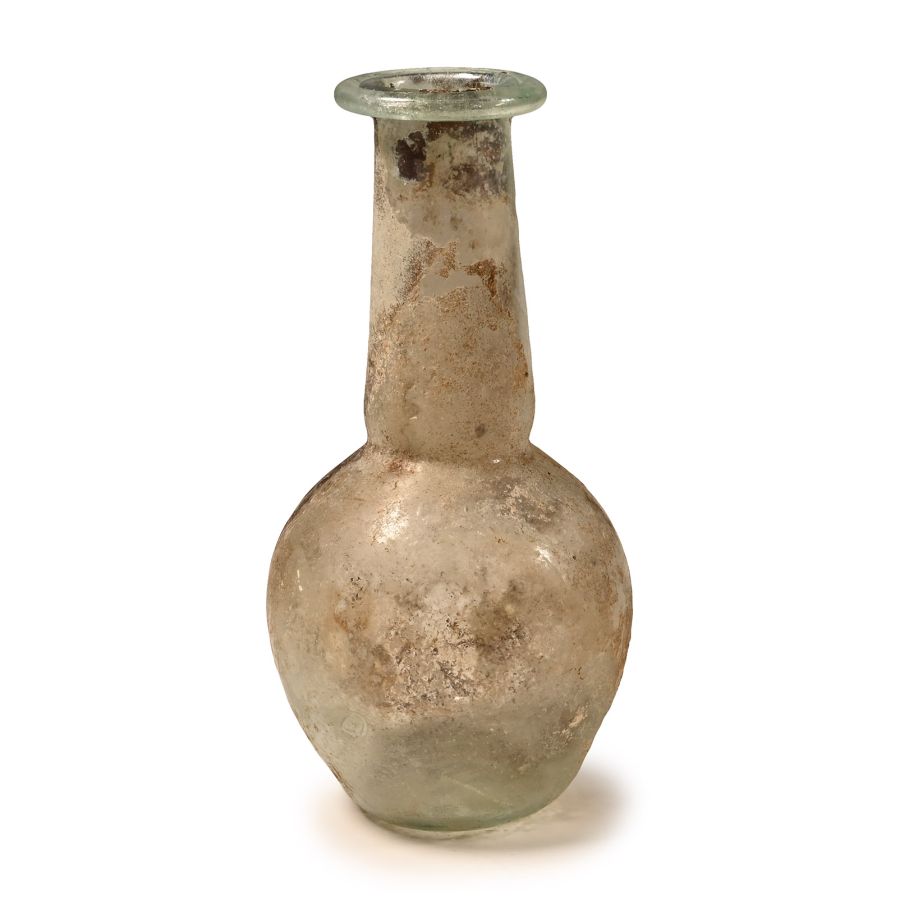
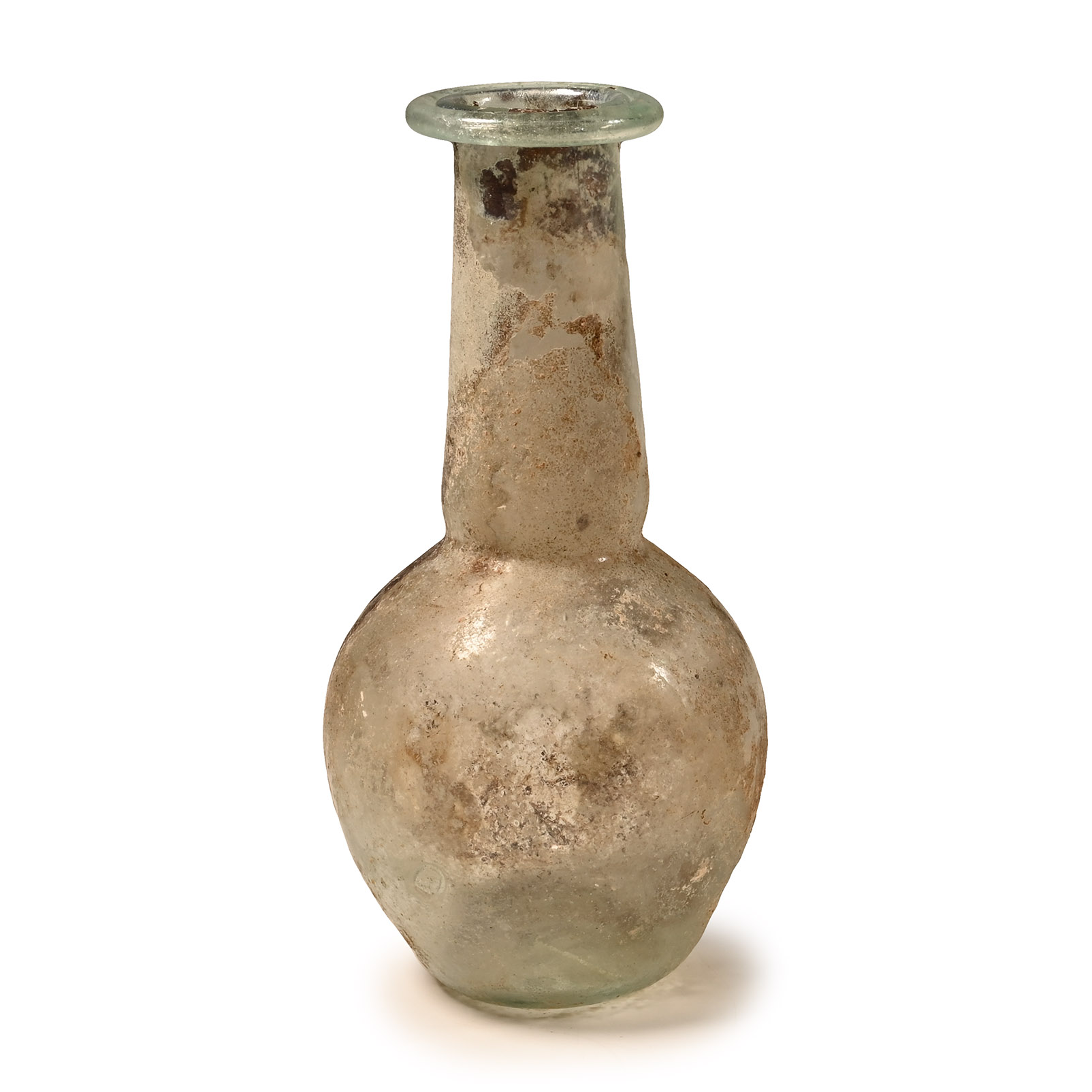
Roman Translucent Glass Vessel
1ST-2ND CENTURY A.D.
5 3/4 in. (63 grams, 14.6 cm).
With piriform body and dimple base, broad tapering neck, rolled and everted rim.
ProvenanceEx London, UK, collection, 1980-1990s.
LiteratureCf. Whitehouse, D., Roman Glass in the Corning Museum of Glass, vol.2, New York, 2001, item 772.
CONDITIONTimeLine Auctions follows a vetting process to ensure the authenticity and legality of all items, reinforcing our commitment to integrity and responsible trading. Each antiquity, antique, and coin lot undergoes thorough examination by a vetting committee of at least ten external specialists, professional trade association members, scientists, and archaeologists: Our Vetting Process
AUCTIONS:
TimeLine is a leading auction house specialising in antiquities, ancient art, collectables, natural history, coins, medals, and books. Our auctions offer museums, collectors, historians, and enthusiasts the opportunity to acquire unique and historically significant pieces.
-
Roman Marble Cornice Fragment Group
3rd-6th century A.D.Estimate: £700 - 900 (+bp*)
Opening Bid: £350
Comprising: triangular-section cornice panel with ledge above a detailed acanthus-leaf frieze in high-relief; section of radiating foliage modelled in the round; both mounted on a custom-made display stand. 3.35 kg total, 26 cm including stand
Private collection, England. -
Roman Silver Decorated Dish
Circa 4th-5th century A.D.Sold for (Inc. bp): £416
Comprising a shallow bowl fitted with handles and raised foot, the rim engraved with petals. 39 grams, 95 mm wide
From a North Yorkshire, UK, private collection. Acquired from Adam Partridge Auctioneers, Macclesfield, UK. Property of Mr A.B., an American collector.
In regards of the shape, Roman silver vessels usually fall into three classes: (1) vessels for eating; (2) vessels for drinking; (3) jugs and saucepans (trullae). The first class includes flat, circular dishes (lances), often of considerable size; the situlae or buckets, and the bowls with projecting rims (our specimen) of various dimensions. The form of the present bowl (probably used for spices, like pepper [piperatoria]) occurs all over the Mediterranean basin, and is Alexandrian in origin. -
.jpg)
Roman Bronze Sitting Squirrel Statuette
1st-4th century A.D.Sold for (Inc. bp): £78
Modelled in the round with naturalistic detailing, sitting upright nibbling a nut. 11.7 grams, 25 mm
‘The Ancient Menagerie Collection’ formerly the property of a Cambridgeshire lady, collected since the 1990s and acquired from auctions and dealers throughout Europe and the USA, now ex London collection.
