
Loading, please wait...
LOT 0864
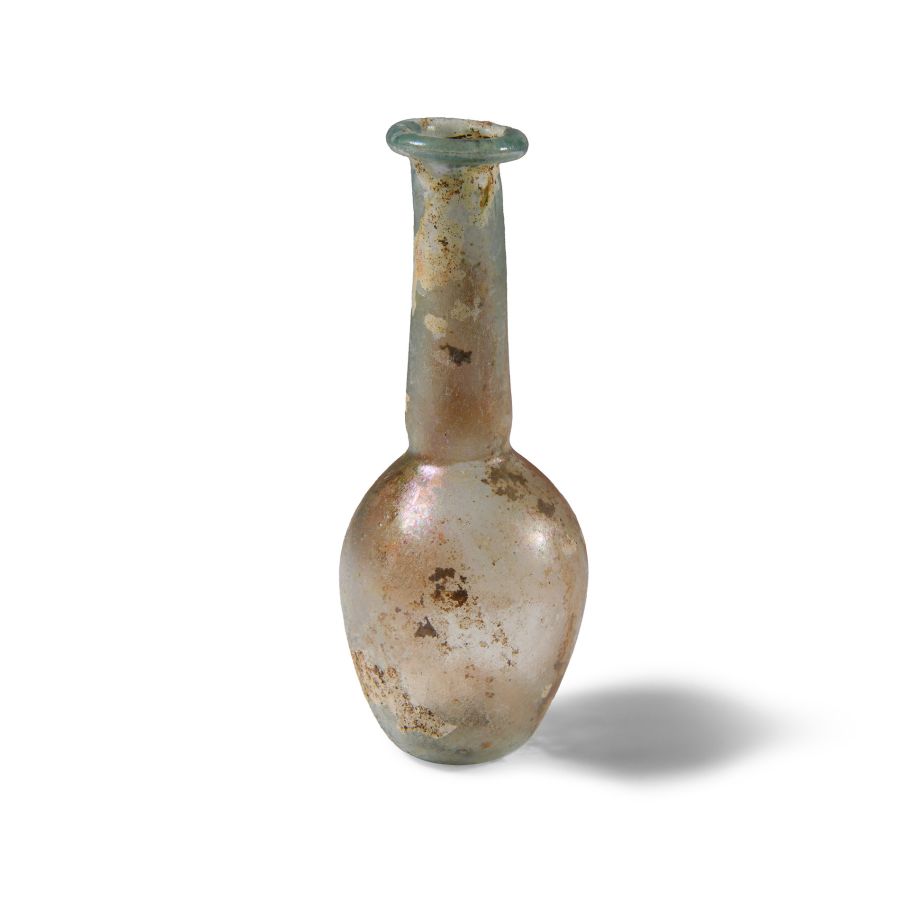
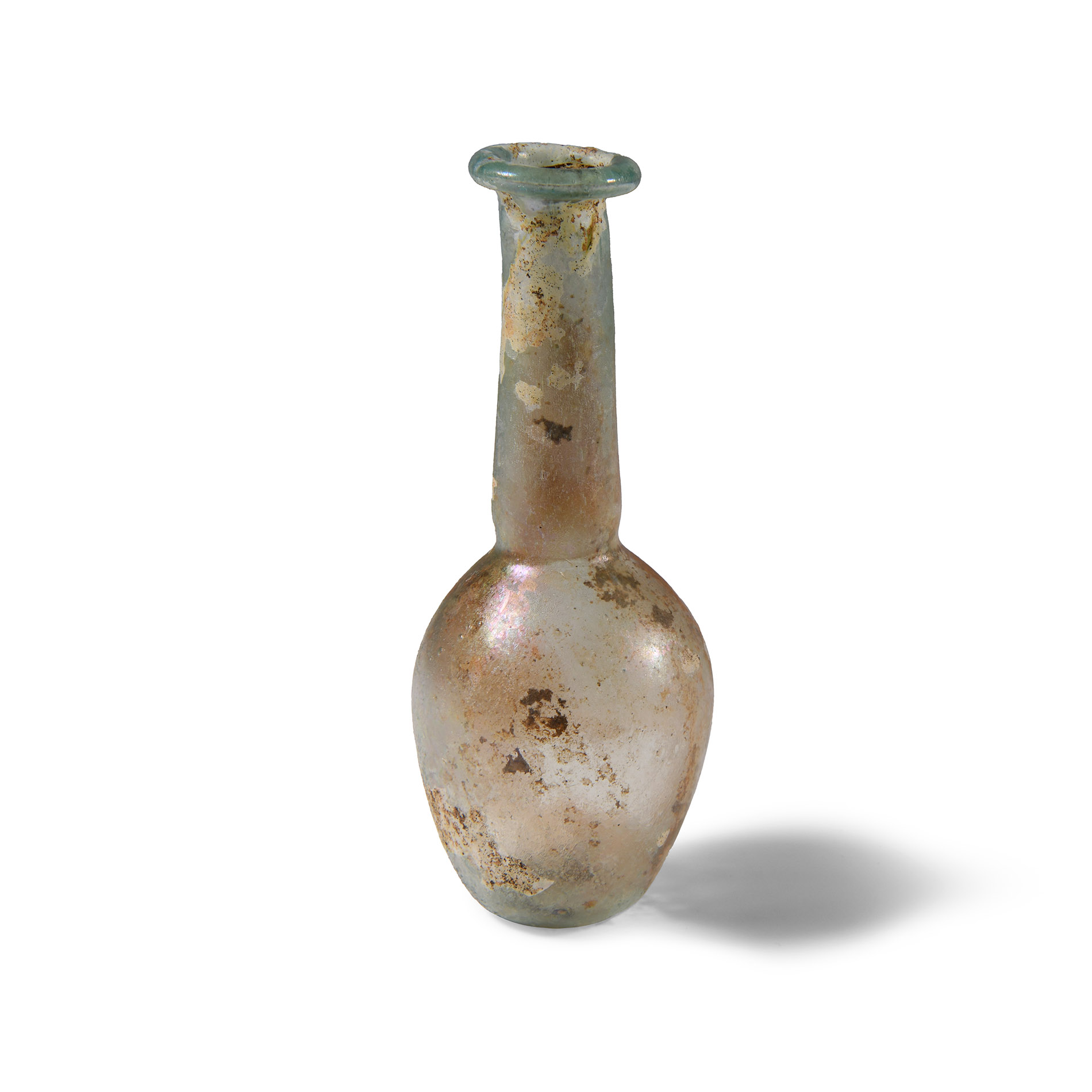
Roman Translucent Glass Bottle
1ST-2ND CENTURY A.D.
4 1/2 in. (20 grams, 11.5 cm high).
Having piriform-globular body and everted rim, tubular neck and flat base with small kick.
ProvenanceAcquired 1980-2015.
Ex Abelita family collection.
See Whitehouse D., Roman Glass in the Corning Museum of Glass, volume I, New York, 1997, cat.200, for the type.
FootnotesThe bottle seems to belong to the type 13 of the De Tommaso classification, but with a more piriform body. By the 1st century A.D., the technique of glass-blowing revolutionised the art of glass-making and allowed for the production of small medicine, incense, and perfume containers in new forms. Glass unguentaria, bottles and vessels of various shapes were manufactured with blow-pipes, free-blown, or mould-blown, and were prevalent throughout the all the provinces of the huge empire.
CONDITIONTimeLine Auctions follows a vetting process to ensure the authenticity and legality of all items, reinforcing our commitment to integrity and responsible trading. Each antiquity, antique, and coin lot undergoes thorough examination by a vetting committee of at least ten external specialists, professional trade association members, scientists, and archaeologists: Our Vetting Process
AUCTIONS:
TimeLine is a leading auction house specialising in antiquities, ancient art, collectables, natural history, coins, medals, and books. Our auctions offer museums, collectors, historians, and enthusiasts the opportunity to acquire unique and historically significant pieces.
-
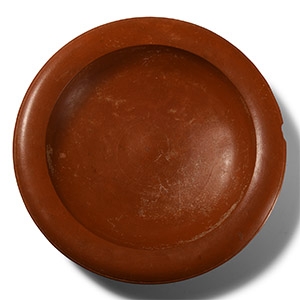
Roman Redware Bowl
North Africa, 3rd-4th century A.D.Sold for (Inc. bp): £143
Broad dish or shallow bowl with rounded flange rim and base. 350 grams, 23.5 cm
From a collection acquired on the UK art market from various auction houses and collections mostly before 2000. From an important Cambridgeshire estate; thence by descent. -
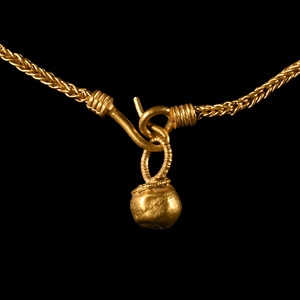
Roman Gold Chain with Ball Pendant
5th century A.D.Sold for (Inc. bp): £2,080
Trichinopoly chain with hook-and-eye closure, ball pendant with beaded wire collar. 15.02 grams, 36.5 cm long
From the collection of a Cambridgeshire lady, UK, 1990s.
The chain is composed of links in the form of pairs of broad, ribbed bands soldered together at a right angle. It is of fine loop-in-loop construction, terminating on one side in a ribbed cap with loops. The chain of ribbed loops placed at right angles is one of several popular varieties introduced in the late Roman period. The ball pendant was very common in Graeco-Roman times, substituted by Christian symbols during the late empire. -
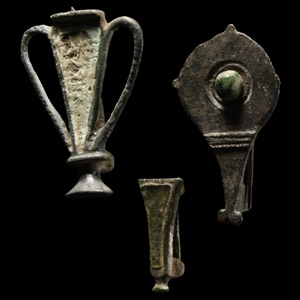
Roman Bronze Plate Brooch Colection
2nd century A.D.Sold for (Inc. bp): £85
One tinned with central boss; one bell-shaped with glass inlay; another shaped as an amphora with remains of enamelling. 12 grams total, 22-38 mm
Ex property of an Austrian private collector since the 1970s.
