
Loading, please wait...
LOT 0745
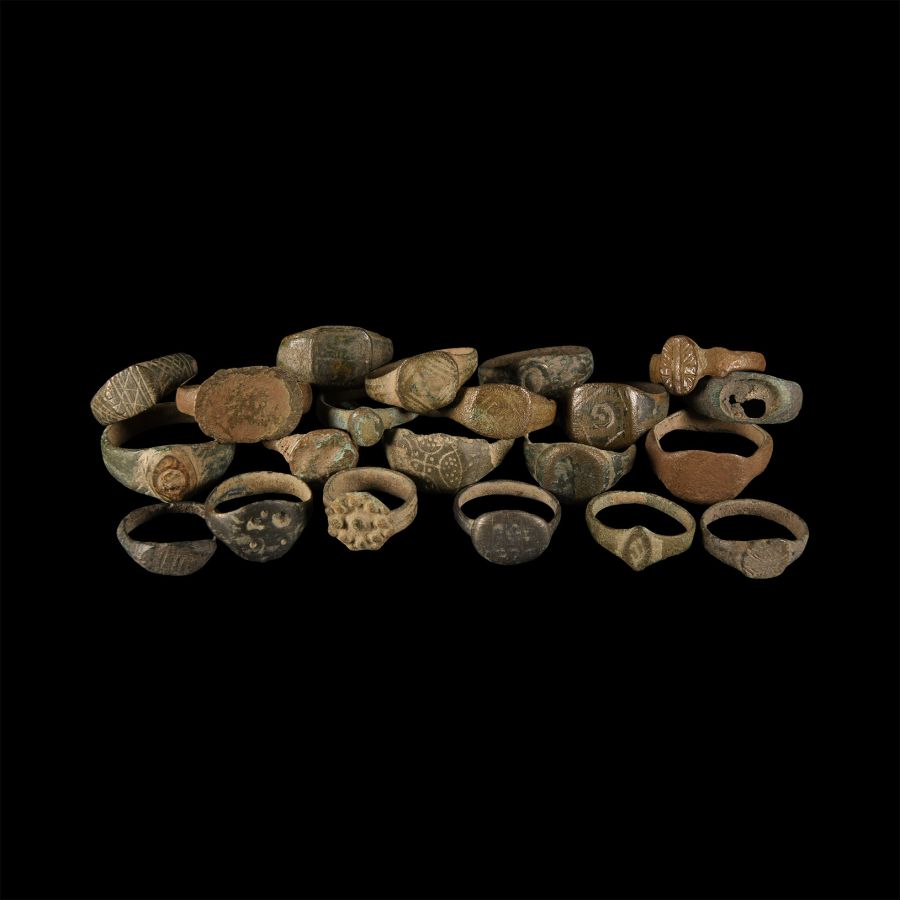
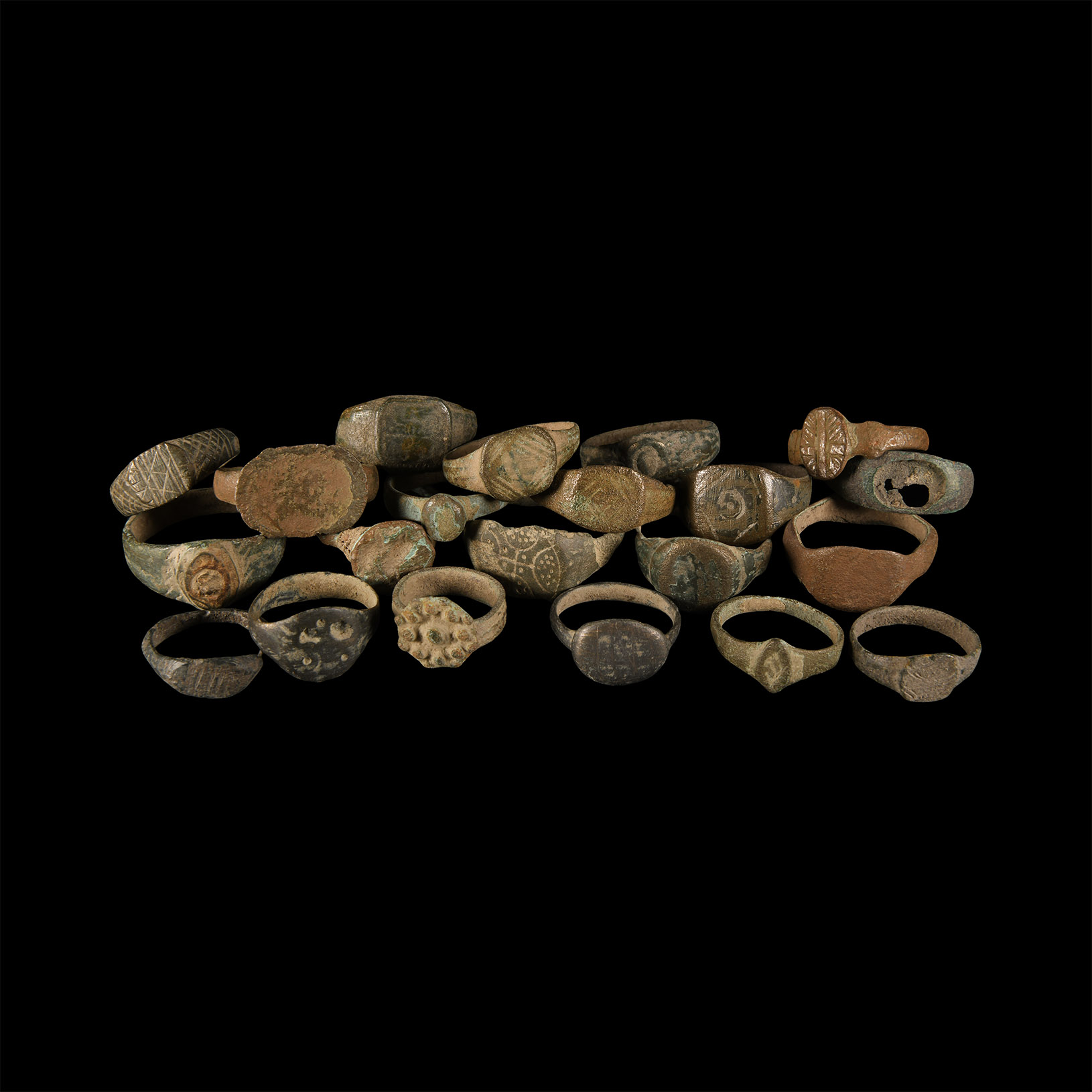
Roman to Post Medieval Bronze Ring Collection
1ST-19TH CENTURY A.D.
5/8 - 1 in. (56 grams total, 16-26 mm).
Including trumpet-bezel, banded-hoop, vesica-bezel and other types. [21, No Reserve]
ProvenanceAcquired on the German art market around 2000.
From the collection of a Surrey, UK, gentleman.
TimeLine Auctions follows a vetting process to ensure the authenticity and legality of all items, reinforcing our commitment to integrity and responsible trading. Each antiquity, antique, and coin lot undergoes thorough examination by a vetting committee of at least ten external specialists, professional trade association members, scientists, and archaeologists: Our Vetting Process
AUCTIONS:
TimeLine is a leading auction house specialising in antiquities, ancient art, collectables, natural history, coins, medals, and books. Our auctions offer museums, collectors, historians, and enthusiasts the opportunity to acquire unique and historically significant pieces.
-
.jpg)
Roman Period Iridescent Glass Bottle with Pimples
4th-5th century A.D.Sold for (Inc. bp): £234
The lower body decorated with raised 'pimples'; shallow kick-up; iridescent surfaces. 15.9 grams, 58 mm
Fine condition.
Ex private collection, 1980s. Acquired on the UK art market in the 1990s. -
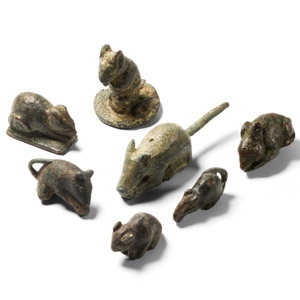
Roman Bronze Mouse Collection
1st-4th century A.D.Estimate: £1,200 - 1,700 (+bp*)
Opening Bid: £600
Modelled with semi-naturalistic detailing either standing or crouching, each nibbling at food held between their forepaws. 212 grams total, 25-64 mm
‘The Ancient Menagerie Collection’ formerly the property of a Cambridgeshire lady, collected since the 1990s and acquired from auctions and dealers throughout Europe and the USA, now ex London collection. -
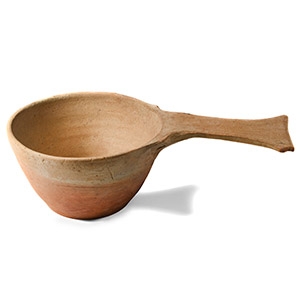
Roman Terracotta Trulla
Circa 3rd-4th century A.D.Sold for (Inc. bp): £234
Comprising a truncated conoid body and integral splayed handle. 248 grams, 22 cm
Acquired 1990s-early 2000s. East Anglian private collection.
A trulla was a type of pan used by the Romans.
