
Loading, please wait...
LOT 0622
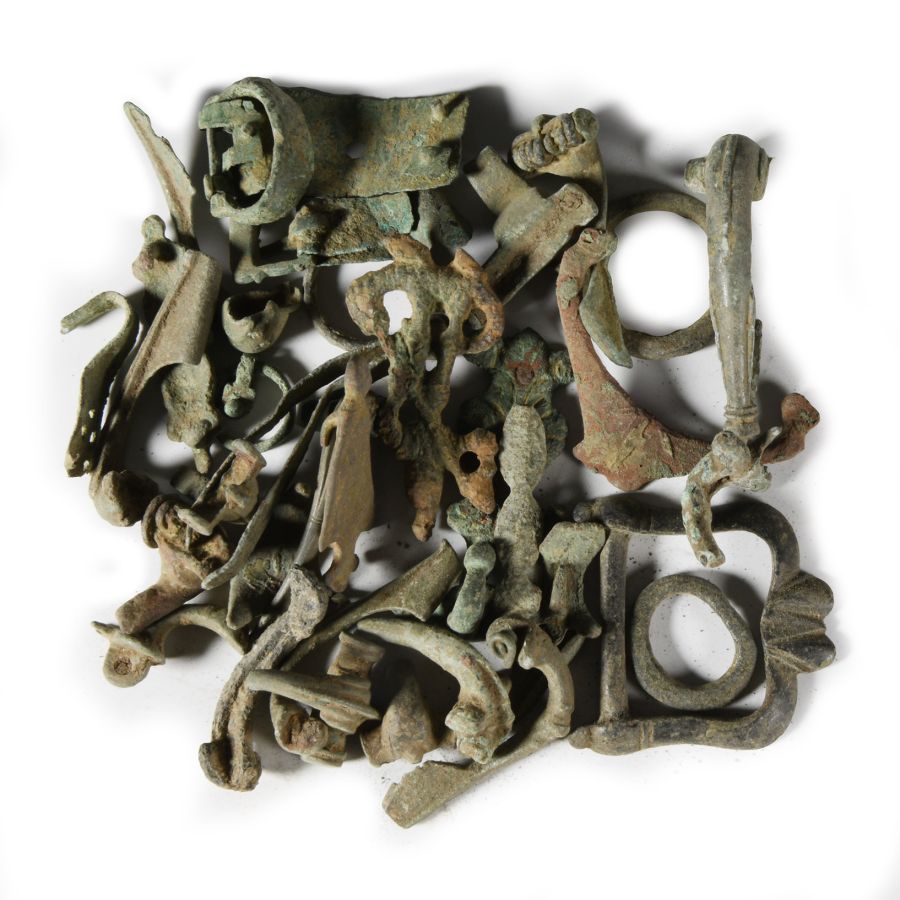
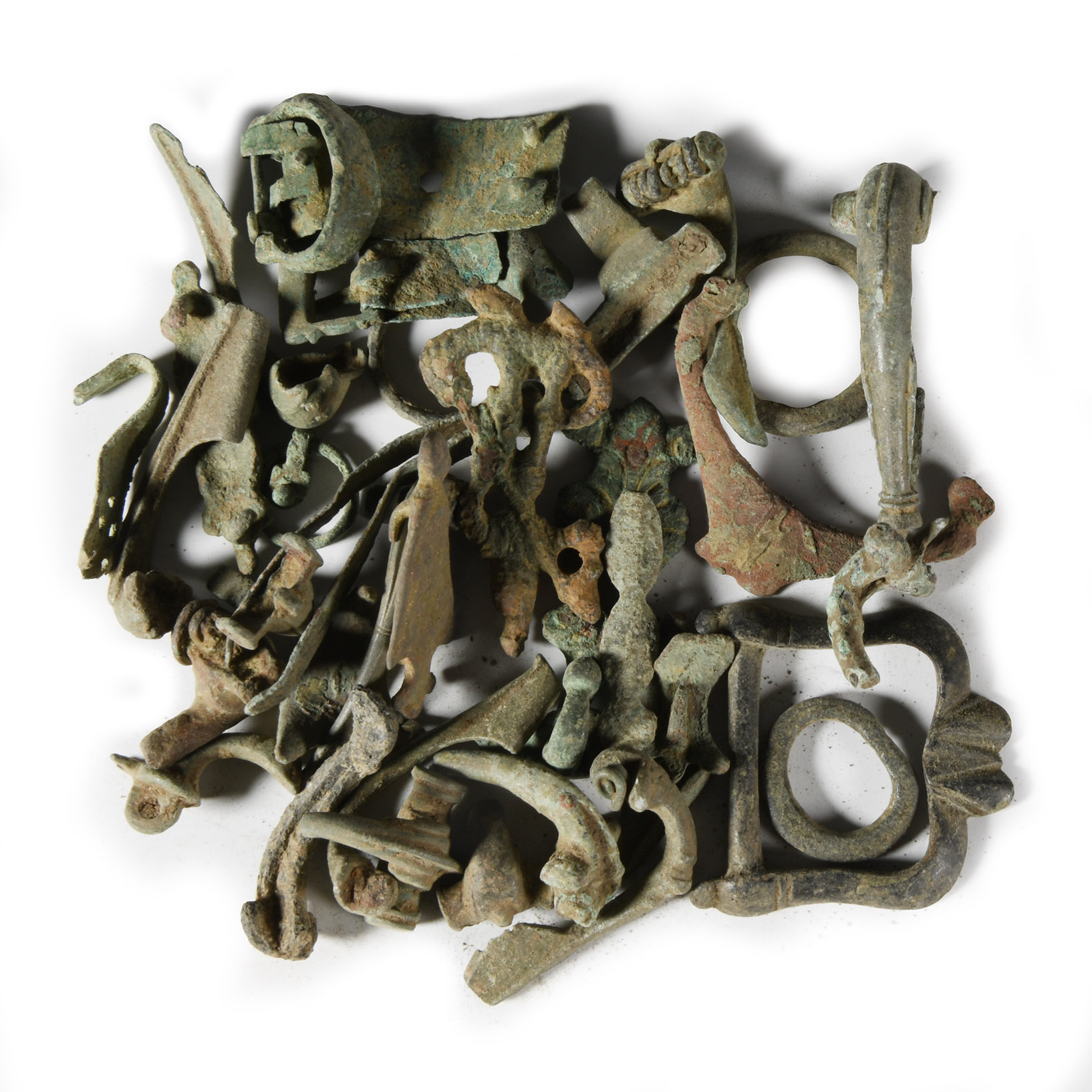
Roman to Post Medieval Artefact Collection
CIRCA 1ST-18TH CENTURY A.D.
5/8 - 2 1/4 in. (200 grams total, 16-56 mm).
Including T-shaped brooches, Langton Down brooches, D-shaped buckle with strap, belt and harness fittings and other items. [34, No Reserve]
ProvenanceFound Gloucestershire, UK.
CONDITIONTimeLine Auctions follows a vetting process to ensure the authenticity and legality of all items, reinforcing our commitment to integrity and responsible trading. Each antiquity, antique, and coin lot undergoes thorough examination by a vetting committee of at least ten external specialists, professional trade association members, scientists, and archaeologists: Our Vetting Process
AUCTIONS:
TimeLine is a leading auction house specialising in antiquities, ancient art, collectables, natural history, coins, medals, and books. Our auctions offer museums, collectors, historians, and enthusiasts the opportunity to acquire unique and historically significant pieces.
-
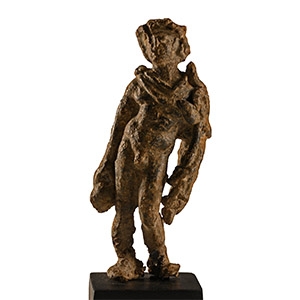
Roman Lead Statuette of Mercury
1st-2nd century A.D.Sold for (Inc. bp): £221
Standing in contrapposto pose, wearing a cloak draped from the right shoulder and tucked around the left arm supporting a caduceus with snake-head finials; broad-brimmed petasos with wings on the crown; the right arm held vertically at the side supporting the marsupium coin-purse; mounted on a custom-made display stand. 111 grams total, 88 mm including stand
From a collection acquired on the UK art market from various auction houses and collections mostly before 2000. From an important Cambridgeshire estate; thence by descent.
Mercury was the god of trade and industry, whose principle shrine in the city of Rome was at the Circus Maximus. The draped mantle is typical for statuary of Mercury from the 1st-2nd century A.D. (Boucher, pl.40, 43) as is the caduceus (Boucher, pl.46 (211)). -
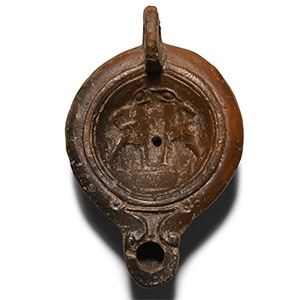
Roman Terracotta Lamp with Fighting Gladiators
1st-2nd century A.D.Estimate: £500 - 700 (+bp*)
Opening Bid: £222
Composed of a discoid body with sunken discus bearing a scene of two gladiators in combat in relief, tabula ansata below, ring handle and roughly D-shaped nozzle with volutes; old crack to base. 84 grams, 12.4 cm
From a German collection. Ex Cambridge, UK, collection, 1980s.
The two gladiators seem to be wearing the armaturae of murmillones. All gladiators began their career as provocatores; the learning of their combat technique was polyvalent and allowed the fighters to specialise as a large shield-bearer (the scutati) like murmillones, or as a small shield-bearer, parmati, like the oplomachus. -
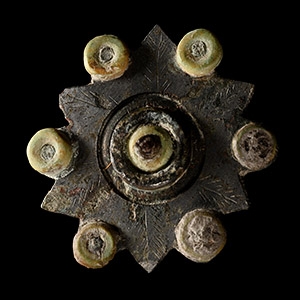
Roman Tinned Bronze Plate Brooch Complete with Appliques
Circa 2nd century A.D.Sold for (Inc. bp): £182
Formed as six radiating triangles with incised leaf detailing, interstitial applied bone discs, central raised collar with bone disc insert; complete with pin and catchplate to verso. 9.1 grams, 40 mm
Acquired on the UK art market in the 1990s. Property of a Stowmarket, UK, gentleman.
