
Loading, please wait...
LOT 0969
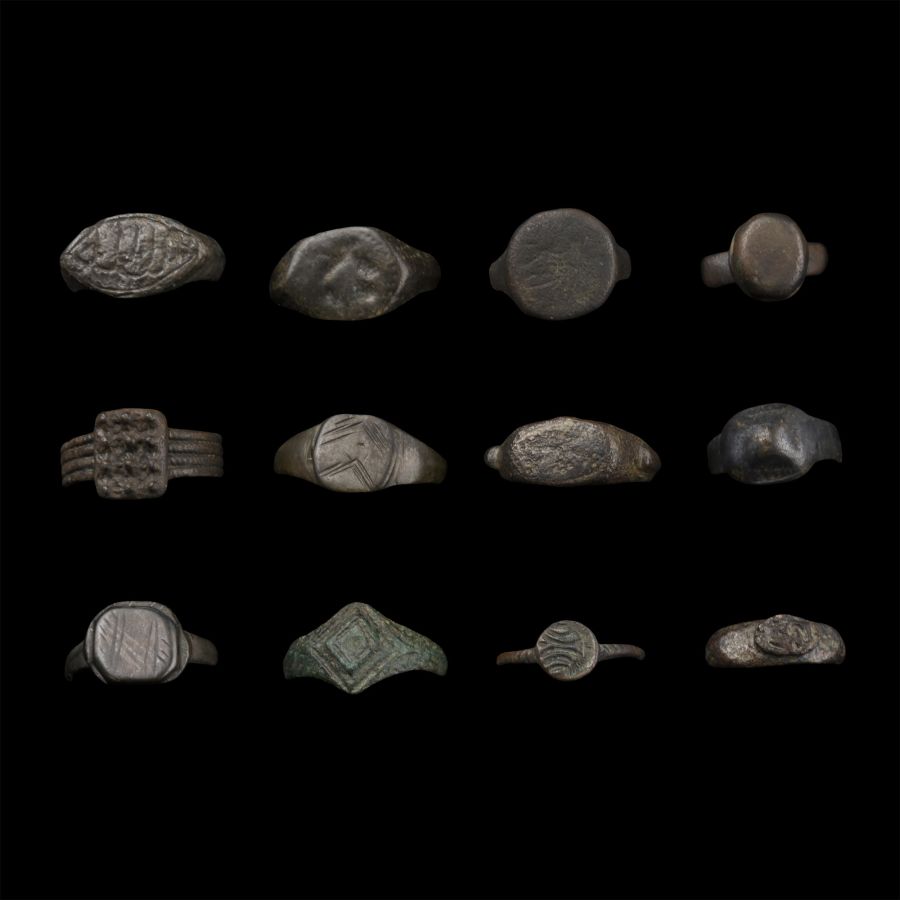
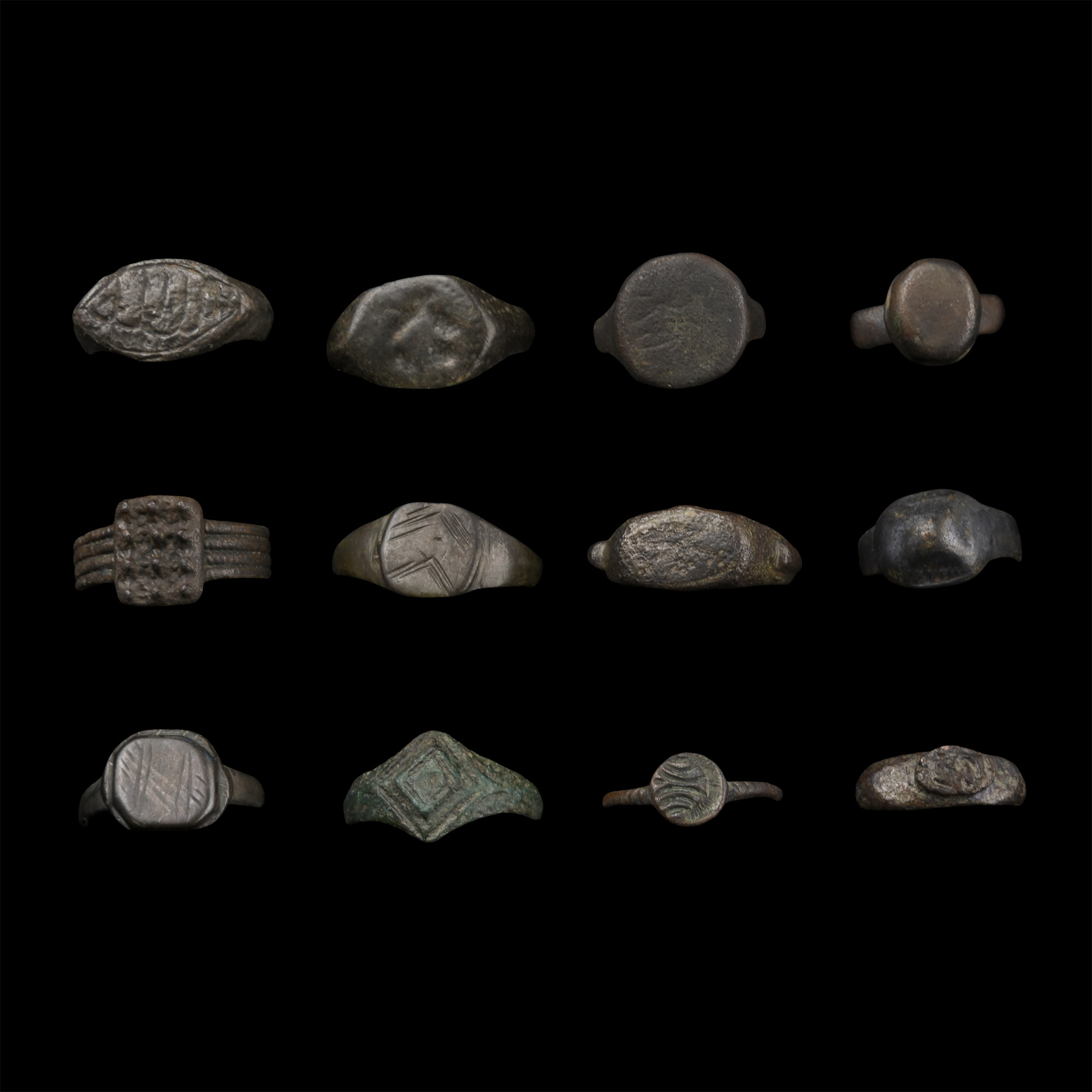
Roman to Medieval Bronze Ring Group
1ST-16TH CENTURY A.D.
3/8 - 1 1/4 in. (56.2 grams total, 20-32 mm).
Comprising twelve rings of different sizes and types, some with incuse motifs on the bezel. [12]
ProvenanceEx German art market, 2000s.
Acquired from an EU collector living in London.
From the collection of a Surrey, UK, gentleman.
TimeLine Auctions follows a vetting process to ensure the authenticity and legality of all items, reinforcing our commitment to integrity and responsible trading. Each antiquity, antique, and coin lot undergoes thorough examination by a vetting committee of at least ten external specialists, professional trade association members, scientists, and archaeologists: Our Vetting Process
AUCTIONS:
TimeLine is a leading auction house specialising in antiquities, ancient art, collectables, natural history, coins, medals, and books. Our auctions offer museums, collectors, historians, and enthusiasts the opportunity to acquire unique and historically significant pieces.
-
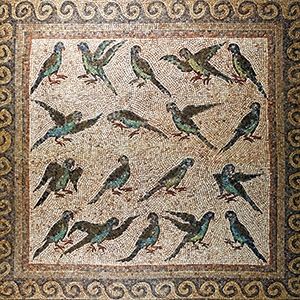
Large Late Roman Mosaic with Inlaid Glass Birds
6th century A.D.Sold for (Inc. bp): £149,500
Rectangular panel of decorative mosaic tesserae comprising: wave pattern border in cream and graduated blue-grey tesserae with darker outer edge; inner border of graduated maroon and dark blue-grey tesserae; central field with two inner rows of four and two outer rows of five parakeets in various standing and perching poses, each formed from blue and green glass tesserae with white, crimson and other detailing to the eye, beak and chest; embedded in a sturdy steel-framed matrix of traditional mid 20th century type. 2.12 x 2.05 m
with Leon Simard, 1960s, Montreal, Canada. Archaeologia Gallery, 1980s. This lot has been checked against the Interpol Database of stolen works of art and is accompanied by search certificate number no.12966-244460.
The design of repeated birds against a neutral field is similar to patterns found on Late Roman and Sassanian textiles of roughly the same date, especially silk and wool textiles woven on more mechanised looms. Birds of all varieties appear frequently in floor mosaics and other arts of the Roman period; however, beribboned birds are rare. -
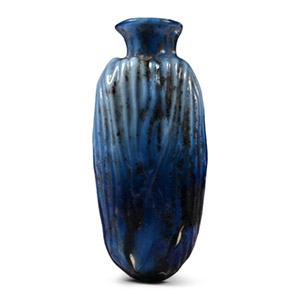
Roman Deep Blue Glass Date Flask
1st century A.D.Estimate: £2,500 - 3,500 (‡+bp*)
Opening Bid: £1,400
Mould-blown with elliptical body, short neck and thick everted rim, with modelled wrinkles imitating the texture of a dried date. 41.7 grams, 80 mm
Dr Gonik & Me Wirth, Geneva, 1970s. Private collection, Europe. Accompanied by an academic report by Dr Raffaele D'Amato. This lot has been checked against the Interpol Database of stolen works of art and is accompanied by a search certificate number no.12394-226935.
Dates were not only a staple of the Mediterranean diet, used to sweeten food and wine, but also a symbol for the New Year and a fruit often given as a gift on the occasion. -
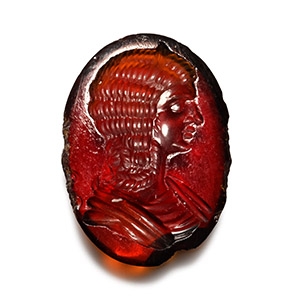
Roman Garnet Gemstone with Bust of Julia Domna
2nd-3rd century A.D.Estimate: £3,000 - 4,000 (+bp*)
Opening Bid: £1,600
With incuse profile female bust with copious tiered curls and braids, palla to the shoulder; supplied with a museum-quality impression. 3.06 grams, 21 mm
Ex London, UK, gentleman, 1990s. This lot has been checked against the Interpol Database of stolen works of art and is accompanied by search certificate number no.13002-244442.
Julia Domna (170-217 A.D.) was one of the most honoured imperial women in the course of the Principate. Almost 600 inscriptions bear her name; numerous coin types portray her together with the emperors; important artworks where she is depicted (such as the Kassel Cameo, the Arch of the Argentarii and the Severan Arch in Leptis Magna) demonstrate that she occupied no secondary position in the Severan regime. She appears, consequently, to be a key figure of this period.
