
Loading, please wait...
LOT 0994
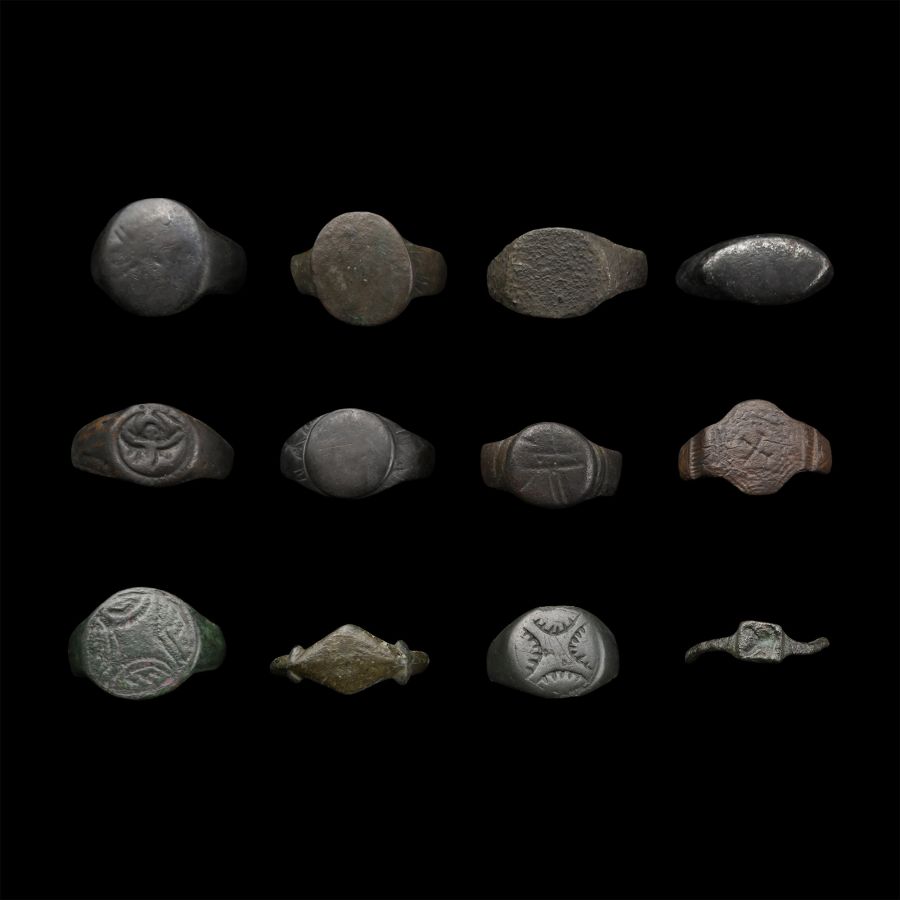
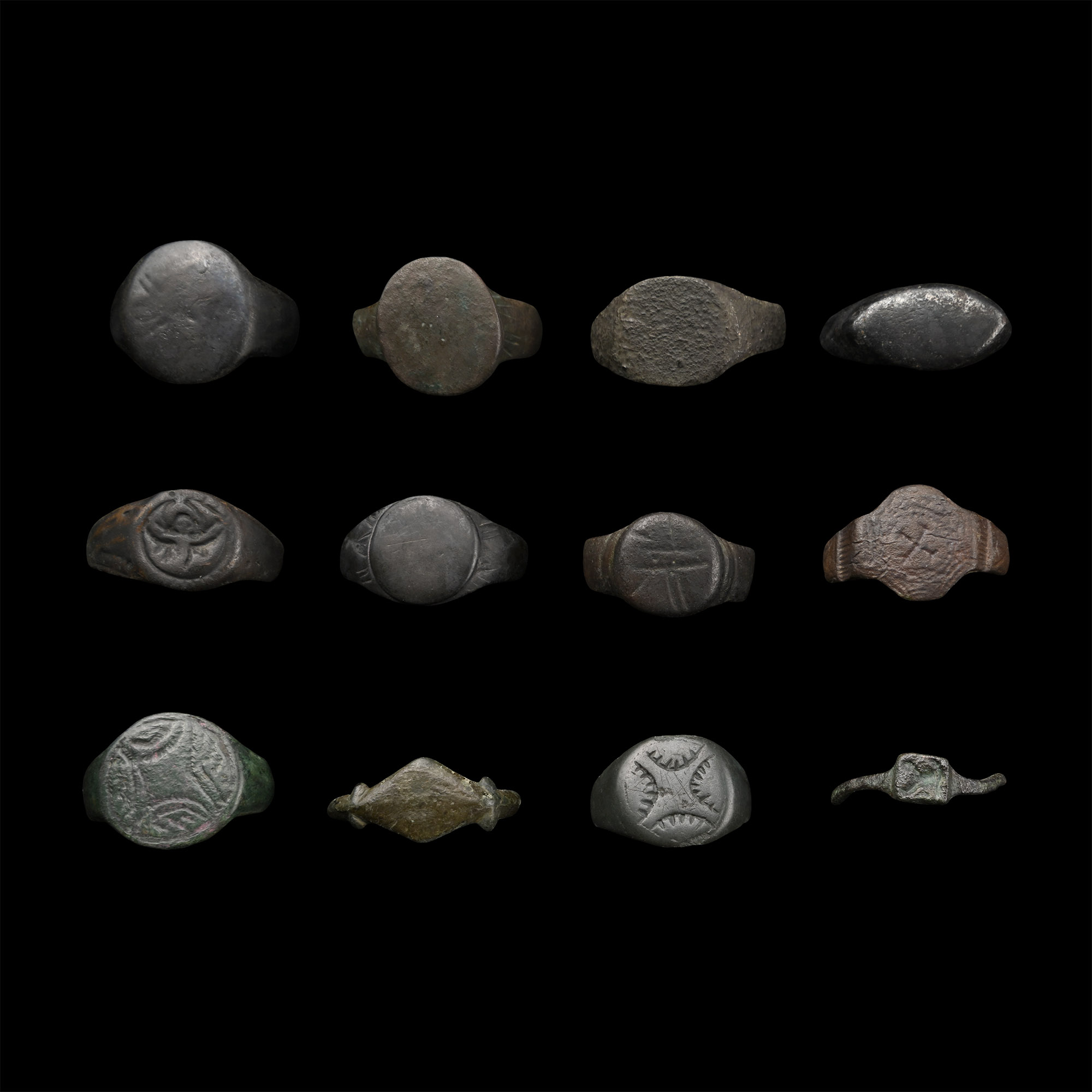
Roman to Medieval Bronze Ring Group
1ST-16TH CENTURY A.D.
3/4 - 1 in. (63.1 grams total, 20-24 mm).
Comprising twelve rings, most with a decorative bezel. [12]
ProvenanceEx German art market, 2000s.
Acquired from an EU collector living in London.
From the collection of a Surrey, UK, gentleman.
TimeLine Auctions follows a vetting process to ensure the authenticity and legality of all items, reinforcing our commitment to integrity and responsible trading. Each antiquity, antique, and coin lot undergoes thorough examination by a vetting committee of at least ten external specialists, professional trade association members, scientists, and archaeologists: Our Vetting Process
AUCTIONS:
TimeLine is a leading auction house specialising in antiquities, ancient art, collectables, natural history, coins, medals, and books. Our auctions offer museums, collectors, historians, and enthusiasts the opportunity to acquire unique and historically significant pieces.
-
.jpg)
Roman Rock Crystal Sleeping Dog
1st-2nd century A.D.Sold for (Inc. bp): £2,860
Carved in the round model of a recumbent canine with head resting on the forelegs; leaf-shaped ears, and deep-set eyes. 14.2 grams, 40 mm
Acquired in the mid 1980s-1990s. Private collection, Switzerland, thence by descent. Private collection, since the late 1990s. This lot has been checked against the Interpol Database of stolen works of art and is accompanied by a search certificate number no.12588-232168.
The small rock crystal sculpture is modelled on similar figures representing sleeping hunting dogs. The subject occurs in cameos, plastic vases, as well as in lamps. These images have symbolic value, implying something of the fidelity of the dogs they depict, as well as their bravery and dependability as guardians. -
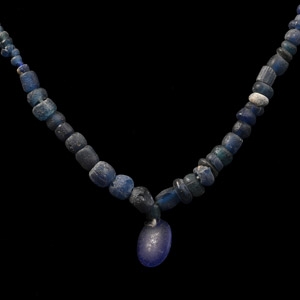
Roman Deep Blue Glass Bead Necklace String
1st-4th century A.D. and laterSold for (Inc. bp): £52
Restrung group of tubular, oblate and other types with tabular pendant centrepiece; including some 'Indo-Pacific' beads. 11.7 grams, 43.5 cm
London, UK, collection, 2000s. -
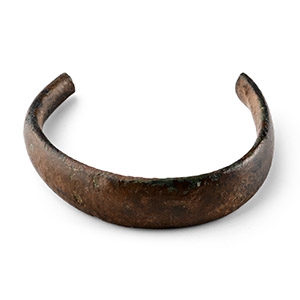
'The Dale Abbey' Romano-British Bronze Bracelet
300-450 A.D.Sold for (Inc. bp): £59
Penannular in form and D-plano-convex in section, tapering to the end of each arm; finials absent. 45 grams, 63 mm
Found whilst searching with a metal detector in Dale Abbey, Erewash, Derbyshire, UK. Accompanied by a copy of the British Museum's Portable Antiquities Scheme (PAS) report no.DENO-89B82E.
