
Loading, please wait...
LOT 0942
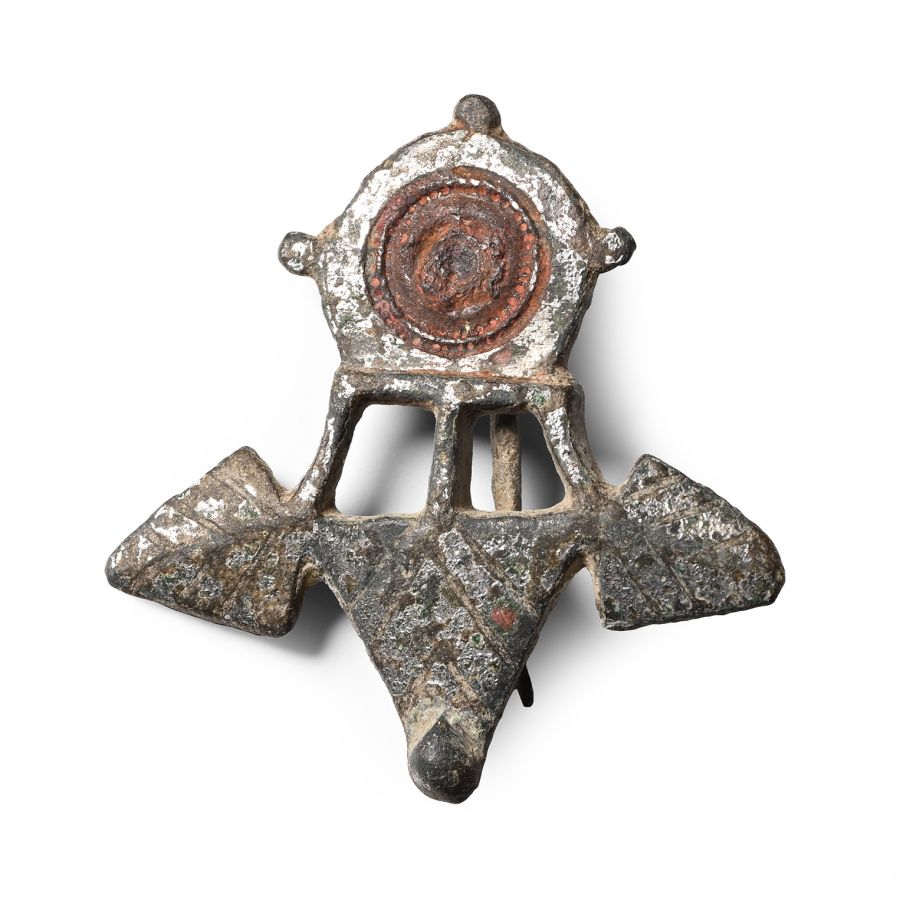
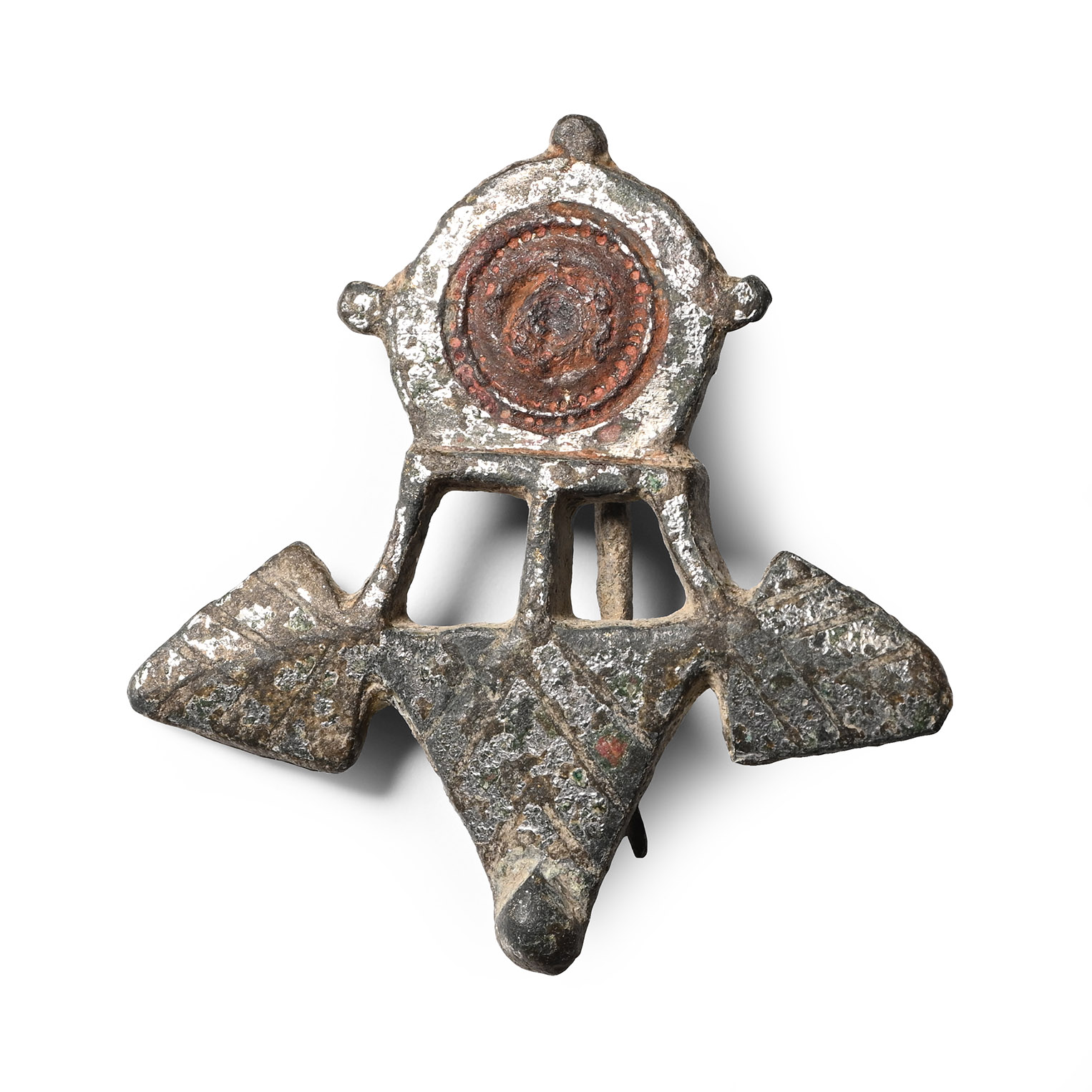
Roman Tinned Bronze Plate Brooch
2ND-3RD CENTURY A.D.
1 3/8 in. (6.9 grams, 36 mm).
Comprising a triangular plaque joined by three radiating struts to a disc with radiating lugs and central enamelled concentric rings; the plaque with lateral leaf-shaped panels all decorated with herringbone motifs, catch and hinged pin to the reverse. [No Reserve]
ProvenanceEx German art market, 2000s.
Acquired from an EU collector living in London.
From the collection of Surrey, UK, gentleman.
Cf. Hattatt, R., Ancient Brooches and Other Artefacts, Oxford, 1989, item 1561.
CONDITIONTimeLine Auctions follows a vetting process to ensure the authenticity and legality of all items, reinforcing our commitment to integrity and responsible trading. Each antiquity, antique, and coin lot undergoes thorough examination by a vetting committee of at least ten external specialists, professional trade association members, scientists, and archaeologists: Our Vetting Process
AUCTIONS:
TimeLine is a leading auction house specialising in antiquities, ancient art, collectables, natural history, coins, medals, and books. Our auctions offer museums, collectors, historians, and enthusiasts the opportunity to acquire unique and historically significant pieces.
-
.jpg)
Roman and Byzantine Bronze Ring Group
Circa 3rd-16th century A.D.Sold for (Inc. bp): £91
Including trumpet-bezel, square bezel, ellipsoid bezel and other types. 25 grams total, 15-24 mm
Ex C. Sullivan collection, UK, 1990s. -
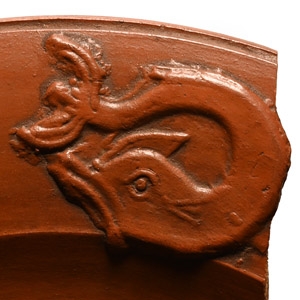
Roman Redware Plate Sherd with Dolphin
4th-5th century A.D.Sold for (Inc. bp): £124
Section of the rim with carination below, high-relief dolphin with its tail curled over above its head. 77 grams, 13 cm
From the collection of a late East Anglian teacher and antiquarian who retired to the Isle of Wight in Hampshire, UK. He amassed a large collection of objects between the 1960s-1980s. -
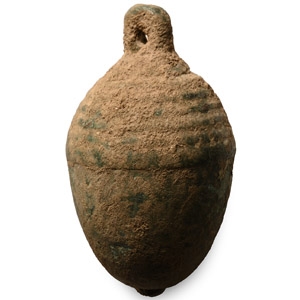
Roman Mason's Acorn-Shaped Plumb Bob Weight
1st-3rd century A.D.Sold for (Inc. bp): £208
Substantial lead-filled bronze with loop above and ribbed cup. 325 grams, 62 mm
From the private collection of the late Victor Brox.
