
Loading, please wait...
LOT 0889
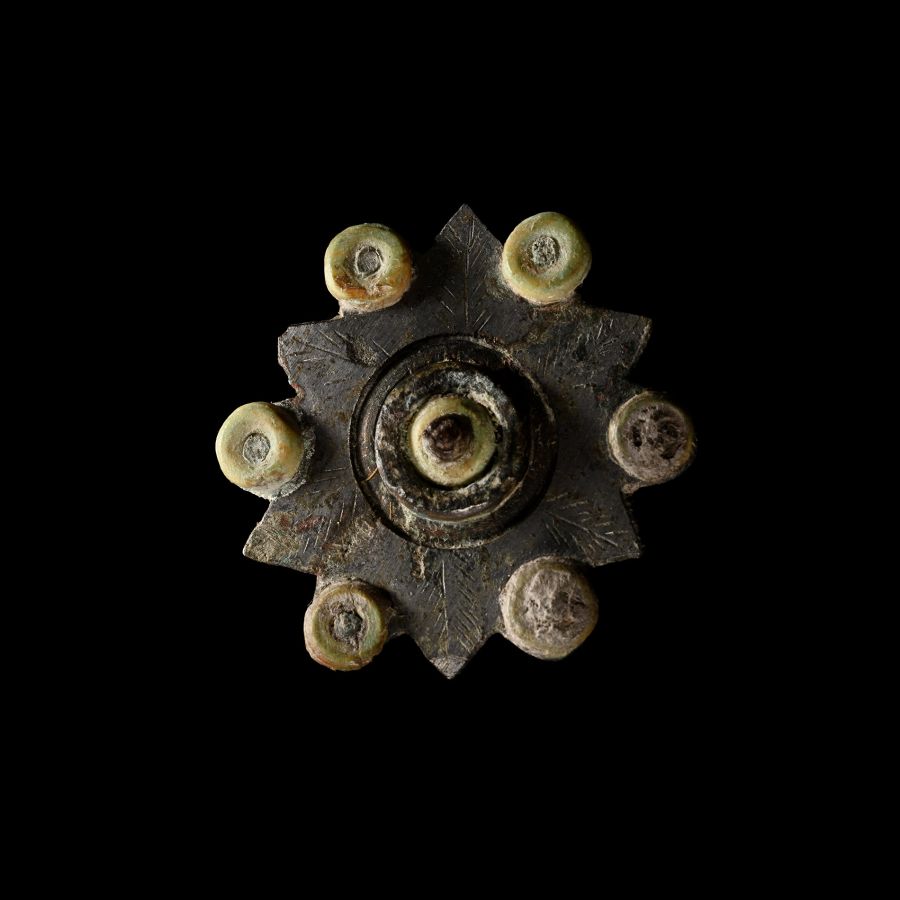
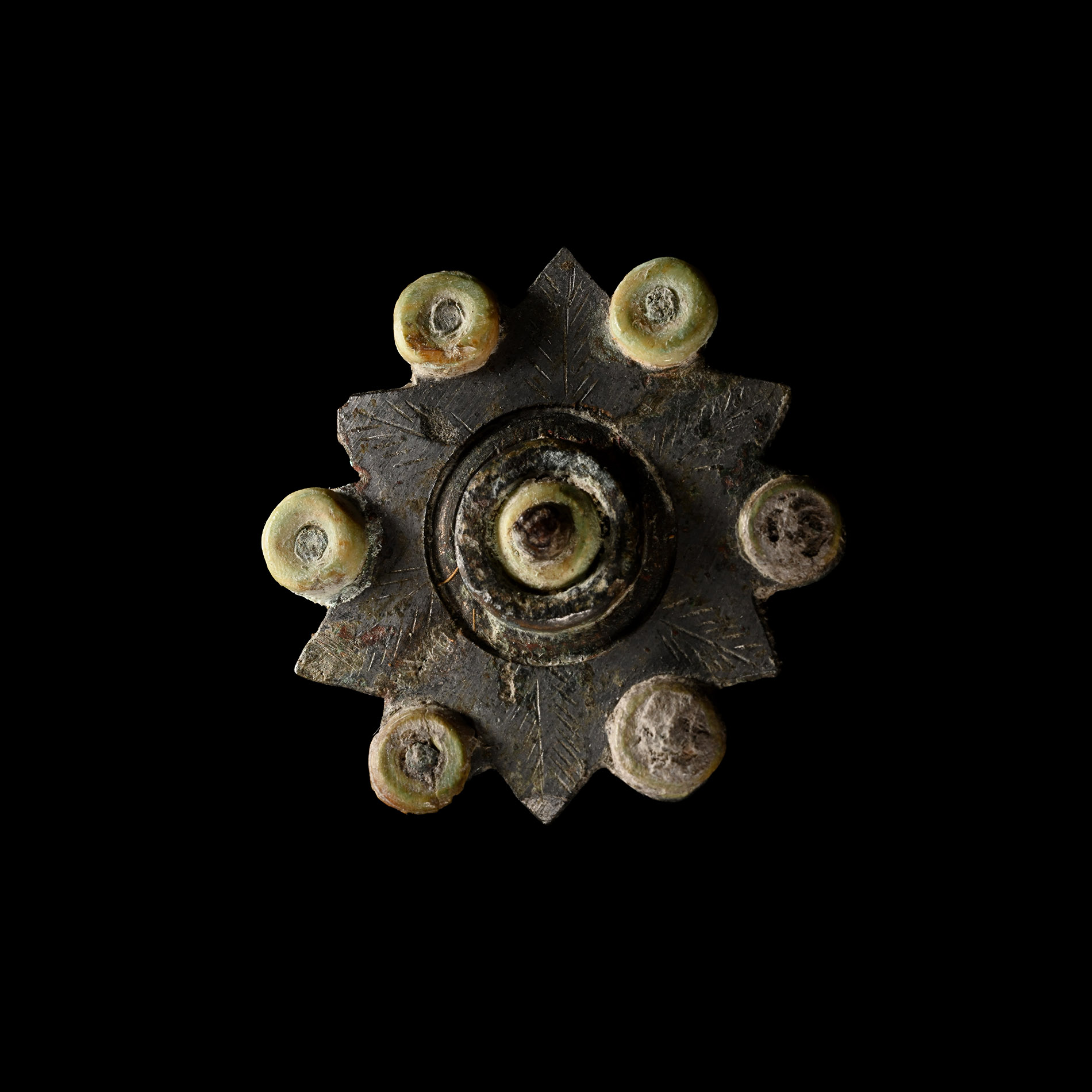
Roman Tinned Bronze Plate Brooch Complete with Appliques
CIRCA 2ND CENTURY A.D.
1 1/2 in. (9.1 grams, 40 mm).
Formed as six radiating triangles with incised leaf detailing, interstitial applied bone discs, central raised collar with bone disc insert; complete with pin and catchplate to verso.
ProvenanceAcquired on the UK art market in the 1990s.
Property of a Stowmarket, UK, gentleman.
Cf. Heeren, S. & van der Feijst, L., Fibulae uit de Lage Landen. Beschrijving, Analyse en Interpretatie van een Archeologische Vondstcategorie, Amersfoort, 2017, type 57-e6 (p.151).
CONDITIONTimeLine Auctions follows a vetting process to ensure the authenticity and legality of all items, reinforcing our commitment to integrity and responsible trading. Each antiquity, antique, and coin lot undergoes thorough examination by a vetting committee of at least ten external specialists, professional trade association members, scientists, and archaeologists: Our Vetting Process
AUCTIONS:
TimeLine is a leading auction house specialising in antiquities, ancient art, collectables, natural history, coins, medals, and books. Our auctions offer museums, collectors, historians, and enthusiasts the opportunity to acquire unique and historically significant pieces.
LOT 0889
Roman Tinned Bronze Plate Brooch Complete with Appliques
Sold for (Inc. bp): £182
-
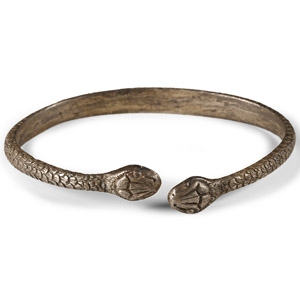
Romano-Egyptian Silver Snake Bracelet
30 B.C.-323 A.D.Sold for (Inc. bp): £1,170
Penannular type with serpent-head ends, scale detailing. 25.4 grams, 74 mm
Ex German art market, 2000s. Acquired from an EU collector living in London. From the collection of Surrey, UK, gentleman. -
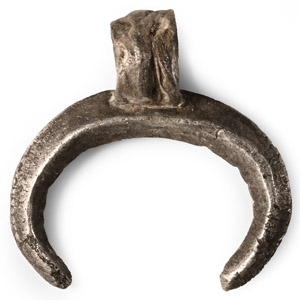
Roman Silver Lunar Pendant
2nd-3rd century A.D.Sold for (Inc. bp): £91
With lozenge-section tapering arms and a large suspension loop. 1.6 grams, 17 mm
Ex German art market, 2000s. Acquired from an EU collector living in London. From the collection of Surrey, UK, gentleman. -
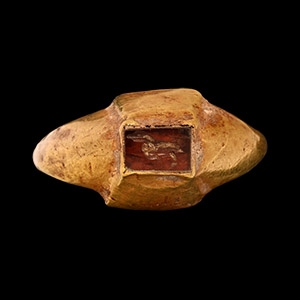
Roman Gold Ring with Bird Gemstone
2nd-4th century A.D.Estimate: £1,000 - 1,400 (+bp*)
Opening Bid: £500
With hollow-formed bezel set with a carnelian cloison, intaglio bird motif. 3.30 grams, 22.60 mm overall, 15.67 mm internal diameter (approximate size British H, USA 3 3/4, Europe 6.18, Japan 6)
Ex property of a late Japanese collector, 1970s.
