Loading, please wait...

Roman Tile and Concrete Group Roman Tile and Concrete Group Roman Tile and Concrete Group
Use mousewheel to zoom in and out, click to enlarge
Details

LOT 0755

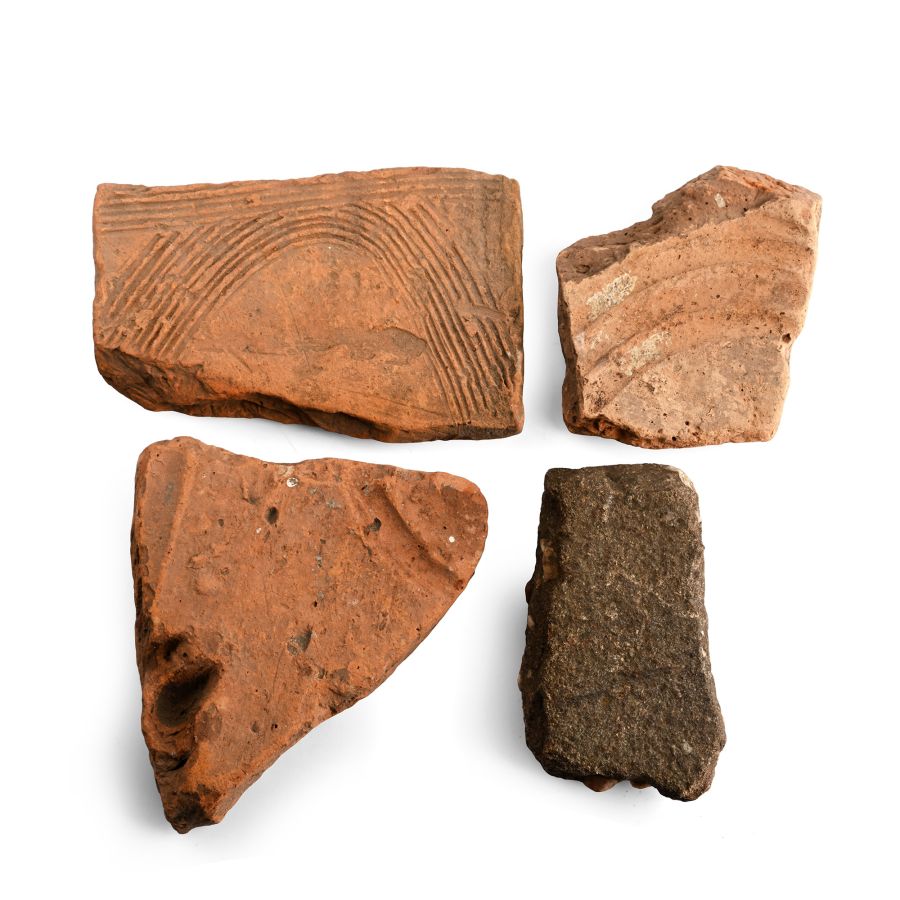
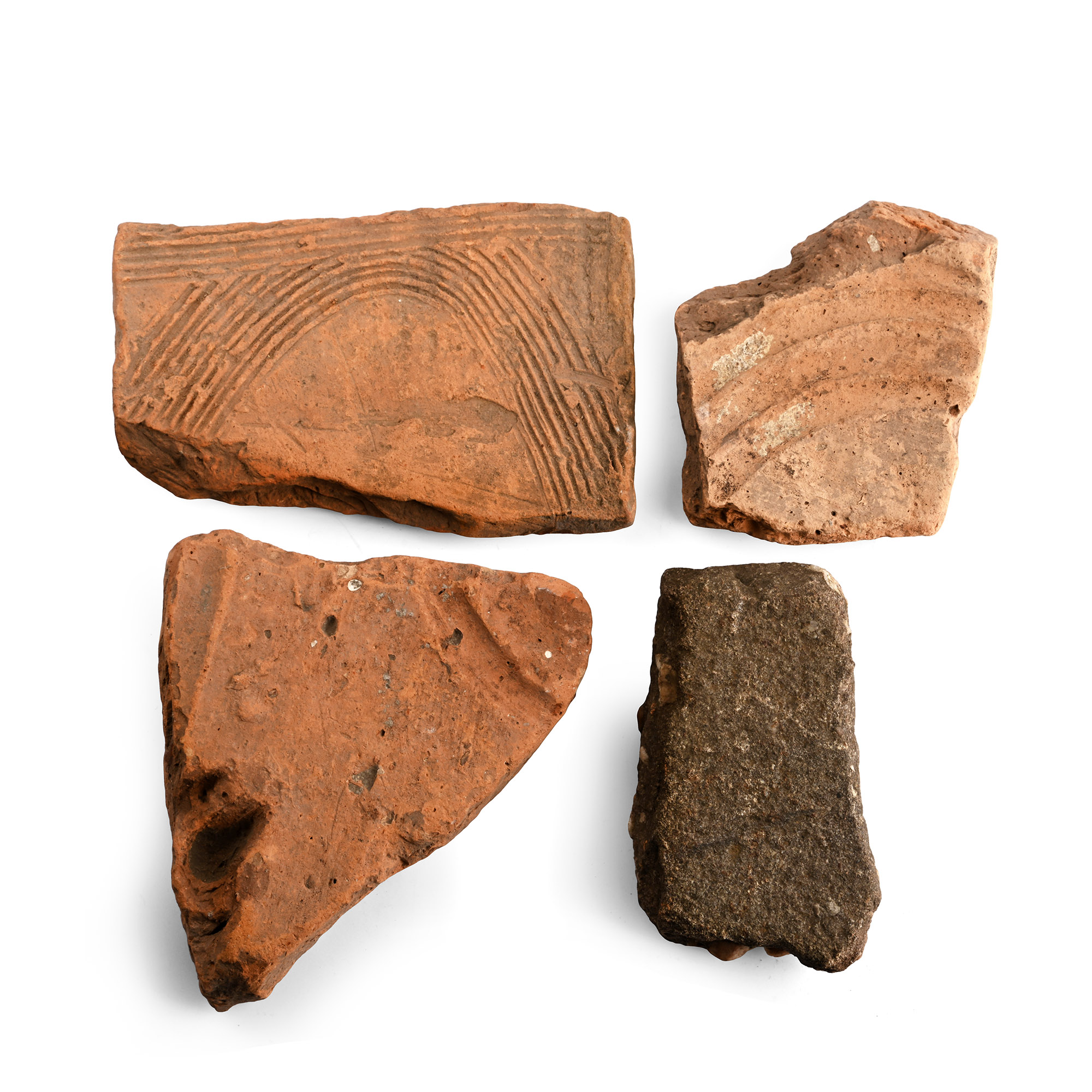
Roman Tile and Concrete Group

1ST-4TH CENTURY A.D.

4 1/2 - 6 1/2 in. (1.98 kg, 11.5-16.5 cm).

Including terracotta tile fragments with striations and other detailing; opus caementicium accretion. [4, No Reserve]

Provenance

From the collection of a Buckinghamshire, UK, collector established from the earlier 1960s.

CONDITION
VETTING:

TimeLine Auctions follows a vetting process to ensure the authenticity and legality of all items, reinforcing our commitment to integrity and responsible trading. Each antiquity, antique, and coin lot undergoes thorough examination by a vetting committee of at least ten external specialists, professional trade association members, scientists, and archaeologists: Our Vetting Process


AUCTIONS:

TimeLine is a leading auction house specialising in antiquities, ancient art, collectables, natural history, coins, medals, and books. Our auctions offer museums, collectors, historians, and enthusiasts the opportunity to acquire unique and historically significant pieces.

LOT 0755

Roman Tile and Concrete Group

Sold for (Inc. bp): £20

Print page

RELATED LOTS
  • Roman Silver Mirror
    Roman Silver Mirror
    1st-3rd century A.D.

    Sold for (Inc. bp): £1,755

    Discoid with raised, rounded rim; a 19th-century collection label bearing a handwritten inscription: ‘GAS, Miroir, Gallo Romain’ indicating the findspot; mounted on a custom-made display stand with serpentine column base. 239 grams, 13.8 cm (426 grams total, 20.1 cm including stand)


    19th century collection label inscribed in ink ‘GAS, Miroir, Gallo-Romain’, indicating that the mirror was discovered at Gas, Eure-et-Loir, northern France. Private collection, UK.

    The British Museum houses several notable ancient Roman silver hand mirrors, including:
1. Bursa Treasure Mirror – Part of the Bursa Treasure, a 1st-century AD Roman silver hoard discovered near Bursa, Turkey. This collection includes a large silver mirror, reflecting the luxurious personal items used by elite Roman women.
2. Chaourse Treasure Mirror – found in 1883 near Chaourse, France, this 2nd–3rd century AD hoard contains various silver objects, including a silvered bronze mirror, offering insights into the affluent lifestyles of Roman society.
These mirrors exemplify the exquisite craftsmanship and refined artistry of Roman silverwork, providing a glimpse into the daily grooming practices and material culture of the Roman elite.

    Lot Details

  • Roman Bronze Horse Crossbow Brooch
    Roman Bronze Horse Crossbow Brooch
    2nd-3rd century A.D.

    Sold for (Inc. bp): £195

    Bow brooch formed as a horse modelled in the round with halter to the neck, notched mane, punched pellet eyes; fore-legs forming the catch, rear legs with transverse bar and hinged pin beneath. 19 grams, 35 mm


    Ex David Miller, Hemel Hempstead, London, UK. From the private collection of a West London, UK, gentleman, formed since the early 2000s.

    Lot Details

  • The Thorpe Audlin Romano-British Enamelled Bow Brooch
    'The Thorpe Audlin' Romano-British Enamelled Bow Brooch
    Circa 2nd century A.D.

    Sold for (Inc. bp): £468

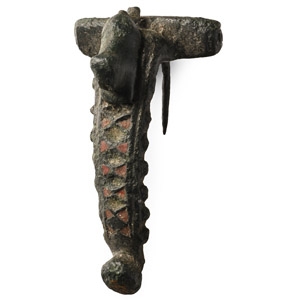
    Comprising: discoid head with raised rectangular neck, tongue-shaped bow with tapered end; the head decorated extensively with a raised triskele style pattern, with retained enamel in alternate yellow and red colours; the body with a raised longitudinal running linear border bisected by four latitudinal borders; within each sub-rectangular cell, a crescent border with central raised pellet; within each cell created by the raised borders, retained enamel in alternating red and yellow; the reverse undecorated with lug and chord, catchplate to lower end. 13.7 grams, 57 mm


    Found by Mr Wayne Colbeck whilst searching with a metal detector in Thorpe Audlin, Wakefield, Yorkshire, UK, in 2014. Accompanied by a copy of the British Museum's Portable Antiquities Scheme (PAS) report no.YORYM-D5BBD5. Accompanied by the finder's original copy of the York Archaeological Trust's object entry form dated 31 October 2014 with reference no.E001019.

    Sally Worrell, National Finds Advisor has been unable to locate any comparable examples of this form of brooch. It has been designated by the British Museum as a 'Find of Note' and of 'Regional Importance'.

    Lot Details

Stay up-to-date with the latest from TimeLine Auctions by joining our mailing list