
Loading, please wait...
LOT 0662
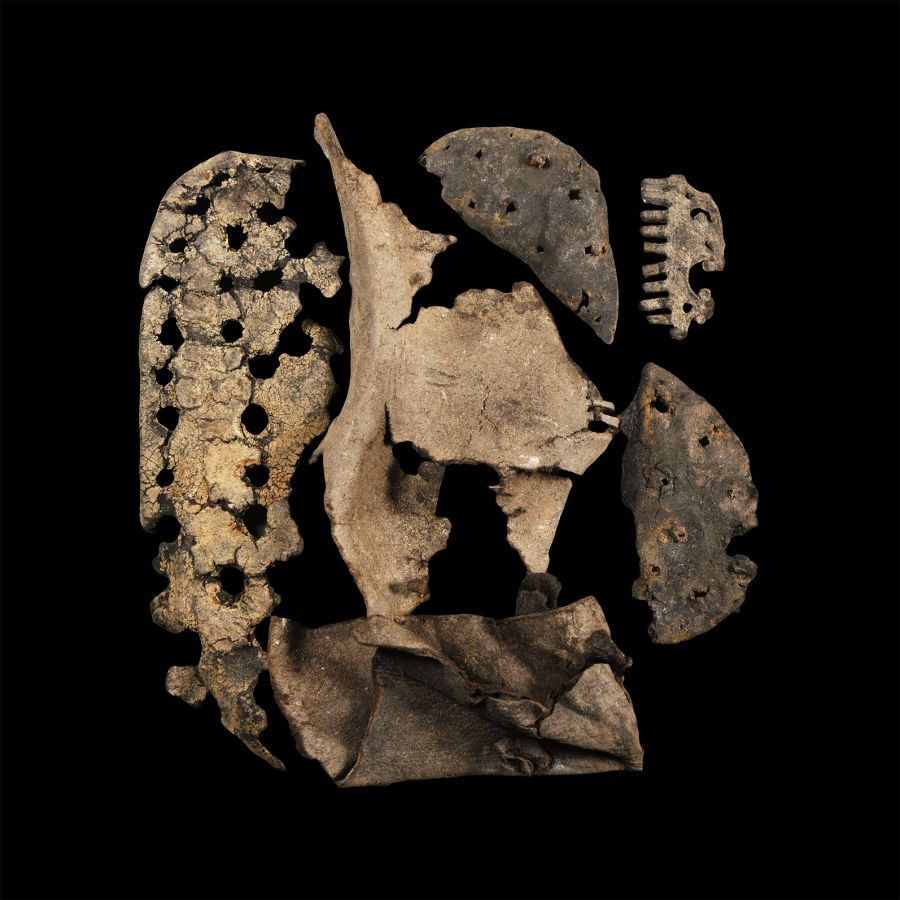
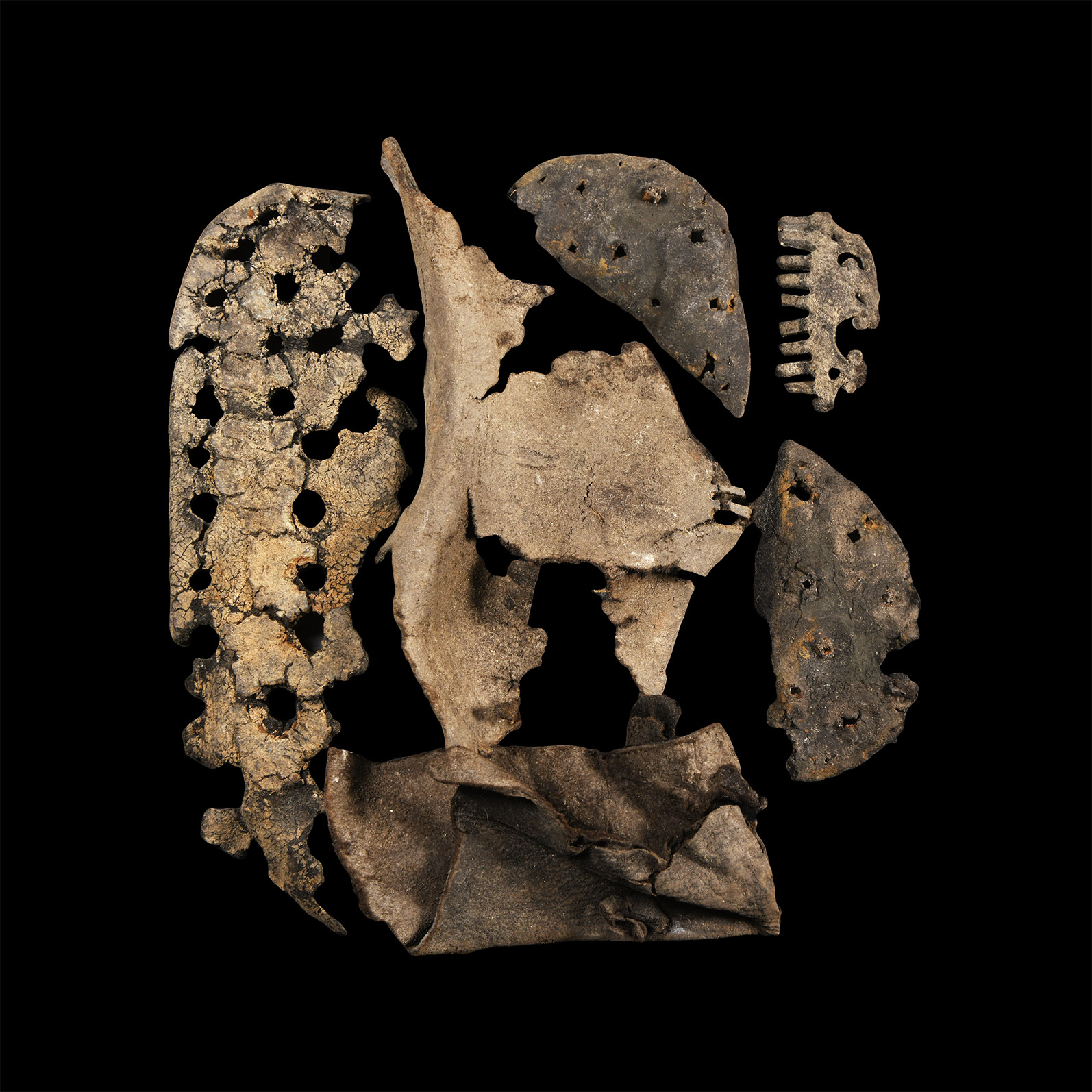
Roman 'Thames' Leather Shoe Fragment Group
1ST-4TH CENTURY A.D.
1 3/4 - 6 in. (30 grams total, 4.5-15 cm).
Including examples retaining hobnails and sections from various elements of (likely) different shoes. [6, No Reserve]
ProvenanceFound Billingsgate spoil from the Thames foreshore, London, UK.
CONDITIONTimeLine Auctions follows a vetting process to ensure the authenticity and legality of all items, reinforcing our commitment to integrity and responsible trading. Each antiquity, antique, and coin lot undergoes thorough examination by a vetting committee of at least ten external specialists, professional trade association members, scientists, and archaeologists: Our Vetting Process
AUCTIONS:
TimeLine is a leading auction house specialising in antiquities, ancient art, collectables, natural history, coins, medals, and books. Our auctions offer museums, collectors, historians, and enthusiasts the opportunity to acquire unique and historically significant pieces.
-
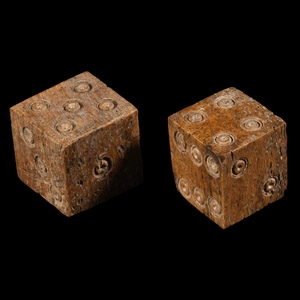
Roman Bone Dice Pair
2nd-4th century A.D. or laterSold for (Inc. bp): £169
With ring-and-dot markings disposed 1:6, 2:3, 4:5. 10.2 grams total, 14 mm each
Ex collection of a UK gentleman formed in the 1990s. From the collection of a Surrey, UK, gentleman. -
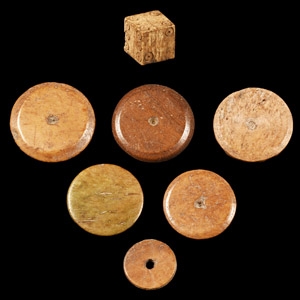
Roman 'Thames' Bone Gaming Piece and Dice Group
1st-4th century A.D.Sold for (Inc. bp): £124
Comprising six polished discoid counters and a single dice, the latter configured: 1:6; 2:5; 3:4 in punched ring-and-dot markers. 8 grams total, 7-18 mm
Found Billingsgate spoil from the Thames foreshore, London, UK. -
.jpg)
Roman and Other Mixed Bead Group
Circa 1st century A.D. or laterSold for (Inc. bp): £46
Restrung, composed of graduated stone and glass beads of various types, predominantly in shades of white and cream. 29 grams, 64 cm long
Fine condition.
Acquired 1980-2015. Ex Abelita family collection.
