
Loading, please wait...
LOT 0670
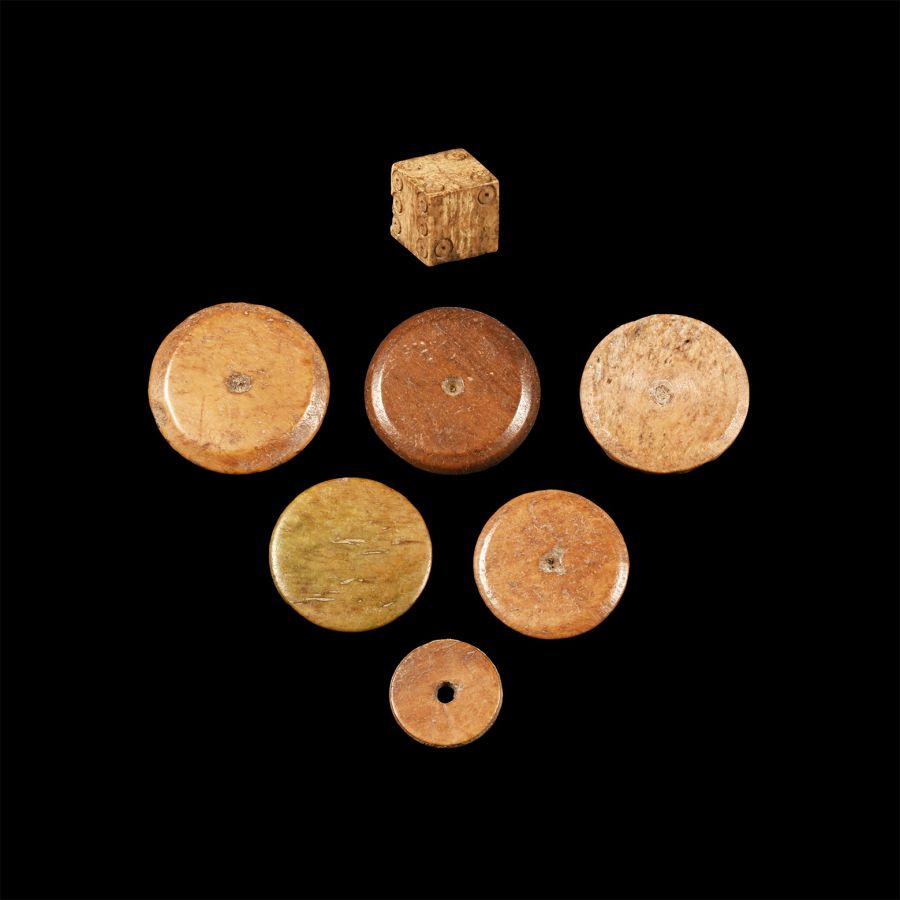
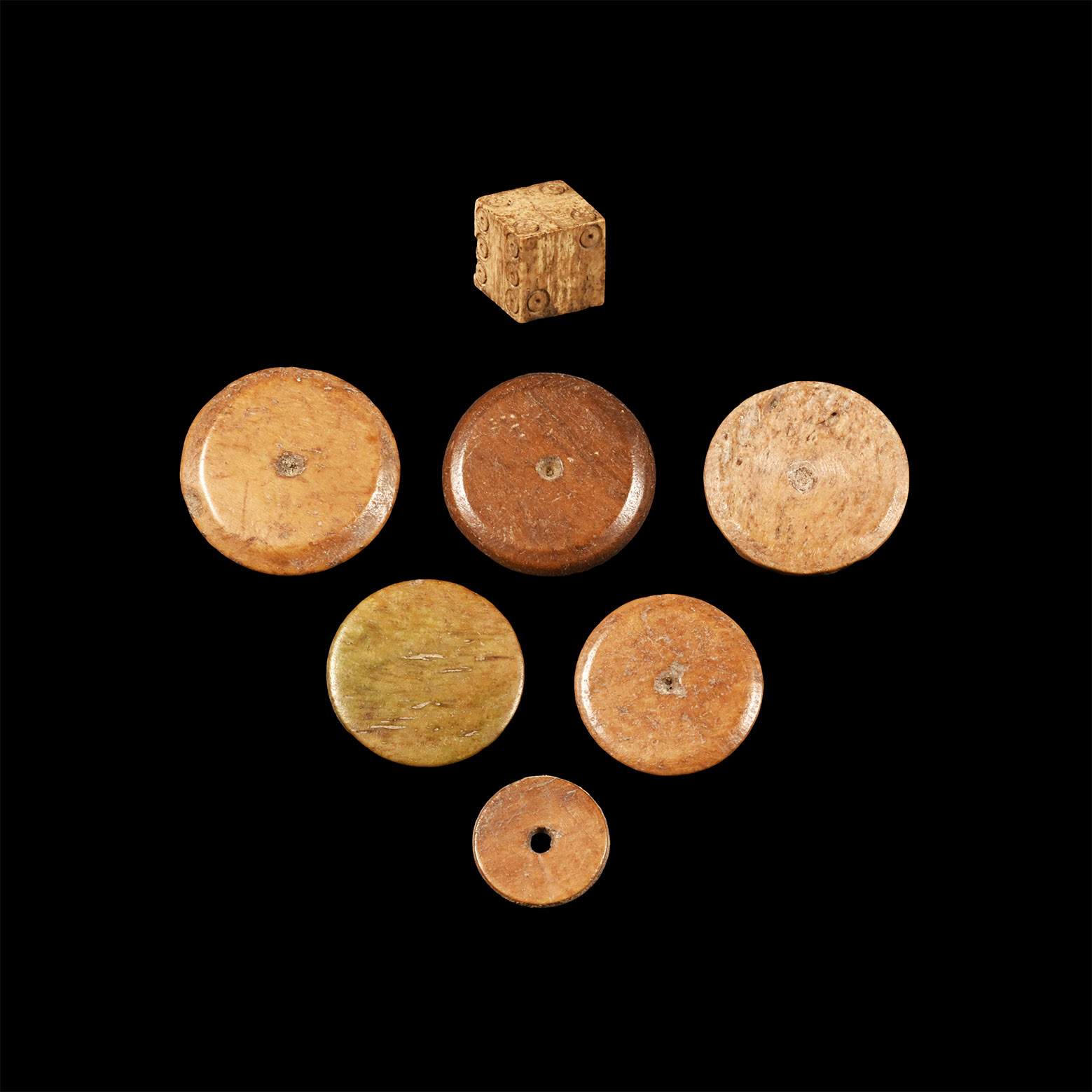
Roman 'Thames' Bone Gaming Piece and Dice Group
1ST-4TH CENTURY A.D.
1/4 - 2/3 in. (8 grams total, 7-18 mm).
Comprising six polished discoid counters and a single dice, the latter configured: 1:6; 2:5; 3:4 in punched ring-and-dot markers. [7, No Reserve]
ProvenanceFound Billingsgate spoil from the Thames foreshore, London, UK.
CONDITIONTimeLine Auctions follows a vetting process to ensure the authenticity and legality of all items, reinforcing our commitment to integrity and responsible trading. Each antiquity, antique, and coin lot undergoes thorough examination by a vetting committee of at least ten external specialists, professional trade association members, scientists, and archaeologists: Our Vetting Process
AUCTIONS:
TimeLine is a leading auction house specialising in antiquities, ancient art, collectables, natural history, coins, medals, and books. Our auctions offer museums, collectors, historians, and enthusiasts the opportunity to acquire unique and historically significant pieces.
-
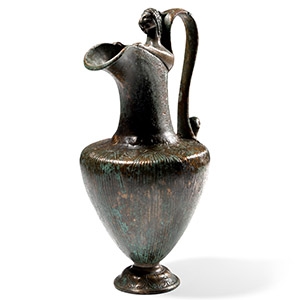
Roman Bronze Oinochoe with Lion Protome
1st century B.C.-1st century A.D.Sold for (Inc. bp): £4,680
The conical body decorated with overlapping petal-shaped panels, tapering neck with a wide spout, high arching handle with acanthus leaves, bust of a youthful male with long hair below (possibly Bacchus) the upper part terminating with a lion protome with the extended forelegs resting on the rim of the vessel, the high flaring foot possibly added later. 797 grams, 22.5 cm high
Excellent condition
Private collection, Rosenheim, Germany, 1960s. Accompanied by an academic report by Dr Raffaele D’Amato. This lot has been checked against the Interpol Database of stolen works of art and is accompanied by search certificate no.11734-201200.
Considering the primary function of oinochoe as drinking jugs, the images decorating them were often related to the god of wine, Bacchus, here probably represented as young Dionysus accompanied by a lion. -
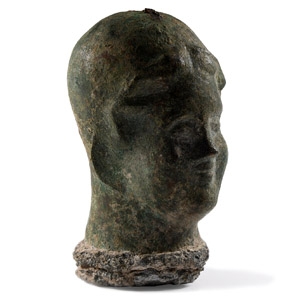
Large Eastern Roman Bronze Bust-Shaped Steelyard Weight
Circa 3rd-4th century A.D. or laterEstimate: £1,000 - 1,400 (+bp*)
Opening Bid: £400
Modelled in the round as a facing female with head turned slightly right, with semi-naturalistic facial detailing and dressed hair; lead-filled. 4.2 kg, 13.5 cm high
Acquired 1990s-early 2000s. East Anglian private collection.
Steelyard weights in the form of human or deities faces were not uncommon in the Roman period (see SWYOR-DA4426, OXON-4391B5, HAMP-BD4D67 and NARC-7A7B81 on the PAS). These were generally filled with lead and had iron or copper suspension loops projecting from the top of the head. -
.jpg)
Roman Lead Plaque with Magical Inscription
Circa 6th century A.D.Sold for (Inc. bp): £572
Rectangular plaque with 17 lines of Greek text in small (2mm) lettering. 8.6 grams, 50 mm
From the private collection of the late Mr S.M., London, UK, thence by descent.
