
Loading, please wait...
LOT 0696
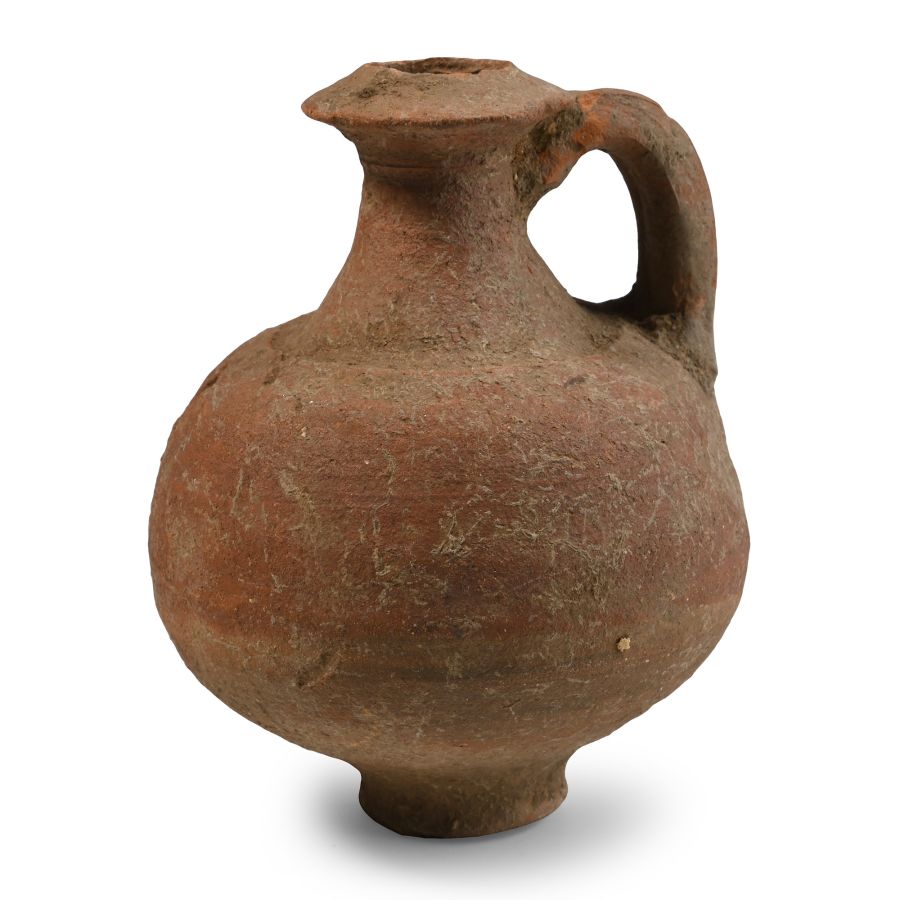
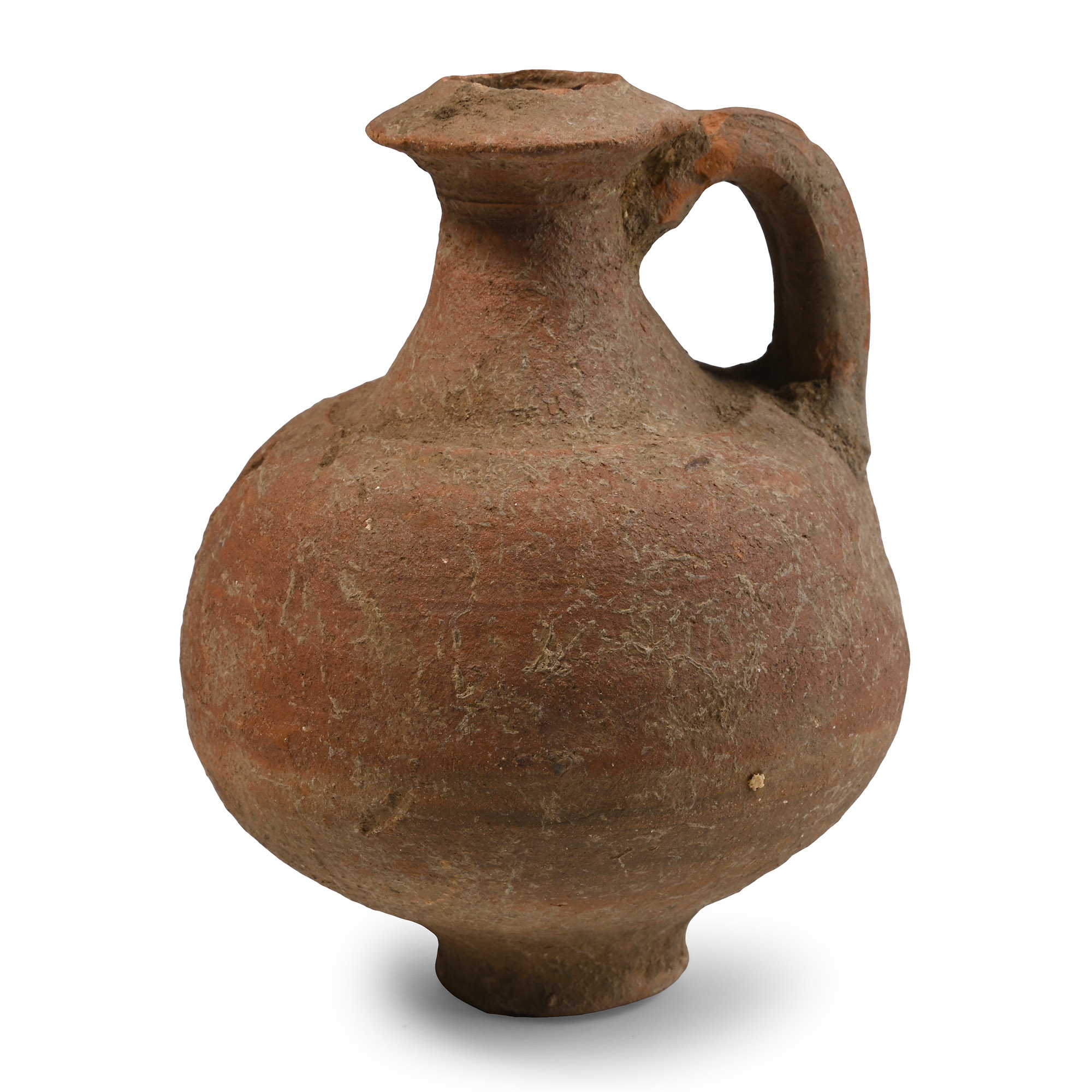
Roman Terracotta Wine Flagon
3RD-4TH CENTURY A.D.
4 in. (153 grams, 10.1 cm).
With narrow foot and broad shoulder, biconvex mouth and strap handle; mouth chipped. [No Reserve]
ProvenanceEx German art market, 2000s.
Acquired from an EU collector living in London.
From the collection of a Surrey, UK, gentleman.
TimeLine Auctions follows a vetting process to ensure the authenticity and legality of all items, reinforcing our commitment to integrity and responsible trading. Each antiquity, antique, and coin lot undergoes thorough examination by a vetting committee of at least ten external specialists, professional trade association members, scientists, and archaeologists: Our Vetting Process
AUCTIONS:
TimeLine is a leading auction house specialising in antiquities, ancient art, collectables, natural history, coins, medals, and books. Our auctions offer museums, collectors, historians, and enthusiasts the opportunity to acquire unique and historically significant pieces.
-
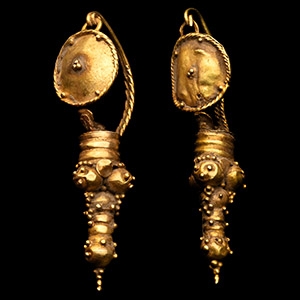
Roman Gold Earring with Matched Copy
2nd-3rd century A.D. and laterEstimate: £1,000 - 1,400 (+bp*)
Opening Bid: £550
Featuring a large central boss with and pendant decorated with fine granulation; discus decorated with a central cluster of granulation with four simple granules to the edges; boss framed with gentle ropework around the edges; hanging pendants with a cylindrical bead, and cluster of granulated hollow spheres; with another reproduction earring to make a pair. 7.25 grams total, 46 mm
Ex collection of a deceased Japanese gentleman, 1970-2010. -
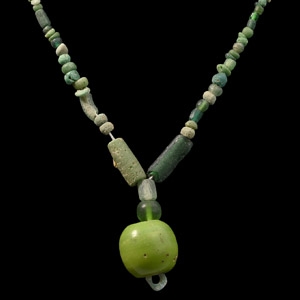
Roman Green Glass Bead Necklace String
1st-4th century A.D. and laterSold for (Inc. bp): £65
Restrung designer necklace string of tubular, oblate and other types with barrel-shaped pendant centrepiece. 31.8 grams, 36 cm
London, UK, collection, 2000s. -
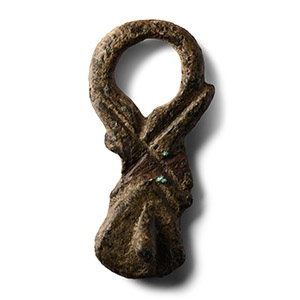
Roman Bronze Phallic Pendant
2nd century A.D.Sold for (Inc. bp): £26
Amuletic fascinum formed as a loop with male genitals below. 10.55 grams, 40 mm
Ex DRG Coins and Antiquities, Bishops Stortford, Essex, UK. From the private collection of a West London, UK, gentleman, formed since the early 2000s. Accompanied by a hand written dealer's ticket.
