
Loading, please wait...
LOT 0689
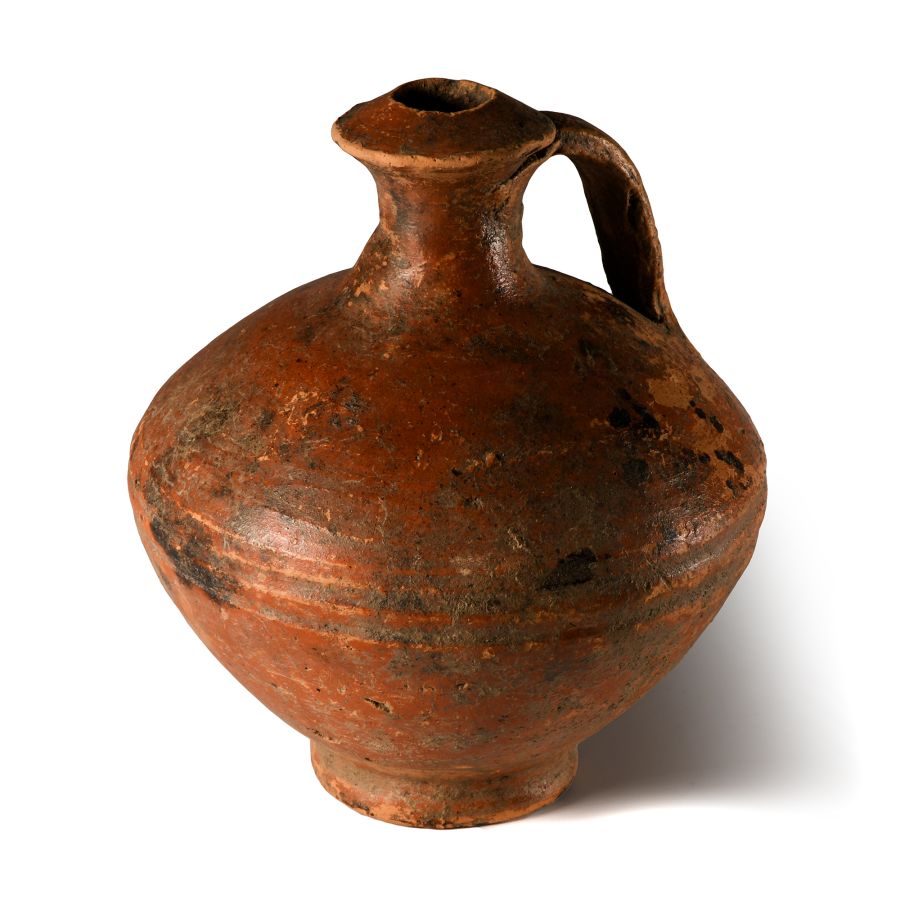
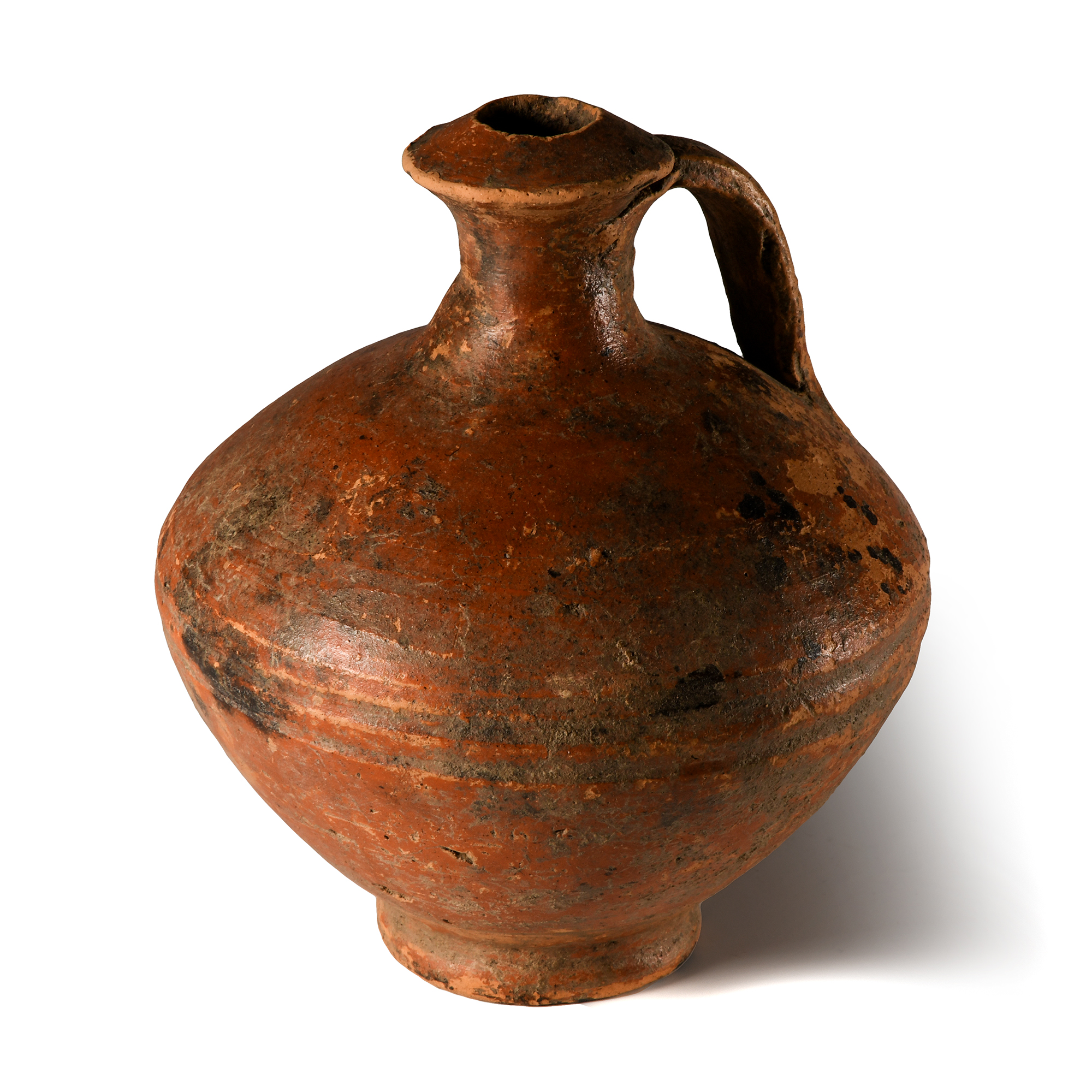
Roman Terracotta Wine Flagon
1ST-2ND CENTURY A.D.
5 1/4 in. (275 grams, 13.5 cm high).
With globular body, thick basal ring, tall columnar neck with biconical collar, single strap handle to the rear.
ProvenanceEx German art market, 2000s.
Acquired from an EU collector living in London.
From the collection of Surrey, UK, gentleman.
TimeLine Auctions follows a vetting process to ensure the authenticity and legality of all items, reinforcing our commitment to integrity and responsible trading. Each antiquity, antique, and coin lot undergoes thorough examination by a vetting committee of at least ten external specialists, professional trade association members, scientists, and archaeologists: Our Vetting Process
AUCTIONS:
TimeLine is a leading auction house specialising in antiquities, ancient art, collectables, natural history, coins, medals, and books. Our auctions offer museums, collectors, historians, and enthusiasts the opportunity to acquire unique and historically significant pieces.
-
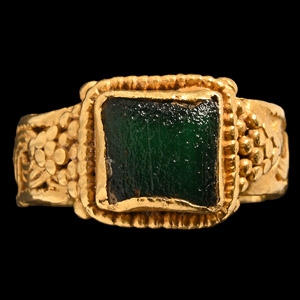
Roman Gold Ring with Green Cabochon
3rd-6th century A.D.Sold for (Inc. bp): £1,560
The hoop recessed and decorated with a simple plait formed with three separate rods; granulated pyramids beneath the square bezel framed with a pelletted band, raised setting with a green glass cabochon. 4.69 grams, 22.63 mm overall, 16.86 mm internal diameter (approximate size British M 1/2, USA 6 1/4, Europe 13.09, Japan 12)
Private collection USA. From the Alexander Gallery, New York, USA, in the early 2000s. This lot has been checked against the Interpol Database of stolen works of art and is accompanied by search certificate no.12106-214327.
Previously these rings were generally dated later, however, according to Chadour, the shape is more typical of the 2nd-3rd century A.D. The gem however can also be of later date, because the use of the emerald was more typical of the late empire. The decoration of the shoulders with the plait reminisces Celto-Roman patterns. -
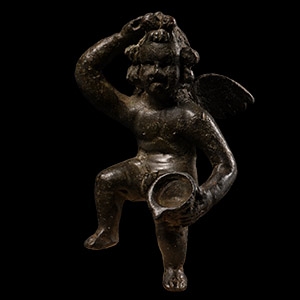
Roman Bronze Statuette of Eros
1st-2nd century A.D.Sold for (Inc. bp): £468
Modelled with the right hand in a fist placed on the brow, left hand supporting a cup on the knee, wings spread to the reverse; mounted on a custom-made stand. 160 grams total, 73 mm high including stand
From a collection acquired on the UK art market from various auction houses and collections mostly before 2000. From an important Cambridgeshire estate; thence by descent. -
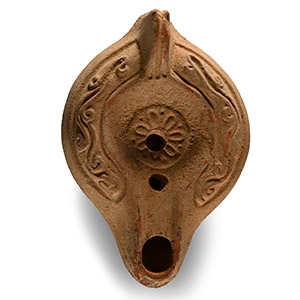
Roman Terracotta Oil Lamp with Floral Motif
5th century A.D.Sold for (Inc. bp): £221
Grooved lug handle to rear, discus with two filling holes and a central rosette motif, foliate border to the shoulder; low basal ring and maker's mark 'E'. 173 grams, 11.5 cm
Acquired on the European art market, 1980s. English private collection.
Many lamps of this category (late lamps of Asia Minor types, sometimes just called 'late Ephesian lamps' but diffused in all of the Roman Levant) were discovered in the Seven Sleepers Cemetery at Ephesus. These lamp types have either a circular or an oval elongated body that is sharply carinated, with protruding nozzle. The shoulders are outward sloping and offer a variety of characteristic decorations in both relief and sunken patterns: rows of globules, slanted radiating grooves, ovolos, vine-tendrils and grapes, tongues or petals, and concentric rings.
