
Loading, please wait...
LOT 0737
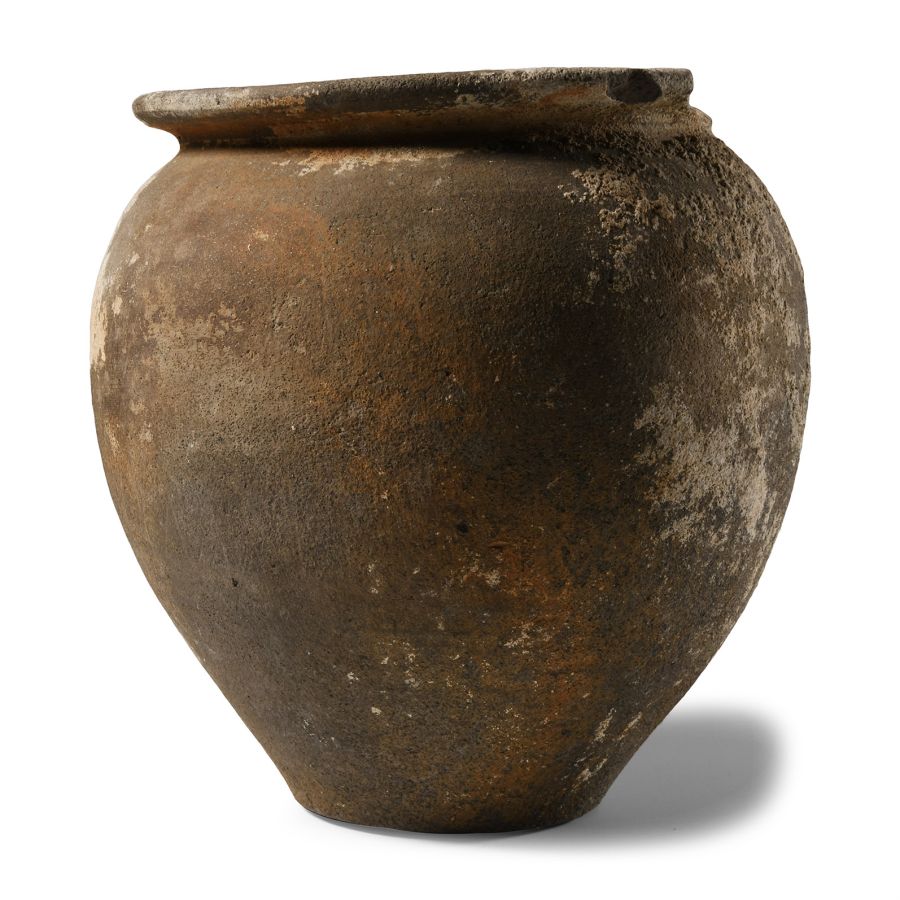
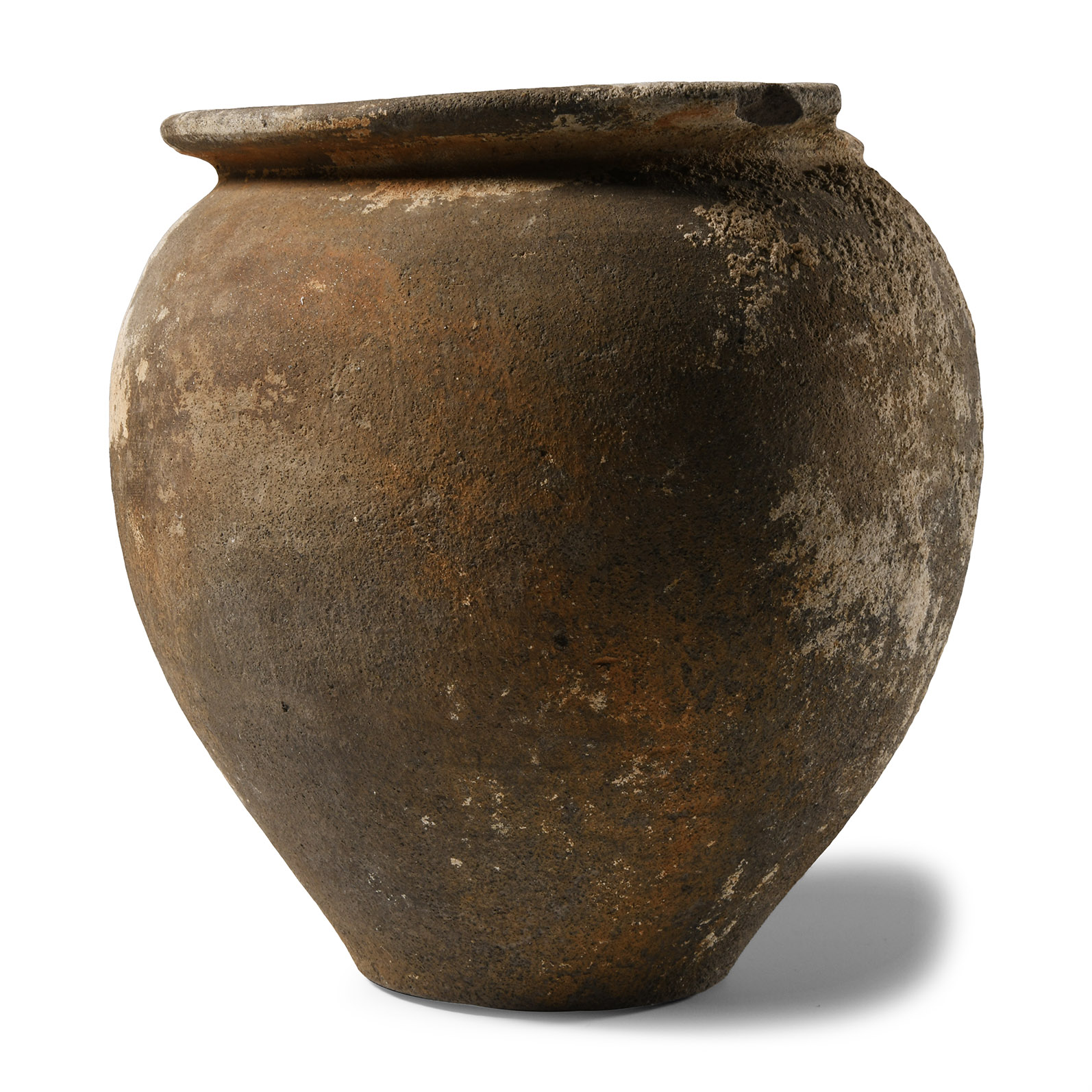
Roman Terracotta Piriform Storage Vessel
3RD CENTURY A.D.
5 7/8 in. (489 grams, 15 cm).
With everted rim and rounded shoulder; marine encrustation. [No Reserve]
ProvenanceFrom a collection acquired on the UK art market from various auction houses and collections mostly before 2000.
From an important Cambridgeshire estate; thence by descent.
TimeLine Auctions follows a vetting process to ensure the authenticity and legality of all items, reinforcing our commitment to integrity and responsible trading. Each antiquity, antique, and coin lot undergoes thorough examination by a vetting committee of at least ten external specialists, professional trade association members, scientists, and archaeologists: Our Vetting Process
AUCTIONS:
TimeLine is a leading auction house specialising in antiquities, ancient art, collectables, natural history, coins, medals, and books. Our auctions offer museums, collectors, historians, and enthusiasts the opportunity to acquire unique and historically significant pieces.
-
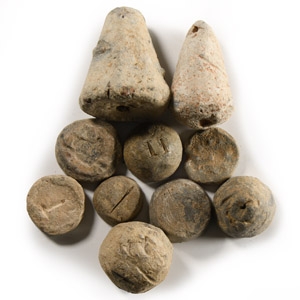
Roman and Later Lead Weight Collection
1st-18th century A.D.Sold for (Inc. bp): £20
Including tabular, plano-convex and conical types. 889 grams total, 20-45 mm
Found whilst fieldwalking in Somerset and Devon, UK. -
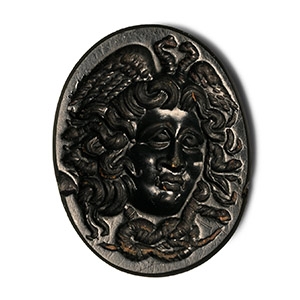
Graeco-Roman Green Jasper Gemstone with Medusa
1st century B.C.-1st century A.D.Estimate: £3,000 - 4,000 (+bp*)
Opening Bid: £1,600
An exceptional intaglio engraved with head of Medusa in three-quarter view, depicted with a sorrowful expression, full lips and large eyes gazing up; voluminous hair composed of entangled snakes framing her face, large wings to the brow flanking a pair of rearing serpents, a knot of serpents below her chin. 1.34 grams, 20.82 mm
Acquired in Switzerland 1970-1980. From a London, UK, collection. This lot has been checked against the Interpol Database of stolen works of art and is accompanied by search certificate no.12034-214098.
In ancient mythology, Medusa was one of three monstrous winged female creatures who had venomous snakes living in her hair. In classical antiquity, representations of the head of Medusa appeared in the apotropaic device known as the Gorgoneion, designed to ward-off evil and bad luck. -
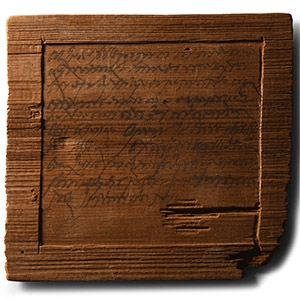
Roman Inked Wooden Tablet for a Contract Between Bassus and Neronianus
4th century A.D.Sold for (Inc. bp): £15,600
A reused tablet with a recessed panel on one side, the last tablet of a legal document which consisted of two (diptychon) or three tablets (triptychon); ten black inked lines of New Roman cursive script, the end of a record of a transaction in formulaic legal language, probably a sales contract, between the buyer (emptor) Bassus and a person called Neronianus; traces of text (perhaps in rustic capitals) to the reverse. 40 grams, 15.1 x 13.9 cm
From an important London collection since 1975. Accompanied by a collection of two 1970s photographs of the the tablet.
The contract follows standard Roman legal formulae.
