
Loading, please wait...
LOT 0654
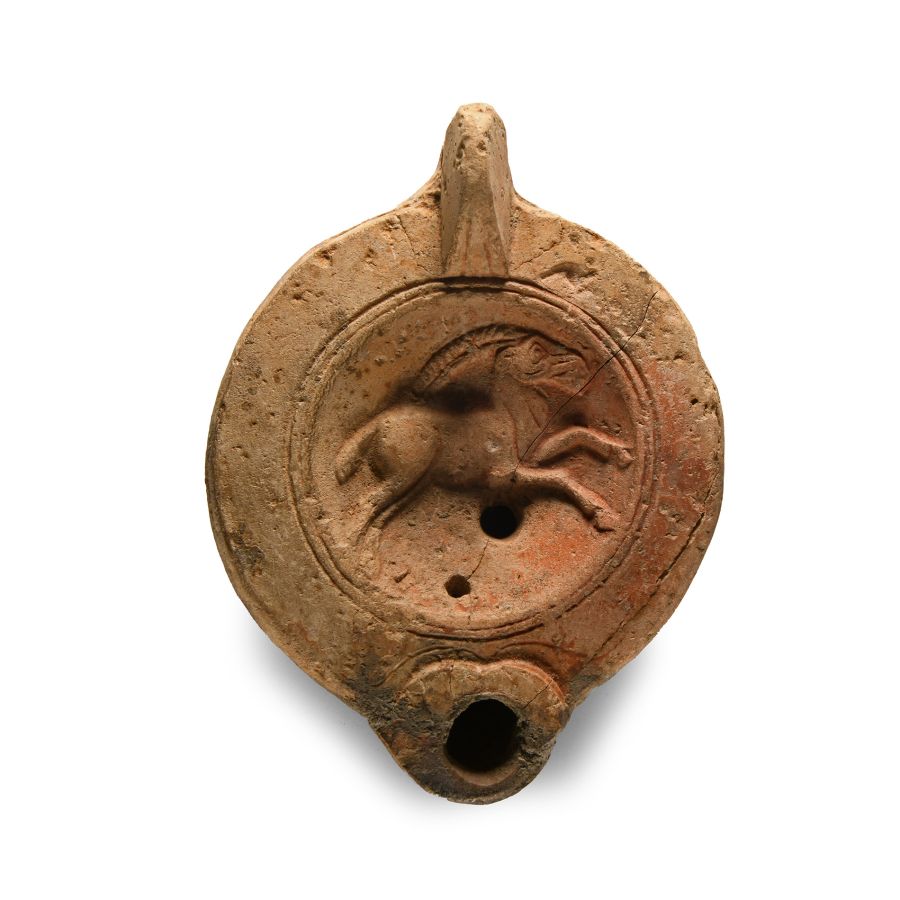
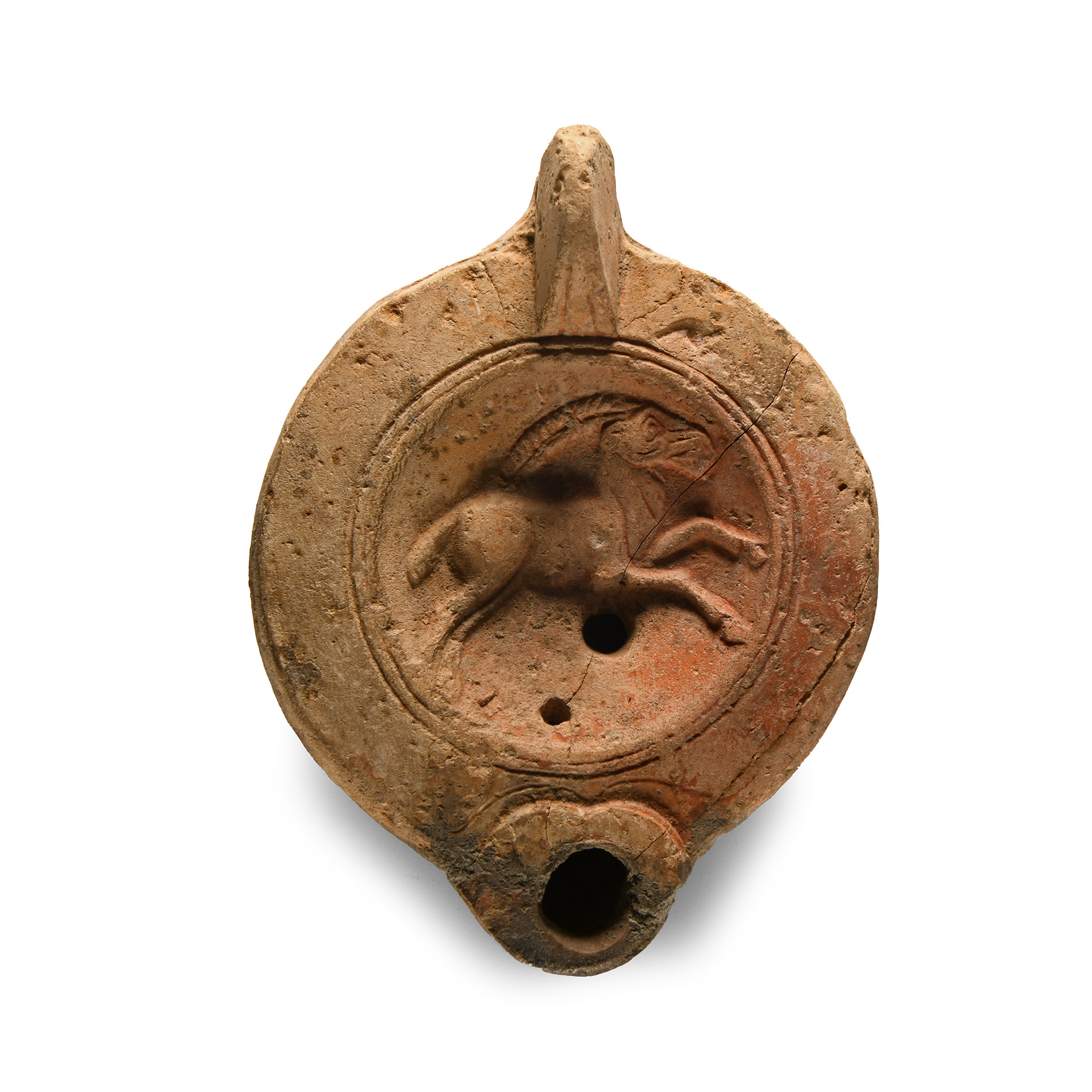
Roman Terracotta Oil Lamp with Leaping Ibex
2ND CENTURY A.D.
4 1/8 in. (110 grams, 10.5 cm).
With a lug handle to the rear, discus with a leaping long-horned ibex within a concentric circle border; concentric circles to base; repaired.
ProvenanceAcquired on the European art market, 1980s.
English private collection.
Cf. Bussière, J., Lindros Wohl, B., Ancient Lamps in the J. Paul Getty Museum, Malibu, 2017, no.402, Loeschcke VIII; Bussière form D IX 2b.
FootnotesThis lamp belongs to the group of provincial African lamps with a plain shoulder and a heart-shaped nozzle. The shoulder form of the lamps (irrespective of African, Italic, or eastern place of manufacture or origin) varies widely. Some of them had undecorated shoulders, like our example. Discus decors include mythology, amphitheatre, daily life, animals (our example), geometric patterns and plain discus.
CONDITIONTimeLine Auctions follows a vetting process to ensure the authenticity and legality of all items, reinforcing our commitment to integrity and responsible trading. Each antiquity, antique, and coin lot undergoes thorough examination by a vetting committee of at least ten external specialists, professional trade association members, scientists, and archaeologists: Our Vetting Process
AUCTIONS:
TimeLine is a leading auction house specialising in antiquities, ancient art, collectables, natural history, coins, medals, and books. Our auctions offer museums, collectors, historians, and enthusiasts the opportunity to acquire unique and historically significant pieces.
-
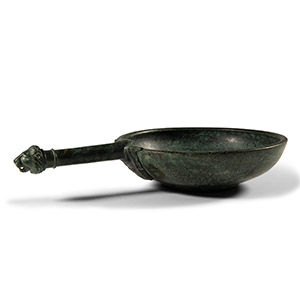
Roman Bronze Patera with Lion Head Handle
1st century A.D.Sold for (Inc. bp): £1,950
Comprising a shallow discoid bowl with inverted lip, central dome with concentric ring ornament, basal ring; the handle columnar with foliage to the junction, lion-head finial with gaping mouth. 410 grams, 21.2 cm
Acquired Gorny & Mosch, Munich, 25 June 2014, no.86. From the Horton collection, UK. Accompanied by a copy of the relevant Gorny & Mosch catalogue pages. This lot has been checked against the Interpol Database of stolen works of art and is accompanied by search certificate no.12062-214252. -
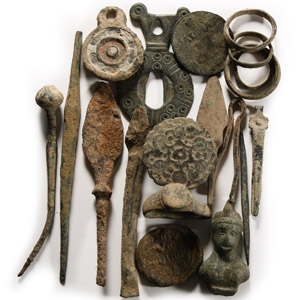
Roman and Later Bronze Artefact Collection
Mainly 1st-3rd century A.D.Sold for (Inc. bp): £104
Including bust of Victory pendant, tanged arrowhead, rosette belt slider, finger rings and other items. 145 grams total, 17-99 mm
Ex Nigel Mills, London, UK. -
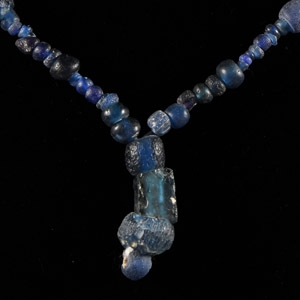
Roman Blue Glass Bead Necklace String
1st century A.D. and laterSold for (Inc. bp): £182
Restrung group of graduated annular, oblate and other beads with cluster forming the centrepiece. 12.9 grams, 35 cm
Acquired 1980-2015. Ex Abelita family collection.
