
Loading, please wait...
LOT 0756
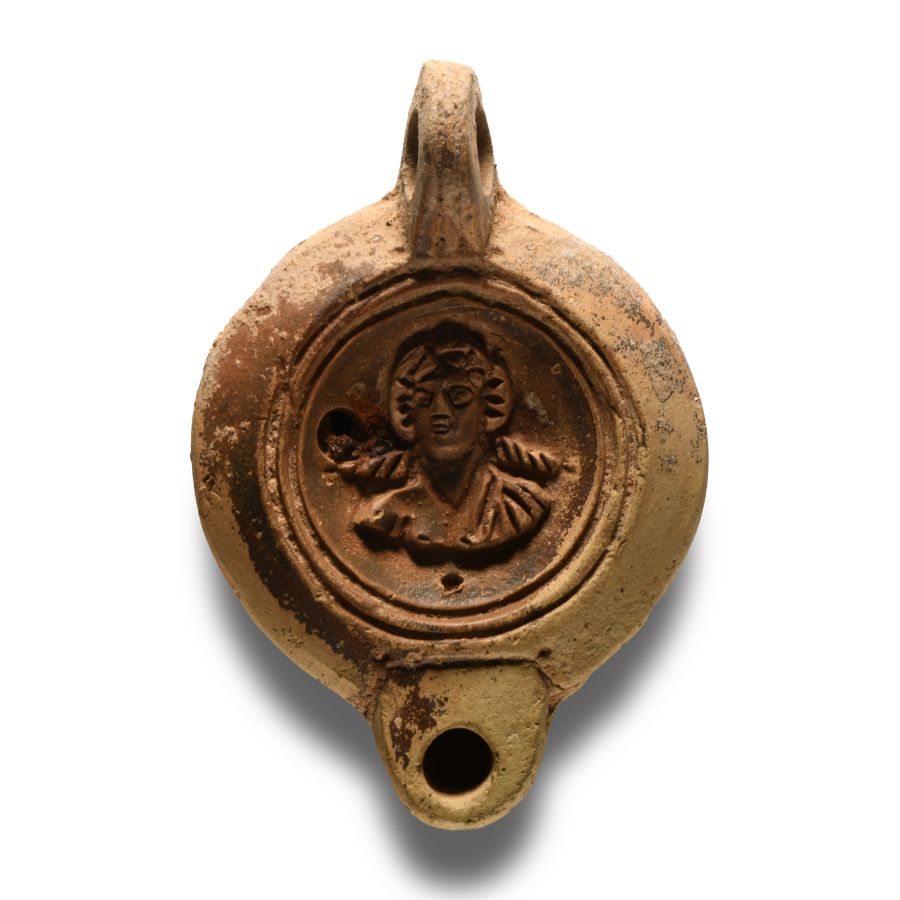
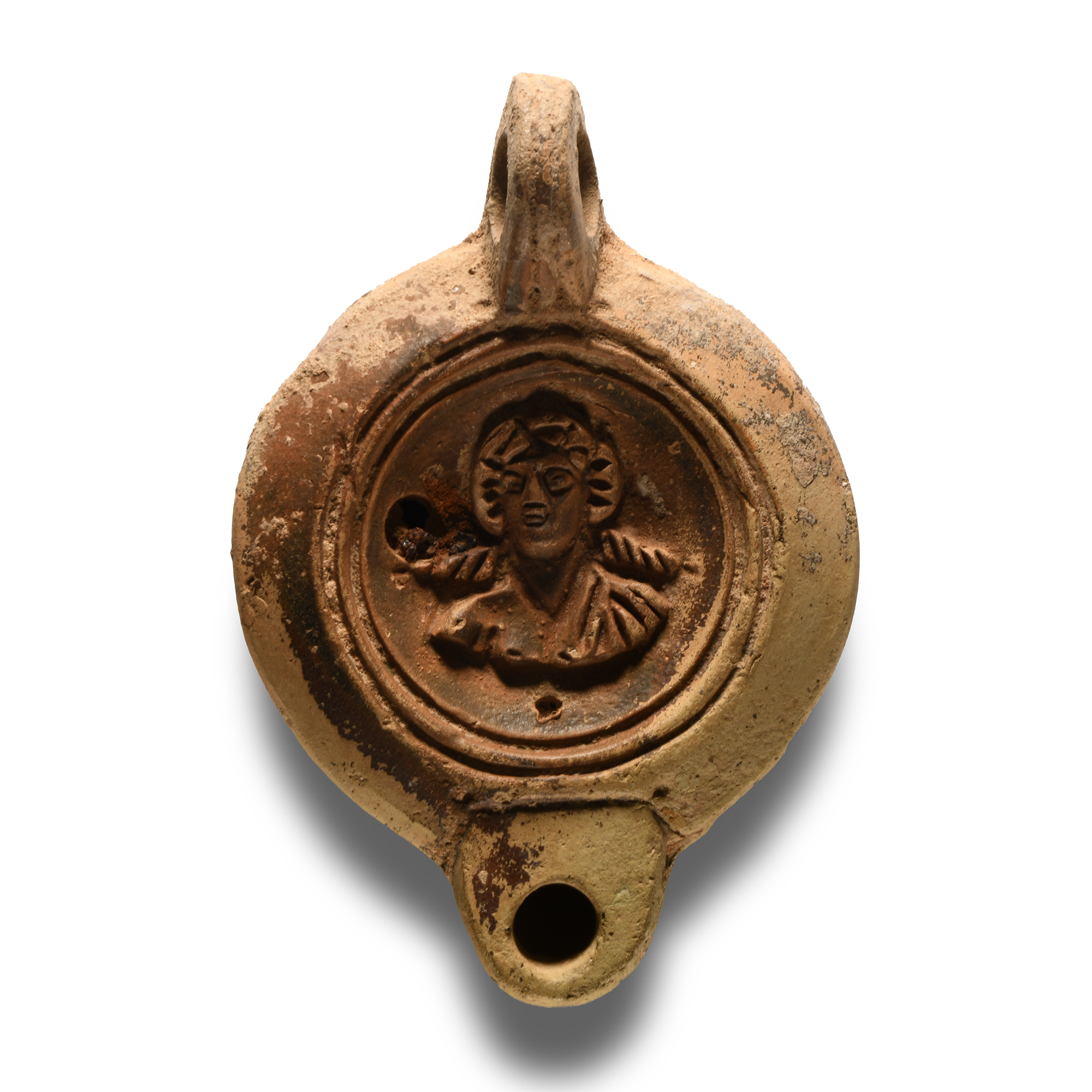
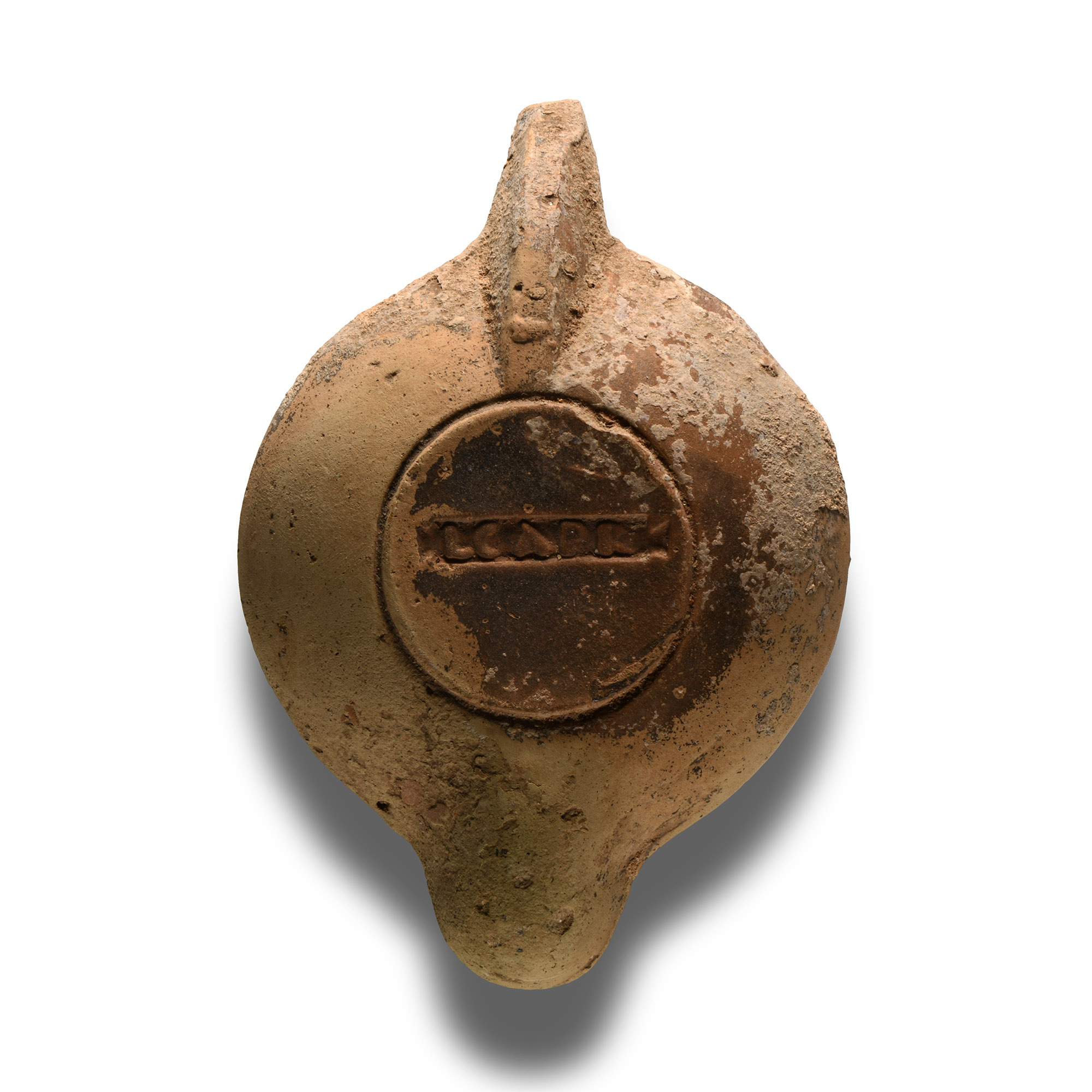
Roman Terracotta Oil Lamp with Frontal Bust
2ND CENTURY A.D.
4 in. (63 grams, 10.2 cm).
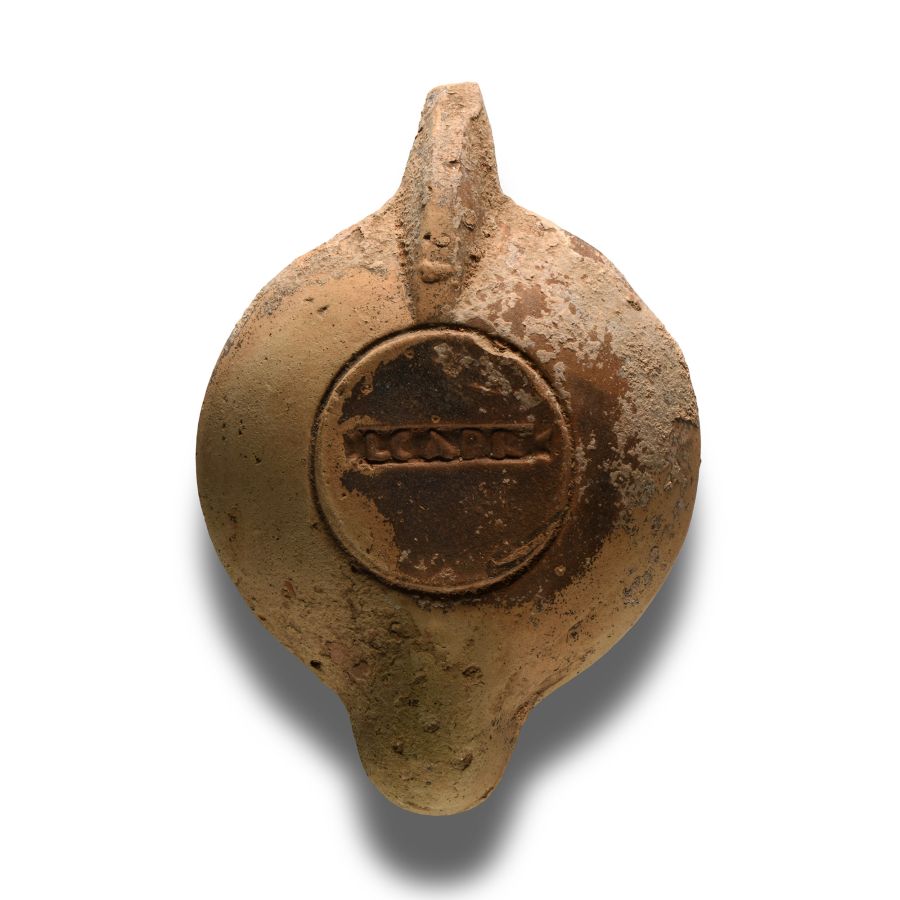
With brown slip, loop handle to the rear, the discus with a facing bust of a young woman within a concentric circle border; maker's mark 'LCΛPΓ' within tabula ansata-shaped stamp.
ProvenanceAcquired on the European art market, 1980s.
English private collection.
See The Getty Museum, inv.no.83.AQ.377.205, for similar discus motif by a different maker in Bussière, J., Lindros Wohl, B., Ancient Lamps in the J. Paul Getty Museum, Malibu, 2017, no.292, p.204, type Loeschcke VIII; Bussière form D II 1.
FootnotesThe discus decorations of these lamps are various: Diana, Dioscuri, Sol and Luna, Africa, Lares, and griffin; portraits of Domitian, Hadrian, male head, bust of a young man, bust of a young woman (our specimen), bust of a bearded old man, fisherman, and an aulete; scorpion, boar, and lion with crocodile; etc. They were an African production and not less than seven worskshops have been individuated: M N O V I V, M N O V I V S T (our case) , M N O V I V S T I , I V N I A L E X I, C C O R V R S , E X F N A / LV C C E I O R V M . Here we can add LCAPIT (Lucius Capito).
CONDITIONTimeLine Auctions follows a vetting process to ensure the authenticity and legality of all items, reinforcing our commitment to integrity and responsible trading. Each antiquity, antique, and coin lot undergoes thorough examination by a vetting committee of at least ten external specialists, professional trade association members, scientists, and archaeologists: Our Vetting Process
AUCTIONS:
TimeLine is a leading auction house specialising in antiquities, ancient art, collectables, natural history, coins, medals, and books. Our auctions offer museums, collectors, historians, and enthusiasts the opportunity to acquire unique and historically significant pieces.
-
Roman Marble Epigraphic Eagle Statue
Circa 2nd-3rd century A.D. or laterSold for (Inc. bp): £1,300
Standing on a rectangular plinth with folded wings, gripping claws and feather detail to the chest and wings; on the front face of the plinth carved inscription in seriffed capitals 'M TITIO / MAXIM[.] / [.]TER[..]'. 2.75 kg total, 17 cm (24 cm high including stand)
Acquired in the 1990s. Private collection, Suffolk, UK. Property of a European gentleman. Accompanied by a copy of a French cultural passport no.140839. -
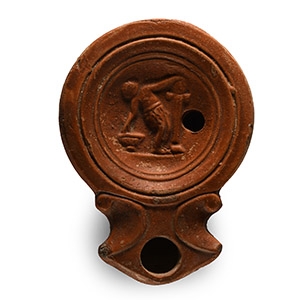
Roman Terracotta Oil Lamp with Figure
1st-2nd century A.D.Sold for (Inc. bp): £286
Comprising a shallow discus framed by concentric lines, low-relief image of a standing male reaching for a bowl with his right hand whilst supporting himself by grasping a low pillar with his left hand, filling hole flanking the pillar; volute to each side of the nozzle; maker's mark 'SVRIEPII'. 80 grams, 10.5 cm
Acquired on the European art market, 1980s. English private collection.
The period of activity of several well-known workshops—L M A D I E C , L M V N S V C , E R O T I S , G A B M E R C , and L M S V —is late Flavian to Trajanic, possibly Hadrianic.Based on this, we will not refer to the broader and too approximate dating given by Bailey to his group IV: Claudian to Trajanic. -
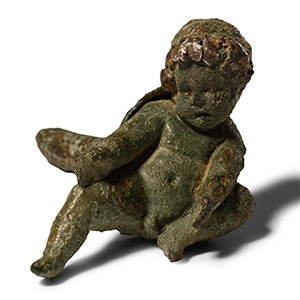
Roman Bronze Figure of a Boy with Silver Inlays
1st century A.D.Estimate: £2,000 - 3,000 (‡+bp*)
Opening Bid: £1,000
Modelled in the round, a male infant with arms and right leg extended, left leg bent and raised; head looking downwards, with applied silver scales imitating a wreath; sturdy mounting peg to the reverse. 70.1 grams, 61 mm
Acquired on the German art market, 2002. European private collection. This lot has been checked against the Interpol Database of stolen works of art and is accompanied by search certificate no.12053-211904.
The model appears to form part of a figural group.
