
Loading, please wait...
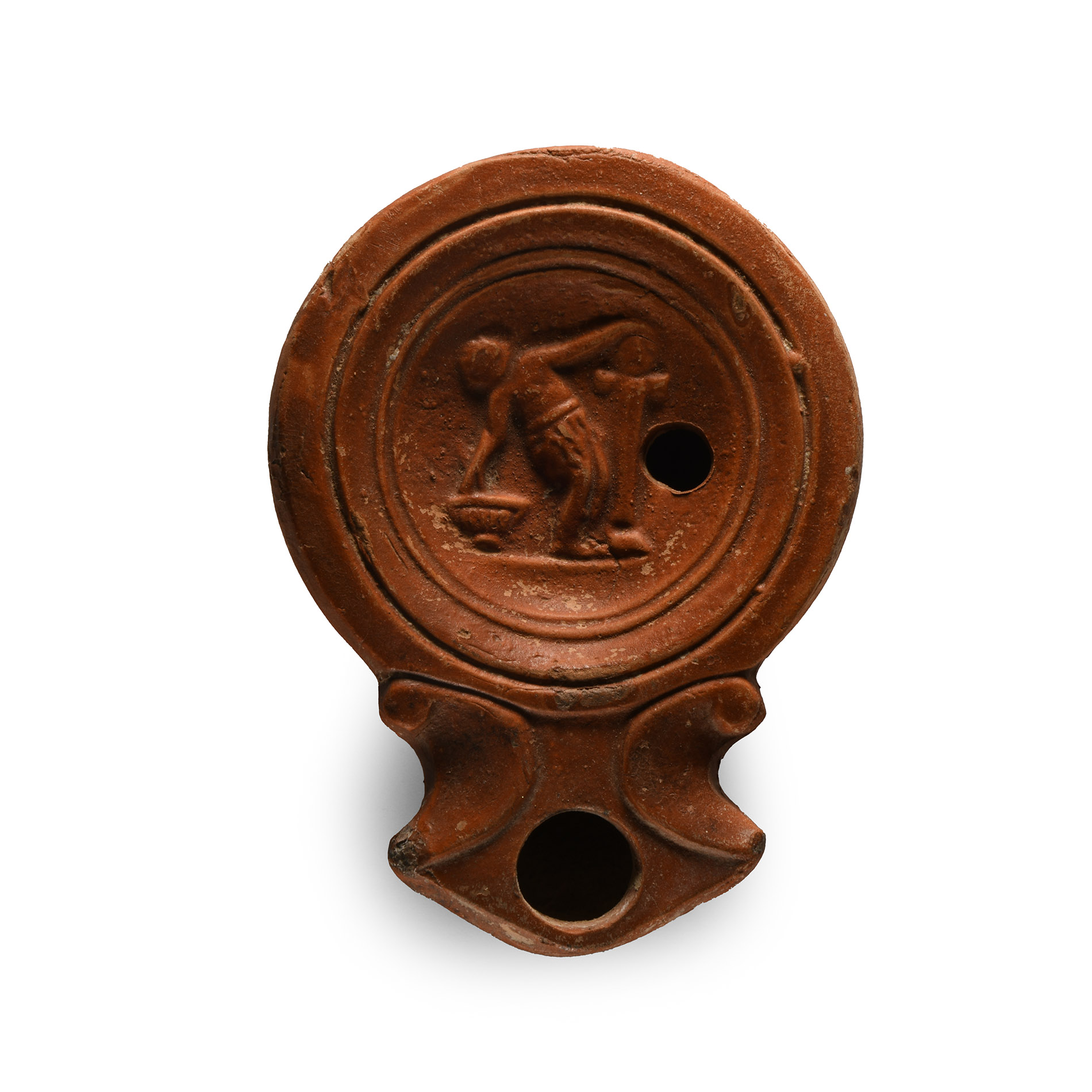
LOT 0665
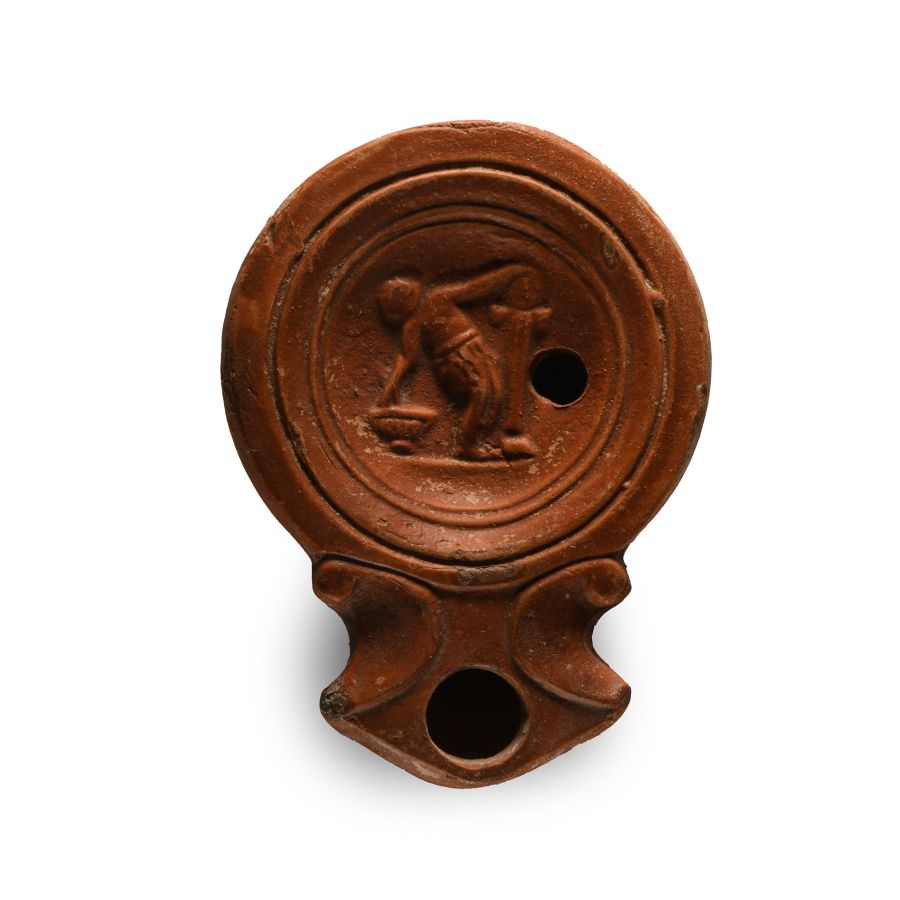
Roman Terracotta Oil Lamp with Figure
1ST-2ND CENTURY A.D.
4 1/8 in. (80 grams, 10.5 cm).
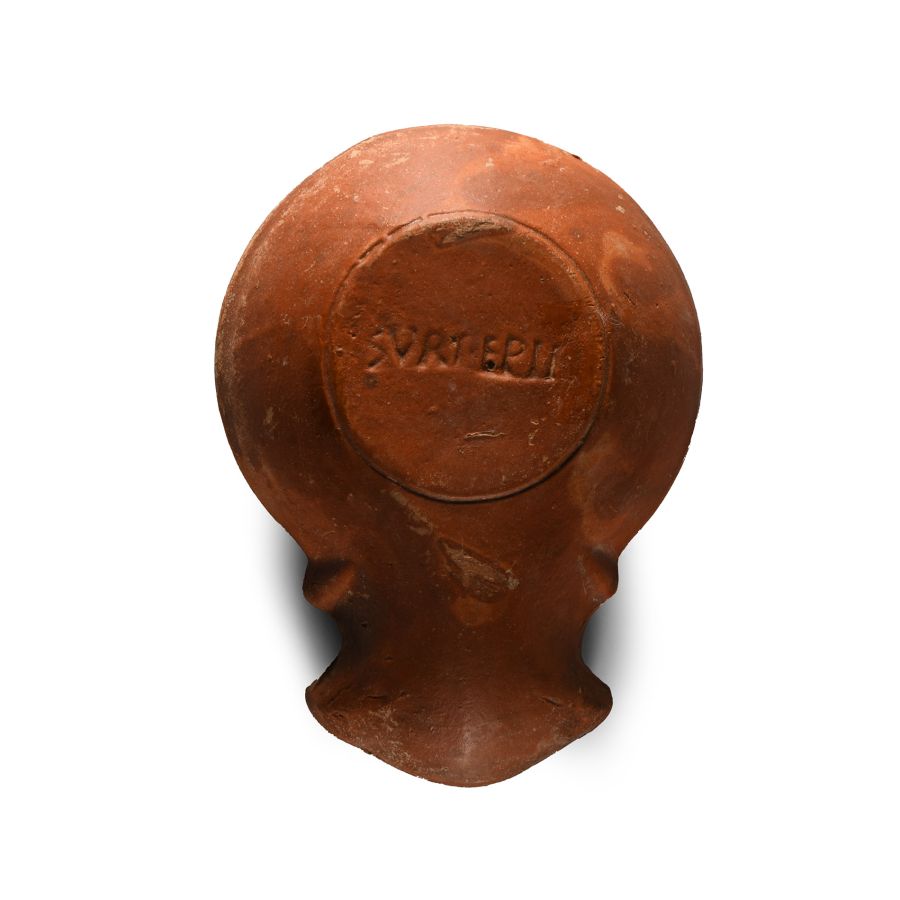
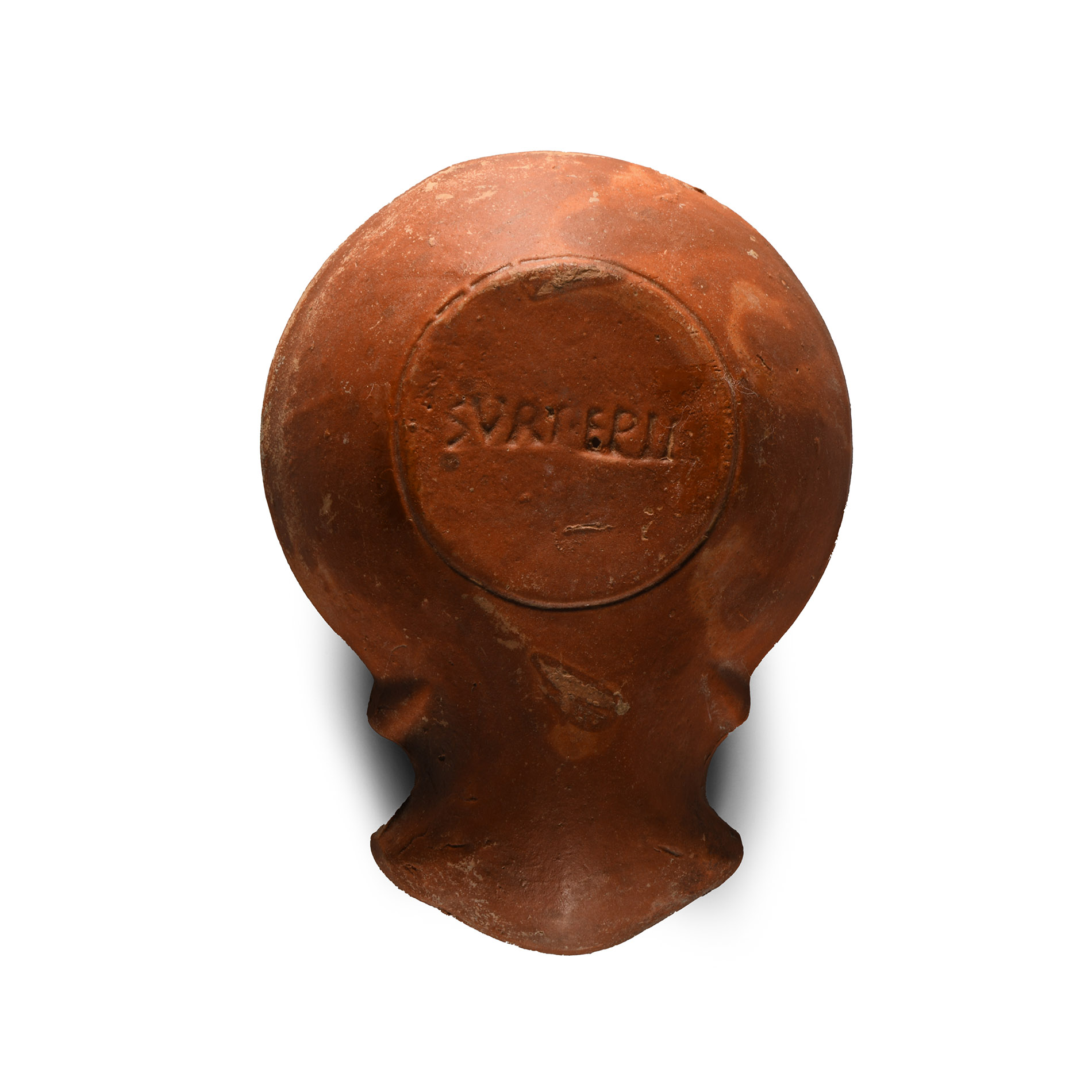
Comprising a shallow discus framed by concentric lines, low-relief image of a standing male reaching for a bowl with his right hand whilst supporting himself by grasping a low pillar with his left hand, filling hole flanking the pillar; volute to each side of the nozzle; maker's mark 'SVRIEPII'.
ProvenanceAcquired on the European art market, 1980s.
English private collection.
See The Getty Museum, inv.no.83.AQ.377.113, for the type in Bussière, J., Lindros Wohl, B., Ancient Lamps in the J. Paul Getty Museum, Malibu, 2017, nos.236,238, pp.159-160, type Loeschcke IV; Bailey B group IV.
FootnotesThe period of activity of several well-known workshops—L M A D I E C , L M V N S V C , E R O T I S , G A B M E R C , and L M S V —is late Flavian to Trajanic, possibly Hadrianic.Based on this, we will not refer to the broader and too approximate dating given by Bailey to his group IV: Claudian to Trajanic.
CONDITIONTimeLine Auctions follows a vetting process to ensure the authenticity and legality of all items, reinforcing our commitment to integrity and responsible trading. Each antiquity, antique, and coin lot undergoes thorough examination by a vetting committee of at least ten external specialists, professional trade association members, scientists, and archaeologists: Our Vetting Process
AUCTIONS:
TimeLine is a leading auction house specialising in antiquities, ancient art, collectables, natural history, coins, medals, and books. Our auctions offer museums, collectors, historians, and enthusiasts the opportunity to acquire unique and historically significant pieces.
-
Roman Buffware Oil Lamp with Horse and Rider
Circa 2nd century A.D.Sold for (Inc. bp): £130
Comprising a ring handle, filling-hole and air hole in lower discus; the discus with a horse advancing left mounted by a cavalryman with a flying cloak. 44 grams, 73 mm
From a collection acquired on the UK art market from various auction houses and collections mostly before 2000. From an important Cambridgeshire estate; thence by descent.
The main charateristic of the type (Bussiere form D I 3) is the form of the nozzle, which is tangent to the lamp rim (nozzle form Bussiere 3). -
Roman Gold Ring with Garnet Cabochon
Circa 2nd-3rd century A.D.Estimate: £3,000 - 4,000 (+bp*)
Opening Bid: £1,600
Comprising a keeled hoop forked at the shoulders to form two elegant scrolls supporting the raised bezel, decorative grooves framing the garnet cabochon. 8.16 grams, 23.85 mm overall, 19.37 mm internal diameter (approximate size British N, USA 6 1/2, Europe 13.72, Japan 13)
Acquired from London galleries during the 1990s. From the jewellery collection of a London, UK, gentleman. This lot has been checked against the Interpol Database of stolen works of art and is accompanied by search certificate no.12114-214295.
The type of ring seems to date (with the volutes on the shoulders) to the late 2nd-early 3rd century A.D., although the model is certainly derived from the Hellenistic world. The use of carnelian and garnet was abundant in Hellenistic and Roman rings, and the style of the rings continued without change in the Roman Hellenised east. -
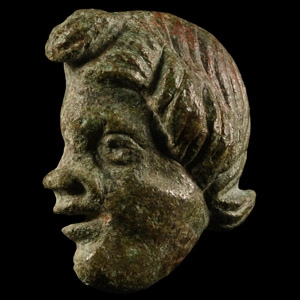
Roman Bronze Face Mount
1st-3rd century A.D.Sold for (Inc. bp): £52
Profile bust of a putto with swept-back hair and fleshy features; studs to the reverse. 8.21 grams, 23 mm
Property of a Gloucestershire, UK, collector. Property of an East Sussex, UK, gentleman.
